country profile
press contact
Public Information Officer for Kenya
Donor Visibility Coordinator
Senior Spokesperson - USA - Global Issues
Chief Spokesperson - North America - Global Issues
Copyright: WFP/Marcus Prior
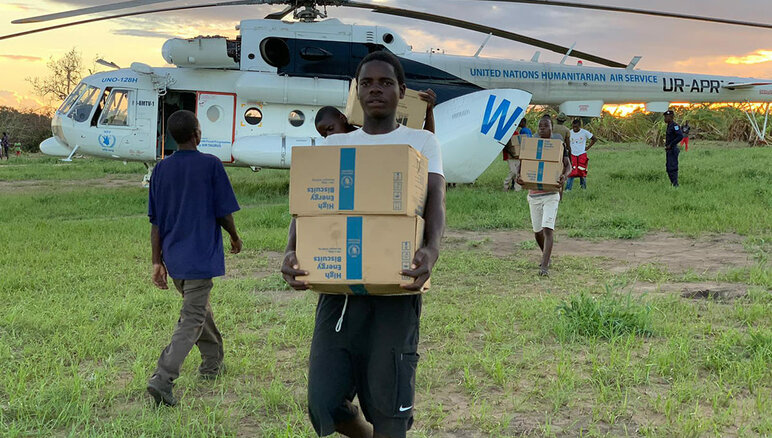
NAIROBI – The United Nations World Food Programme (WFP) is scaling up food assistance in Kenya to feed 3.5 million Kenyans hit by drought and high food prices, and appealing to donors for a total of US$244 million dollars to prevent the most vulnerable from going hungry.
“Kenyans already struggling with drought and high food prices are now being hit by the financial crisis,” said WFP Kenya Country Director Burkard Oberle, adding that falling remittances from overseas, in addition to crop failures, meant that hundreds of thousands more people were now struggling to find enough food.
Subsistence farmers in southeastern and coastal areas were hardest hit by the failure of the October-December short rains and have experienced almost total crop loss. Many families are struggling to find food for even one meal a day, and need food assistance in some cases until the next short rains harvest in 2010.
Oberle added that rates of child malnutrition in pastoral and marginal agricultural districts, for instance, were already beginning to reach or surpass crisis levels.
A new WFP operation from 1 April will scale up food assistance with the following specific measures:
Under a separate operation, 770,000 children currently receive WFP meals in school.
The Government of Kenya declared a national disaster in January following the failure of the short rains in southeastern and coastal marginal agricultural lowlands and the central highlands. The 3.5 million people to receive WFP food assistance are concentrated in rural areas. In addition, the Government has identified around 4 million people in urban areas as food insecure, plus 1.9 million affected by HIV/AIDS.
High food prices have exacerbated the crisis caused by drought and reduced people’s ability to buy food. Maize prices have increased by up to 130 percent in parts of the country since last year. Inflation and high fuel and fertilizer prices stopped farmers producing larger harvests.
A joint short rains assessment due to be issued this week by the Government, UN agencies and NGOs found maize output for 2008-2009 marketing season was 15 percent below average. High food prices contributed to shortages of cereals at affordable prices for many Kenyans. Livestock disease and conflict in northern pastoral areas weakened many people’s ability to feed themselves.
The new WFP operation will help people rebuild and increase the resilience of their livelihoods in the longer-term and provide WFP the flexibility to scale up operations in times of crisis.
WFP is encouraging farmers to grow drought resistant crops, such as millet and sorghum. Through Food for Assets projects, communities receive WFP food in exchange for building water pans and other water harvesting tools to protect them from the worst effects of drought.
The new WFP operation in Kenya will cost a total of US$474 million from April 2009 through March 2012. Of the US$244 million required through February 2010, the following countries donors have already contributed: Spain, Japan, Turkey and Australia.