
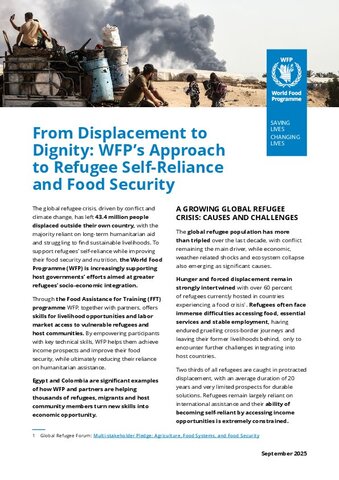
This document outlines WFP’s strategic approach to develop skills for livelihood opportunities through Food Assistance for Training (FFT) interventions. In response to the growing global displacement crisis, WFP is increasing its investments in long-term solutions that empower refugees and host communities with marketable skills and access to income-generating opportunities. This approach strengthens both their economic independence and food security.
By integrating technical training, financial inclusion and employment pathways, the FFT programme supports durable solutions and fosters socioeconomic integration of refugees. Notable examples from Egypt and Colombia demonstrate how skills development interventions are helping thousands of refugees, migrants and host community members turn new skills into sustainable economic opportunities.