
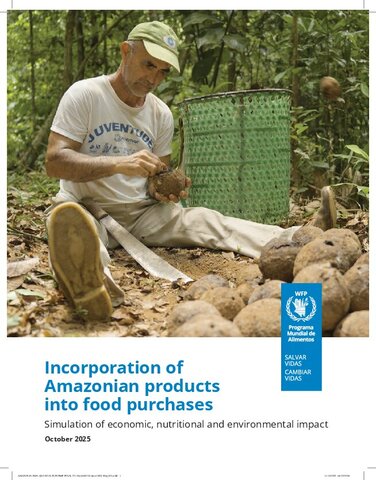
This report introduces a methodology to simulate the economic, nutritional and environmental impacts of incorporating Amazonian foods into institutional procurement programs. Using the ICLA tool and 44 indicators, it evaluates how replacing external products with local Amazonian alternatives can strengthen food systems, promote inclusion and reduce carbon footprints. Case studies in Colombia and Bolivia show that even small substitutions such as chontaduro flour for corn or Brazil nut flour for oats can significantly increase local purchase value, boost income for small producers, create jobs and maintain nutritional balance while lowering greenhouse gas emissions. The document also highlights challenges such as cost, logistics and biodiversity risks and offers recommendations for sustainable implementation including capacity building, policy design and monitoring mechanisms. This evidence based approach supports informed decision making for more inclusive and climate friendly food procurement strategies.
WFP. 2025. Incorporation of Amazonian Products Into Food Purchases: Simulation of Economic, Nutritional and Environmental Impact. Rome.