
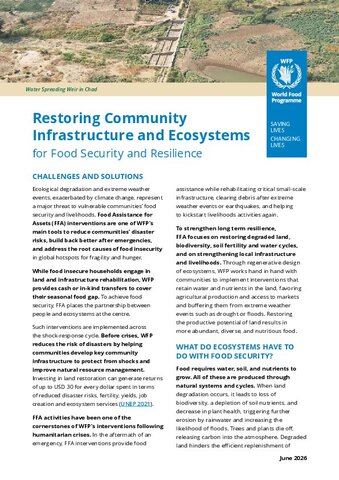
Food depends on healthy ecosystems. Water, fertile soil and nutrients are all sustained through natural processes. When land becomes degraded, biodiversity declines, soil loses nutrients and plants suffer. This increases erosion, raises the risk of floods and droughts, and reduces water supplies for communities. As trees and vegetation disappear, carbon is released into the atmosphere, temperatures rise and soils lose their ability to retain moisture and cool the environment. Ecosystem decline can reduce crop yields, undermine livelihoods and increase the risk of social unrest and conflict.
The good news is that environmental damage can be reversed. By working with nature to restore landscapes, communities can capture and retain water, rebuild soil health and improve agricultural productivity. Restored ecosystems help replenish groundwater, reduce the impacts of floods and droughts, and strengthen resilience to climate shocks. They also support food production, protect livelihoods and create more secure and sustainable futures for people and the environment.
| Document | File |
|---|---|
| Regenerating Ecosystems and Restoring Livelihoods for Food Security and Resilience – September 2024 |
PDF | 818.59 KB
Download
|