
COP31: Why Madagascar is growing a green wall against hunger
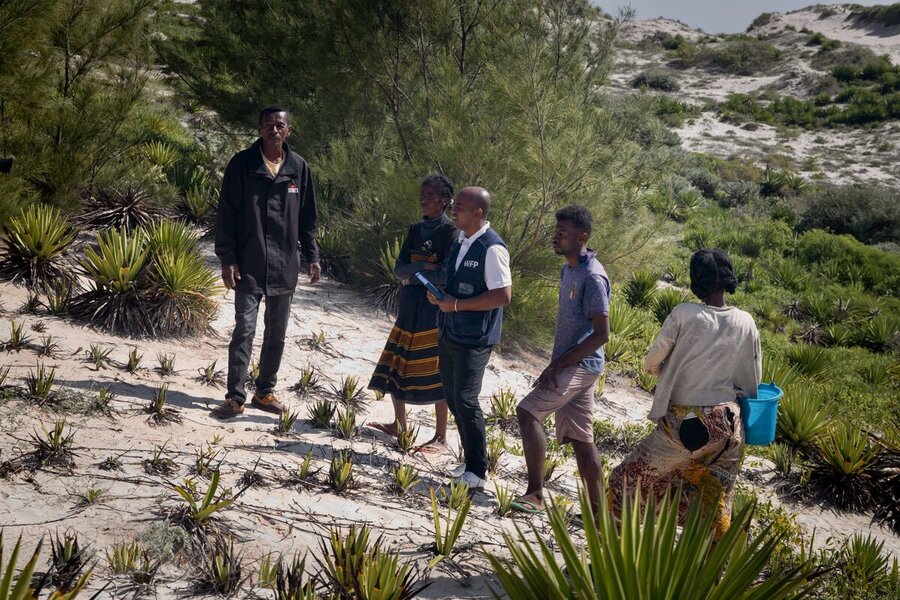
Year after year, residents of Faux Cap have watched a changing climate reshape this arid slice of southern Madagascar. Ever-sparser rains and more intense storms have battered crops and hopes for a good harvest.
Droughts and fierce winds have formed sand dunes that swallow up once-fertile farmland and entire coastal villages – uprooting residents and shattering livelihoods that for centuries revolved around farming and fishing.
“Because of climate change, droughts have become more frequent, and strong winds have intensified.” – Bertin Fanomezantsoa, Deputy Mayor of Faux Cap
“Years ago, life was better here. We had regular rainfall and the winds were not as strong,” says Bertin Fanomezantsoa, Deputy Mayor of Faux Cap, a collection of 53 villages at the southern tip of this island nation. “Farmers were able to cultivate their land successfully.”
No longer. “Droughts have become more frequent,” he says, “and strong winds have intensified.”
But some changes have been for the better.
Today, rows of spiny sisal plants – beach morning glory known locally as lalanda – and sturdy filao – or Australian pines – are taking root in communities like Faux Cap, forming green barriers that help to anchor the sand, block destructive winds and nourish the soil. Across southern Madagascar, more than 36,000 hectares of dunes have been stabilized since 2017 under a World Food Programme (WFP) initiative to shore up local resilience against desertification and weather extremes.
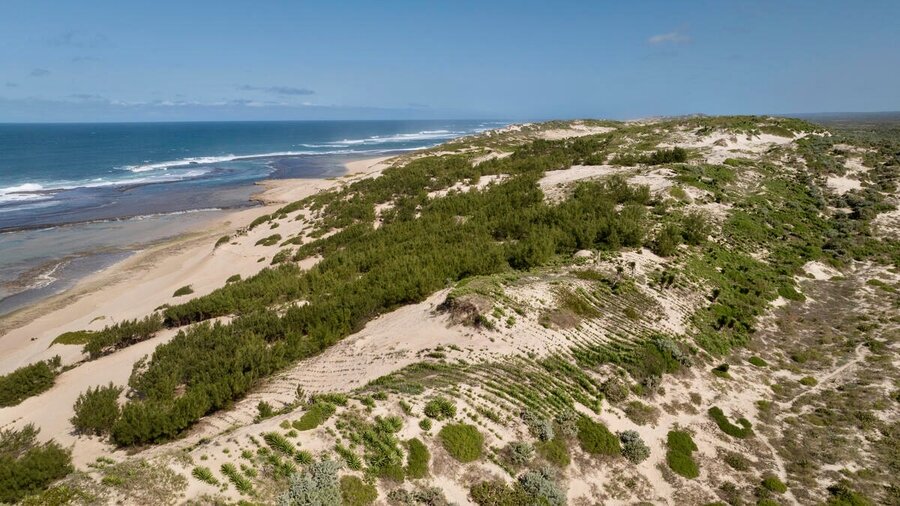
“As the sisal and file trees matured, the strong winds could no longer move the dunes,” says Fanomezantsoa, who lost his beehives to the shifting sands.
“After we planted these species, local animals began returning to areas where there had been nothing but sand. Livestock began to graze. And communities could start farming again.” – Loubien Razafimarolahy-Octave, WFP Programme Associate in Madagascar
With this year’s powerful El Niño expected to intensify yet another drought in Madagascar, the stabilized dunes offer one tangible win against desertification and hunger. Across the Indian Ocean island nation, a projected 3.7 million people are severely food insecure – up from 2.1 million earlier this year. Up to 426,000 may face emergency food insecurity in the poorest and most food-insecure Grand Sud region, which includes Faux Cap.
“We’re seeing the advancing sand slowed in some places and stopped completely in others,” thanks to the dune stabilization, says Loubien Razafimarolahy-Octave, WFP Programme Associate who covers Faux Cap. “After we planted these species, local animals began returning to areas where there had been nothing but sand. Livestock began to graze. And communities could start farming again.”
Building resiliece to hunger – and extreme weather
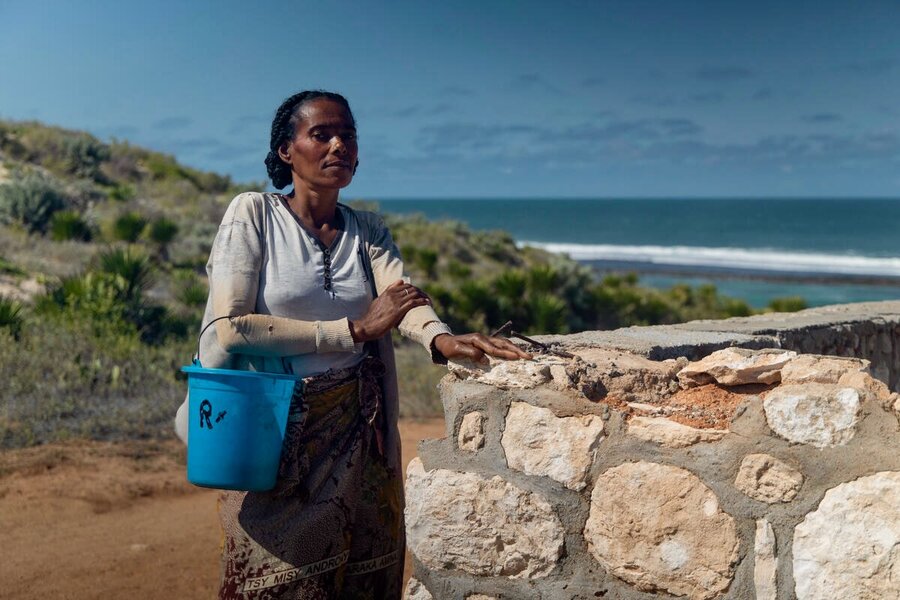
Standing near her tiny home of wood and straw, black goats grazing nearby, Faux Cap resident Lakinasie describes fields that are once again yielding cassava, beans and other vegetables.
“We could protect some of the area, thanks to dunes stabilized by the plants,” says Lakinasie, who goes by only one name. “We also got a little rain. During the time with rain, we could eat three times a day.”
But the rains offer only a temporary reprieve. One of the world’s most climate-vulnerable countries, Madagascar has seen recurrent droughts and water scarcity in recent years, along with back-to-back storms. During the many hard times, Lakinasie says, “there is nothing to eat”.
In 2024, WFP worked with local authorities to build a new meteorological centre at Faux Cap, to alert farmers and fishermen about extreme weather events. We have worked with local communities to launch fish farming and plant coconut trees, along with a thornless variety of cactus for animal and human consumption. And there are plans – if financing comes through – to launch initiatives like coconut oil extraction and cactus jam production to diversify local incomes.
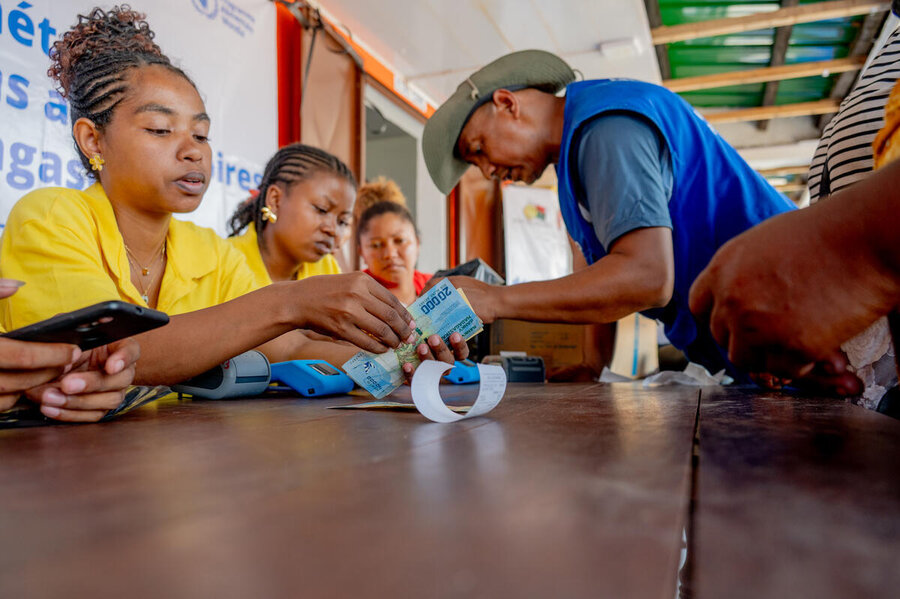
Last year, as forecasts showed an intensifying drought, WFP distributed cash assistance to residents of Faux Cap and other at-risk areas, so they could prepare for the worst. This year, with another El Niño-intensified drought threatening to deepen hunger in southern Madagascar, WFP is again providing anticipatory assistance. As part of the Government’s broader action plan, more than 207,000 people in the Grand Sud are receiving early-warning messages, including more than 171,000 people who are receiving anticipatory cash assistance.
Acting early against drought and hunger
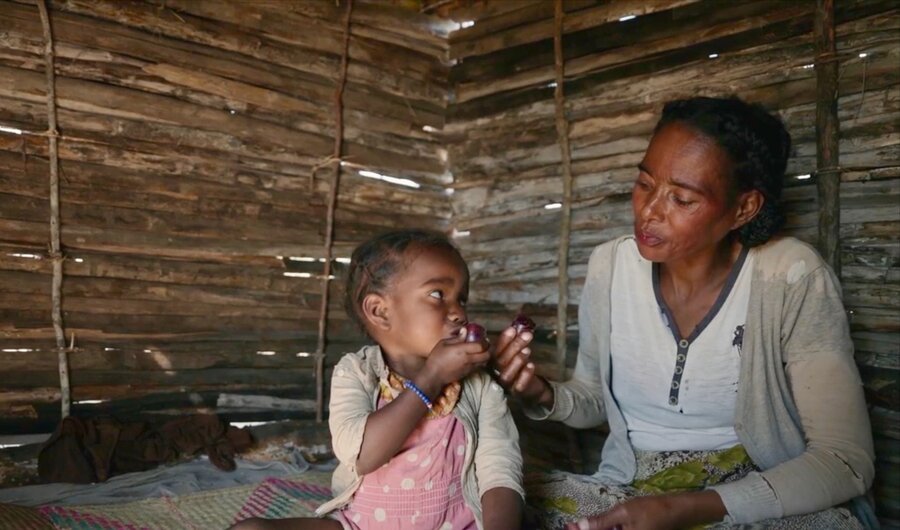
This early action helps families prepare for more dry weather and ensure their food security doesn’t deteriorate further. In early 2027, when the between-harvest lean season is projected to deepen hunger, severely food-insecure households like Lakinasie’s in Faux Cap are also expected to receive WFP food assistance. With more funding, we are ready to expand that coverage to reach tens of thousands more people.
Lakinasie’s family spent some of their earlier WFP drought assistance – the equivalent of about US$53 – on immediate essentials. But they also bought a goat and invested in their children’s education.
“It was used to prepare us for future shocks,” she says of the support. “We were able to pay school fees and buy pens and books. My children still learn, even now.”
WFP’s Loubien Razafimarolahy-Octave hopes these investments in Faux Cap’s future will continue. “Our biggest problem is financing,” he says. “With financing, we can do many things.”
WFP’s resilience building and anticipatory initiatives in southern Madagascar are funded by the European Union, France, Germany and Norway.