
The road to Dadaab: unlocking the food potential of Kenya's drylands
The road through Dadaab is a study in dust and distance. The landscape stretches beneath an enormous sky: sandy earth, thorny scrub, the occasional herd moving across the horizon. This is Kenya’s arid northeast, a place shaped by heat, scarce rainfall and increasingly unforgiving cycles of drought.
And then, unexpectedly, there is greenery.
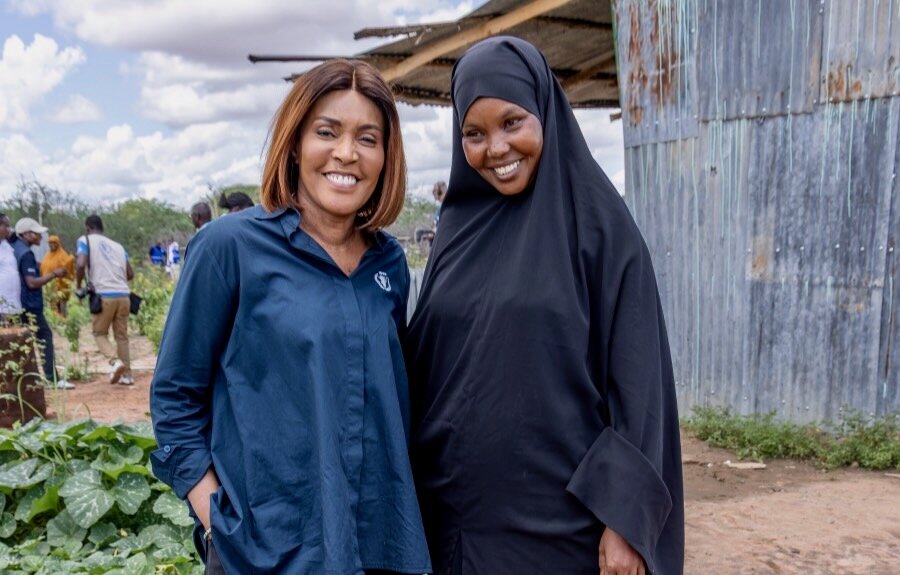
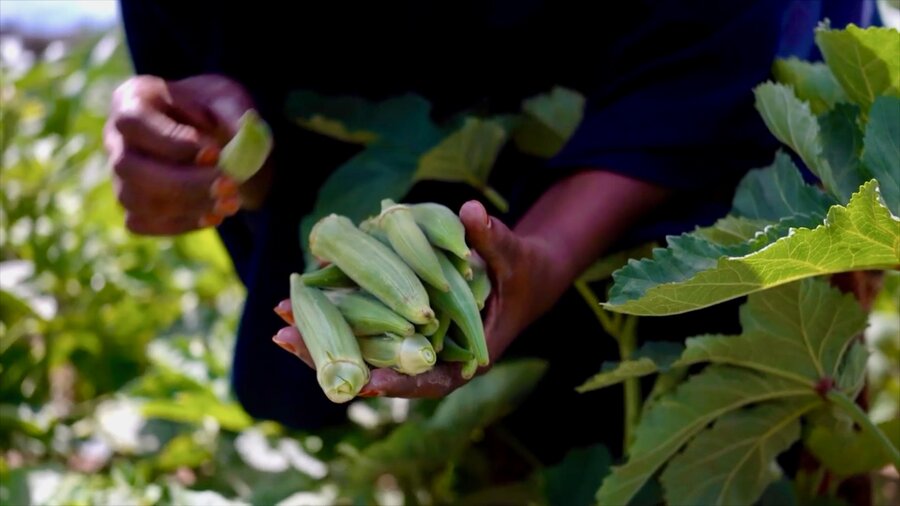
Rows of vegetables rise from the dry earth. Women move between them, harvesting okra and other vegetables. I stood there watching them work, struck by the contrast.
"I have seen produce from WFP-supported horticultural farms...growing in landscapes more commonly seen when rains have failed." – Betty Ka, WFP Country Director in Kenya
For decades, Dadaab, one of the world’s largest refugee complexes, has been known for something very different. Its name is almost synonymous with displacement and humanitarian assistance. More than 400,000 refugees live in the wider Dadaab complex today, alongside host communities facing many of the same pressures of drought, rising temperatures and limited natural resources.
That reality is impossible to ignore. But standing in that field with those women one recent morning was a reminder of another reality.
We have become so accustomed to talking about vulnerability in Dadaab and other communities across Kenya’s arid and semi-arid lands – lands covering more than 80 percent of the country – that we sometimes fail to talk enough about their potential.
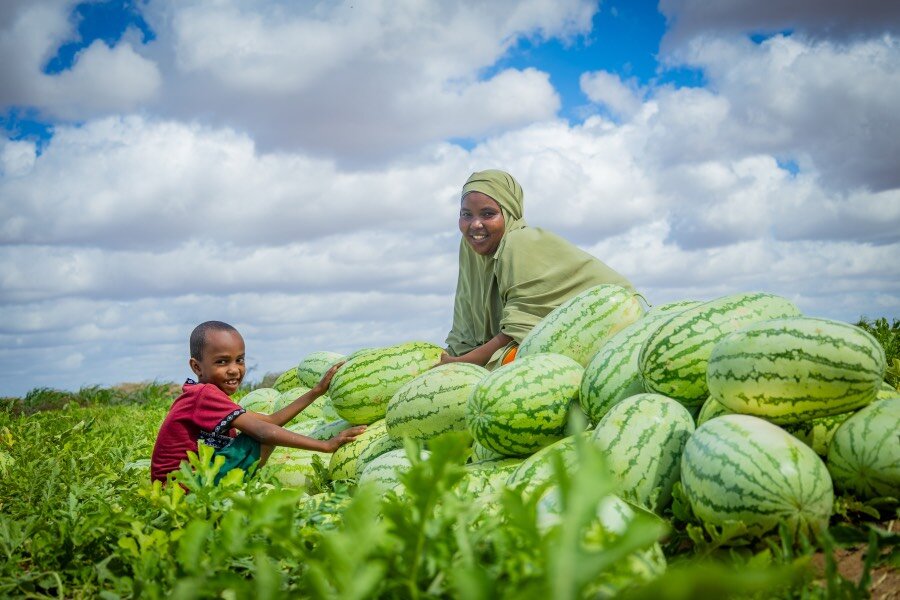
Over my first year in Kenya, I have travelled through parts of these drylands, from Garissa and Dadaab in the northeast, to Kakuma in Turkana County in the northwest. I have seen produce from WFP-supported horticultural farms – tomatoes, watermelons, bell peppers and leafy greens – growing in landscapes more commonly seen when rains have failed.
And I have met people like Sahara, one of the women harvesting vegetables in that Dadaab field. (As a refugee, Sahara's last name is being withheld for her protection.) Part of a refugee-led empowerment organization in the camp, she told me what they grow means their families do not have to rely entirely on food assistance. They can add fresh vegetables to their meals and earn an income selling the rest.
Beyond the next hunger emergency
The vulnerability is real. When the rains fail, we see cracked earth and dry riverbeds. Livestock weakened by lack of pasture. Families walking ever further in search of water, and children facing malnutrition.
And when those shocks leave families needing urgent assistance, our responsibility to respond remains. This year, for instance, WFP has provided cash-based assistance to more than 367,000 people affected by drought across four hard-hit northern counties.
"I have spoken with communities, government officials and my humanitarian colleagues about what it takes not simply to survive the next drought, but to build livelihoods that can withstand it." – Betty Ka
But responding to the next emergency cannot be the whole story. I have spoken with communities, government officials and my humanitarian colleagues about what it takes not simply to survive the next drought, but to build livelihoods that can withstand it.
Those conversations are shaping what we do. Across Kenya’s drylands, WFP is working with communities and the Government to capture and store rainwater, restore degraded land, help farmers produce food and connect what they grow to markets.
And we are beginning to see those investments pay off. In 2025, WFP’s climate-resilient food systems work reached almost 650,000 people across the drylands and other high-production areas. Farmers supported through WFP-linked initiatives aggregated and sold around 83,000 metric tons of produce worth US$21 million.
Investing in people
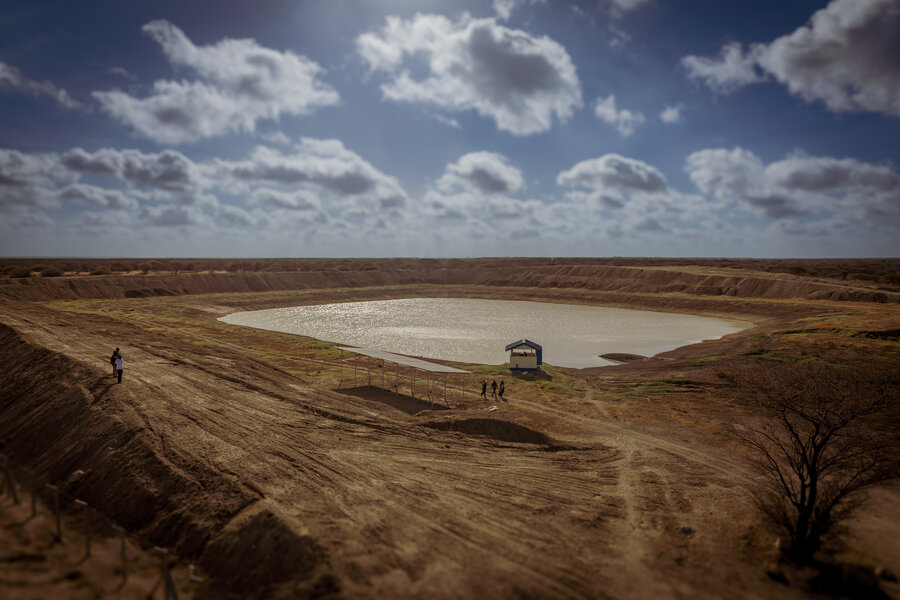
Those numbers matter. But what stays with me are the possibilities they represent on the ground. And whenever we talk about how to unlock more of that potential, I find myself coming back to water. Water is the spine. Get that right, and so much else becomes possible.
In Hagadera, one of Dadaab’s refugee camps, for example, WFP-supported programmes are using a water pan – or type of reservoir – that captures and stores rainwater for irrigation. Earlier this month, farmers using that water harvested watermelons for the first time. It is an early result, but a striking one, and a glimpse of what access to water can make possible.
"Water is the spine. Get that right, and so much else becomes possible." – Betty Ka
With water, farmers can diversify what they grow: for their own tables but also for profit. Pastoralists have a better chance of protecting their livestock. None of this makes drought disappear. But it can change what drought does to a family.
Water alone, however, is not enough. A farmer who can produce more still needs a market. A pastoralist needs healthy rangelands and information to make decisions before drought takes hold. Communities need access to finance, infrastructure and services. Young people need opportunities to build livelihoods where they live.
That is why these investments are not enough on their own. WFP helps smallholder farmers aggregate what they grow and reach markets, including schools sourcing food locally for Government-run school meals programmes. We are also supporting communities in restoring the land and rangelands on which these livelihoods depend.
Acting early to shore up food security
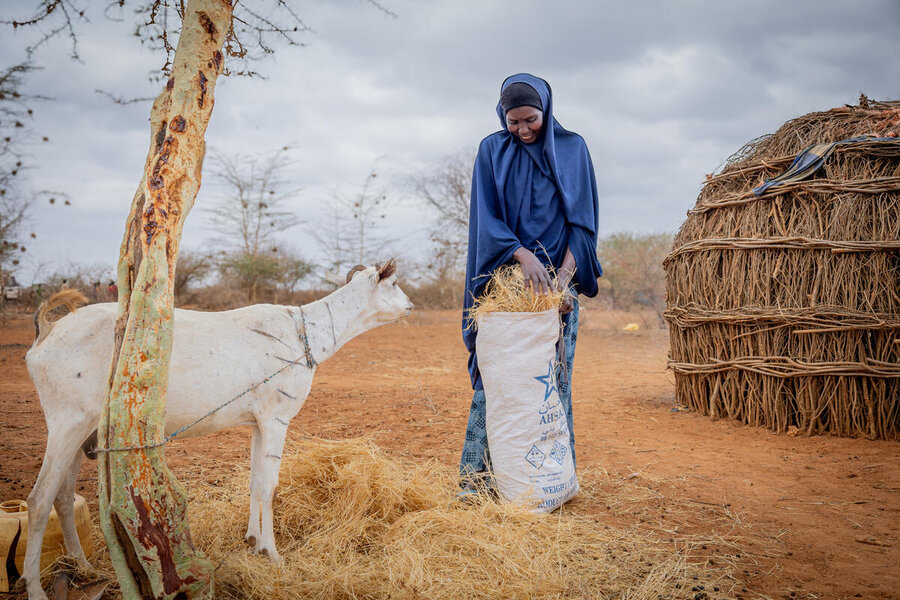
Kenya’s drylands are accustomed to the consequences of too little rain. But in the coming months, some of these same areas are preparing for the possibility of the opposite. A powerful El Niño weather phenomenon is expected to bring wetter-than-normal rainfall during the October-to-December season, with northeastern Kenya likely among the hardest hit.
For farmers and pastoralists, those rains could replenish water sources, regenerate pasture and support production. But heavy rainfall can also bring flooding – destroying crops and livestock, cutting off roads and markets, and forcing families from their homes. Here, too, WFP is acting early, using forecasts and offering support to give communities time to prepare for the worst.
None of these investments is transformative on its own. But together, they give families more tools to overcome setbacks.
When I think about my first year in Kenya, I think again of Dadaab. Of dry earth. But also of green rows. Of Sahara and the other women bending among them and rising again with food in their hands.
WFP's work in Kenya's arid and semi-arid lands is made possible thanks to donors including Austria, Canada, Denmark, the European Union, Germany, Ireland, Japan, Netherlands, New Zealand, Norway, the Republic of Korea (KOICA), the Kingdom of Saudi Arabia, Slovenia, Ukraine, the United Kingdom, the United States of America, as well as the Mastercard Foundation, the Novo Nordisk Foundation and other private donors.