
Sudan fallout: how shrinking aid is deepening one of the world’s biggest hunger crises
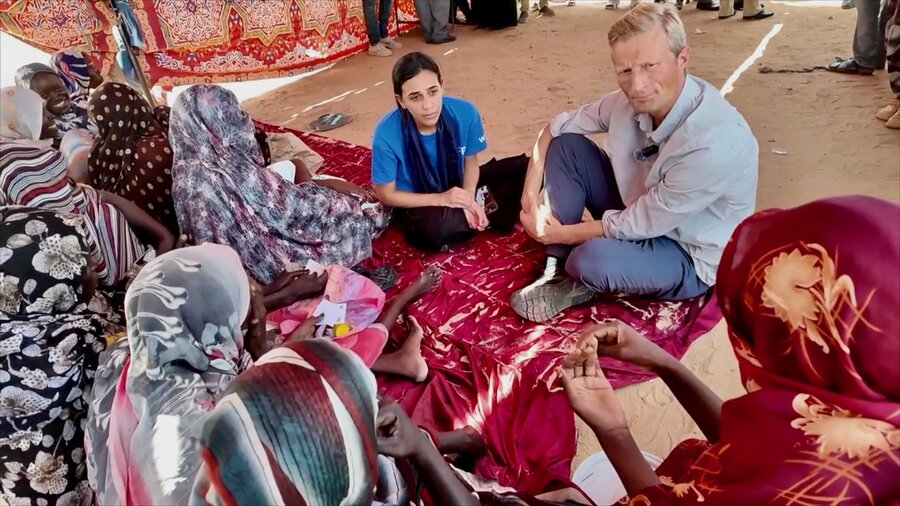
Just 75 km of scrubland separates El Fasher from Tawila – a route that has been fraught with danger for hundreds of thousands of people who fled western Sudan’s war-battered city for the teeming displacement camp.
Now, the nearly 1 million uprooted in Tawila – and many others a meal away from hunger catastrophe – face a new threat: cuts to World Food Programme (WFP) and other aid in Sudan, which many depend on to survive.
“We’re doing our best on the food side, but we need funding,” said WFP’s Acting Executive Director Carl Skau, who recently made the journey from El Fasher to Tawila as part of a week-long visit to some of the most food-insecure parts of Sudan.
“It’s really, really a dire situation,” he added, “and we need the world to pay attention.”
“We need to do more. We need to step up. We cannot keep failing these people.” – WFP Acting Executive Director Carl Skau
Well into the fourth year of Sudan’s civil war, limited resources threaten to make one of the world’s largest hunger crises even bigger. The fallout is also spilling into neighbouring countries like South Sudan and Chad, which are grappling with massive influxes of Sudan’s conflict-displaced and dwindling funding to support them. Extreme weather, intensified by El Niño and trade disruptions, is also fuelling spiralling needs as harvests shrivel and food and energy costs soar.
“We need to do more,” says Skau. “We need to step up. We cannot keep failing these people.”
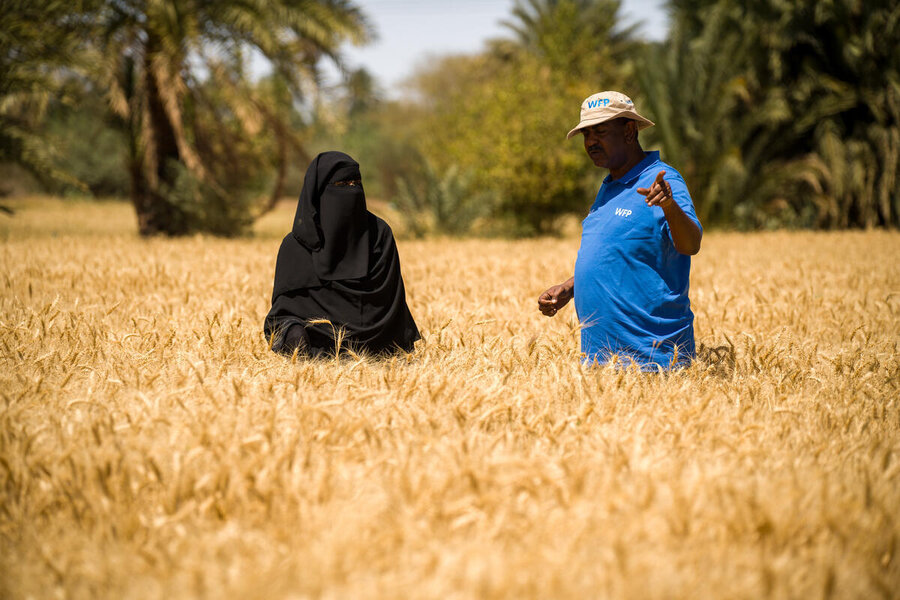
Investing in people can offer powerful returns: seen in harvests produced by WFP-supported farmers in Sudan, healthier children and mothers thanks to our nutrition and school meals programmes, and resilience-building taking root among Sudanese refugees and host communities in neighboring Chad.
But in Tawila, Skau saw the opposite. Due to lack of financing, WFP is further cutting rations to the 950,000 displaced people who have turned the once-small North Darfur town into a sea of tents. The women he spoke to there – many of them now single heads of households – have run out of options.
“Many have lost their husbands, many have lost their sons,” he said, adding of our diminished assistance: “They are really struggling to make it last.”
Across Sudan, more than 19.5 million people faced acute hunger according to the most recent analysis earlier this year, and 4.2 million women and children were acutely malnourished. Despite the massive needs and access constraints, WFP is making a difference: reaching more than 4 million hungry people with monthly assistance in recent months – including those at risk of famine.
Our support is reaching some of Sudan’s biggest hunger hotspots: like the south-central Sudanese city of El Obeid, where thousands of war-displaced people have sought shelter from fighting.
“It's become kind of a safe haven where people from across the country have been arriving,” Skau says. But, as funding runs dry, “we are providing less and less,” and prioritizing the newly arrived.
South Sudan’s ‘funding cliff’
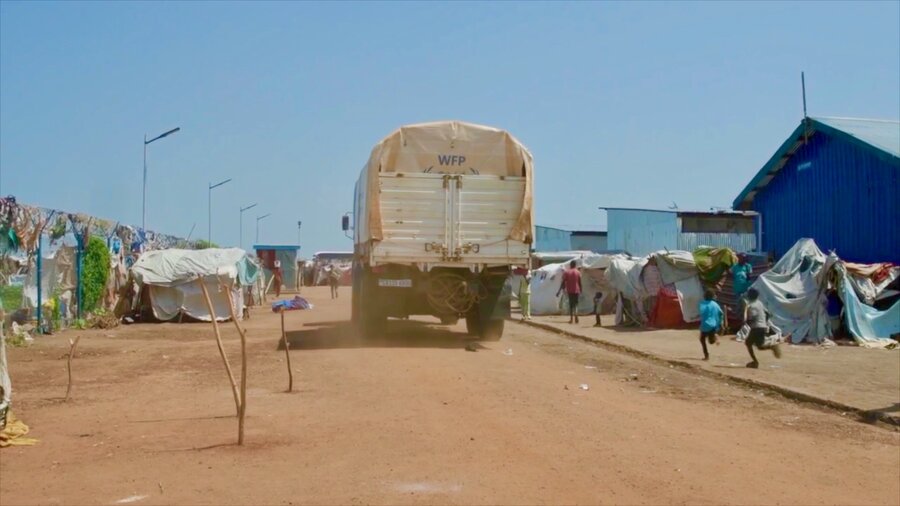
In neighbouring South Sudan, where up to 3,000 refugees and returnees arrive weekly from Sudan, funds are also running dry. The influx of people seeking food, safety and shelter is further stretching local communities also grappling with conflict, along with deep poverty and weather extremes, including a severe drought in parts of the country. Countrywide, 7.8 million people face acute or worse food insecurity: more than half the young nation’s population.
“We are about to drop off the financial cliff at a time when the needs have been at their greatest level that they’ve been in the past 13,14 years,” said WFP Assistance Executive Director Matthew Hollingworth, who visited South Sudan in early September.
“We are about to drop off the financial cliff at a time when the needs have been at their greatest level" in more than a decade." – WFP Assistance Executive Director Matthew Hollingworth
At a transit centre in the South Sudanese border town of Renk, where WFP provides food assistance to the new arrivals, Hollingworth listened to the stories of women, children and elderly people – some of whom had walked for days or weeks in search of safety.
“Many have lost their homes. Most, if not all, have lost their livelihoods and belongings,” he said. “Sadly, many had lost loved ones.”
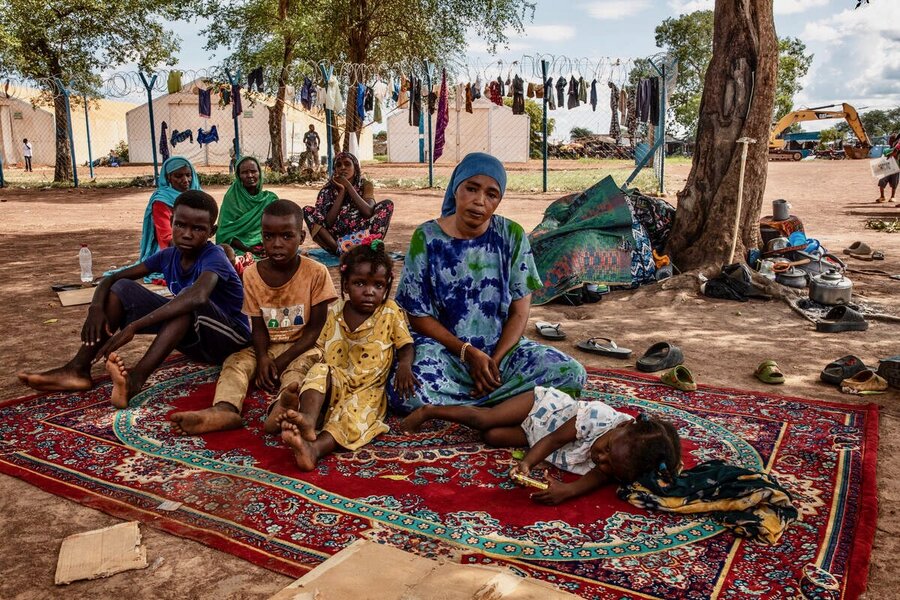
Salma arrived in Renk more than a year ago, after fleeing Sudan’s capital Khartoum. She returned to her homeland to search for a missing son. She never found him.
Today, she lives far from Renk in South Sudan’s Wedweil settlement, in Northern Bahr el Ghazal State – one of hundreds of thousands of refugees who risk losing the WFP assistance they depend on.
Even what she currently receives is not enough. “We have gone three days without food,” Salma says. “There is only porridge for the children.”
Chad: less food for women and children
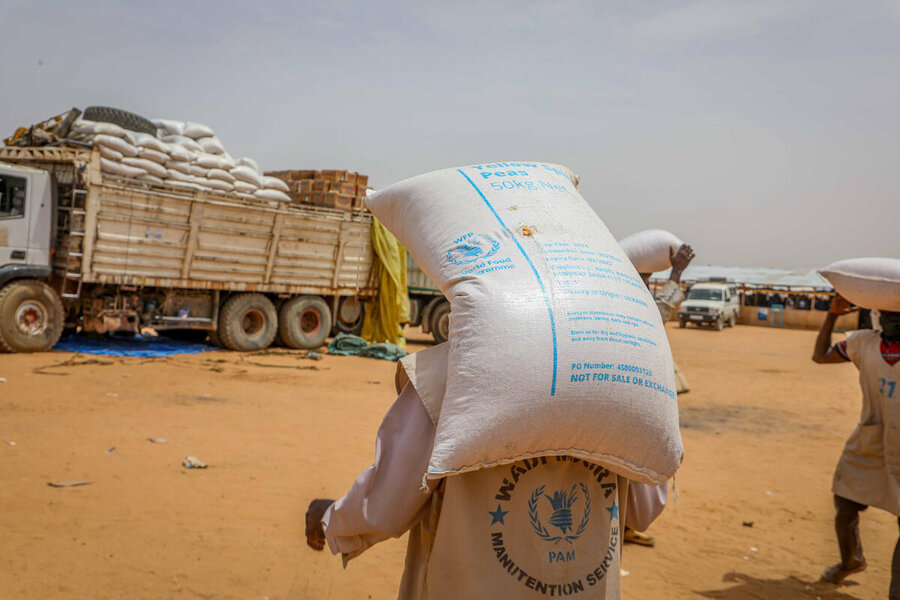
Further north, some of the 1.4 million refugees from Sudan hosted by Chad are also feeling the bite of funding cuts. In August, WFP assisted 900,000 of them. But this month, we were forced to prioritize those newly arrived.
“For refugees who remain heavily dependent on humanitarian food assistance and who have very limited access to livelihood opportunities, this represents a drastic reduction,” said Vanessa Boi, who heads WFP’s refugee operations in the eastern Chadian town of Adre – the main border crossing for many women, men and children fleeing Sudan.
“At first, people were fleeing the war, but later we saw people arriving because they could no longer survive hunger and famine,” said Boi, describing periods when thousands of refugees, many of them women and children, would arrive in a single day.
“These women and children carry the consequences of the atrocities of the war in Sudan,” she adds. “Some have lost family members, homes and everything they have worked for throughout their entire life.”
"We are talking about less food reaching women and children who have already lost almost everything." – Vanessa Boi, Head of WFP's refugee operations in Adre, Chad
For many who bear the scars of violence and fear, our food assistance offers a critical measure of stability. “I speak regularly with refugees, both at the border and at our distribution sites,” Boi said, “and one of the first things they ask for is food, especially for their children.”
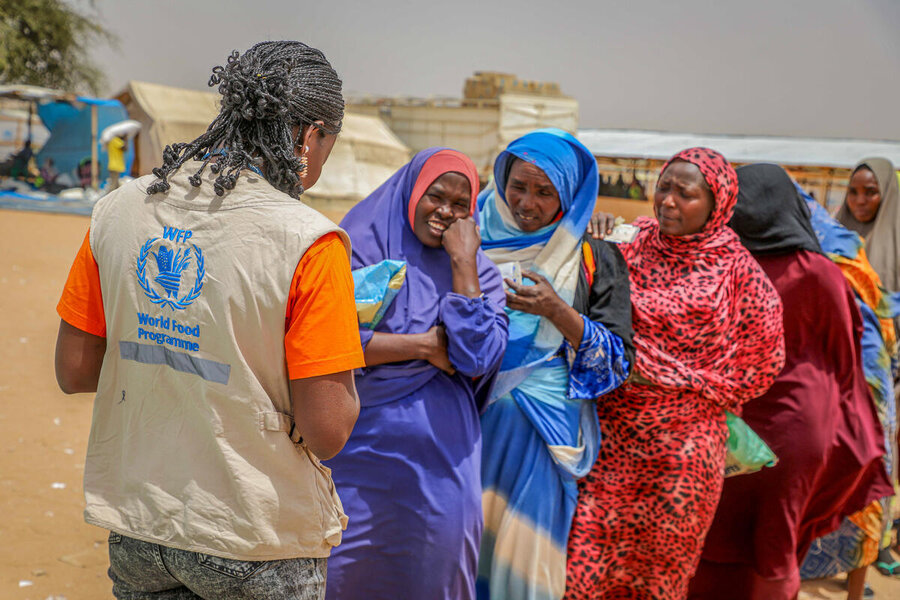
Beyond delivering immediate assistance, WFP is also partnering with Chadian authorities and UNHCR to implement farming and infrastructure projects that help build self-sufficiency among both the mostly Sudanese refugees and Chadian host communities. Those projects too are threatened by cutbacks.
Shrinking humanitarian budgets are colliding with Chad’s rainy or lean season between harvests, when illnesses like malaria flourish – increasing health risks for children and other vulnerable refugees. This year, below-average rainfall is jeopardizing crops and pasturelands, compounding the already significant challenges facing refugees and host communities.
“This is the human dimension we need to remember when we talk about funding cuts,” says Boi. “We are not describing something abstract. We are talking about less food reaching women and children who have already lost almost everything.”
Support for WFP's assistance for displaced people and those otherwise affected by the war in Sudan, Chad and South Sudan is made possible thanks to contributions from donors including Canada, Chad, Cyprus, the European Union, Finland, France, Germany, Italy, Japan, Korea, Liechtenstein, Luxembourg, Netherlands, Norway, Sweden, Switzerland, the United Kingdom, UN CERF, the United States of America, the World Bank and private donors.