
School meals, solar pumps and sewing: Guinea-Bissau builds food security from the ground up
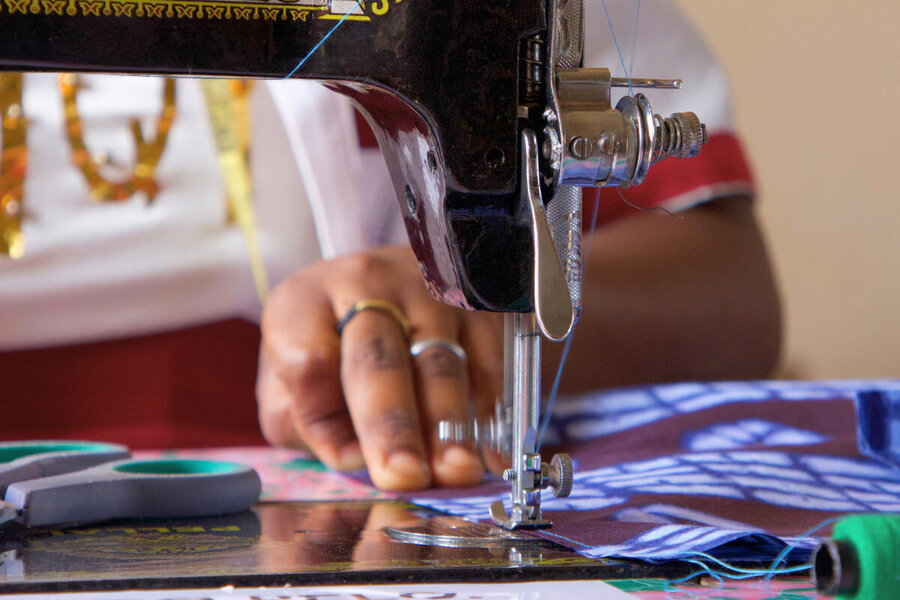
Life unfolds in motion in Cumpanghor, a village in Guinea-Bissau's eastern Gabu region. Women tend vegetable gardens, chickens cluck inside a newly built poultry house, and young girls and boys learn to sew clothes in a once-abandoned community centre. These snapshots of village life are part of a single, far-reaching experiment in building grassroots resilience and food security.
What started as a few sewing machines to build skills in 2024 has since evolved into a broader community effort. After the sewing came poultry farming in Cumpanghor, followed by training in horticulture and irrigation – and the installation of a solar-powered pump and overhead storage tank. As gardens began to flourish and eggs reached the market, school meals arrived, reconnecting children's nutrition with food produced by the community.
The transformation is part of One SDG Tabanca Initiative at a Time, a project launched by the World Food Programme (WFP) in collaboration with regional authorities and a local women’s farming cooperative, CAMUCA. In Guinea-Bissau’s Creole language, tabanca means village. And Cumpanghor is ground zero for the pilot, which aims to support one community at a time through interconnected activities.
“Food security is about more than food. It is about livelihoods, education and opportunities.” – Jacqueline Flentge, WFP Country Director in Guinea-Bissau.
“Food security is about more than food. It is about livelihoods, education and opportunities,” says Jacqueline Flentge, WFP Country Director in Guinea-Bissau. “What we are seeing in Cumpanghor is how food production, nutrition, education and income-generating activities can reinforce one another when communities are at the centre.”
Today, Cumpanghor serves as a hub for the six villages participating in One Tabanca, which has so far seen nearly 3,000 people learn new skills, exchange experiences and build more food-secure futures. The initiative is also providing valuable lessons on how different sectors and partners can work together to realize shared goals – pooling resources at a time when humanitarian funding is scarce.
“Thanks to this initiative, our community now has a vegetable garden, our young people are learning sewing skills that can lead to a profession, and children once again have access to school meals,” says Suleimane Gan, village chief of Cumpanghor
Grassroots solutions
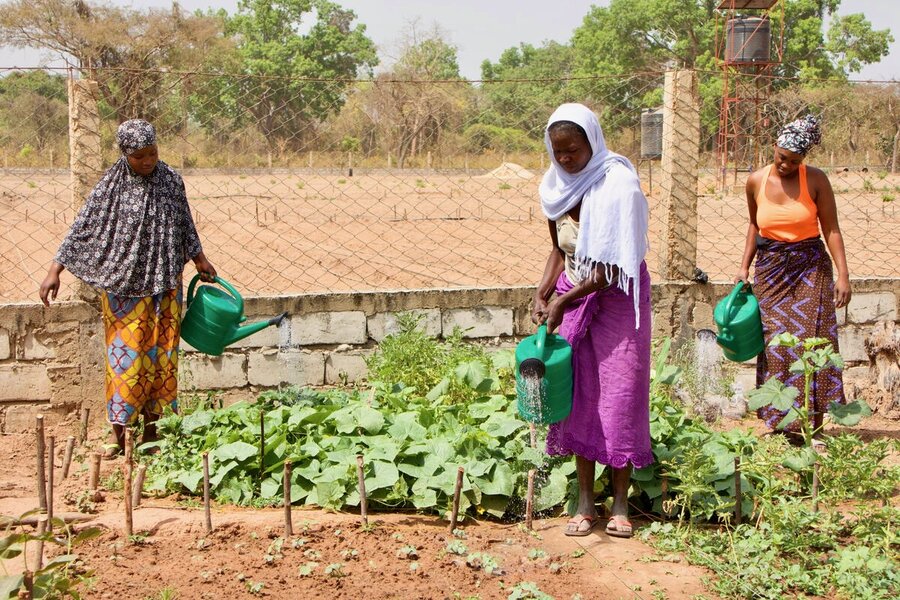
An assessment conducted in all six communities about the challenges they faced informed the pilot’s design. “We found that many families were struggling with poor diets and high levels of anaemia. That confirmed both the need for, and the relevance of, this project,” says Adama Candé, who heads CAMUCA, which helps to ensure development activities reflect community priorities.
The challenges facing One Tabanca villages are reflected across Gabu, a region with some of Guinea Bissau’s highest rates of hunger and malnutrition. Countrywide, nearly 1 in 3 children under 5 suffers from chronic malnutrition, and nearly 7 in 10 people cannot afford a healthy diet.
Mariama Baldé waters rows of tomato seedlings, okra and other vegetables growing in Cumpanghor’s new community garden. She is one of CAMUCA’s more than 100 women farmers, helping to turn One Tabanca into reality.
“I wake up early every day to help, even when it is not my turn. Now we have access to water and can grow more food.” – Mariama Baldé
“I used to have my own garden, but when my husband fell ill, I had to care for him and for my children,” she says. “I did not have the strength or time to continue.”
One Tabanca changed that. “As a member of the cooperative, I was invited to take part in training on how to manage the community garden and the poultry house,” Baldé says of the WFP-supported initiative. “We learned how to care for crops, use organic fertilizer and prepare the soil.”
Today, she is often among the first members arriving at the garden. “I wake up early every day to help, even when it is not my turn,” she says. “Now we have access to water and can grow more food.”
“The goal was not only to establish a community garden, but to create the conditions for it to thrive,” says Silva Clusse, WFP Programme Associate, pointing to the solar pump and poultry farm as two examples.
School meals and skills for the future
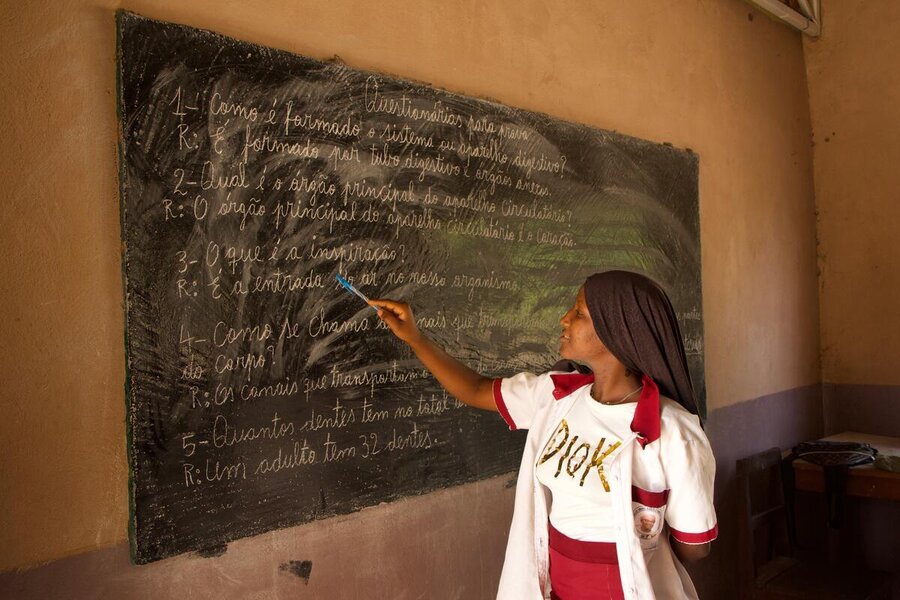
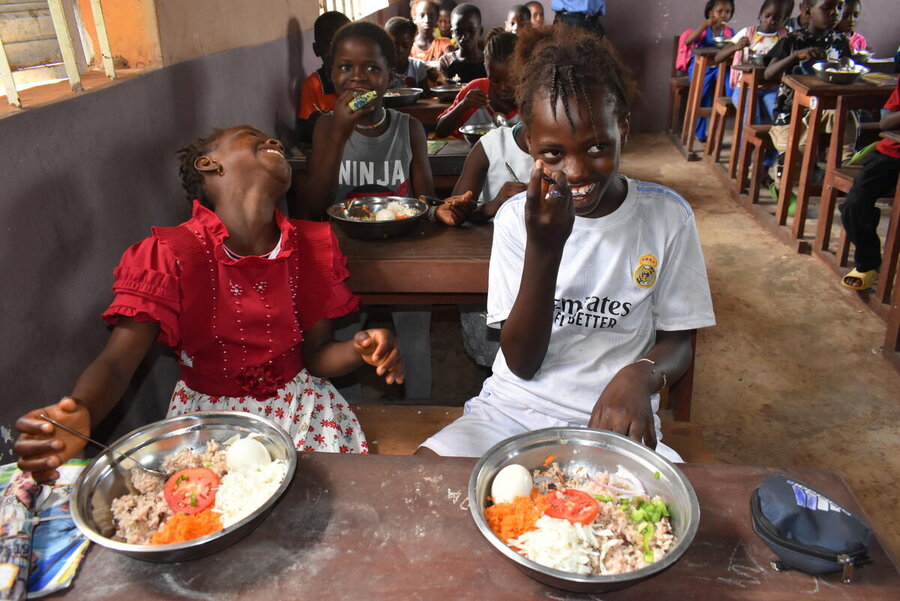
Across from the community garden sits Cumpanghor Elementary School, where 16-year-old Djenabu attends sixth grade. She counts among more than 152,000 children across 700 schools countrywide receiving school meals provided by WFP, the Government’s main school meals partner.
Cumpanghor Elementary is one of two schools serving the six communities participating in One Tabanca. The initiative has reintroduced WFP-supported school meals, which had been suspended for more than a year due to lack of funds.
“Today's meal was different from what we usually eat,” Djenabu says of the hearty plateful that included eggs and vegetables provided by local farmers. “Before, we mostly ate rice with canned fish sardines and beans.”
For parents like CAMUCA member Mariama Baldé, school meals fill a key hole in her children’s diet. “I have four children in school,” Baldé says of the meals, which can improve diets, attendance, attention and learning. “I worried about how to feed them every day.”
The initiative aligns with a broader commitment from the Government of Guinea-Bissau for universal coverage of school meals by 2027, as a member of the School Meals Coalition.
Student Djenabu benefits from another One Tabanca activity: sewing classes launched at Cumpanghor’s resurrected community centre. She now attends school during the day and spends her free time at sewing classes, learning skills she hopes will one day earn her living. As the sewing classes grow, more machines have been added, thanks to support from the United Nations Population Fund.
“I have always loved sewing and dreamed of becoming a seamstress,” she says.
Djenabu also wants to be a teacher. “In my community, many girls do not go to school,” she says. “I want to show parents how important education is for girls.”
CAMUCA president Candé believes One Tabanca’s greatest achievement is showing how interconnected investments in people and livelihoods can drive broader community development.
“WFP's sewing and tailoring, horticulture, poultry and education initiatives are income-generating activities that can change lives,” she says. “Today, Cumpanghor has become a reference. People from different localities come to see our work and get inspired to replicate this model in their own regions.”
Designed as a platform for collaboration, the One SDG Tabanca initiative is helping align the efforts of multiple partners around community priorities. In Cumpanghor, this has already attracted additional support, including sewing equipment from UNFPA and planned vocational training activities by UNESCO.
School meal activities under the initiative are supported by Japan, the Republic of Korea, the Japanese private sector, and the Support Value Chain Development and Agricultural and Rural Entrepreneurship (PACVEAR II), a government-led programme supported by the African Development Bank and the Global Agriculture and Food Security Program (GAFSP).