
As El Niño deepens global hunger, early action pays off
Story | 11 September 2026
El Niño can bring droughts, floods, storms and extreme temperatures, damaging food production and livelihoods. Learn how El Niño affects hunger and how WFP helps communities anticipate, prepare for and respond to its impacts.

El Niño’s impacts vary significantly between and within regions. The current event is expected to increase the risk of drought across parts of Southern and Eastern Africa, Central America, and Asia and the Pacific, while increasing the likelihood of floods and storms in parts of the Horn of Africa and Asia. The consequences are most serious where people already face high levels of food insecurity and depend heavily on rain-fed agriculture, pastoralism or climate-sensitive livelihoods.
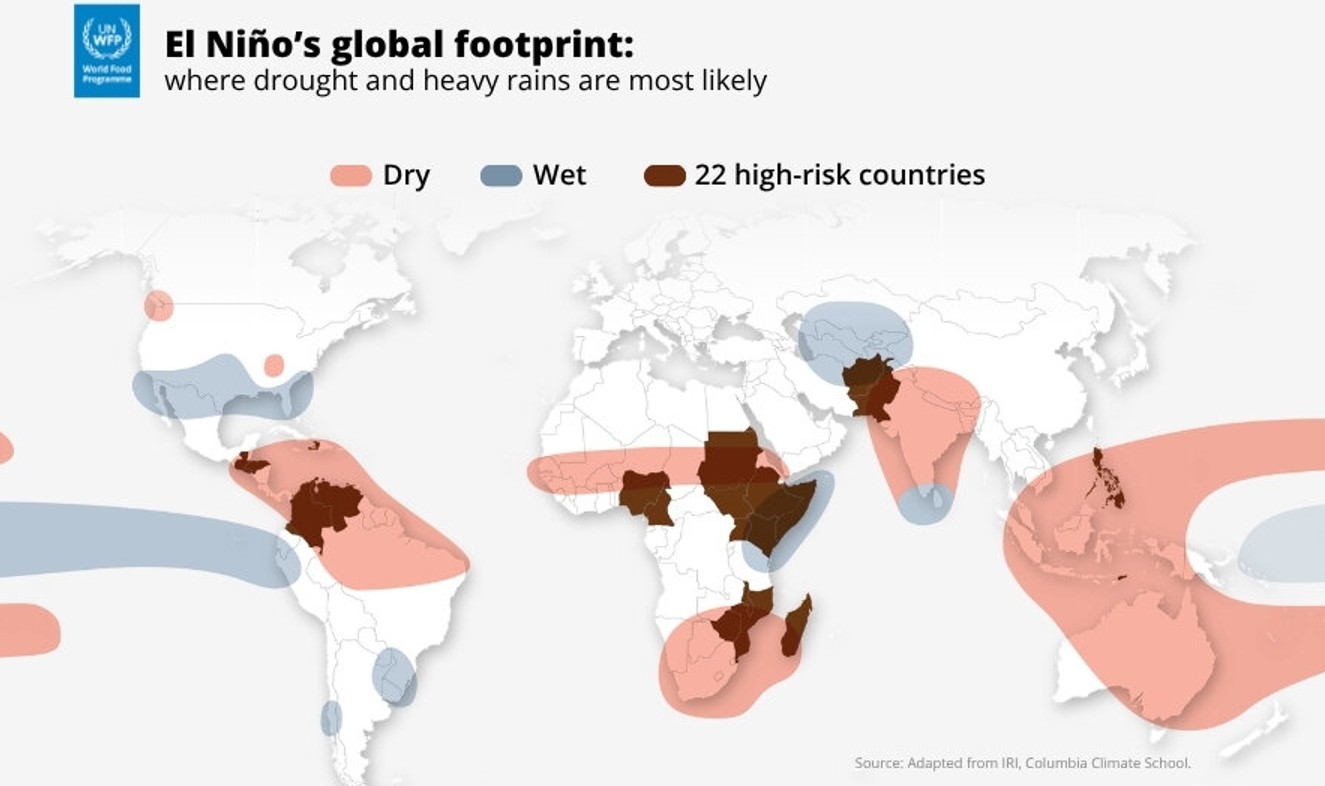
Southern and Eastern Africa: Drier and hotter conditions could reduce harvests, damage pasture and increase pressure on livestock-dependent communities. In the Horn of Africa, however, heavier rainfall could cause flooding, disrupt access to markets and damage crops and infrastructure.
West Africa and the Sahel: Drought and extreme heat could reduce agricultural production and compound existing food insecurity and livelihood pressures.
Latin America and the Caribbean: Rainfall deficits, extreme heat and water scarcity could affect crops, livestock and agricultural employment, particularly in Central America’s Dry Corridor. Parts of the region may also face flooding and storms.
Asia and the Pacific: Drier and hotter conditions could affect crops, vegetation and water availability in some areas, while heavy rainfall, floods and tropical storms threaten others.
Middle East and North Africa: Below-average rainfall and high temperatures could place additional pressure on water supplies, agriculture and vulnerable rural livelihoods in some areas.
Story | 11 September 2026
News release | 10 July 2026
News release | 18 June 2026