
After Venezuela's earthquakes: WFP staff help their communities rebuild
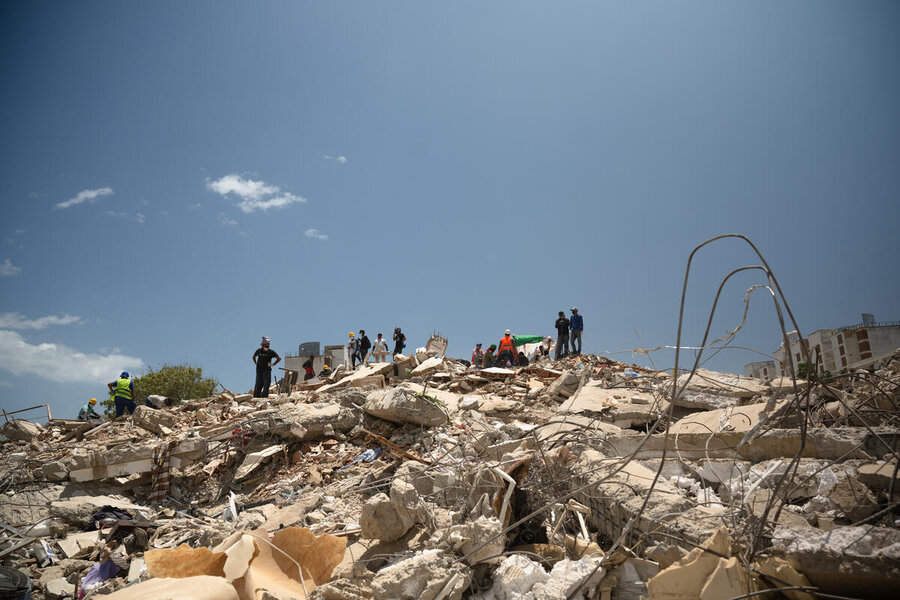
They clock in long hours delivering food assistance and solace to quake-traumatized people, sometimes getting up before dawn and staggering home after midnight for a meal and bed. They mourn friends, family, homes and pasts buried under collapsed buildings and twisted infrastructure – and carry on.
On World Humanitarian Day on 19 August – and two months after powerful, back-to-back earthquakes struck Venezuela, killing and injuring thousands – the World Food Programme (WFP) pays special tribute to humanitarians on the frontlines of the country’s response.
They include two of WFP’s Venezuelan staff, Sarco Contreras and Blanca Narvaez, who share their stories about how they are helping fellow citizens recover: with commitment, empathy and WFP food assistance that has reached more than 300,000 people to date.
Sarco Contreras, WFP Emergency Preparedness and Response Officer
When the earthquakes struck on 24 June, Contreras rushed to his children’s home in Venezuala’s capital Caracas, and found to his horror the building’s facade had collapsed. His family survived, but many other Venezuelans did not. Two days later, he was in Ground Zero – hardest-hit La Guaira State – as part of WFP’s earthquake response. A former pilot who joined WFP in 2021, he is no stranger to emergencies. But nothing like this one.
When I got to La Guaira I saw the magnitude of the earthquake’s impact. People were still being pulled from the rubble. There were people delivering food and water to those affected. Neighbours saving neighbours. I told my supervisor I was available immediately to support our earthquake response. I wanted to make a difference.
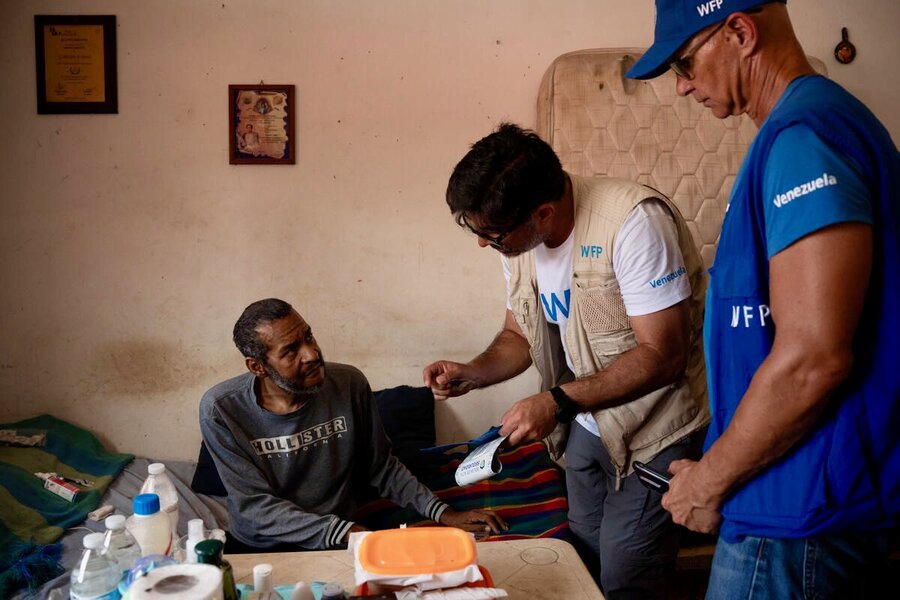
The earthquake knocked down walls and buildings, but it shook us as well. This response is a very challenging operation. Sometimes you have to find strength when you don’t have any. You have to go home and tell your family everything is OK – because people are afraid of an aftershock, of another earthquake happening.
"A catastrophe of this magnitude unites us as a team." – Sarco Contreras, WFP Emergency Preparedness and Response Officer in Venezuela
At the beginning, we didn’t know how many people had been affected, but we immediately started to design how we could respond. WFP is relatively new in Venezuela, but after five years of working here, I think the trust and partnerships we’ve built have made the difference.
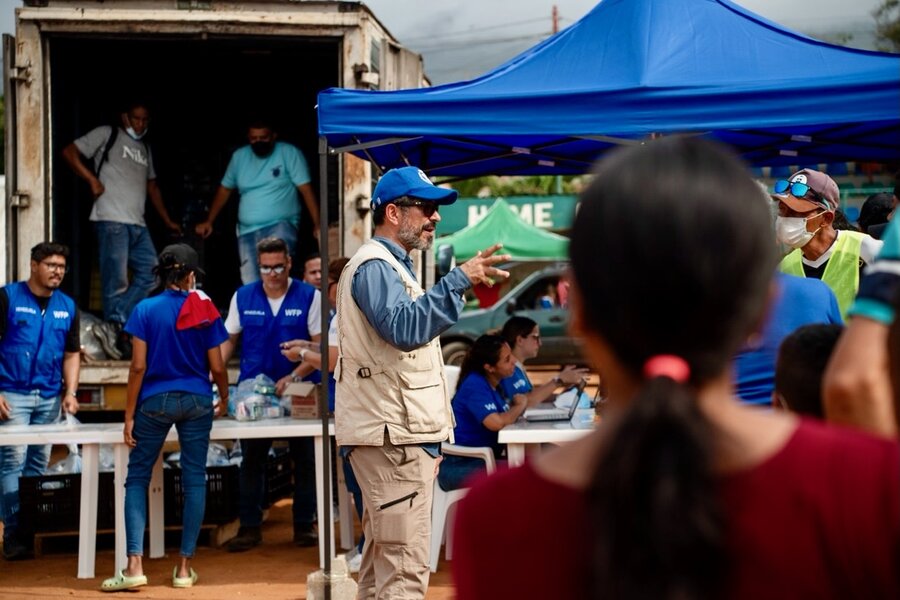
First, we delivered ready-to-eat food to affected people. I felt happy seeing an elderly lady under a tree opening our emergency assistance, a child eating the fruit puree she had just received, a young girl opening a packet of biscuits. I messaged my colleagues to tell them that their hard work was behind each smile and joy, and that this moment belonged to them.
I am sure none of my Venezuelan colleagues has experienced a disaster or emergency of this magnitude. Some lost relatives and close friends. Seeing them saying: "I want to help, I want to contribute" – it recharges your energy. A catastrophe of this magnitude unites us as a team. So does our commitment to WFP – and to this country that needs us. We support our Venezuela.
Blanca Narvaez, WFP Communications Officer working with communities
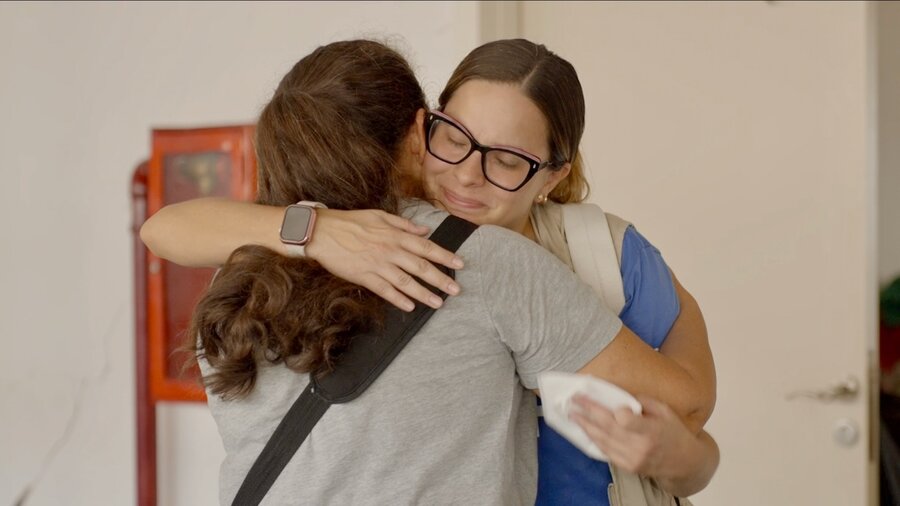
Born in Caracas and raised in La Guaira, Narvaez is also working in the epicentre our earthquake response, in the place where she grew up. As our community liaison, who joined WFP in 2021, Narvaez fosters open dialogue by providing quality information about WFP’s support to quake survivors and relays their feedback – even as she copes with her own losses of friends, neighbours and her childhood home, now buried in the rubble.
I was in Panama for a workshop when the earthquake happened, and the first hour-and-a-half was horrifying. I couldn’t reach my family. It turned out that my immediate family was OK, but we’ve had big losses of friends who have become family.
A young man – the same age as my son – was missing for a week-and-a half, until they found his body. I knew him since he was in the womb, when he was born, when he grew up. I was like a godmother to him. His mom – my friend – was left without her son, without her husband, without her in-laws, without her house, without her whole life. It is very hard.
"The first time I went down to La Guaira after the earthquakes, to the temporary shelters, breathing in that sadness, understanding the harshness of what happened – it was like coming down to earth." – WFP Communications Officer Blanca Narvaez
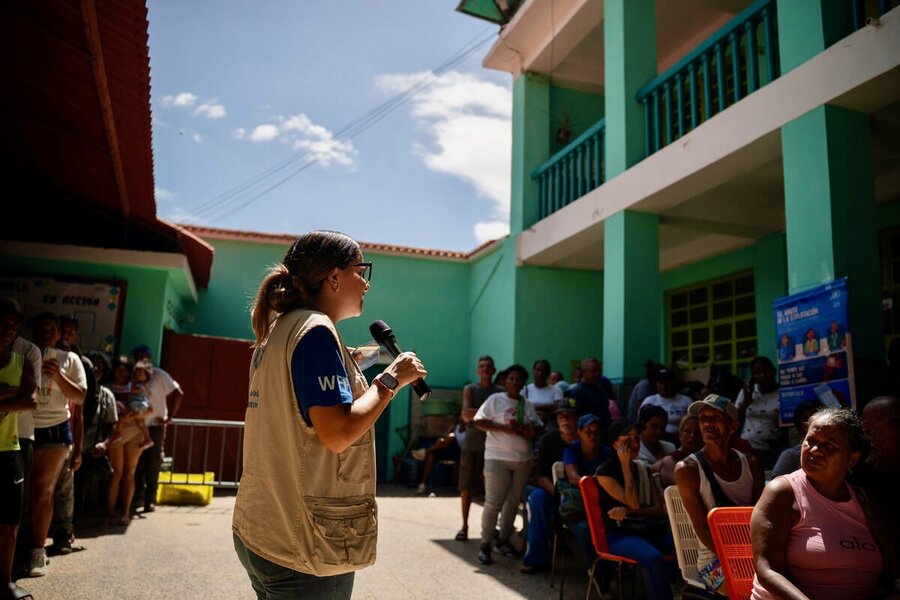
The first time I went down to La Guaira after the earthquakes, to the temporary shelters, breathing in that sadness, understanding the harshness of what happened – it was like coming down to earth. I was seeing it first-hand, not on social media. The second time was even harder. In Playa Grande, where I grew up, I saw my old building reduced to rubble and I cried.
I bump into people here that I know, who I haven’t seen for years. I tell my mom and dad: "I’ve run into so and so.” Telling these stories is the new family dynamic.
Because of our work – all day, full on – we don’t have much time to process everything. But what’s calmed me down a bit is knowing at least I’m here with my people, listening to them, telling them I know what they’ve been through, because I’m from here too. That motivates me: that I’m contributing to making people feel a little bit better, letting them know that we care, that we’re not just handing them food because they need it. And we’re going to keep delivering quality assistance, because they deserve it.
Humanitarian principles have to be lived, so we see the humanity in each of us. Being here on the ground, with the people, gives this work true meaning.
WFP's earthquake response remains focused on helping families meet their immediate food needs and begin rebuilding their lives, as we aim to support up to 500,000 people during the next three months.