
Venezuela earthquakes: Food brings hope to families in crisis
It seemed like an ordinary public holiday. On the evening of 24 June, Venezuelans were wrapping up a day at the beach, gathering for dinner, or settling in for the night – an evening like countless others. But with many at home instead of at work, their day off carried especially deadly consequences.
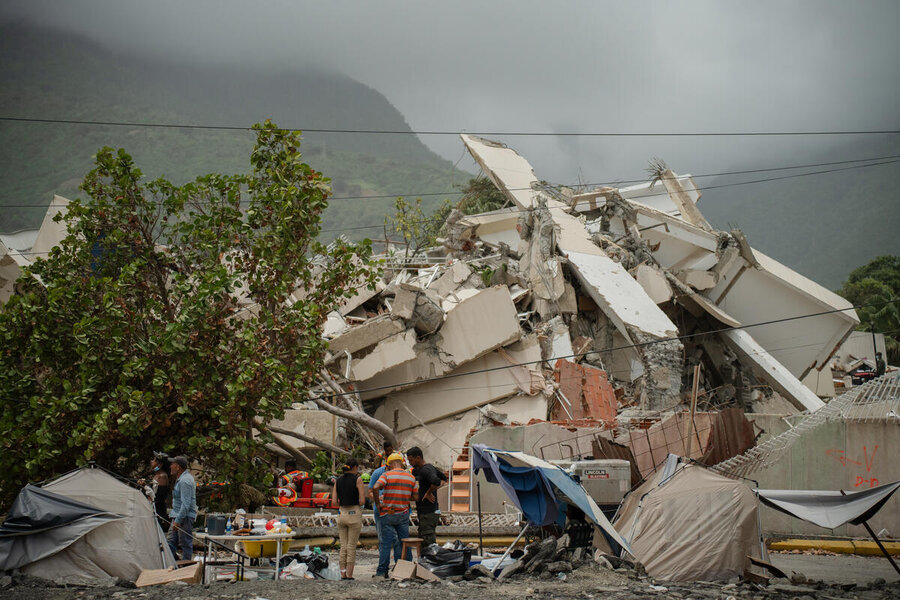
Just after 6 pm local time, the ground shook. In less than two minutes, two powerful earthquakes ripped through seven states along the country’s Caribbean coast, flattening apartment buildings and houses, and killing and injuring thousands. La Guaira State, just half an hour from the capital Caracas, was among the hardest hit.
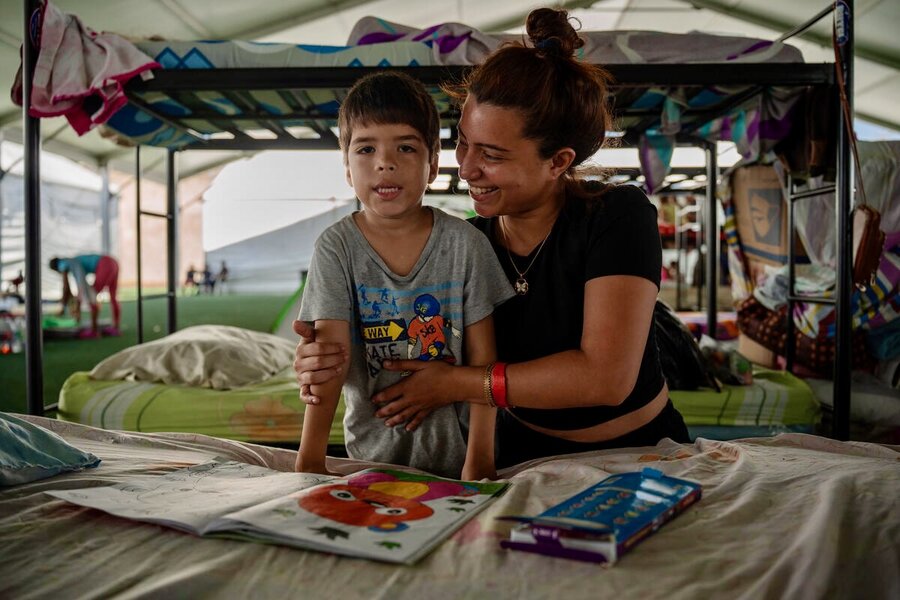
From her apartment in La Guaira, Enni had only seconds to act. She grabbed her young son Moisés and – like thousands of other quake-hit Venezuelans – ran for safety. (Surnames of earthquake survivors are withheld for their protection).
Today, she and her son count among thousands of Venezuelans staying in temporary shelters. Unsure of when they can return home, Enni focuses on keeping Moisés safe and cared for, one day at a time. “It's not been easy running out of my house and not even being able to go back to grab anything,” she says. “And having to sleep here with uncertainty, with such a young child.”
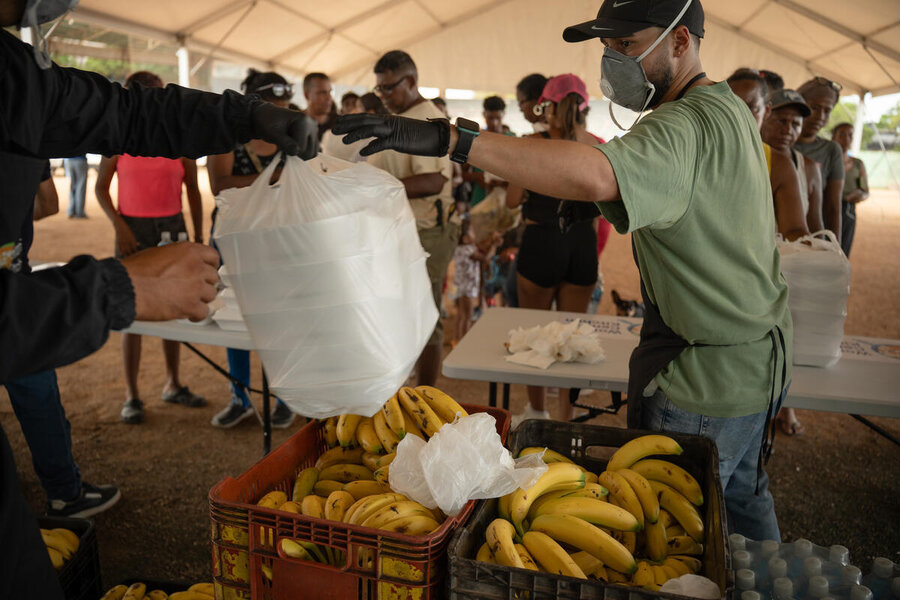
Enni can count on one thing: two hot meals daily provided by the World Food Programme (WFP), in coordination with the Government of Venezuela, humanitarian partners and partner UN agencies. Three weeks after the quakes, WFP has already reached tens of thousands of affected people with food assistance that also includes ready-to-eat meals and food baskets. Over the next three months, we plan to assist over half-a million earthquake-affected people in shelters – and surge our support to reach up to 1 million, if sufficient funding is secured.
“People have lost family members and neighbours, it is just heartbreaking to see the despair,” says Stephanie Hochstetter, WFP Country Director in Venezuela. “WFP is rapidly scaling up our support to ensure it reaches all those who need it.”
Why WFP was able to respond so quickly
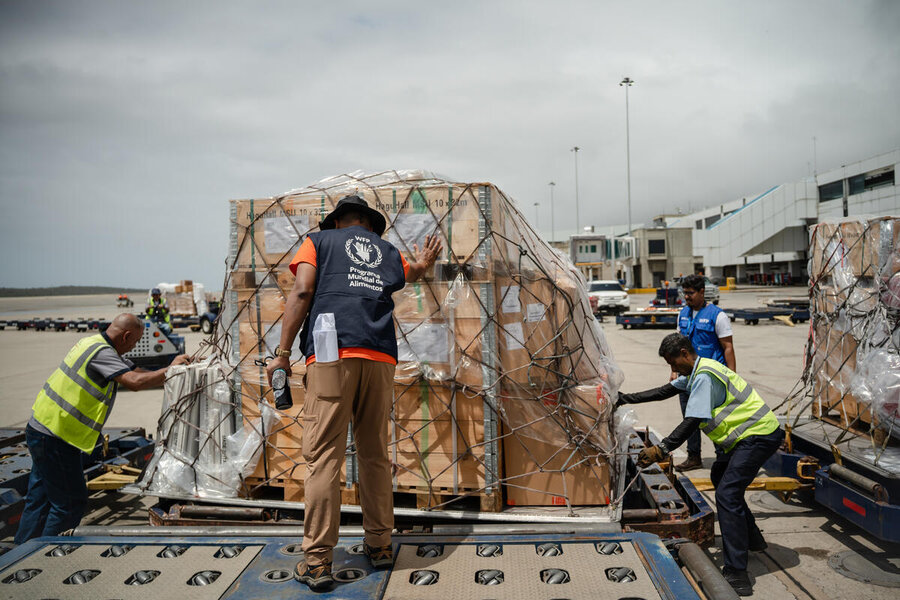
Long before the earthquakes struck, WFP had been working in communities across Venezuela, supporting school meal programmes for hundreds of thousands of children, and helping families rebuild their livelihoods. In 2025 alone, we delivered food assistance to more than 760,000 people in 12 of the country's 23 states – amounting to 80 percent of the national food security response. WFP also provides food assistance to households during extreme weather and other shocks, and strengthens their resilience so they can build longer-term food security.
This on-the-ground presence allowed our teams to move quickly after the earthquakes, mobilizing within hours after they struck, and responding from the earliest moments of the crisis. Other partners are offering protection services, psychosocial support and child-friendly activities designed to help children regain a sense of normalcy.
“Right now, I just feel accompanied, safe,” says Enni.
“People have lost family members and neighbours – it is just heartbreaking to see the despair.” – Stephanie Hochstetter, WFP Country Director in Venezuela
But the needs are massive. Even before the earthquakes, accessing food was a major worry for Venezuelans, with the average monthly food basket exceeding the monthly incomes of many. The loss of homes and livelihoods, along with disrupted supply chains, are expected to further worsen hunger and access to essential services for vulnerable families.
“In La Guaira, homes, markets, and food supplies have been devastated, leaving families with little or nothing to eat,” WFP’s Hochstetter says.
“Right now, in addition to emergency medical services, access to food, water and shelter are the most urgent priorities,” she adds. “WFP teams are working around the clock to reach survivors with the assistance they desperately need.”
Finding survivors beyond the shelters
Not everyone affected by the earthquakes made it to a shelter. In the days after the disaster, WFP deployed mobile units to search areas surrounding La Guaira: steep hillsides, informal settlements and pockets of mountainous terrain where people had fled on foot carrying nothing.
That is how WFP's teams found Maryelis and her 5-year-old son, hidden in the mountains above La Guaira. Alone and without food, they count among the many quake survivors found by WFP’s mobile units, in places that disaster response teams had not yet reached. We distributed ready-to-eat food on the spot: meals that required no cooking, no electricity and no delay.
Now sheltered in an informal refuge, Maryelis recounts how she and her son fled their coastal apartment building, fearing a possible tsunami. She also lost contact with her family and friends.
”I kept calling them and no one responded,” Maryelis recalls, adding, “I know my friends are gone. My cousin couldn't escape. I have no other family members – only me and my son.”
Later, Maryelis learnt that her home, like so many others, had collapsed.
Community solidarity
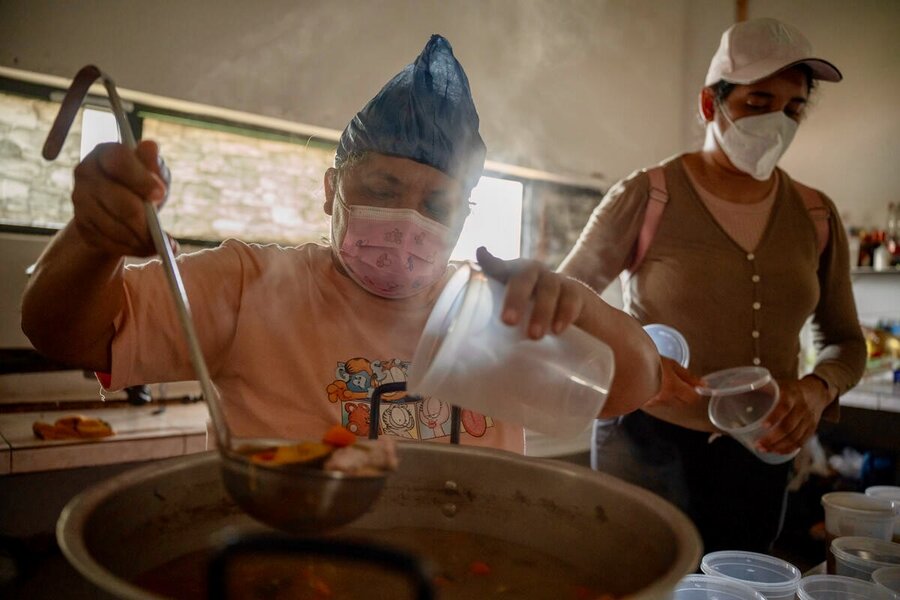
Communities hosting quake survivors are also getting WFP assistance. Their homes may still be standing, but their livelihoods – eked out from small farms, informal trade, and daily labour – have been deeply affected by the disaster, just like those of the families they have welcomed in.
Many other Venezuelans are also pitching in to support the earthquake response.
“We’re all here together with a single purpose: to help one another to lend a hand,” says Vileidi, from Carabobo State, who volunteers as a cook at a community kitchen in La Guaira that serves up hundreds of hot WFP meals to earthquake survivors.
Donors worldwide are also helping out. Among them: thousands of concerned people who have contributed to WFP's online giving platform, ShareTheMeal. That solidarity gives Vileidi hope.
“Right now,” she says, “what we need is love.”
WFP’s earthquake response in Venezuela needs US$80 million to reach 500,000 people over three months.