
WFP ramps up food and other assistance for Venezuela earthquake response
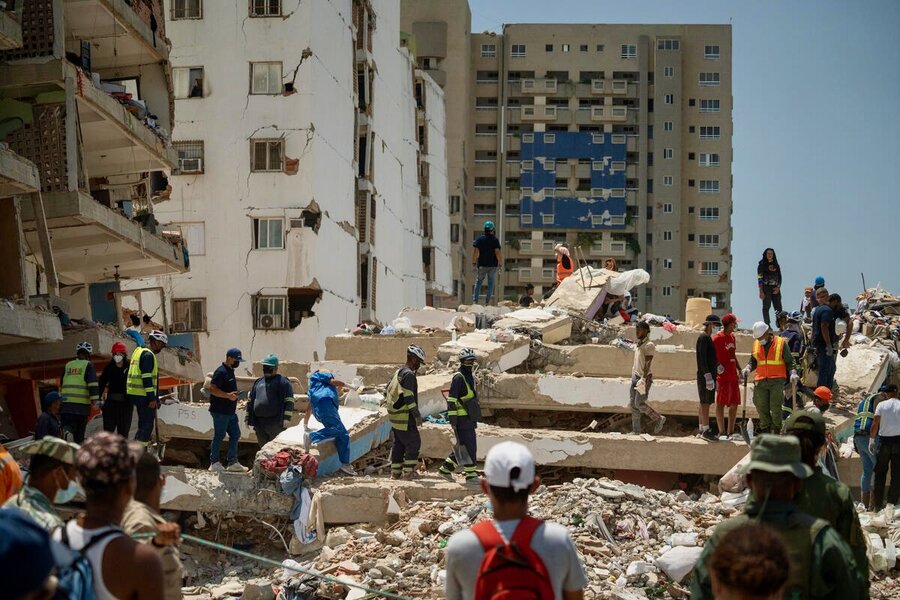
The World Food Programme (WFP) is ramping up food, logistics and other humanitarian assistance in Venezuela following last week’s (24 June) massive, back-to-back earthquakes that left a trail of devastation in the country’s northwest.
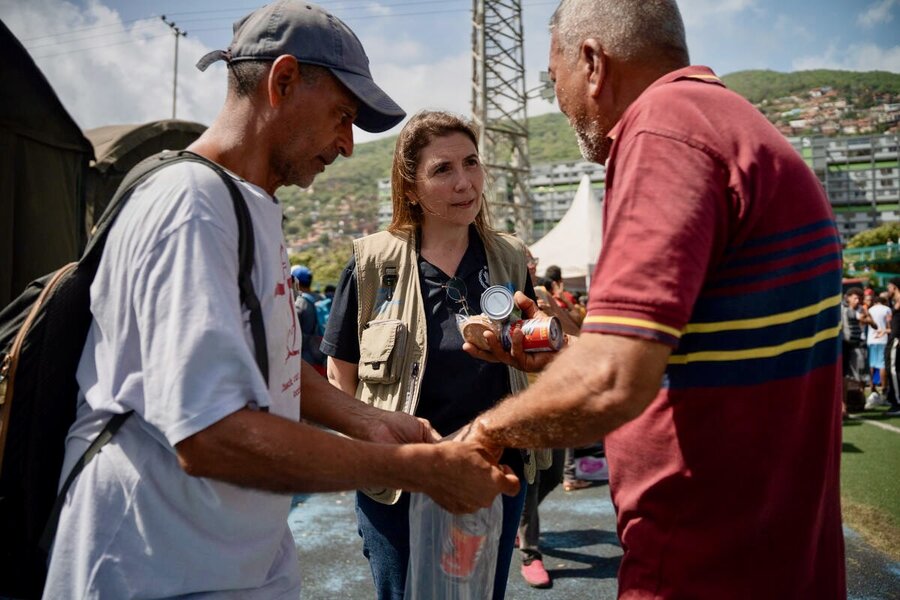
Days after the quakes, WFP began emergency food distributions to the most vulnerable impacted people in hardest-hit La Guaira State. During the first three months of the response, we aim to reach half-a-million quake-affected people living in shelters – and up to one million if enough funding comes through.
"WFP teams are working around the clock to reach survivors with the assistance they desperately need.” – Stephanie Hochstetter, WFP Country Director in Venezuela.
WFP has also begun installing temporary food distribution centres in La Guaira, offering integrated services with our United Nations partners – and we are expanding operations to other quake-hit states. Teams of responders have deployed to impacted areas to assess the conditions, challenges and communities’ most pressing needs.
The scale-up comes amid a backdrop of widespread destruction, with the powerful magnitude 7.2 and 7.5 quakes demolishing buildings, and damaging roads, airport facilities and other infrastructure. Many people are still in shock, with survivors desperately searching through the rubble for relatives, friends and belongings. Thousands are sleeping in evacuation shelters, and whole livelihoods have been decimated.
“In La Guaira, homes, markets, and food supplies have been devastated, leaving families with little or nothing to eat,” says Stephanie Hochstetter, WFP Country Director in Venezuela. “Right now, in addition to emergency medical services, access to food, water and shelter are the most urgent priorities. WFP teams are working around the clock to reach survivors with the assistance they desperately need.”
The full scale of humanitarian need is still emerging, with search-and-rescue operations ongoing and entire communities yet to be reached.
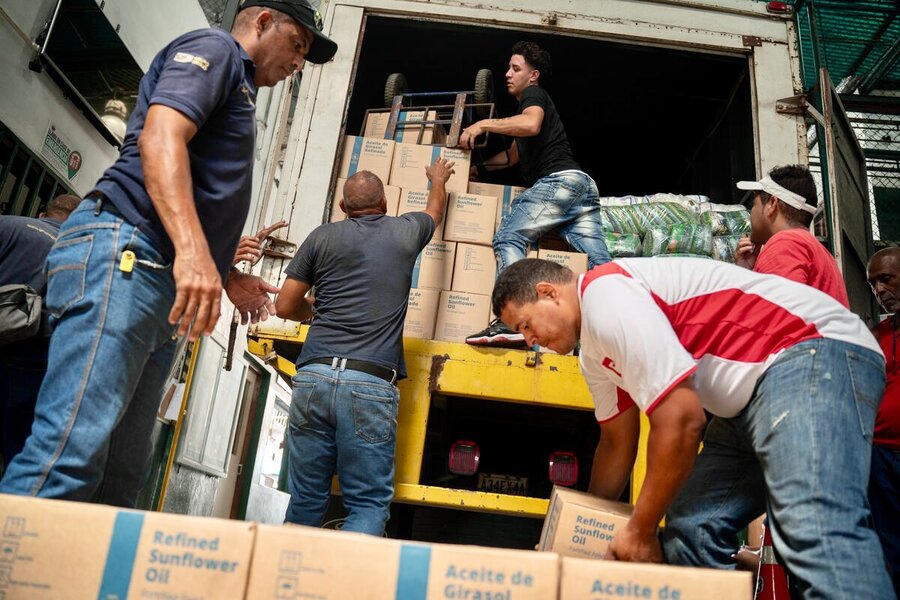
WFP is responding in multiple ways. We have over 3,000 metric tons of food already in-country – enough to feed more than 10,000 families for two month – and we’re bringing in additional supplies.
Additionally, more than 1,400 metric tons of relief from our humanitarian partners are prepositioned at the WFP-managed United Nations Humanitarian Response Depot in Panama, ready for dispatch.
WFP food: from school meals to resilience building
The earthquakes pile more hardship on a country facing overlapping needs – and where access to enough food remains a top concern for 80 percent of the population.
Over the past five years, WFP has been the backbone of the humanitarian food security response in Venezuela. In 2025 alone, our food assistance – including school meals for young pupils and support to the most vulnerable households – reached 760,000 people across 12 states, accounting for 80 percent of the country's food security assistance.
Critically, WFP has built the capacity to deliver timely food and other essential supplies to crises-hit communities, and supported the strengthening of national risk management systems by training the country’s Civil Protection and firefighting teams. We are also assisting families in building resilience and capacity to recover from shocks, and in strengthening their livelihoods and building longer-term food security to cope with future ones.
But needs are immense as Venezuela faces a raft of challenges – from the world’s highest food inflation, of over 500 percent annually, to a string of weather disasters this past year that have helped to drive up prices and hunger.
The earthquake's impact on employment, infrastructure, and supply chains is expected to push food access beyond reach for the most vulnerable – even as the country braces for the fallout of El Niño in the coming months.
See how you can donate to Venezuela's earthquake response