
From hunger to harvests: how land restoration is transforming the Sahel
The earth is cracked beneath the midday sun, baked hard after nine long months without rain. Here in the village of Doungoulou, in central Chad's Guera Province, dust hangs in the hot air, weighing down every movement.
The soil is so dry that when the first rains arrive each June, much of the precious water would normally rush downhill in torrents, carrying away fertile soil – and with it the hope of a good harvest.
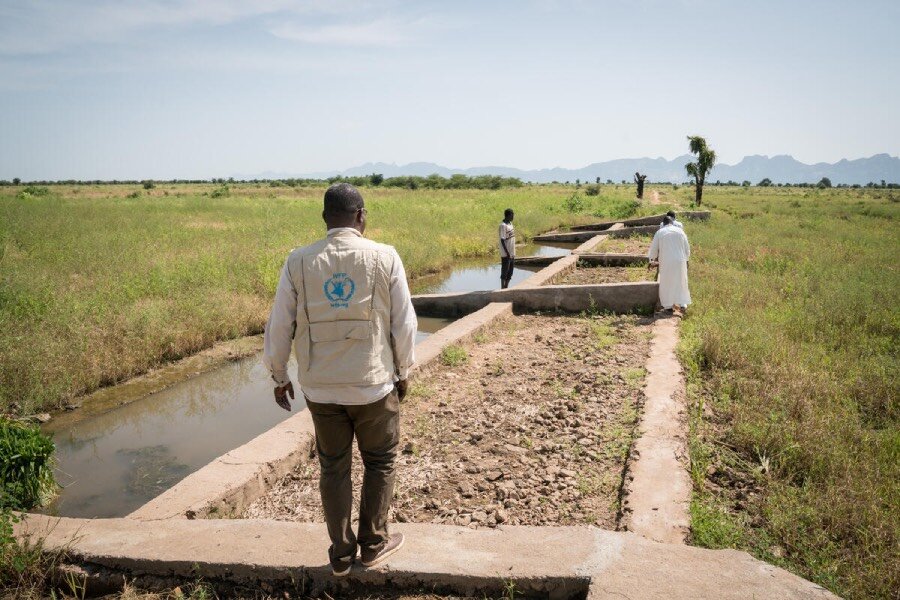
But things have changed since 2021, when Doungoulou's community, with support from the World Food Programme (WFP) and our partners, built a 6,000-metre-long dike to capture seasonal rains. Instead of disappearing downstream, the water is now held in the earthen structure, slowly soaking into the ground. The water not only regenerates the land and replenishes groundwater, but is also used for crops and livestock – building food security, incomes and community bonds in the process.
“Now we can't talk about hunger,” says Doungoulou sorghum farmer Anasa Hamdane. “We improve our harvest and fight against hunger.”
Doungoulou’s transformation is being replicated across the Sahel, illustrating the multiple paybacks of restoring degraded soils beyond just environmental ones. It is a message highlighted this August, as nations hold a key desertification conference in Mongolia, known as COP17 – and WFP’s Sahel initiative earns UN recognition as a flagship project under its broader drive to revive damaged ecosystems.
Since 2018, more than 4 million people have benefited from WFP resilience programmes that combine land restoration, school meals and nutrition interventions to improve the food security of vulnerable communities across the Sahel.
So far, over 335,000 hectares of productive land across Burkina Faso, Chad, Mali, Mauritania and Niger have been rehabilitated. By 2030, working with governments, United Nations partners and donors, WFP aims to restore 475,000 hectares of productive land – a critical step in addressing the hunger and malnutrition that affects 7.4 million people across the Sahel.
“Land degradation is not irreversible,” says Kinday Samba, WFP Regional Director for Western and Central Africa. “We have the knowledge, the tools and the capacity to make a difference. What we need now is greater investment to scale these efforts and build lasting resilience.”
Restoring ecosystems – and livelihoods
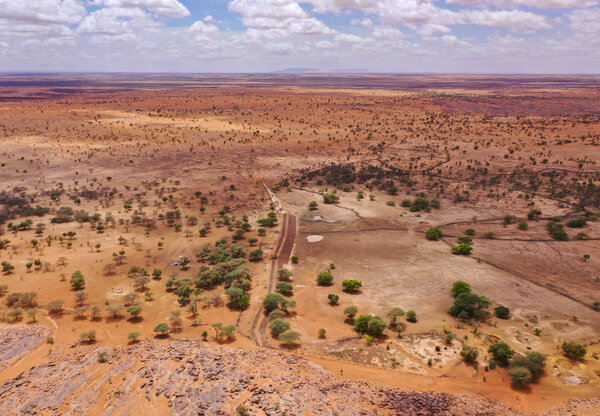
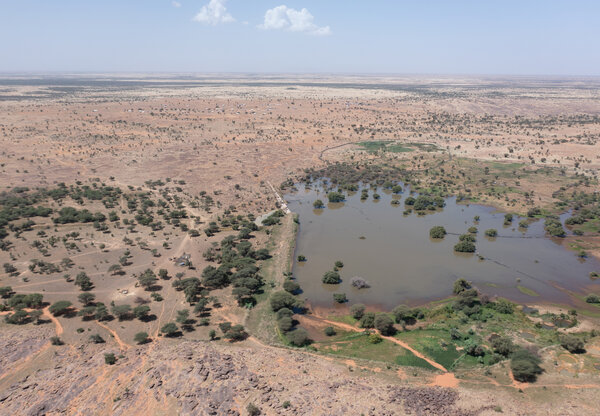
The resilience initiative is especially critical at a time when Chad faces increasingly severe challenges and climate extremes, including recurrent drought that destroys crops and catastrophic floods which in 2024 affected more than 2 million people. This year alone, 3.5 million people were expected to face severe hunger during the June-August lean season between harvests.
Restoring degraded land is therefore far more than an environmental intervention. It helps communities rebuild the natural systems that food production depends on.
“By transforming degraded watersheds into productive land, we are restoring not only ecosystems but also livelihoods and human capital,” says WFP’s Samba. "This is the foundation for long-term food security and resilience for communities across the region."
That is happening in places like Doungoulou, where many families depended on seasonal food assistance between harvests, when food stocks ran low just as households needed the strength to prepare their fields.
“By transforming degraded watersheds into productive land, we are restoring not only ecosystems, but also livelihoods and human capital." – Kinday Samba, WFP Regional Director for Western and Central Africa
But today, the WFP-supported dike replenishes groundwater, irrigates fields and vegetable gardens, and keeps the soil moist long after the rainy season has ended. Land that once produced little more than dust has become productive again.
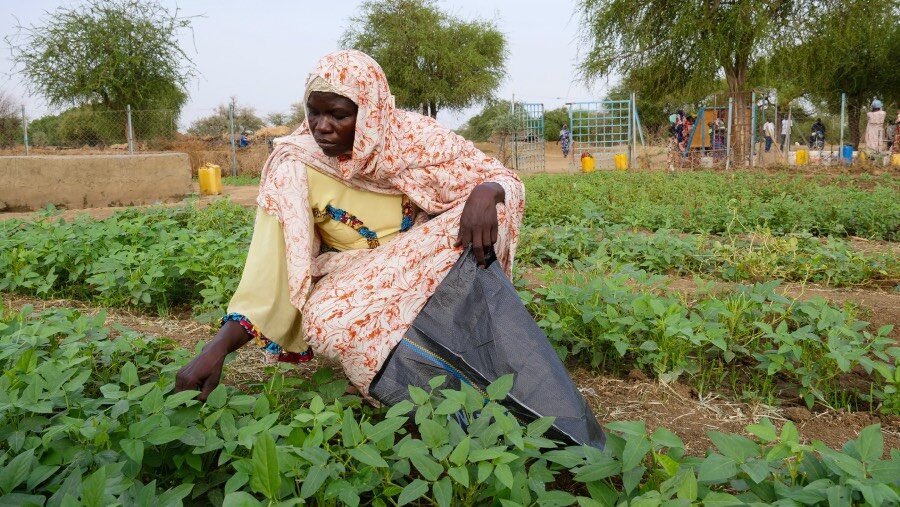
On rehabilitated land, harvests have tripled, from 0.5 to 2 tons per hectare. And farmers like Hamdane are reaping the payback. “Before we grew millet, but the harvest wasn't good,” she says. ”Where it was five bags, now we harvest more than twenty.“
These changes are happening elsewhere in the Sahel, where WFP has rolled out similar projects. “Restoring land helps communities to produce enough food to feed themselves, withstand climate shocks – and gradually reduce their need for humanitarian assistance,” says Ahmat Akouna, WFP Guera Resilience Programme Associate.
Built by communities, owned by communities
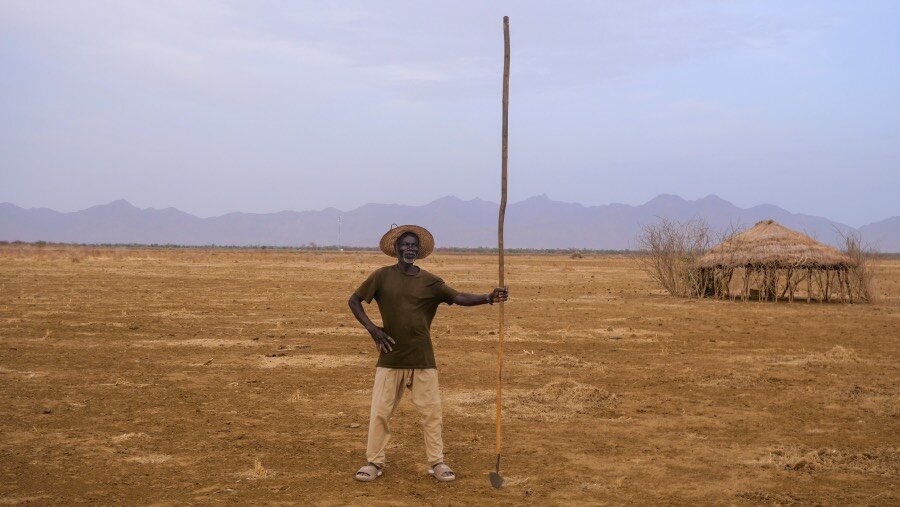
The restoration begins with local knowledge. In villages like Doungoulou near the town of Mongo, communities identify the degraded land they want to restore, discuss where water should be retained and agree how restored land will be managed.
WFP and our partners provide technical expertise, training, equipment and financial support for initiatives that include building water-harvesting structures, establishing nurseries and strengthening sustainable agriculture. Communities contribute their labour, local knowledge, and building materials.
Beyond agriculture, WFP is also shoring up community resilience in other ways: providing nutritional support for vulnerable people, school meals for young pupils, and opportunities for people to diversify their livelihoods.
“We don't always come in with a ready-made solution,” explains WFP’s Akouna, who is based in Mongo. “We support, we back, we develop and simply enhance what they cannot do on their own. Their contribution is very important because it allows them to take ownership of all the assets created.”
That sense of ownership is seen in Doungoulou, where the community contributed the stones and sand for the dike and took part in its construction. “We are working now and we want to continue on the same way,” says village committee president Moukhtar Imedane Izo.
Today, local farmers grow vegetables, sorghum and rice, along with millet, improving both the quantity and diversity of their meals all year round. They market their surplus harvests, investing their profits in their families and livelihoods.
“With the money we gain, we pay for our children's school fees, their uniforms, books and necessary things for their schooling,” Izo says.
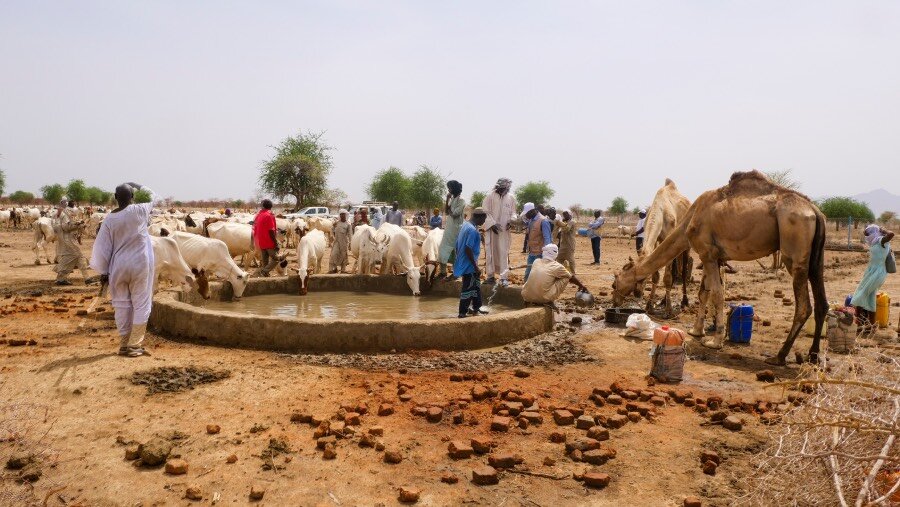
The dike also provides irrigation water for Doungoulou’s market gardens, whose harvests provide women like Hamdane with food and income – offering an alternative to long hours spent fetching and selling firewood.
“WFP staff helped us a lot,“ farmer Hamdane says. ”They brought us tools to plant seeds. Now we can have our own seeds and don't need to rely on others."
The dike project is not just helping growers. It is feeding water points created through the project and shared by both farmers and herders in the region, helping reduce competition over scarce natural resources.
“We are living in peace together,” says pastoralist Annour Saha.
Doungoulou committee president Izo agrees. And – in what may be the strongest measure of the project’s success – he believes local communities will continue to sustain it, long after WFP has left.
“We know the importance and the benefit it generates,” he says. “We know how to improve our harvest.”
The Sahel Integrated Resilience Initiative is made possible thanks its longstanding partnership with the German Federal Ministry for Economic Cooperation and Development (BMZ), as well as Canada, the United Kingdom, Denmark, Switzerland and other partners.