
Nepal floods: where roads stop, humanitarian cargo drones deliver
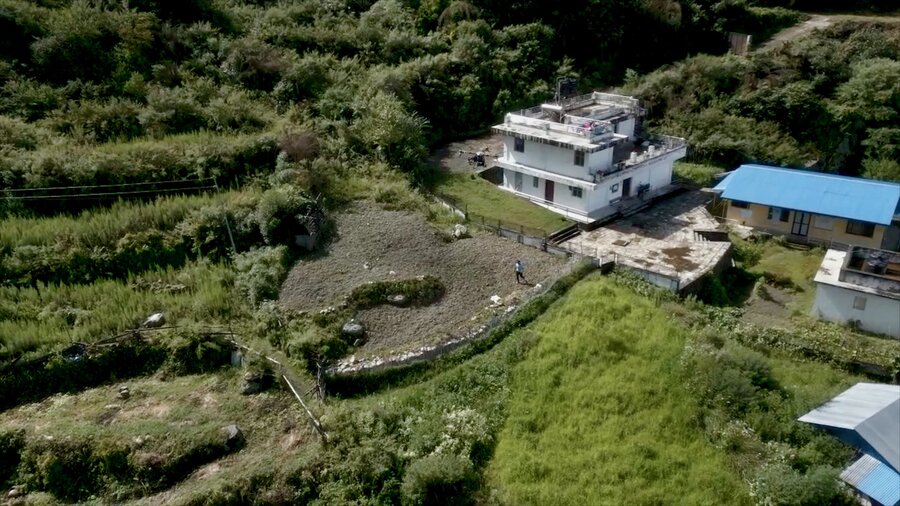
With a bundle of food suspended from a sling, the humanitarian cargo drone buzzes over Nepal’s soaring green mountains, before hovering and finally dropping its payload onto a dirt field. Seconds later, a man walks over to collect the bags of World Food Programme (WFP) assistance, waving as it takes off for its next mission.
WFP cargo drones – deployed for the first time ever in a humanitarian emergency – have emerged as crucial delivery vehicles following northern Nepal’s devastating, late-August floods and mudslides. Triggered by a glacier collapse, the disaster has left more than 1,400 people dead and thousands missing, wiping out roads, bridges, power plants and entire villages.
"No community is too remote to reach. When access disappears, solutions emerge.” – Riaz Lodhi, WFP Country Director in Nepal.
Now, as communities bury their loved ones and try to recover from the disaster, the humanitarian drones – which have the capacity to dispatch up to 100 kg of relief supplies per mission – are a critical part of WFP’s overall goal: to ensure up to 43,000 vulnerable survivors receive vital food and nutritional assistance by road and air.
“This is logistics solving a humanitarian problem – no community is too remote to reach,” says Riaz Lodhi, WFP Country Director in Nepal. “When access disappears, solutions emerge.”
WFP assistance provides a vital lifeline to communities. As part of these Government-led response efforts, WFP has now completed a first round of food assistance via trucks and helicopters, as well as the drones – providing more than 15,500 flood-affected people with 127 MT of food.
Latest monitoring shows that 92 percent of households surveyed reported acceptable food consumption, but nearly all of them are relying on humanitarian assistance for their staple foods.
Last-mile solutions: humanitarian aid within minutes
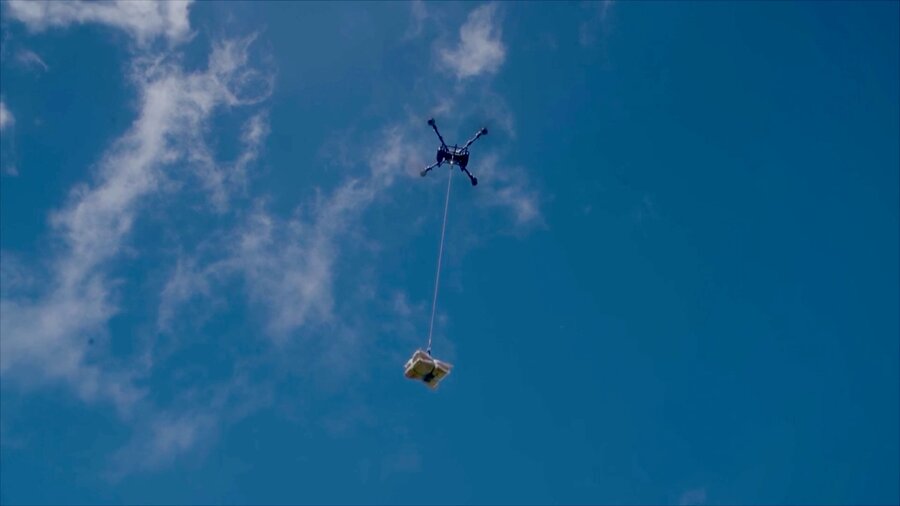
For disaster-hit communities in Nepal’s remote Rasuwa District, where bridges are destroyed and roads washed away, those solutions start with WFP humanitarian cargo drones. Carrying emergency rations of lentils, rice, oil and salt, the drones target settlements that would be otherwise inaccessible.
“That is where humanitarian cargo drones can make a difference,” says Geoffrey Mwangi, WFP’s Chief of Aviation. “We can take assistance from the point where a helicopter or a truck has to stop and carry it further across that final stretch.”
The drone’s cargo can be dropped directly into fields and courtyards of the people WFP serves, sparing them potentially long and difficult journeys to collect the assistance – while also allowing WFP to monitor and verify aid deliveries, says Country Director Lodhi.
“This is how much difference this innovative technology can make, in the way WFP responds to emergency operations and makes food available to populations,” he adds.
Lodhi should know: in 2015, he was part of another WFP emergency operation in Nepal after a powerful earthquake killed thousands and affected millions. Then, too, responders raced to deliver vital aid to desperate communities as fast as possible.
“At that time, the last-mile delivery was done by mules and yaks and porters carrying a bag of food on their backs,” Lodhi recalls. “They were walking for days to deliver food - which means people were waiting.”
Today in Nepal, he adds, “the journey of days has been converted to minutes”.
A delivery dream come true
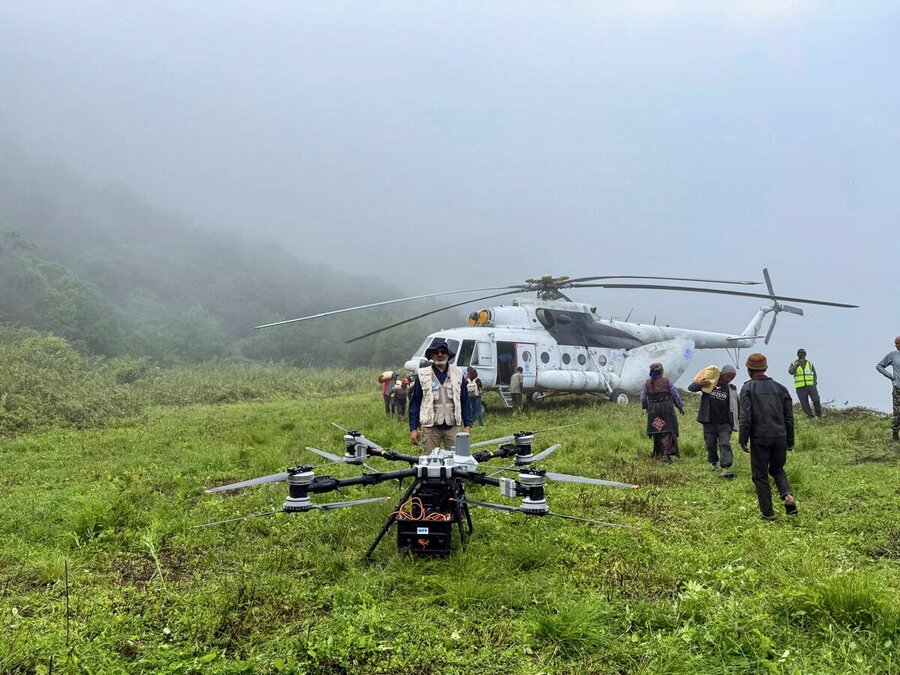
WFP first began developing the use of humanitarian cargo drones for deliveries as far back as 2017. In Madagascar, for example, WFP has used humanitarian cargo drones to dispatch life-saving nutritional and other assistance for children to remote southeastern region of Farafangana, sparing residents grueling, hours-long treks to collect it.
“Nepal takes us another step forward,” says WFP aviation chief Mwangi. “We are applying what we learned in Madagascar in a very different geography, at high altitude, under difficult weather conditions and as part of a live emergency response.”
“I think what we have practised here opens doors for other humanitarian settings.” – WFP Nepal Country Director Riaz Lodhi of humanitarian cargo drones.
In Guatemala, WFP is training rural women in drone technology so they can monitor crops and help their communities better adapt to weather extremes.
But it is in Tanzania, in 2018, where Country Director Lodhi – who at the time headed WFP’s supply chain operations in the country – challenged drone manufacturers to come up with solutions for sudden emergencies.
“It was only a concept, a dream at the time,” he says. “But I’m so happy and excited to see that dream come true today.”
How drones could shape future humanitarian response
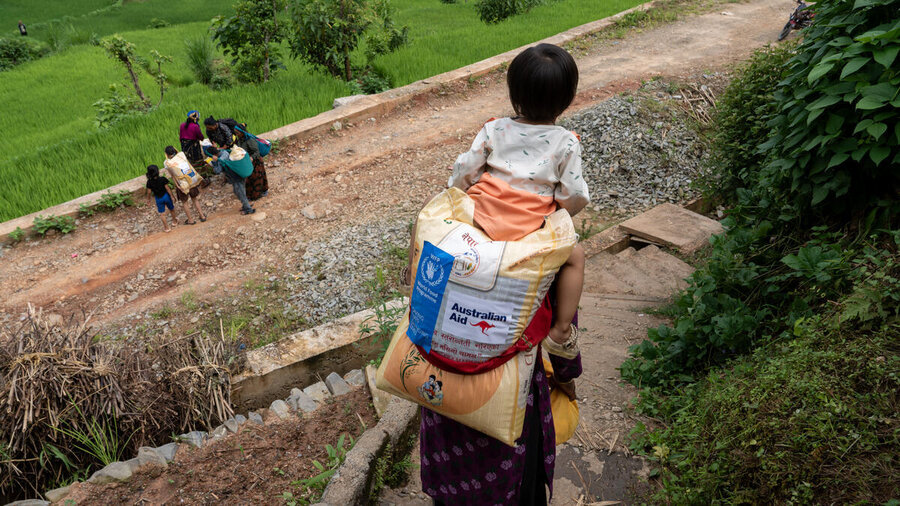
In Nepal, the floods have hit a country deeply vulnerable to a changing climate. Roughly one in five people lives below the poverty line, and one-quarter of children under 5 have stunted growth from malnutrition. WFP is working closely with Government authorities – who are now also using drones for humanitarian assistance – to coordinate the dispatches, which complement WFP’s traditional delivery methods.
The WFP aid is reaching flood survivors like Bunima Sherpa and his family, who were in the hills when the floodwaters engulfed their home. Today, they live in a shelter in the upper hills of Rasuwa, uncertain of their future.
“I have lost my home,” says Sherpa, 51, whose possessions are also buried in the mud. “I lost many of my family members and relatives.”
For now, WFP food assistance that has so far reached 9,000 people is helping many flood-hit families get by. Beyond dispatching aid today, humanitarian cargo drones offer an important precedent for future emergency operations.
“I think what we have practised here opens doors for other humanitarian settings,” Lodhi says. “Particularly last-mile deliveries in many countries.”
WFP's flood response in Nepal is made possible thanks to support from Australia, Japan, Switzerland, the United Nations Central Emergency Response Fund (CERF) and the United States.