
Steering through danger: the WFP drivers keeping Ukrainians fed
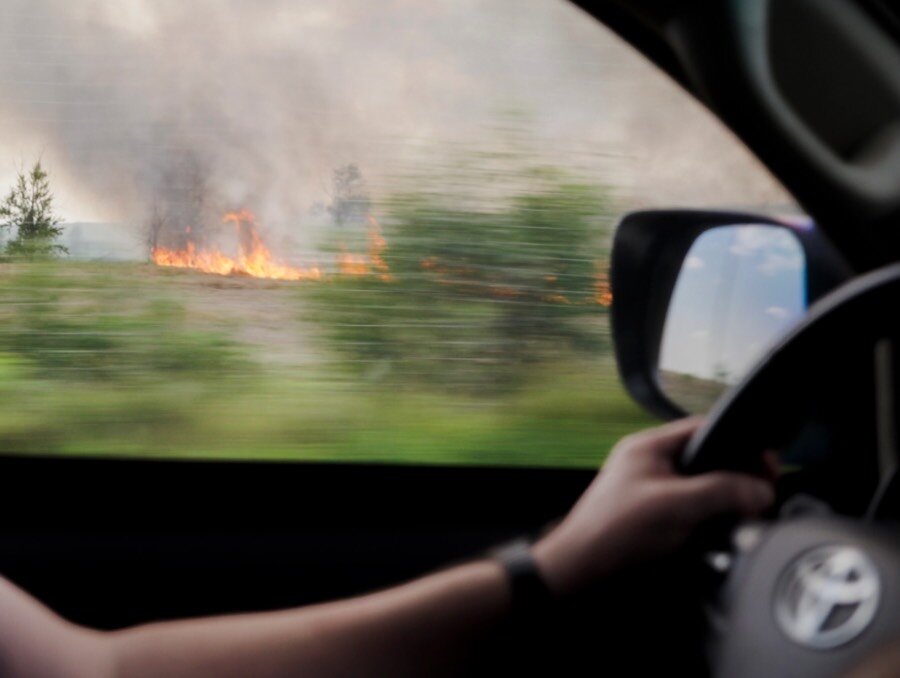
The mission started like any other. Driver Vasyl was behind the wheel of a World Food Programme (WFP) truck – part of a humanitarian convoy heading to Bilozerka, a small town in southern Ukraine’s Kherson Region, roughly 10 kilometres from the frontline of a war now in its fifth year.
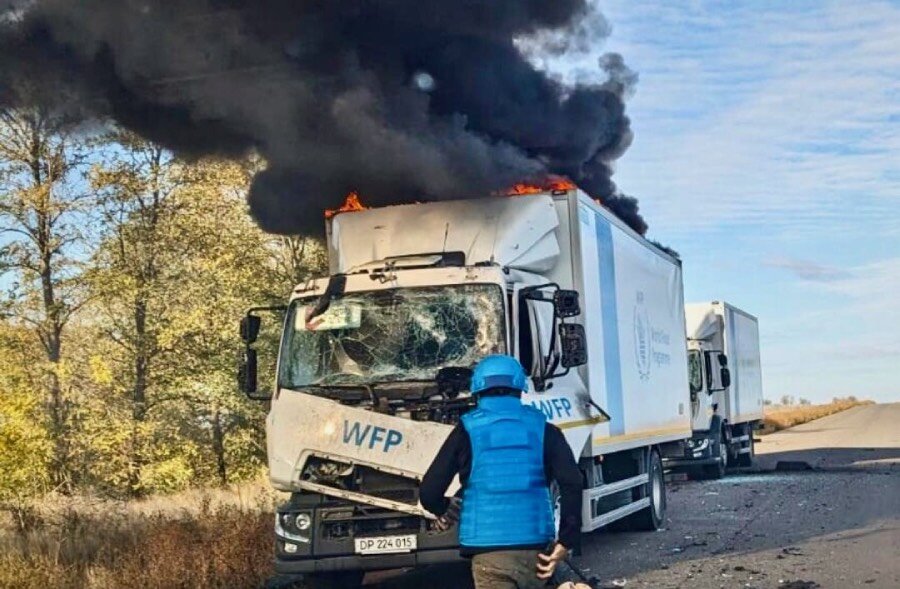
The four-truck convoy carried humanitarian assistance including medicine, hygiene and shelter items for the 1,400 residents remaining in the town – formerly home to 9,000. As the line of vehicles neared the entrance of Bilozerka, a small bomb-laden drone detonated on the road.
Then another drone struck even closer.
“We jumped into the armoured car and quickly drove away,” Vasyl recounts (last names in this story are being withheld protectively). As they escaped, members of the convoy heard his truck getting hit multiple times. By the time it was safe to go back, the vehicle was completely engulfed in flames.
If I had been inside, I don't think I would have survived.” WFP driver Vasyl.
The drones hit the cab where Vasyl had been sitting minutes earlier. “If I had been inside, I don't think I would have survived,” he says.
No one in the convoy was hurt. But the convoy’s humanitarian supplies had all gone up in smoke.
Such incidents are becoming increasingly common for humanitarian drivers in Ukraine. They are on the road every day to bring food and other lifesaving assistance to communities living closest to the frontline – where shops are often closed, and prices are high.
That makes WFP’s support — reaching more than 600,000 Ukrainians in frontline areas with food and cash each month — all the more important. Tapping our fleet of WFP trucks and our logistics expertise, our weekly convoys also carry not only food but essential humanitarian supplies such as health and shelter items from other United Nations agencies and nongovernmental groups.
Humanitarian convoys under fire
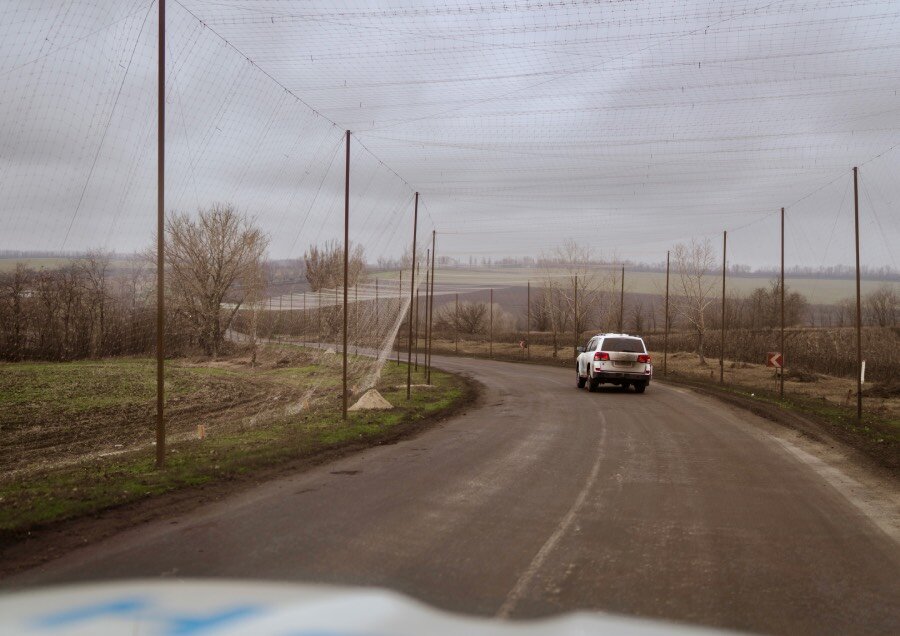
But a surge in drone attacks over the last year has drastically complicated movements and deliveries, with trucks, passenger vehicles and gas stations frequently targeted. Anti-drone nets, which authorities have erected over hundreds of kilometres of the main axes crossing frontline regions, only partially reduce the threat.
Since 2023, WFP’s own tracking has recorded a total of 120 security incidents affecting WFP operations and our cooperating partners. So far this year, 43 incidents have been recorded – more than triple the total recorded in all of 2023.
“It was emotionally hard,” Vasyl recalls of the explosion he survived. “The realization that my children could have been left without a father came later. That's probably the hardest part.
“Before this incident, we were careful,” he adds. “Now we're three times more careful.”
Born in a small town in western Ukraine’s Rivne Region, Vasyl has been behind the wheel for twenty years, steering vans and buses long before the war. Even today, on the quieter drives along Ukraine’s sunflower fields, he sometimes stops to buy pies and fresh vegetables from roadside sellers to carry home to his wife and two daughters.
His wife worries each time he leaves on mission. He rarely shares the full details to spare her the distress. His daughters, though, are well aware of the risks and have always supported his decision to keep going.
Job first, fear later
Andrii has been working in the humanitarian field since 2012. In fourteen years on the road, he has never experienced anything like this year, when he survived two convoy attacks.
The first attack came this past March in the Donetsk Region, within 20 kilometres of the frontline. Andrii was driving the tail vehicle when a drone hit the truck ahead of him.
“I thought it was just a branch falling. Then suddenly the truck caught on fire,” he recalls. “Following protocol, I quickly backed up my vehicle.”
His team pulled the injured driver from the truck’s cab and rushed him to the nearest hospital, where he underwent surgery. Everyone survived.
“You don't feel anything in the moment,” Andrii says. “You're just doing your job. It's scary before and after. During, you just do what needs to be done. Afterward, when you start processing what happened, that's when the fear comes.”
“Our job is to help people stay alive. So we keep going." – WFP driver Andrii
The second strike came in July: 20 minutes from the frontline in the eastern Dnipropetrovsk Region, as Andrii’s convoy was on its way back from delivering assistance.
“Our armoured vehicle was hit, and the whole car jumped up,” Andrii says. “But thankfully everyone was safe. The cab was still usable, so we continued our way back to Dnipro city.”
He describes a vigilance that never fully switches off. “We always look around when we drive. Of course it's frightening, it's always frightening,” he says, ”because these hits come like lightning. You never know when they will start or when they will stop.”
After the first strike, the image stayed with him: flashbacks surfacing at night. The memory of a truck tearing apart, replaying at unexpected moments. “It gets harder and harder to keep driving,” he admits.
But his commitment hasn't changed.
“Our job is to help people stay alive,” Andrii says. “So we keep going. For us the goal of any mission stays the same: to return safely.”
The road back home
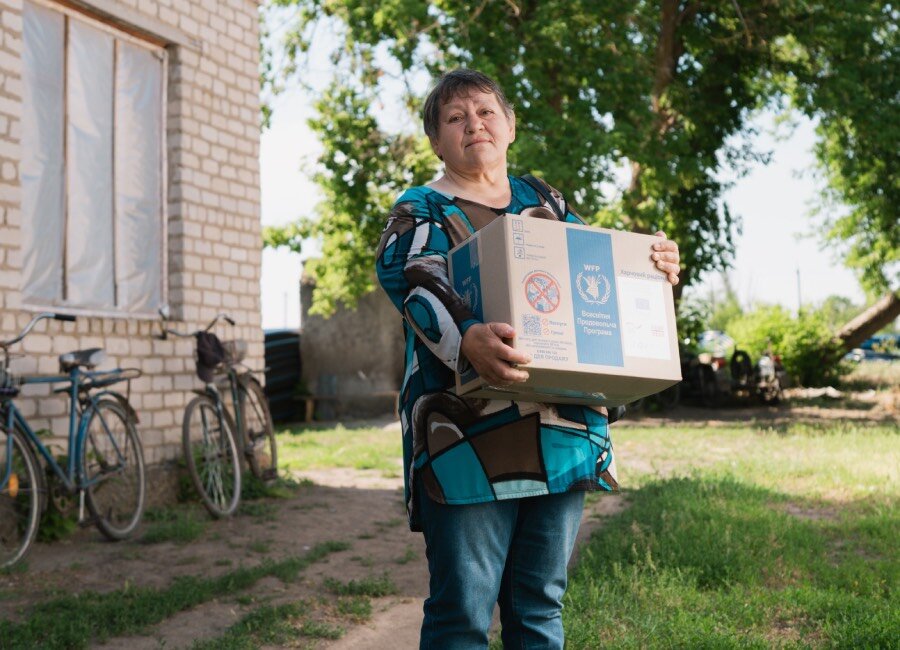
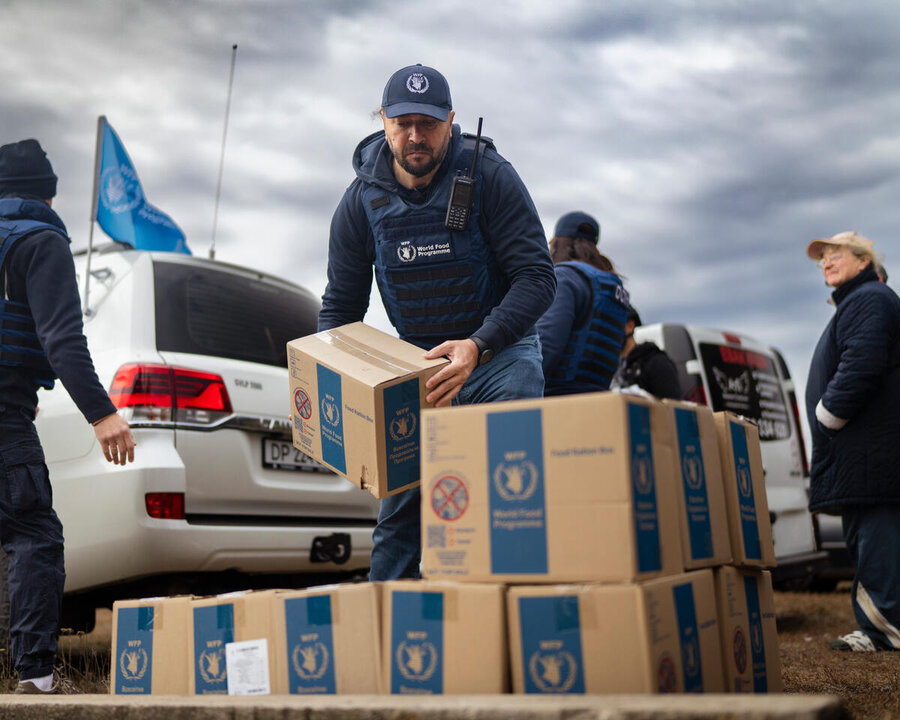
For people waiting for these frontline deliveries, the WFP food boxes are a lifeline. Residents near these battle zones describe a daily struggle to access basic necessities in places where shops have shuttered and few opportunities exist to earn an income.
Many remaining are elderly or live with disabilities. Even reaching shops in nearby areas can be dangerous.
“It's not easy for us to get to the shops because drones are constantly flying,” says Tetiana, who lives in a frontline village in southern Kherson.
But for another WFP driver, Oleksandr, the frontline evokes another sentiment.
“Work missions bring me home, even if it's only for an hour. I know every road, every turn,” he says. "It feels like going back home.”
“It's a heavy nostalgia - knowing your homeland is right there, and that you can't go.” WFP driver Oleksandr of his hometown in the occupied Donetsk Region.
His hometown lies just a few kilometres from the routes he now drives for work, close enough that he can almost see it. It’s just two fields away, he says, but still completely unreachable: on the other side of the frontline in occupied Donetsk.
“It's a heavy nostalgia,” he says. “Knowing your homeland is right there, and that you can't go.”
The land makes itself known as soon as you get near, he says, the particular odor of Donbas: the smoky metallic smell of terikony —large, coneshaped hills of mining by-products, a symbol of the Donbas landscape, mixed with scorched steppe grass and the sweetness of ripening summer orchards. It is a heavy agrarian region, thick with the odor of a place that has always lived off its soil.
“Even the air pressure feels different there,” he says. “You just know you're home.”
Despite the risks, Oleksandr, Andrii and Vasyl continue to help bring food and humanitarian assistance every week to hundreds of thousands of their fellow Ukrainians still living in frontline areas. Yet, since the beginning of the year, WFP has lost access to 354 settlements due to worsening security, leaving more than 15,000 people cut off from vital humanitarian support.
WFP’s Logistics Cluster, which coordinates weekly humanitarian convoys to frontline areas of Ukraine, is generously funded by the European Union.