
Four years of war leave Ukrainians facing brutal hardship as WFP provides a critical lifeline
“In here, in here! into the shelter!” yelled Oleh as a loud explosion tore through the late morning sky of Kherson, Ukraine. Strangers with shopping carts rushed inside from the street. Minutes later another shell – from a 152mm howitzer – slammed the ground 50 meters away, just next to the grocery store.
“Every day is a lottery,” says Oleh – a Kherson resident. “When we go out, we move in short sprints – hiding here and there. Above our heads most often an FPV (first-person view drone) is buzzing, or some other nuisance that kills people.”
Four years into the war in Ukraine, as battle lines continue to harden and defensive lines entrench, those remaining near the fighting must often risk their lives to reach food and other necessities.
“People are afraid to go out in the street to even buy a loaf of bread”, said Liubomyra in Zolochiv, Kharkiv region – a village sitting 10 km from the Russian border.
People struggle to access food amid collapsing services
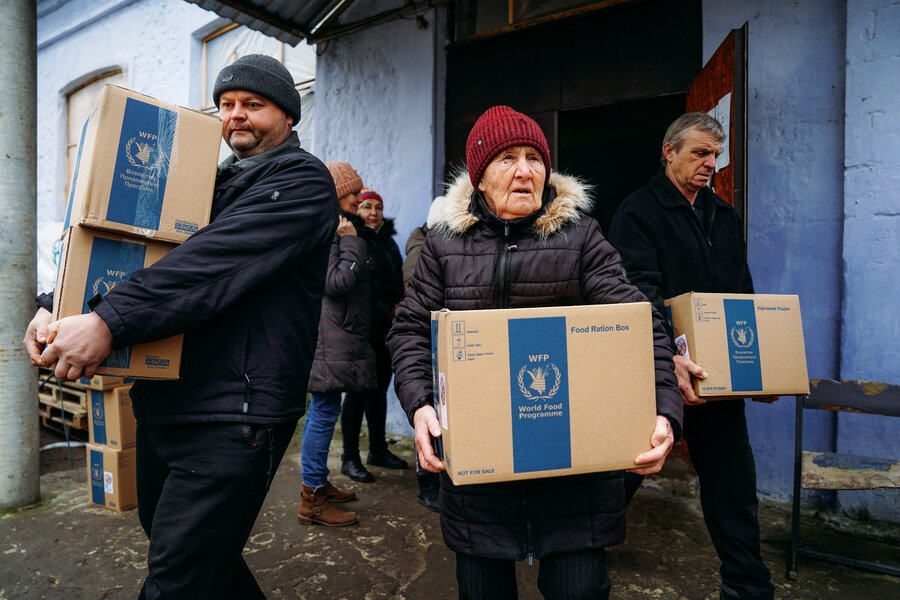
Near one of Kherson’s bomb shelters, residents gather for a World Food Programme (WFP) food distribution. One of WFP’s local partners is handing out 30-day food boxes to a crowd of mostly female and elderly citizens.
In Kherson and other frontline cities, life for civilians continues to be a fight for survival. There are few shops left, scarce opportunities to make any income, and under the threat of drones and artillery shells, every step can be the last. Most of those who have remained are elderly citizens with small pensions who cannot keep up with high food prices.
They count among 10.8 million people now in need of humanitarian assistance across Ukraine.
“Those who don’t live here [in Kherson] do not have any idea how valuable those food kits are,” Oleh explains.
Inside WFP’s effort to deliver food into danger zones
Each morning before sunrise, at one of WFP’s warehouses in Ukraine, lights switch on, forklifts move between stacked pallets. Drivers check routes as their phones vibrate with the overnight security updates. Another truck prepares to leave, packed with food boxes.
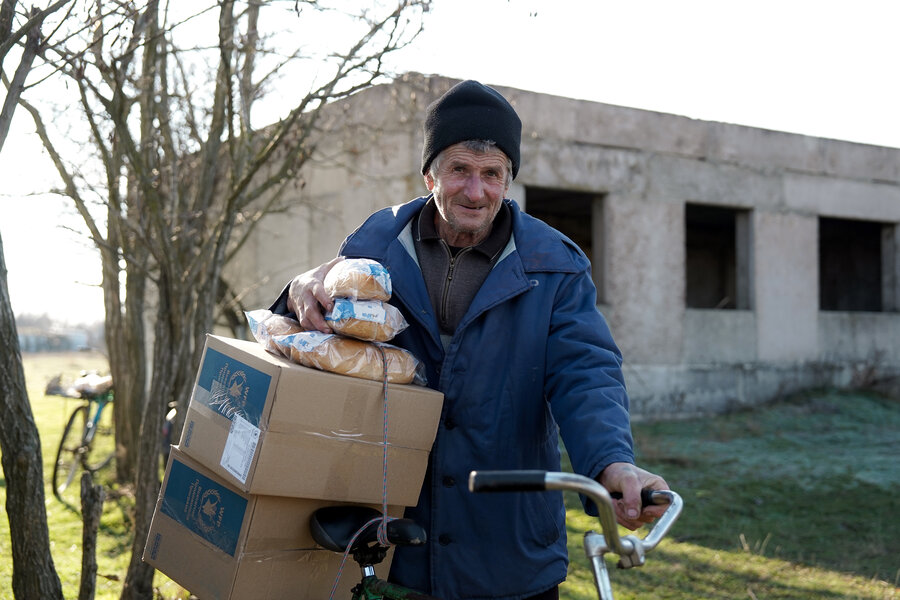
Last year, WFP distributed more than 3 million of these boxes to people like Oleh and Liubomyra in frontline areas of Ukraine.
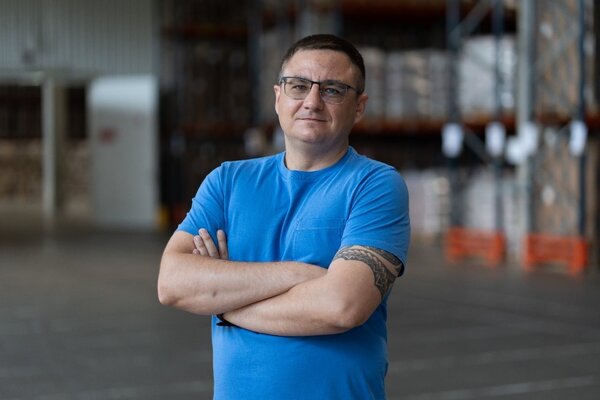
The rhythm began in late February of 2022. Like many others, Andriy Nechay, a logistics officer, was convinced that this war would last a few weeks, maybe some months at most. “Even in my worst nightmares, I could not imagine four years of full-scale war”.
Andriy was part of the initial team that set up a WFP emergency operation in record time. In early March 2022, he was in Krakow, then moved to Rzeszow to set up one of the first logistics hubs for the humanitarian operation.
“The global attention on Ukraine and support from the international community was something unprecedented”, recalls Oleksii Ivanov, a WFP staffer. “In a way, what we received was less important than the feeling that we were not alone. It was this feeling that gave us the strength to keep working non-stop,” he explains.
Four years later, while fighting may appear stalled, Ukrainians have been living through the most brutal winter of their lives. Relentless strikes on cities and critical civilian infrastructure have left millions without electricity and heating for months, even as temperatures have reached minus 20 degrees celsius.
The last year was also the deadliest for civilians in Ukraine since 2022 – with more than 2,500 civilians killed.
“You write and call people in the morning - ‘Ilona, Iryna, Vlad - everything is fine?’ And you think about them, and as long as everyone is alive, well, we will manage the electricity somehow,” says Oleksii.
Funding cuts bite hard on the frontlines
Thanks to partners including the European Union, Germany and France, WFP continues to support more than 600,000 Ukrainians in frontline regions every month with food and cash assistance.
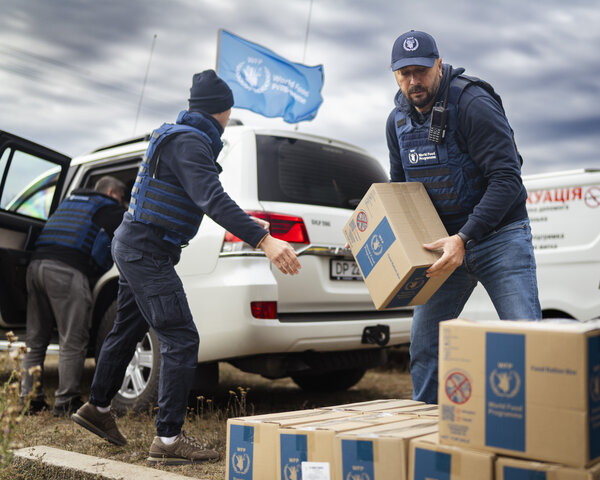
However, funding cuts are biting hard. “In the past year, WFP has been forced to stop assistance to more than 1 million people,” said Richard Ragan, WFP Country Director in Ukraine. “Delivering assistance near the frontline is also becoming increasingly dangerous - in the past 2 years, our operations were affected by more than 70 attacks, including on distribution sites, warehouses, and trucks, threatening not just our staff and partners but the people we serve and the very continuity of lifesaving assistance to them,” he added.
WFP urgently needs US$278 million to sustain operations up to June 2026.
While global attention slowly erodes – fierce fighting continues. The war today is no different than on the first day, reminds Andriy. “Four years of war have taught us resilience – but they must not teach us indifference. Getting used to war is, in fact, the biggest risk. War is not normal, and we must not allow ourselves to accept it as such.”
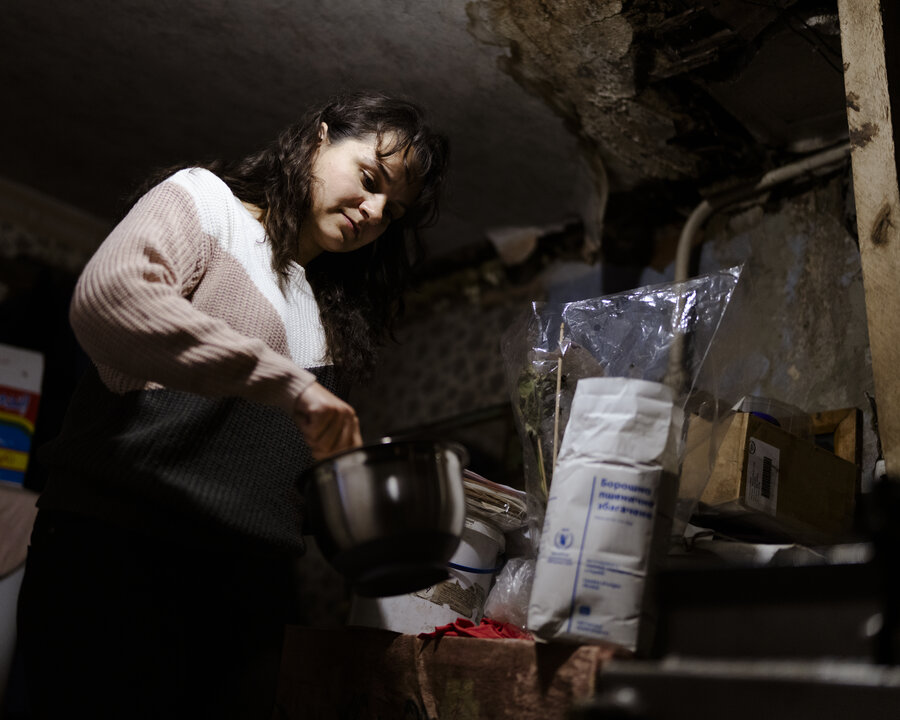
In Tsirkuny, another village near the Russian border in the Kharkiv region, Olena feeds her ailing grandmother a plate of horichky, traditional walnut-shaped cookies that she has made with the WFP flour and some condensed milk. From their cramped temporary house, she and her father often cycle back to what remains of their family home, destroyed by a missile strike. They clear debris, cut overgrown bushes, and sweep dust from collapsed rooms once filled with laughter and life. Four years into the war, their rhythm remains one of caution and survival.
“I try not to think too far ahead. I believe I just have to survive.”