
1 million reasons for hope: the individual donors powering WFP's fight against hunger
Terry Lustig is a retired Australian engineer from Sydney who worries about the deadly impact of hunger. “Food is important – it’s basic,” he says.
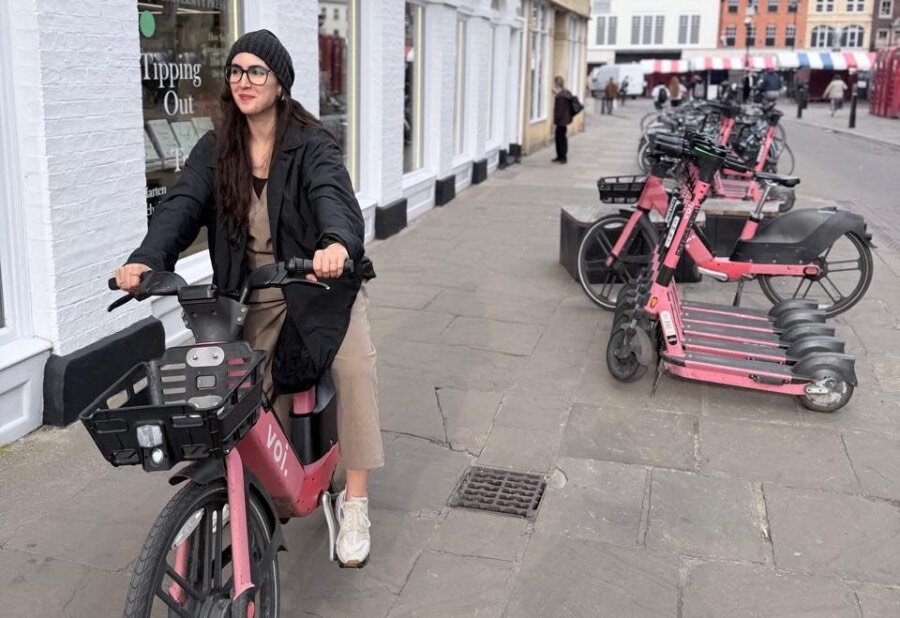
Noor Al Khouri is a Dubai-based marketing professional, passionate about making a difference.
“I’m committed to trying to give back as much as possible, I think we all should,” Al Khouri says. “No person or living creature should have to go hungry in this day and age.”
From their homes thousands of kilometres apart, Lustig and Al Khouri count among more than 1 million people worldwide who contributed to the World Food Programme (WFP) in 2025 – a community of supporters that is increasing exponentially. Alongside governments and corporations, support from individuals is becoming an essential engine for driving WFP’s hunger-fighting mandate.
From securing an initial US$16 million before its scale-up in 2019, to US$142 million in 2025, WFP’s Individual Fundraising programme is growing by roughly 18 percent yearly – faster than any other large humanitarian agencies and international nongovernmental groups. By 2027, WFP hopes to reach US$200 million in annual contributions.
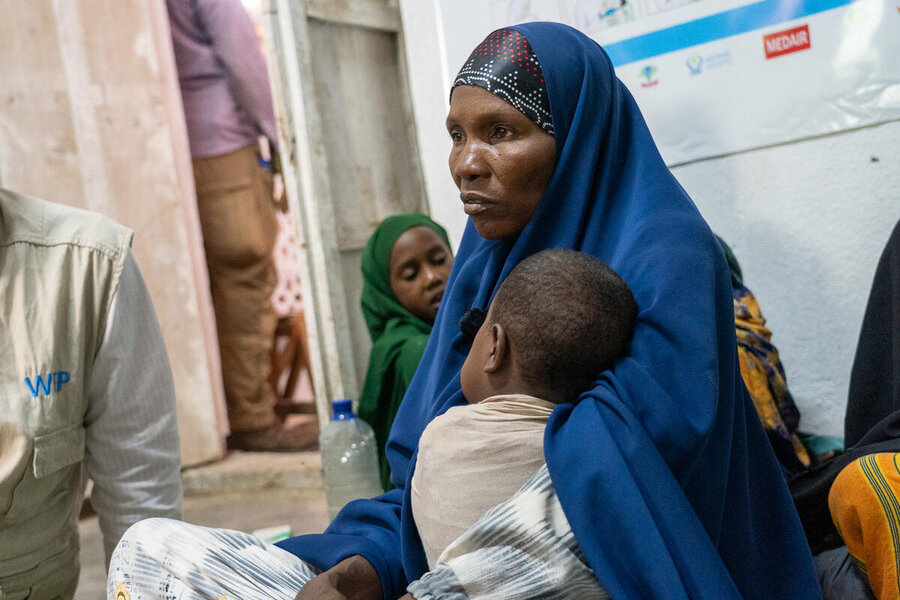
The support is all the more crucial at a time when 266 million people worldwide face acute food insecurity. Last year, we assisted 121 million of the most vulnerable.
“Our proposition is really simple and tangible: we feed people,” says Kate Hearn, Head of WFP’s Individual Giving programme, on why so many support our work – even during tough economic times. “And people can find their place in that – whether they’ve got US$1 or US$1 million to give.”
There’s another powerful draw, she adds: “Regardless of who you are and where you live, you can understand the concept of feeling hungry.”
Three ways to give against hunger
WFP offers individuals three different ways to donate: direct contributions, our ShareTheMeal app, and through our affiliated organizations, World Food Program USA and JAWFP, based in the United States and Japan, respectively.
More than half of our individual contributions amount to less than US$50 a year, and sometimes as little as US$5 – underscoring the power of modest contributions. A much smaller – but growing – number of supporters give upwards of US$10,000 annually.
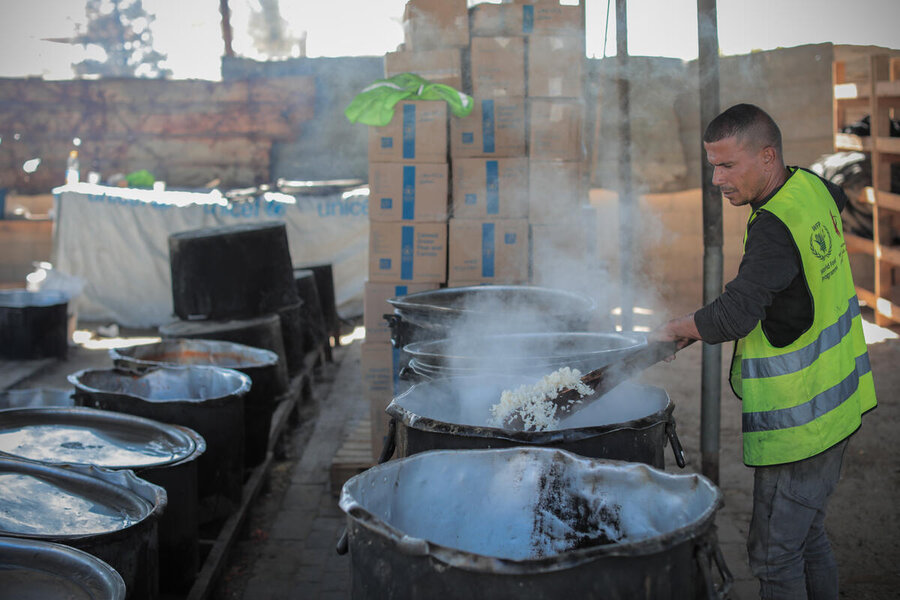
“We always link contributions to the change they can make – US$20, for example, is equivalent to feeding a family of five for a month,” Hearn says. “Donors giving larger sums want to see bigger change: for example, helping to run a bakery in Gaza. We work closely with our teams on the ground to find that tangibility.”
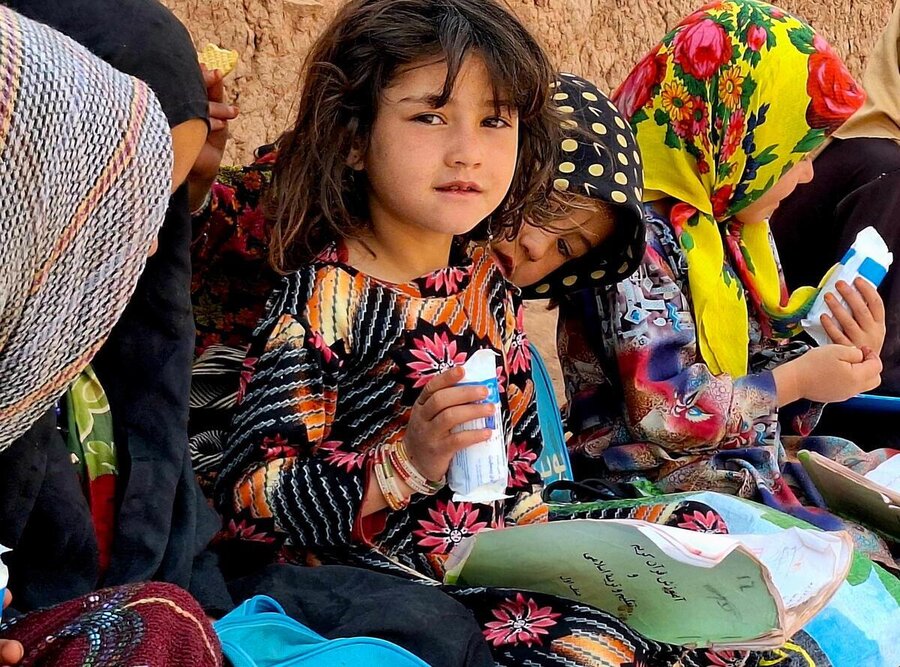
Lustig began donating to WFP in 2022. A key motivation: seeing our impact first-hand, as an engineer for a WFP project in Viet Nam decades earlier. His contributions have supported our operations in Afghanistan – which include nutrition treatment for mothers and children, and assistance to families hit by drought and other shocks.
"You can’t do anything without food. You can’t think. You can’t focus. You can’t have a bright future." – WFP donor Noor Al Khouri
But Palestine, and specifically the soaring hunger in Gaza, are his favoured causes. “I’m Jewish, and I know what my parents’ families went through in Europe,” he says, adding, “I know the World Food Programme does more than food. But obviously food is key in Gaza – and I know, from my past UN work, that WFP has a good chance of being effective.”
Al Khouri gives to WFP monthly, via our ShareTheMeal app. She is particularly motivated by hunger in her region, with the emergencies in Lebanon and Palestine high on her list. “It’s very efficient way to give regularly,” she says of the app, adding: “I love the way WFP lets us track the impact we’re making in a very simple way.”
She recalls being particularly moved by a WFP campaign featuring a girl winning a science prize. The girl never realized her potential – because she died of hunger. “You can’t do anything without food,” Al Khouri says. “You can’t think. You can’t focus. You can’t have a bright future. I always try to keep that top of mind.”
The power of flexible funding
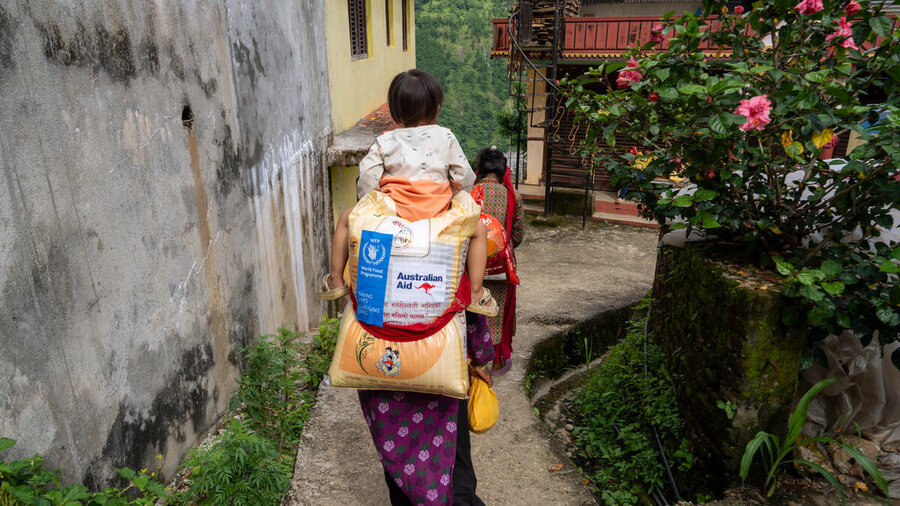
Many individual contributions are flexible – allowing WFP to use the funds where needs are greatest: whether for emergencies, neglected crises or relief and recovery operations. “There’s a lot of trust from donors that the money will be spent where it’s most needed,” Hearn says. “That gives WFP assurance about what’s coming down the line.”
WFP’s transparency about how we use those donations – nearly 65 percent is spent on our operations in the field – and our close relationship with our donors are two other powerful draws for contributors, she says. Through social media, webinars and other forums, we share information about our work, the people we serve – and the impact every dollar makes.
"We let our beneficiaries tell our story – and that’s been a game changer.” – Kate Hearn, Head of WFP’s International Individual Giving
“We try to have a donor-first approach,” Hearn says. “And we work really hard to connect those who give to our beneficiaries, and bring WFP’s work to life. The people we serve tell their own stories – and that’s been a game changer.”
The people giving to WFP represent a rainbow of backgrounds and profiles. A recent study shows many WFP individual donors are in their thirties and are driven by social justice, empathy, their religion or a first-hand experience with people facing difficulties.
“When I was little, I saw my grandmother giving without question,” one WFP donor shared. “I learned…that everybody in the world is like a guest to your family.”
Doing 'my bit' against food insecurity
Lustig, the Australian engineer, says he gives because he can afford to. He wants to make sure his contribution is used as cost-effectively as possible.
“I don’t feel special,” he says. “I just do my small bit. But little times often equals a lot.”
Al Khouri agrees. “There’s power in numbers,” she says. “We all need to help each other out.”
The monthly fasting month of Ramadan has given her a first-hand understanding of hunger, she adds, but so has WFP’s ShareTheMeal app.
“I try to ensure I’m not wasting food, that nobody is,” Al Khouri says. “Even when I’m invited out, I leave with a doggy bag with the rest of the food and give it to someone.”
“I just do my small bit. But little times often equals a lot.” – WFP donor Terry Lustig
Every dollar Lustig and Al Khouri give is making a difference, Hearn says. Even as humanitarian crises pile up, individual giving globally is growing — translating into food and hope for the people we serve.
“Even in the darkest of days, the support from our donors is inspiring,” she says. “They really do see their role in ending hunger.”