
Chef Christian Abegan lends star power to fighting hunger in Africa
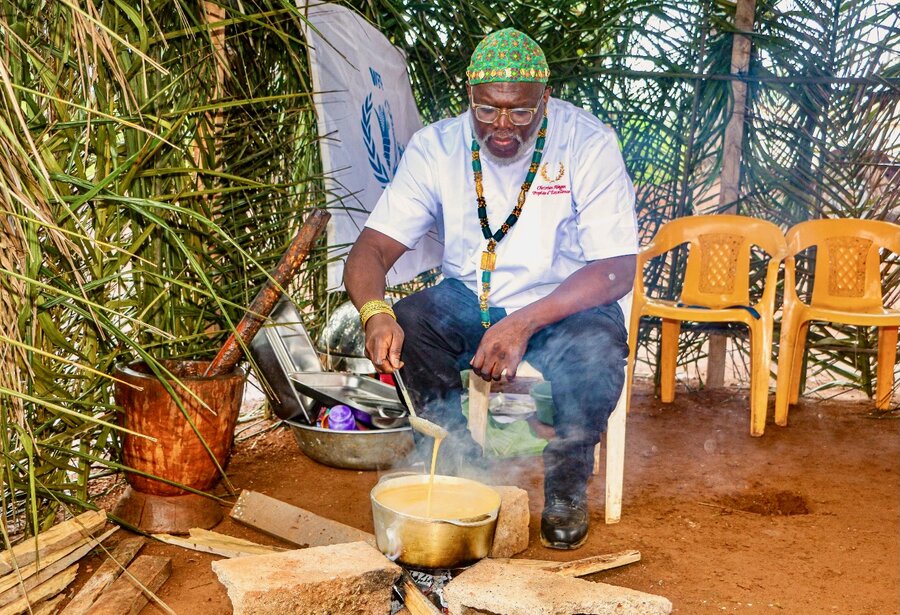
Maize, groundnuts, powdered fish and fruit line a long trestle table in eastern Cameroon’s Kaigama village, as Christian Abegan begins a morning cooking session. Dried, crumbled and cooked in a large metal pot over an open fire, the ingredients form the bedrock of the tasty and nutritious Five Star Porridge - a local dish and a powerful antidote, Abegan believes, against hunger and malnutrition that are soaring in the region.
“Now you add water,” he tells women gathered around him - who include both local Cameroonians and refugees from the Central African Republic. “That’s an important step so it’s well blended.”
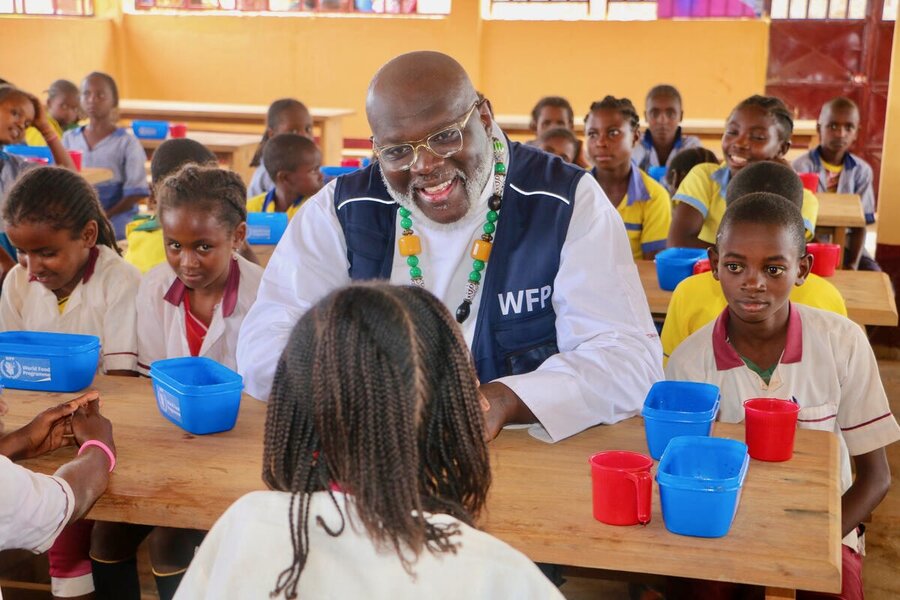
Star chef, author, musician and designer, Cameroon-born Abegan is now on another journey: as the World Food Programme’s (WFP) recently named Chef Advocate for Food Safety and Sustainable Food Systems in West and Central Africa. “I thought I knew the power of food after 40 years in kitchens,” he says, during his recent WFP trip to his homeland.
But his travels with WFP - which have also included Benin and Burkina Faso - have taught him something more. “Feeding people,” says Abegan, “is a powerful act of solidarity and an investment in the most valuable resource we have: humanity.”
That’s a message that resonates across many western and central African countries, where unrest, displacement, soaring prices and weather extremes have deepened poverty and hunger. In Cameroon alone, 3.1 million people - 11 percent of the population - faced severe hunger between this past October through December. Roughly 2.9 million are expected to face acute hunger between June and August 2026.
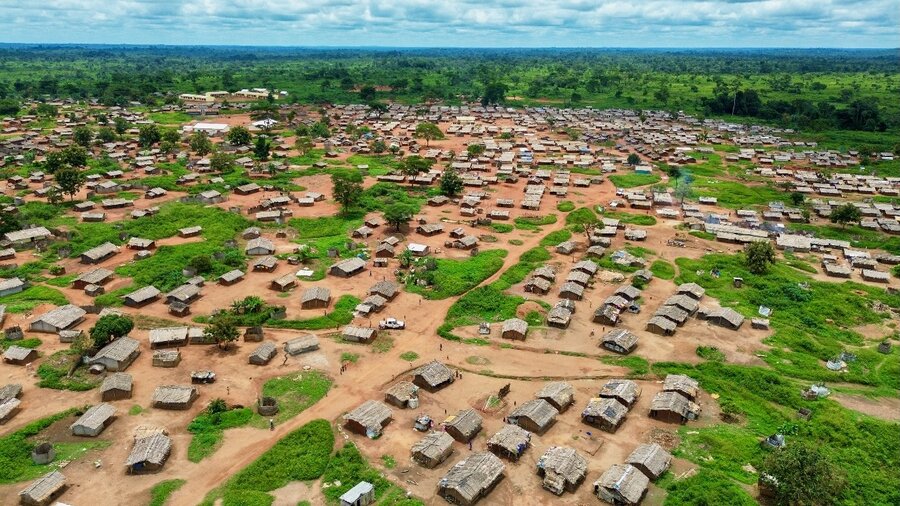
Some of the highest hunger and malnutrition rates are in Cameroon’s East, where Abegan visited and which shelters nearly half of the country's more than 300,000 Central African refugees. A funding shortfall has translated into deep cuts in WFP’s food assistance for vulnerable people - including the refugees, some of whom face the difficult choice of returning home to an uncertain future.
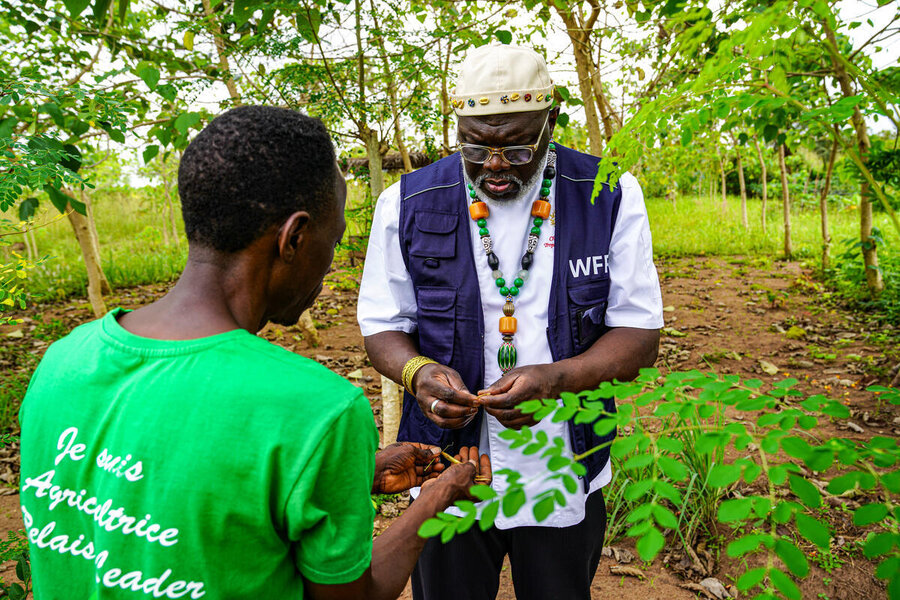
But a WFP-supported food security and resilience programme offers one key buffer. Funded by the World Bank and launched by Cameroon’s Government in 2023, the programme - known by its acronym PULCCA - is helping to build food security through a raft of initiatives. From fish farming and techniques to boost farm output and reduce post-harvest losses, to school meals and other efforts - like Abegan’s promotion of Five Star Porridge - it is fighting malnutrition, one meal at a time.
A five-star hunger shield
“Five ingredients, all local, all available, all affordable, together forming a shield against hunger,” Abegan says of the recipe for Five Star Porridge, which WFP introduced in eastern Cameroon. “Watching mothers prepare it with care, I understood something profound: innovation doesn’t always come from laboratories. Sometimes it comes from tradition and resilience.”
Abegan has long been a champion of sustainable food systems and healthy diets. Born in northern Cameroon, he grew up in the capital Yaounde hanging around the family kitchen. “Susie was teaching me so many things,” he says of his nanny, one of his earliest mentors. “After school and homework, I’d watch her cooking. She taught me to smell what things were ripe - and how we can use different foods in the same recipe. This helped me throughout my career.”
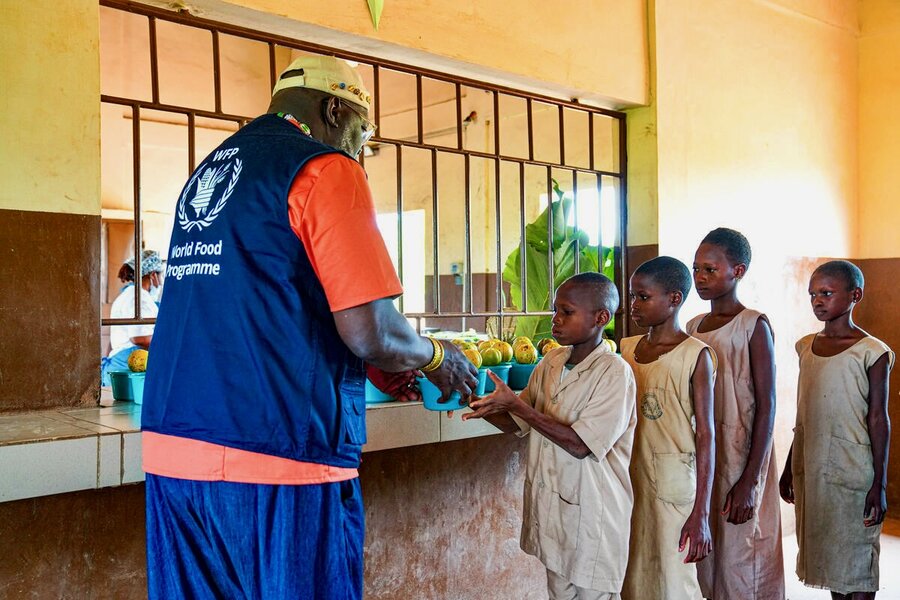
After high school, Abegan went to France to initially study law. But cooking was his passion - and he eventually enrolled at the Cordon Bleu culinary school in Paris. He opened a restaurant in Cameroon’s port city of Douala. Later, he joined the jury of Star Chef, a TV show broadcast in francophone Africa, where he preached the gospel of creating delicious, gastronomic dishes using local ingredients. Eight years ago, Abegan began working with WFP, using his dishes and voice to fight against food insecurity. In 2025, he was named WFP Chef Advocate.
“Every time I think about hunger in Africa and the world, I think about the places I’ve visited - with all their land and potential,” Abegan says. “How can there be hunger - even famine - in Africa? But the crises are there.”
Local solutions
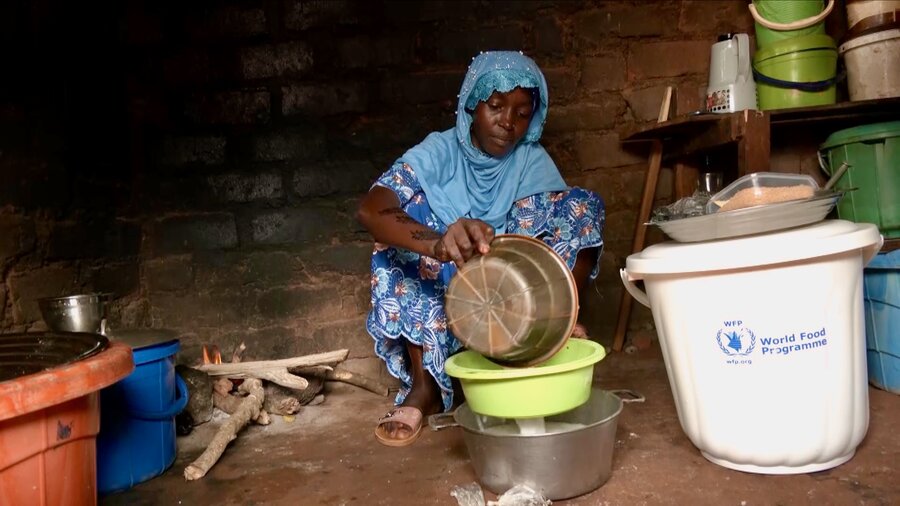
At a refugee camp of tiny mud brick houses in Mbile, Abegan visits Asmaou, a young mother from the Central African Republic. She has learned to make the Five Star Porridge.
“The porridge really helped me - it will help my baby grow,” Asmaou says, adding, “he doesn’t get sick anymore.”
“The Five-Star Porridge merits its name - it’s super nutritious,” says Abegan, who calls it a “solution for the future“ - and not just in Cameroon.
Local ingredients have long been central to Abegan’s message. In Burkina Faso in 2017 - one of his first trips with WFP - he joined women cooking up our school meals for children in the northeastern town of Dori. Vegetables were not on the menu.
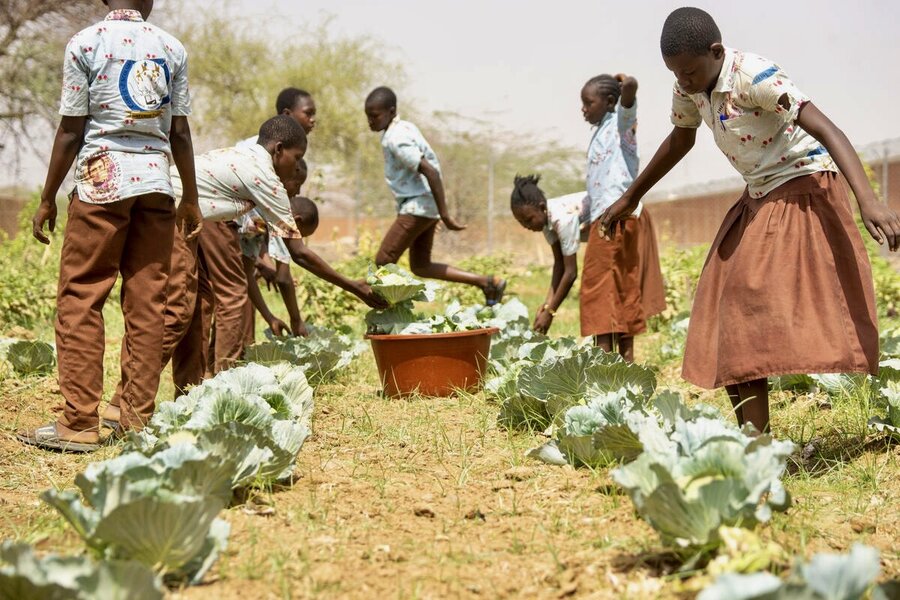
“I went to the market - there was cabbage, carrots, lettuce. And I asked villagers why they didn’t add vegetables to the meals they cooked?” Abegan recalls. That practice, he discovered, wasn’t part of local eating habits. He added them in, giving some young students their first taste of cooked carrots.
“When I left Dori, there were a few small kids who followed me, saying: ‘Safe journey, safe journey,’” Abegan recalls. “It lifted my heart.”
In Mbile, Abegan also helped school cooks dish up hearty bowls of locally procured manioc, groundnuts and gumbo sauce, and visited a WFP-supported fish farm where women scooped up their wriggling catch with bare hands.
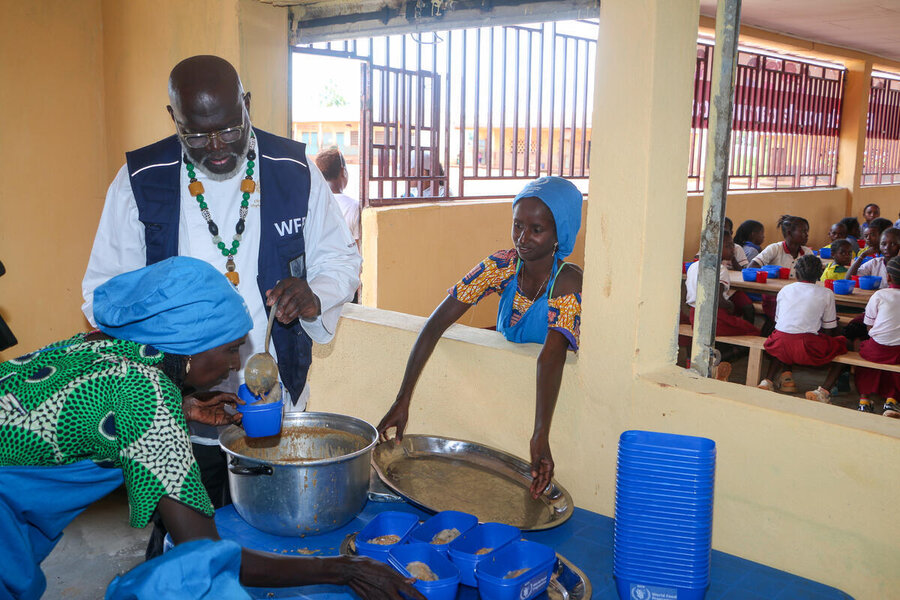
“It’s a packet of actions which has proven its effectiveness,” says WFP Cameroon Country Director Gianluca Ferrera of the PULCCA interventions, which together help build local incomes and food security. He called for more international financing to complement Cameroon’s efforts. The programme needs US$156 million to keep going in 2026. Without fresh contributions, it risks being sharply scaled down as of January.
For Abegan, the paybacks of these and other WFP-supported projects are worth the investment.
“WFP puts people at the heart of its work - and it offers them faith and hope,” he says. “WFP is there when people are displaced, when they’re bereft, when things are going badly. WFP saves lives.”