
Colliding crises leave Afghanistan’s children facing a malnutrition emergency
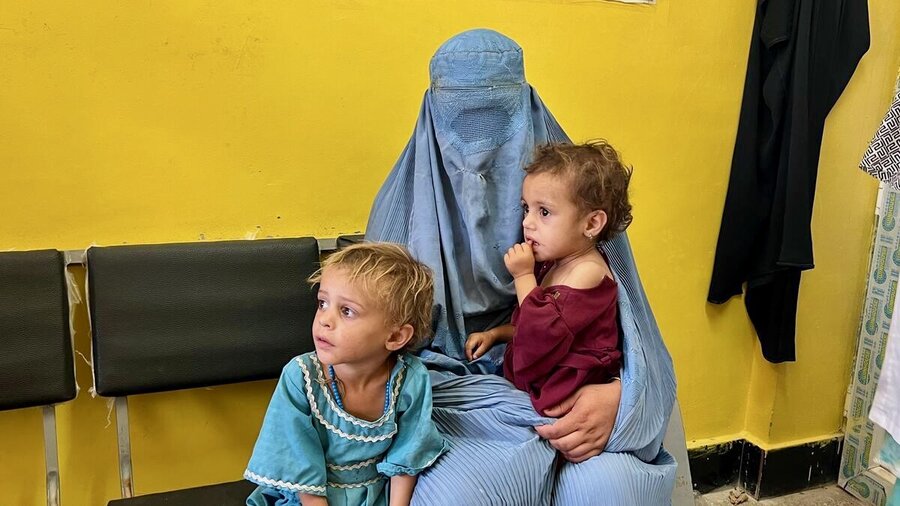
The yellow-and-white packages Sediqa’s young daughters grasp playfully offer a nutrient-packed lifeline beyond the family’s spare diet of mostly bread and tea.
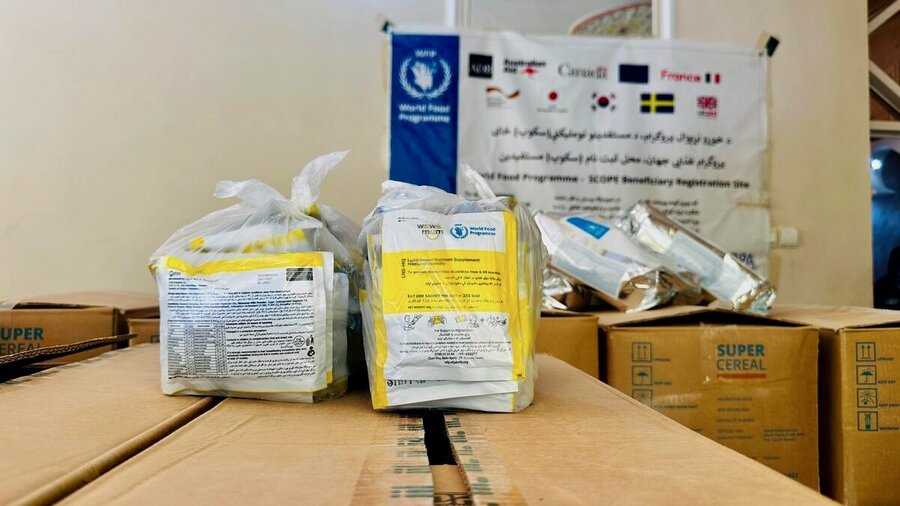
“There is no other food,” says Sediqa, as she collects World Food Programme (WFP) nutritional supplements for her 2 malnourished girls, aged 3 and 18 months, at a health centre in southern Afghanistan.
“We don’t have nutritious food like potatoes, rice, beans or pulses,” Sediqa, a mother of seven, says, “because we are poor.”
That is the story of many families in Afghanistan as colliding crises – including conflict, unemployment, high food prices, supply chain disruptions and reduced humanitarian funding – sharply deepen hunger and malnutrition.
“A visit to a health centre in Afghanistan is a highly distressing experience, where we are practically witnessing the next generation waste away.” – John Aylieff, WFP Country Director in Afghanistan
Today, Afghanistan is in the midst of a child malnutrition crisis, WFP warns. Wasting, when children are dangerously underweight for their height, has already reached critical and record levels in a third of the country's provinces and is projected to keep rising.
“A visit to a health centre in Afghanistan is a highly distressing experience, where we are practically witnessing the next generation waste away,” says John Aylieff, WFP Country Director in Afghanistan. “This is not simply heartbreaking – it is unacceptable.”
Malnutrition emergency afflicts millions
Without immediate investment, the outlook for Afghanistan’s youngest citizens is grim, WFP and other experts say. Roughly 3.7 million children are projected to be malnourished in 2026. Another 1.2 million pregnant and nursing women are also expected to face malnutrition, which is driving a surge in communicable diseases.
“Afghanistan is already gripped by one of the world’s most severe and unrelenting malnutrition crises,” Aylieff says, “and recent developments threaten to push these staggering numbers even higher – raising the terrifying prospect that the crisis could eclipse all previous projections and condemn countless more children and mothers to preventable death.”
At the health centre, Sediqa describes the many barriers preventing her children from leading healthy lives. Her husband, a day labourer suffering from kidney problems, earns the equivalent of US$3 daily – but only when work is available and he is not out sick. Half of his earnings go to rent, leaving little to feed her children.
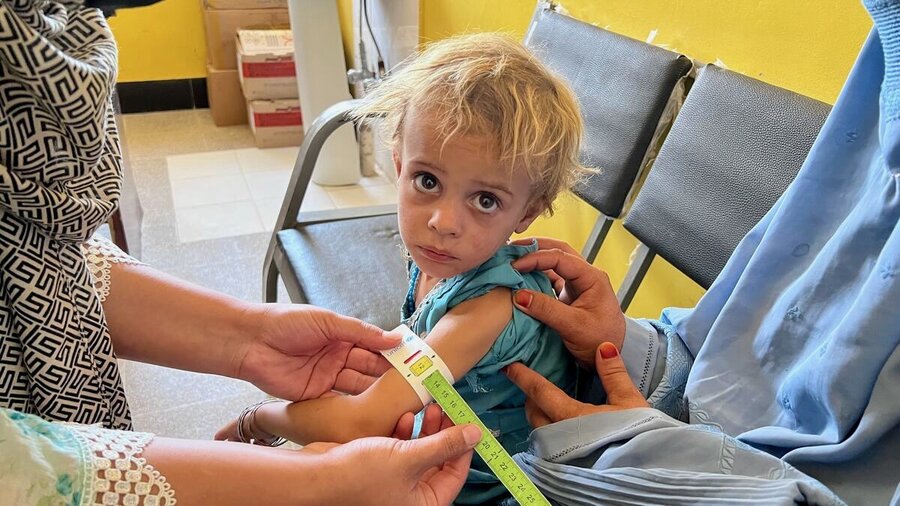
“Each of them needs sandals, clothes, medicines, but we can’t afford them,” says Sediqa. Rice, biscuits and milk are also prohibitively expensive. Her children often vomit after eating okra and eggplants, she says, the only vegetables her family can afford. She herself is sick with typhoid and often unable to breastfeed.
“I give them bread and tea,” she says of her children. “Sometimes they eat, sometimes not.”
For years, she has relied on one powerful backstop: WFP nutritional support that six of her seven children have received from the clinic.
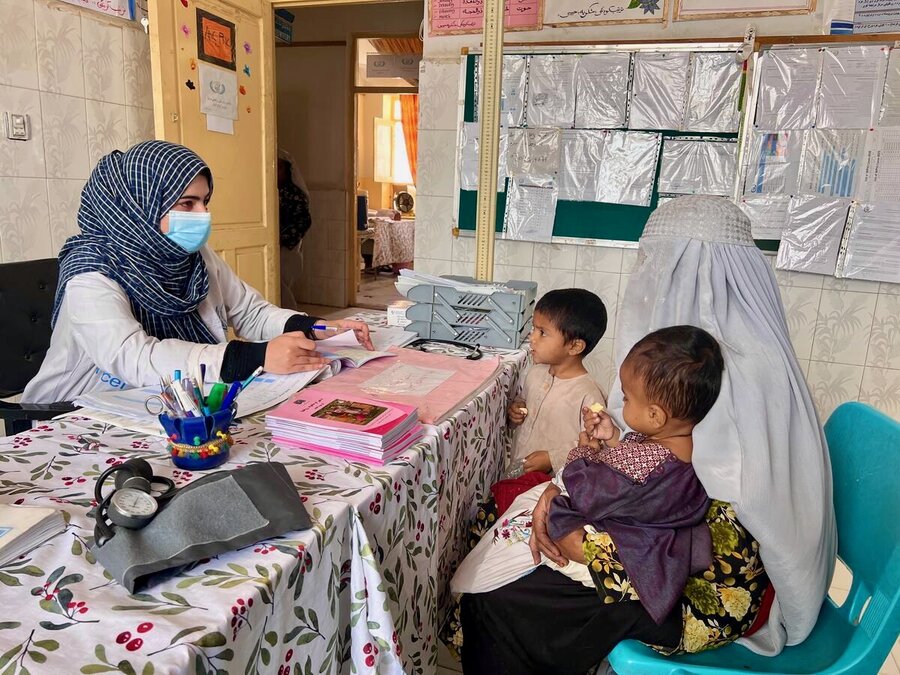
“Most of the patients coming here are malnourished,” says Dr. Samira (name changed for her protection), who works at the health centre treating Sediqa’s children. Over the past few years, the doctor says, she has seen malnutrition soar among pregnant women and children.
“It’s important that WFP sends these food items for the patients because it treats and prevents malnutrition,” Dr. Samira adds of our support. “Most of these patients are poor and can’t afford a healthy diet. If they have these items, it will stop them from falling into malnutrition.”
WFP's nutritional backstop at risk
But today, aid cuts are shuttering health clinics across Afghanistan and drying up precious nutritional assistance that many Afghan children and women depend on. Funding shortfalls are also forcing WFP to scale back food distributions in Afghanistan. The situation has been aggravated by the Middle East crisis and Pakistan border closures that have disrupted supply chains, driven up operating costs and left nearly 1 million mothers and children missing out on essential nutrition services for five months.
The cuts could break mothers like Farida, who awaits treatment for her two anaemic children at another health clinic in the country. Like Sediqa, she describes a monotonous diet of bread and tea she gives her three children. It is all she can afford on her husband’s tiny income selling cups.
“He is sick and wants healthy food,” she says of her oldest son, a 6-year-old, who stands near her. “But I can’t afford to give it to him.”
“We only rely on this clinic for medicine and for nutrition,” she adds. “If food is not here, my children will die.”
WFP's work fighting malnutrition in Afghanistan is made possible thanks to support from Australia, Canada, Germany, Japan, the Republic of Korea and the United Kingdom.