
The WFP lifeline keeping families afloat amid Afghanistan’s silent malnutrition emergency
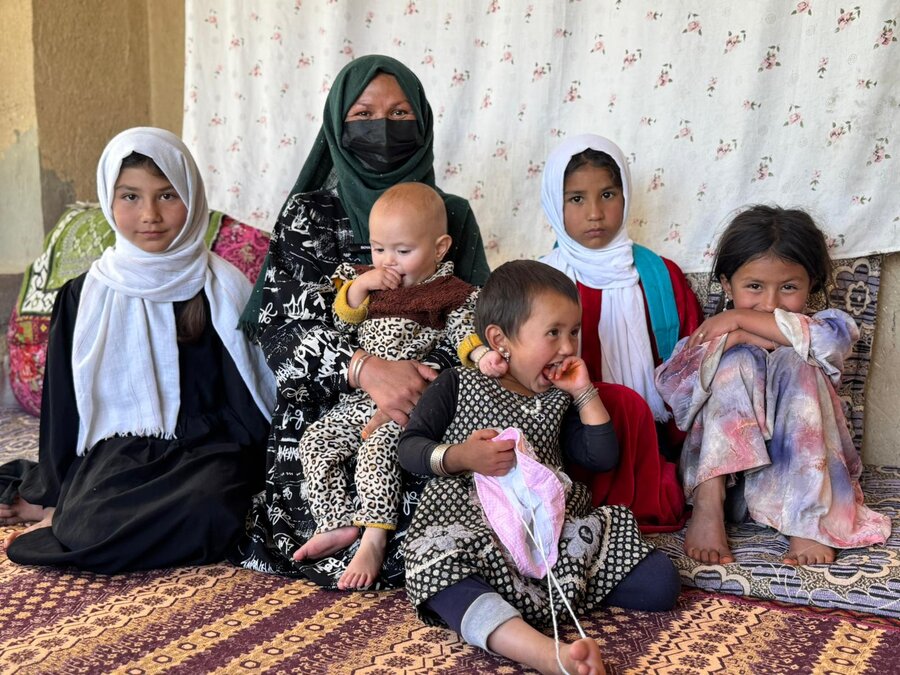
Raqiba Ahmadi knows hunger as a daily reality. As a mother of six, there were times when she had to make impossible choices: who in her family eats first, who must wait and how long the food might last. Survival has become a careful calculation carried almost entirely on her shoulders.
In the northeastern Afghan city of Faizabad where she lives, crisis follows crisis and families struggle daily for survival. Here and elsewhere in the Central Asian country, the silent emergency of malnutrition jeopardizes the future of millions of children and mothers. Ahmadi hopes her family won’t be among them.
“The little food we can afford we give to our children, but that is not enough,” says Ahmadi, whose youngest daughter is recovering from malnutrition and whose husband is unemployed.
"Programmes such as nutrition assistance are essential, not optional." – John Aylieff, WFP Country Director in Afghanistan
For Ahmadi and countless other Afghans, life has become increasingly precarious. The country is grappling with overlapping shocks, including a collapsing economy, job losses and climate extremes.
More recently, rising regional tensions – from the fallout of the Middle East crisis to border closures from escalating hostilities with Pakistan – have disrupted supply chains, further driving up prices and deepening food and nutrition insecurity. For the World Food Programme (WFP), this has meant our stocks have been depleted of specialized foods helping women and children recover from malnutrition.
“Programmes such as nutrition assistance are essential, not optional,” says John Aylieff, WFP Country Director in Afghanistan, where beyond nutritional support, WFP provides food rations for vulnerable Afghan families. “They are a lifeline for millions of women and children across Afghanistan. But unfortunately, this lifeline has already been severed, threatening the lives of hundreds of thousands of mothers and children."
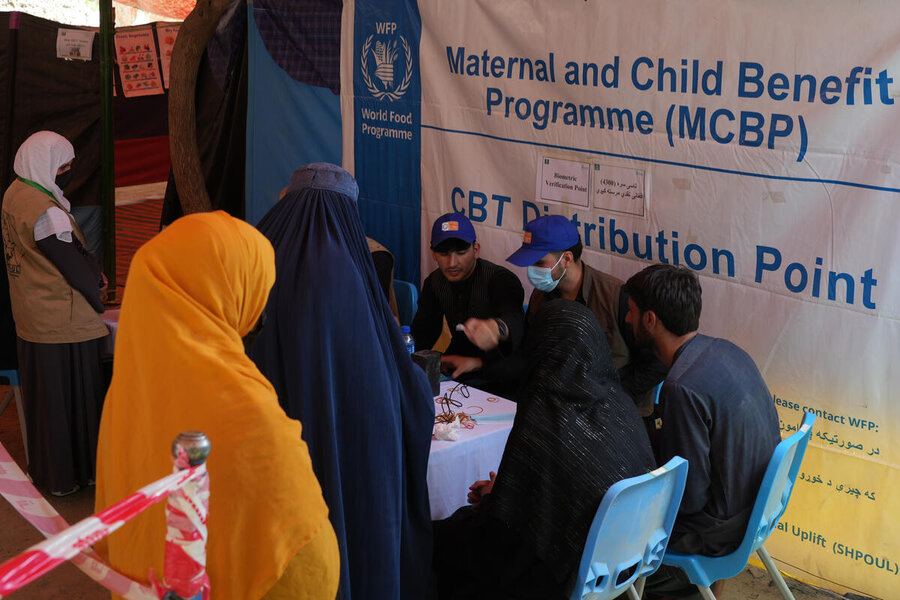
Even before the latest shocks, the country was struggling with record levels of hunger and malnutrition. Over 13.8 million people now face acute food insecurity, and nearly 5 million children and pregnant or breastfeeding women are malnourished.
Last year, WFP supported more than 12.4 million Afghans with food rations and nutrition assistance. Nearly three-quarters of them, or 9.1 million people, were women and children like Ahmadi and her youngsters. But funding cuts have forced us to slash our support. Today, WFP assistance reaches less than a fraction of Afghanistan’s undernourished mothers and children – and even that is at risk of further cuts.
“Nutrition support prevents children from sliding deeper into malnutrition,” says WFP’s Aylieff. “It’s a means for mothers to protect their families amid constant economic and climate shocks. Without reliable cross-border access and sustained funding, we risk pushing thousands more mothers and children into life-threatening malnutrition.”
Vanishing options
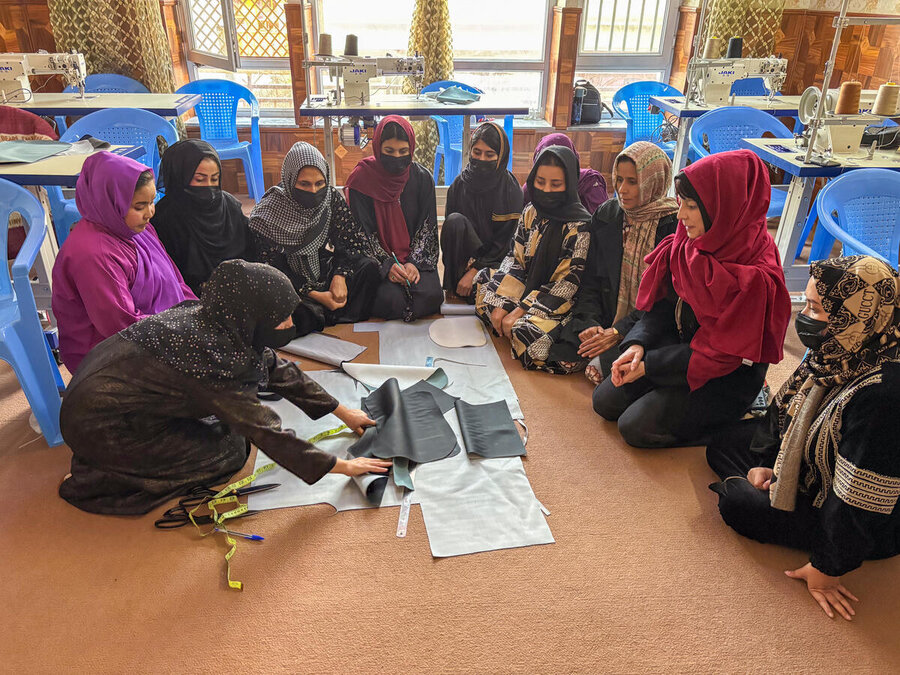
As economic opportunities vanish and restrictions tighten around women’s lives here, Ahmadi has few alternatives but staying home to care for her children, while her husband searches for daily labour. The family’s small vegetable garden and a few animals, including hens and a goat, provide some support, but barely enough to cover their basic needs.
“We don’t have jobs and do not have any source of income,” she says. "When we have food, I prepare it for the kids.”
On a recent morning, she makes the 5 km journey from her tiny stone house to a WFP-supported clinic in Faizabad for her daughter Neda’s routine check-up. The 15‑month‑old is among 3.7 million children in Afghanistan suffering from acute malnutrition.
During Neda’s routine check-up, the nurse measures her weight and height. There has been progress since her last visit. Neda has gained weight, she has grown, but signs of undernutrition are still there. Recovery does not happen at once. It is a long journey, with many steps still ahead.
After the check-up, Ahmadi receives 3 kg of special, nutrient‑rich peanut paste. The nutritional supplement, which helps Neda gain weight and strength, is part of WFP assistance for the family that also includes wheat flour, pulses, oil and salt.
"I want my children to grow up healthy, without being hungry or ill." – Afghan mother Raqiba Ahmadi
“With the food we receive, I feed my children once a day,” Ahmadi says, adding, “I want my children to grow up healthy, without being hungry or ill.”
Yet, uncertainty hangs over the family’s future. Ahmadi has watched neighbours lose their assistance as humanitarian funding declines. She fears her family could be next.
“My hope for the future, for my baby and my whole family, is that this assistance continues. I want my children’s lives to improve thanks to this support,” Ahmadi says, adding, “assistance is especially important for women and it must continue.”
WFP’s work in Afghanistan is made possible thanks to the support of the Asian Development Bank, Australia, Canada, the European Commission, Japan, New Zealand, Sweden, Switzerland and the United Kingdom.
WFP urgently needs US$350 million to support Afghanistan's most vulnerable people over the next six months.