
Middle East crisis: WFP navigates turbulent waters to tackle hunger
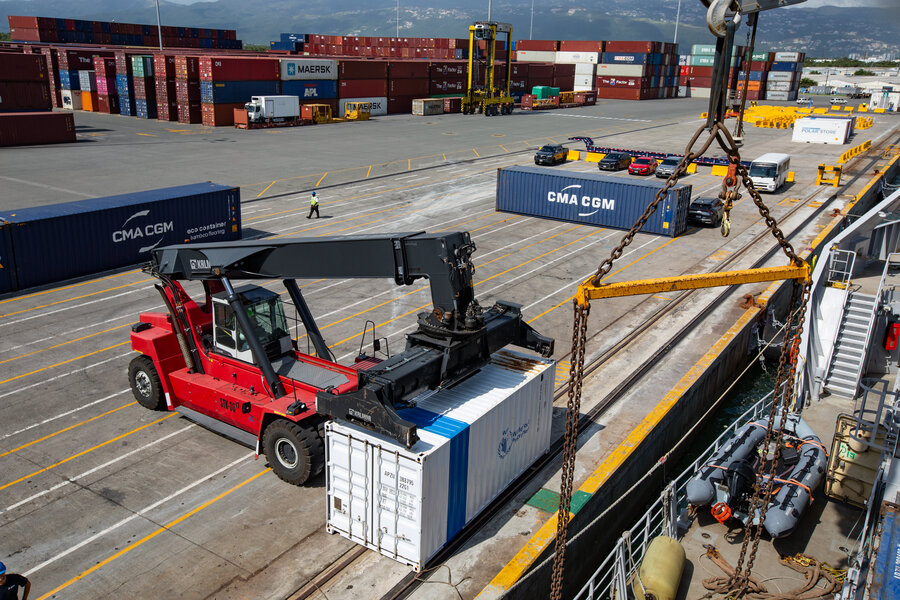
Can you give us a snapshot of the challenges in shipping food aid today?
From my perspective, we’re facing the most disruptive period in global shipping since the COVID-19 pandemic and the (2023) Red Sea crisis. Multiple trade routes are affected simultaneously, which is slowing deliveries, pushing up costs, and making shipping schedules far less reliable.
A major factor is the effective closure of the Strait of Hormuz, the only maritime gateway for all ports inside the Persian Gulf. Cargo is now diverted or delayed in ports like Salalah in Oman, or Colombo, Sri Lanka. Gulf ports that previously served as transshipment hubs are disrupted. Many vessels are also avoiding the Bab el-Mandeb Strait (a strategic Red Sea corridor) for precautionary reasons, rerouting instead around the Cape of Good Hope. Additionally, carriers are introducing steep surcharges for containers and freights, including war-risk premiums on top of already elevated freight rates.
"Vessel schedules change at short notice, WFP cargo gets delayed or stuck in transshipment hubs, and costs keep rising...Despite this, we're adapting." – WFP Shipping Chief Henrik Hansen
Unpredictability is our biggest issue. Vessel schedules change at short notice, WFP cargo gets delayed or stuck in transshipment hubs, and costs keep rising. Despite this, we’re adapting: finding new land corridors, adjusting routing strategies, and working around bottlenecks to keep food assistance moving to the people who need it.
What does this all mean for hungry people?
The impact goes well beyond disrupted shipping routes and rising freight rates. Prices across the entire supply chain feed into higher operational expenses – reducing how much food WFP can buy, ship and deliver. The result is simple but devastating; we can’t reach as many people with either food or cash-based interventions. Those we do reach may get smaller rations, or may buy less food at markets because of rising prices.
Communities already facing severe food insecurity are hardest hit by global shipping disruptions thousands of kilometres away. That’s what keeps me up at night.
Which countries are most affected?
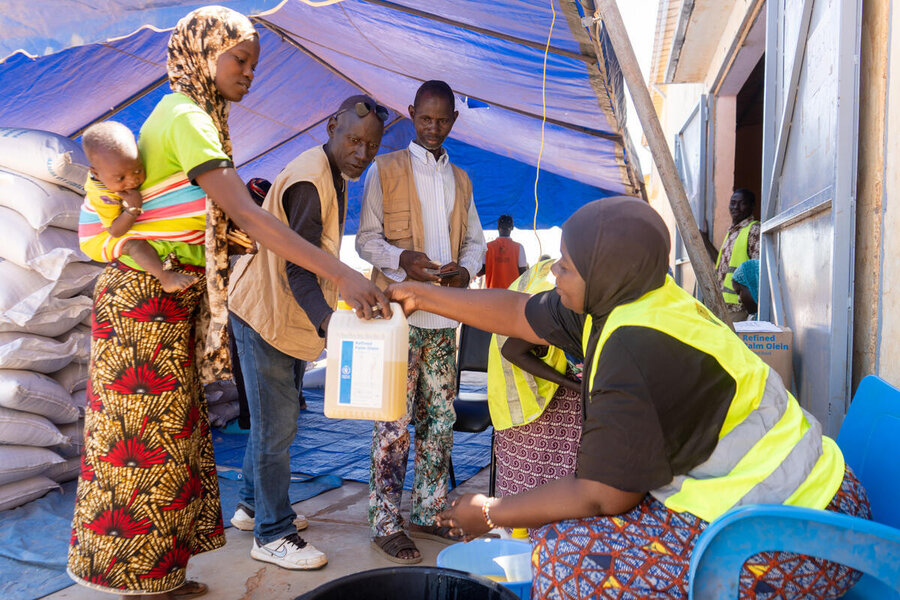
To be honest, the impact is global. That said Sudan, where the supply chain was already extremely fragile, faces among the most immediate impacts. With many vessels now avoiding Bab el-Mandeb Strait, alternative routes can add weeks to travel times and significantly increase costs. We’re seeing similar transport disruptions for some of our other operations in East and Southern Africa, including the Democratic Republic of the Congo, Kenya and Ethiopia. Like Sudan, they all rely heavily on long maritime supply chains from Asia and the Gulf Region.
West Africa is also feeling the strain. Ports like Dakar (Senegal), Tema (Ghana) and Abidjan (Côte d'Ivoire) are all experiencing longer lead times because of delayed shipments from Asia and the Middle East. This affects our ability to preposition food ahead of lean seasons and reduces predictability for some of the most food-insecure countries in the Sahel.
For Asian countries like Afghanistan and Myanmar, delays in global shipping flows are slowing down imports of both humanitarian aid and essential commodities. Those wider market disruptions are reducing local availability and quickly increasing the prices of staples – which directly affects the people we serve.
What solutions is WFP finding, first in negotiating shipping access?
At the moment, securing shipping access is extremely challenging. Many transshipment hubs are full, vessels are overbooked, and many carriers have stopped accepting new bookings into the Middle East region altogether.
Nonetheless, WFP has managed to keep cargo moving. We’re benefiting from the years of strong relationships we’ve built across the shipping and freight forwarding industries. Carriers, shipowners, freight forwarders and port operators are giving WFP priority treatment, recognizing the critical, lifesaving nature of our shipments. That’s a key reason we’ve been able to secure space when commercial cargo cannot.
WFP and UNICEF have also successfully negotiated waivers for many of the recent shipping surcharges on behalf of all United Nations agencies. Even so, our preliminary analysis shows WFP still faces a roughly 18 percent cost increase in transporting cargo currently at sea.
How is WFP rerouting stranded food aid?
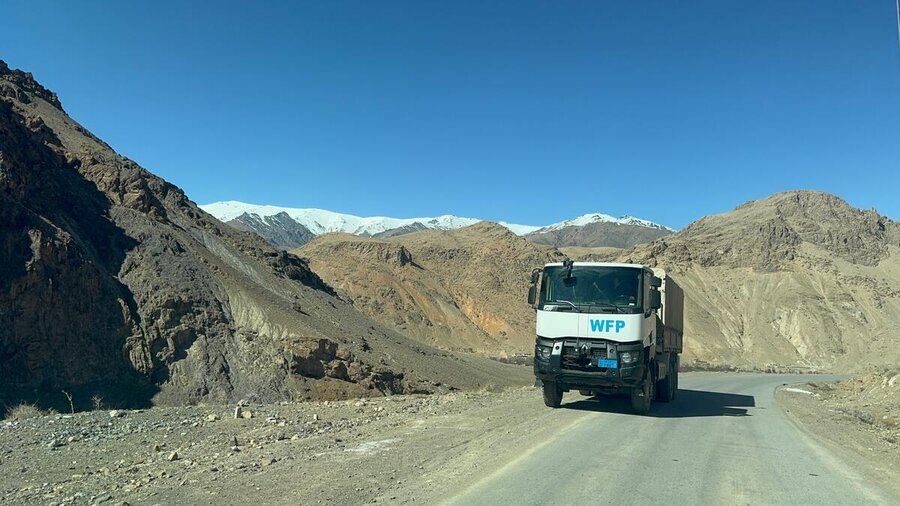
For us, the first step is always to source food as close as possible to where it’s needed. That reduces transit times, cuts exposure to disrupted corridors, and helps keep costs under control. But in the current environment, proximity alone isn’t enough — we need multiple backup plans for every route. We’re constantly developing contingencies to keep cargo moving from Point A to Point B.
For example, we’re trucking cargo from the United Arab Emirates to Türkiye, where it can be shipped on more reliably. That’s especially critical for aid headed to Afghanistan. With the Pakistan and Iran corridors currently closed, one of the only viable remaining routes continues overland from Türkiye across the Caucasus through Georgia. From there, our cargo is shipped across the Caspian Sea into Central Asia, then trucked to northern Afghanistan. It’s a long, multi-country chain, but right now it’s one of our few reliable corridors.
"We’ve lived through this before. After COVID-19, it took almost a full year before global shipping networks started functioning normally." – WFP Shipping Chief Henrik Hansen
We’re applying the same adaptive approach across all regions – finding different ways to ship cargo more quickly, and looking at workarounds by land. The goal is always the same: maintain the flow of food, even when maritime networks are shifting daily.
And honestly, this has always been the rhythm of my day. I’m on the phone constantly, with freight companies, shipowners, terminals, carriers, WFP country offices and colleagues across our network testing ideas, troubleshooting bottlenecks and redesigning routes in real time.
Looking ahead, can WFP’s operations recover quickly if the Middle East crisis ends soon – and what happens if not?
Even if the situation in the Middle East stabilizes tomorrow, it won’t be an immediate recovery. There is already a huge backlog of cargo sitting in congested transshipment hubs, waiting for vessels, space, or access to move. That will take time to untangle – anywhere between 1-5 months, according to shipping company estimates. I’d say the reality is probably somewhere in the middle.
If the crisis continues for months, it means even higher costs and more delays – making it harder and more expensive to keep pipelines steady, and ultimately reducing WFP’s food assistance.
We’ve lived through this before. After COVID-19, it took almost a full year before global shipping networks started functioning normally. Containers were stranded in the wrong places, vessel rotations were off schedule, ports were jammed and the ripple effects travelled around the world for months.
But if there’s one thing I’ve learned, it’s that WFP adapts fast. We’ll find new corridors and shift transport modes to keep food moving. The system will eventually recover, it always does. But it won’t be overnight – even under the best-case scenario.