
Lebanese families forced to flee again as conflict increases risk of hunger
Roukaya’s son shook her awake one night, warning he had heard airstrikes. Minutes later her family was running out of their apartment, joining a flood of people fleeing heavy shelling that pounded their neighbourhood in Beirut’s southern suburbs.
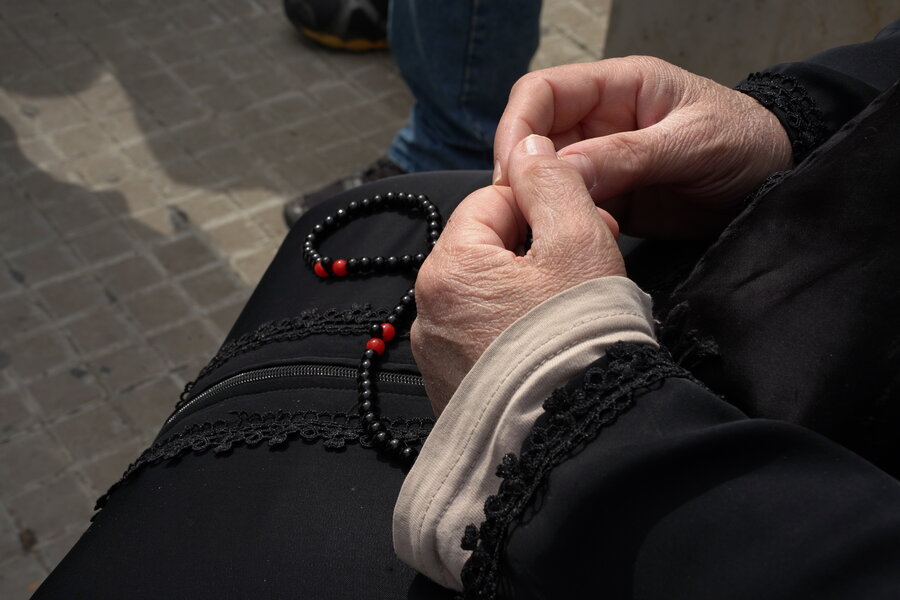
“The roads quickly became crowded with cars as people tried to leave,” recalls the mother of four, her hands clasping dark prayer beads as she sits in a cramped shelter in Lebanon’s capital. “May God protect us and give us strength,” she adds.
“The Lebanese have been through this crisis before...They are exhausted.” – WFP Deputy Executive Director Carl Skau
Today, Roukaya (surname withheld on request) and her family count among more than a million conflict-displaced people in Lebanon – one of the many fallouts of a broader and escalating Middle East crisis with no immediate end in sight.
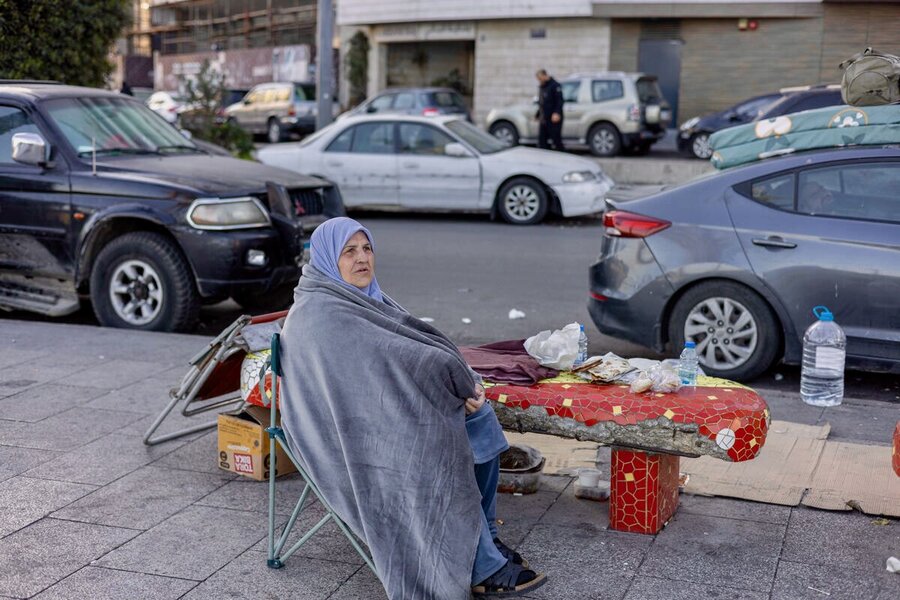
With many schools and other temporary shelters full to the brim, many fleeing the violence have been forced to pitch makeshift tents in the streets, camp out in their cars, or seek support from family and friends. Tens of thousands of Syrians who once found refuge in Lebanon are now turning around and heading home.
“The Lebanese have been through this crisis before. They’ve been displaced before.” said World Food Programme (WFP) Deputy Executive Director Carl Skau during a recent visit to Lebanon. “They are exhausted, they are afraid, and frankly there is a sense of desperation on the streets.”
WFP provides critical lifeline
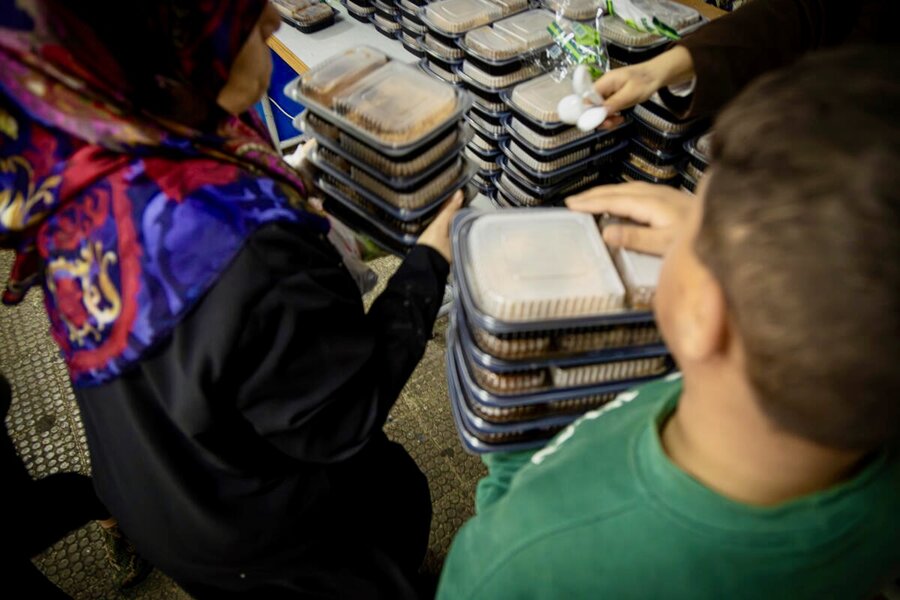
For Roukaya and many others, some stability comes from the hot meals, food packages, snacks and packages of fresh bread that WFP is distributing to over 63,000 affected people. In coordination with the Government of Lebanon, we are also supporting tens of thousands of families with emergency cash assistance.
As displacements soar, WFP is requesting US$72.5 million to ramp up our life-saving response in Lebanon over three months, as part of a broader flash funding appeal issued by the United Nations.
“We are responding across Lebanon at scale, but the needs are growing by the day." – WFP Lebanon Country Director Allison Omar
“We are meeting families who fled in the middle of the night with nothing. Families trying to reassure their children while they themselves don’t know what comes next. The strength is extraordinary, but so is the exhaustion," says Allison Omar, WFP Lebanon Representative and Country Director.
“We are responding across Lebanon at scale, but the needs are growing by the day as more people are displaced. We urgently need support to sustain and expand this assistance," Omar adds. "Without it, we risk leaving the most vulnerable families without the basic food they rely on to get through this crisis.”
If Lebanon is on the frontlines of the Middle East crisis, the fallout is spilling well beyond the region, with potentially grim food security implications. New WFP findings show a record 363 million people could face acute hunger if the conflict doesn’t end by mid-year – 45 million more than today and totalling more than in the wake of the COVID-19 pandemic or the start of the war in Ukraine.
Moving multiple times to escape conflict
Since fleeing their home, Roukaya and her relatives have moved from place to place seeking shelter. Her extended family of ten is now packed into a tiny room at a Beirut school that has been turned into a short-term refuge. During their first few days, the family slept on the floor, until they received pillows and other items.
“There is a lot of hardship here – even the simplest things of life become difficult,” Roukaya says, describing a tiny shared washing area for dishes, laundry and other needs.
“I haven’t been able to shower,” she adds. “My daughter hasn’t showered for four days.”
Like many Lebanese, Roukaya’s family has been uprooted by conflict before. When violence flared in 2024, they crossed the border into Syria and later went to Iraq, seeking security.
Last July, they again fled their home in southern Lebanon, just a week after she gave birth. Her husband’s native village has been almost entirely destroyed by shelling, Roukaya says. She fears her own home is gone as well.
“At least we can eat,” she says, “while others are still out on the road seeking shelter."
Support to date for WFP's response to the Lebanon crisis includes the European Commission, Japan, Sweden, the United Kingdom and private donors.