
Ramadan: Stories of hunger, displacement and hope amid three humanitarian emergencies
Gaza: the lifeline of WFP hot meals
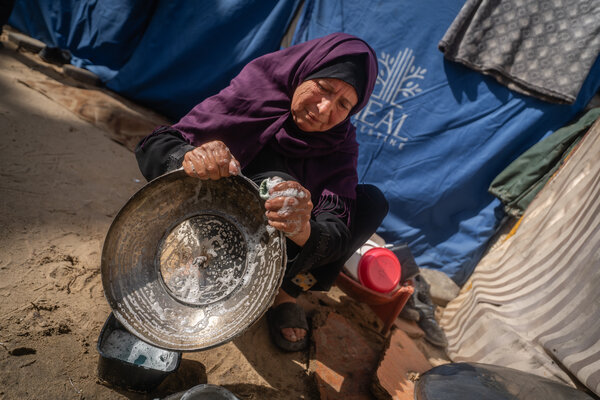
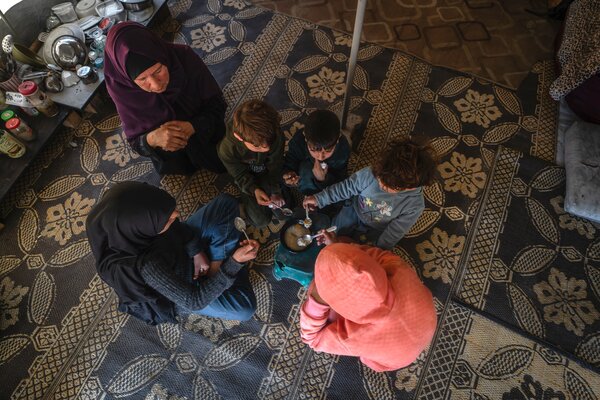
Zahra Abdel Raouf remembers the many Ramadans when her large family would gather at their home in Gaza City for the [post-sunset] iftar meals that broke the fast. When this mother and grandmother would put four or five dishes on the table.
Times before a war that brought soaring hunger and death, including to Abdel Raouf’s family.“Every year we were together. All my children around me,” Abdel Raouf recalls, adding, “the kids were happy for Ramadan. Not like now.”
After the 2023 conflict broke out, bombing destroyed Abdel Raouf’s home and neighbouring ones. With nowhere else to go, her family fled to nearby schools, believing they would be safe. But even the schools did not remain shelters for long.
“it is survival with whatever we can afford.”
They evacuated south. There, suffering took on new forms. There were no tents at first. Water had to be carried from far away. Conflict and humanitarian access constraints made food scarce. Whenever the family heard of a kitchen distributing meals, they walked long distances.
Sometimes they found food. Sometimes they did not. “We struggled,” Abdel Raouf says.
Multiple displacements briefly took the family back home, then to central Wadi Gaza, where they lived in a shelter of wood and nylon sheets. “We lived day by day,” she recalls.
During this time, Abdel Raouf carried on with patience, retaining her faith and thanking God, even in the midst of war.
After last year’s ceasefire, the family returned to Gaza City. But shelter was nowhere to be found. Finally, they cobbled a makeshift refuge on a neighbour’s land. Eventually, the acquired proper tents. Now, a nearby WFP-supported hot meals kitchen - serving rice, peas, carrot and bulgur wheat - has become central to their survival. The food comes directly to their tent. Whatever arrives, they accept.
“Thank God, the kitchen saves us.”
“Thank God, the kitchen saves us,” Abdel Raouf says. But her children still yearn for meat. Bread comes, sometimes several times a day, but for a family of nine, it never lasts. They often have to buy more, although money is scarce.
Work has stopped. Fathers sit idle, unable to provide. Zahra’s 32-year-old son, still unmarried, sleeps in a tent. Even clothing is a struggle. One neighbor gives a shirt, another a pair of trousers, and somehow they manage.
This Ramadan, they will depend on whatever the hot meals kitchen serves up. Abdel Raouf describes pre-war days when her children were joyful. They ran outside, bought treats, and waited eagerly for iftar. Now, they cannot go out.
“Joy? There is none,” she says. “We just say, ‘thank God.’”
Central African Republic: Communities are breaking a cycle of instability
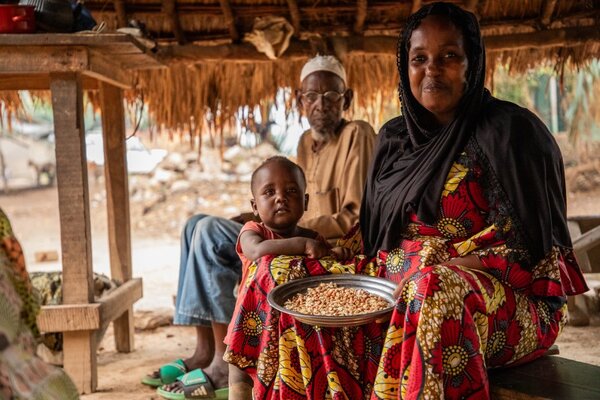
Ramadan is a time for Sadia Adraman’s family to gather, pray and appreciate the Muslim month of fasting in their PK22 neighbourhood, on the outskirts of the Central African Republic’s capital of Bangui.
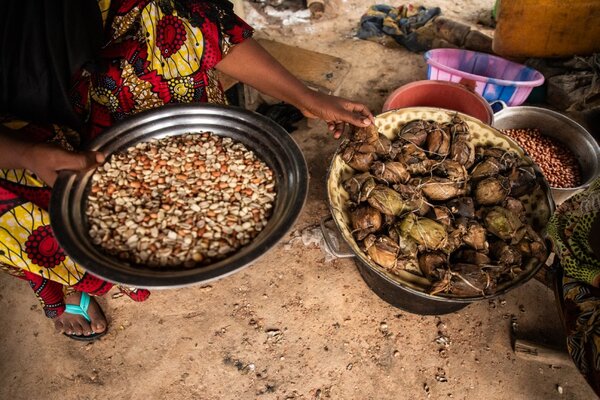
“During Ramadan, my prayers go to my loved ones,” says the single mother of four, as she prepares traditional Central African fish cakes at home with her mother.
The tasty dish, known locally as kanda, along with peanuts and cakes that Adraman bakes and shares with neighbours, are a staple of the family’s Ramadan meals breaking daylong fasts — meals they can enjoy thanks to a WFP project bringing job opportunities, financial support and education to a neighbourhood where many struggle to get by.
“During Ramadan, my prayers go to my loved ones.”
Launched last year, the WFP initiative boosts income opportunities through activities like repairing rural feeder roads that help boost commerce, and developing farmland - projects benefitting 500 residents of PK22 alone.
Participating families receive the equivalent of US$30 monthly for their work to buy food and other staples. Those funds - along with earnings from selling their harvests - allows them to their children to school, and focus on earning a living, rather than just surviving.
The WFP assistance has helped Bangui residents turn the page on years of instability and violence that once rocked the capital. It has helped Adraman rebuild her family’s life after they lost their home during those troubled years, allowing her to buy staples like rice, sardines and tomatoes to feed her young family.
"I admire these strong women in our group who face difficulties alongside me."
“I hope to continue to receive WFP support again this year,” says Adraman, who is president of a women’s group whose members also receive the assistance. Called “Tous Ensemble” (All Together), the group aims to improve their neighbourhood through activities like farming maize and groundnuts, selling soap and by raising awareness about soaring sexual violence in CAR that especially targets women and girls.
The women also used the WFP assistance to establish a school that is attended by Adraman’s children. During Ramadan, they additionally organise cultural events like musical gatherings and women’s outings.
“Mutual support among women is very important to me,” Adraman says. “As a single mother, I know their courage, and I admire these strong women in our group who face difficulties alongside me.”
Afghanistan: Support ensures nutritious food upon breaking the fast
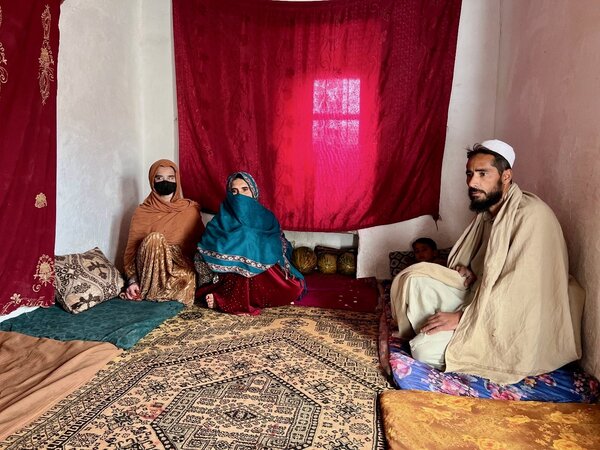
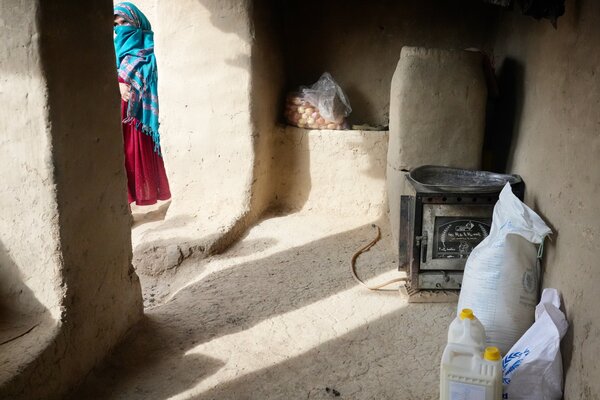
Since Ghairat Khan lost his teaching job six months ago in Afghanistan’s eastern Parwan Province, providing for his household of nine has become a daily struggle.
“I worry about feeding my family,” says Khan, who has turned to odd jobs to survive.
It is a sentiment shared by many in his village of Dandar, where unemployment is widespread. When work does come, it is temporary and poorly paid.
“If we don’t get WFP’s assistance, it will be very difficult for us.”
In a country where 17 million people face acute hunger, the month of Ramadan - a time of reflection and sharing - instead brings additional pressure. Many are beginning the fasting period without reliable incomes, after years of economic hardship, drought and limited access to basic services.
That makes WFP support all the more important - at a time when eating a wholesome meal for suhoor (the pre-dawn meal before the daily fast) and iftar, breaking the fast is essential to stay fit and energetic.
“During Ramadan, we can’t work much,” Khan explains. “If we don’t get WFP’s assistance, it will be very difficult for us.”
For families like Khan’s, WFP support - which includes wheat flour, cooking oil, salt and pulses - means having the chance to break their Ramadan fast with a substantive meal. These key energy-boosting staples also pack a nutritional punch.
“It is survival with whatever we can afford.”
Children, along with pregnant and nursing women - the most vulnerable groups - receive specialized nutritious foods. But that assistance is now threatened by funding cuts, putting at risk millions of Afghans who desperately need it.
At iftar, Khan and his family often eat simple food, like vegetable flatbreads known as Bolani or Peraki with tea. But since losing his job - like many other teachers in Afghanistan - this Ramadan feels very different.
“WFP’s food assistance helps us meet our basic food needs,” Khan says. “Then with the little I earn from day‑labouring, we cover other essentials like medicines, warm clothes for children, and even clothes for Eid,” the holiday marking the end of Ramadan.
“For us,” he adds, “it is survival with whatever we can afford.”