
'I have never seen anything like it' – reflections from a worsening hunger crisis
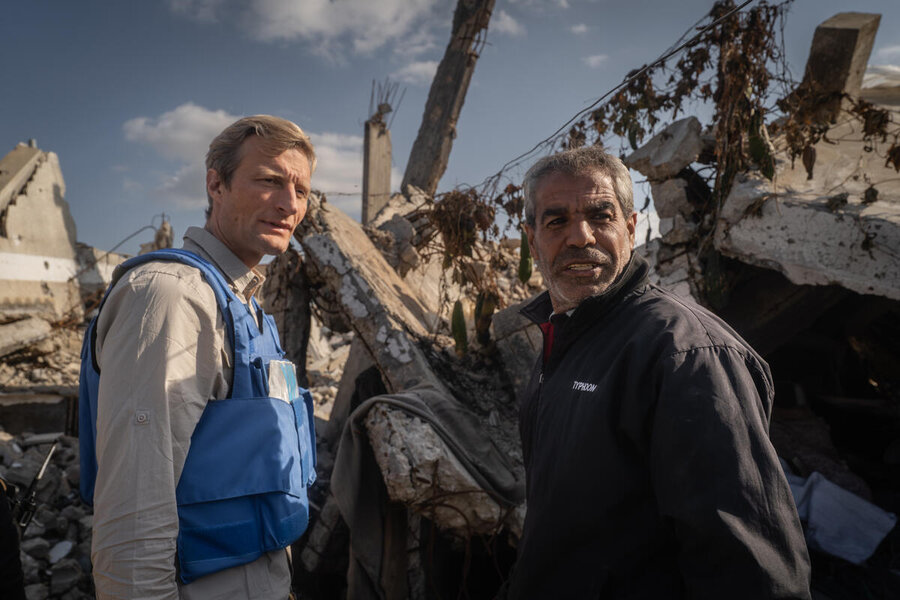
We are facing a perfect storm, with record-high levels of hunger that risk getting even higher at the same time as historic drops in funding.
Weeks ago, we raised alarm that, should the crisis continue and the price of energy remain over US$100 a barrel, some 45 million people would be pushed into hunger.
That is mainly because the correlation between the price of energy and food is so tight in many places. In the poorest countries, people are already spending all their money on food. When food prices rise, they eat less. What we warned against is now playing out in real time in many contexts.
Increasing costs are driving food insecurity
We have looked particularly into Somalia, Afghanistan and Sri Lanka. In Somalia, we’re seeing 2.5 million people now acutely food insecure. In Afghanistan, it's 2.3 million and in Sri Lanka it’s 1.3 million.
In all three countries, there is a different mix of issues that is driving this. Increased prices is one, but there is also the element of underfunded humanitarian responses and development responses, and the cost of doing business has gone up dramatically. With the limited funding that is there, fewer people are being reached.
The long-term implications might be even more severe. This is now the planting season in most of Eastern Africa. The rainy season is on its way, and we are really worried that productivity will go down. That would then have implications six to nine months from here.
Ebola response: a crisis within a crisis
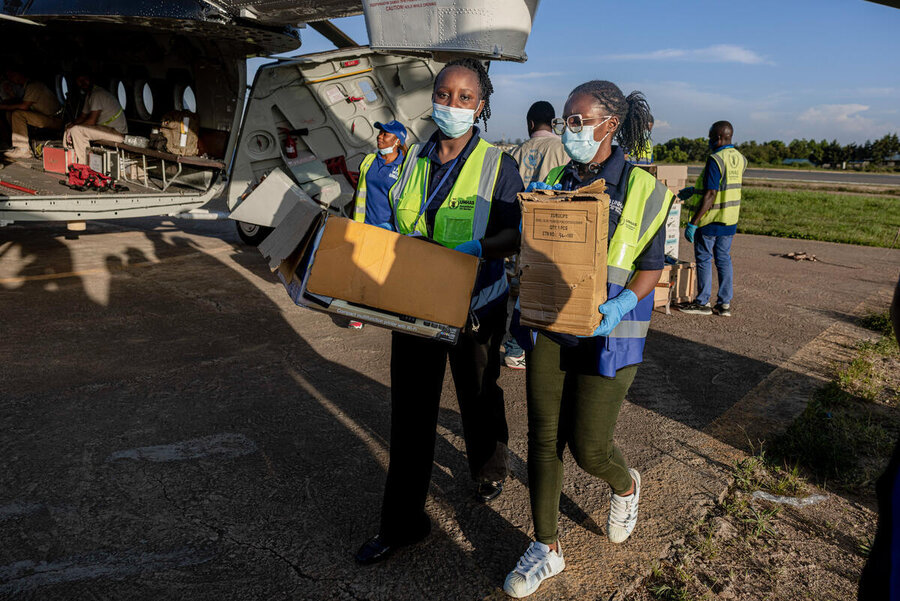
On Ebola in the eastern Democratic Republic of the Congo, this is a crisis in an existing crisis already. In Ituri province where the outbreak reportedly started, hundreds of thousands of people are already displaced – only in the past couple of months we saw additional tens of thousands of people displaced. A million people are also acutely food insecure and we are just barely meeting the minimum requirements in terms of response.
We have a strong presence and are now lending that to the health response. We are working very closely with WHO, with UNICEF, and with the Government and local authorities, who are really the front line in responding to this.
Our support is mainly to provide logistical services to move first responders but also equipment to the outbreak front lines, and also providing for air medevac [medical evacuation].
There is also a food element to this. People who are isolated or quarantined need food, but so do their families, who are impacted by the fact that their loved ones are not present.
Funding cuts mean fewer people reached and risk of famine
Turning to the funding gap: we are facing historic drops in our funding, with a 40 percent drop year to year. The funding is extremely unpredictable and some contexts are hit more than others.
We are now facing the possibility of famine-like conditions. Our colleagues are working around the clock to try to prevent that. We have the data, we have the experience and we’ve done it before, but the resources are simply not there.
With the limited funding that is there, fewer people are being reached at a time when needs are growing. Acting now is so much cheaper than waiting until the disaster has arrived.
What hunger and funding gaps look like on the ground
In Afghanistan, I was at the border where some 700 to 1,000 people per day are coming back. I met a mother, maybe 20 years old, with three kids. She had never lived in Afghanistan and was heading up to some village without any plan or prospects to create a living.
I was also at a rural health clinic where we had run out completely of commodities. I saw hundreds of mothers with their severely malnourished children who had to turn back. Many of them had already walked three, four hours to get to the clinic. They left empty-handed.
I have never seen anything like it. The desperation in the air at that clinic is hard to describe.
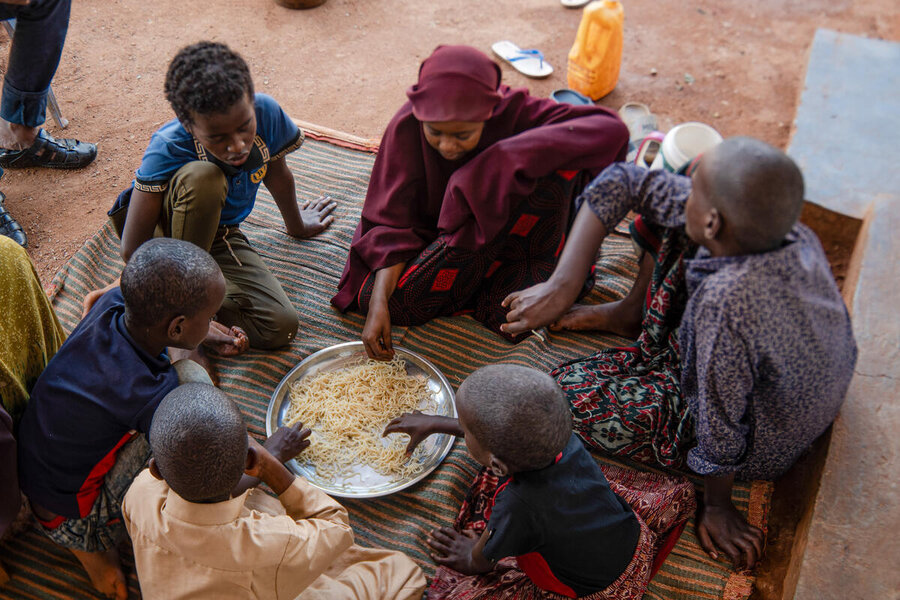
In Sudan, I was in a camp where there are 700,000 people who survived the besiegement and are now left stranded. It is an ocean of grass huts. You drive and you don’t see the end. There are grass huts to the horizon.
These people are left with nothing. We bring food convoys maybe every other month, and that food only lasts two or three weeks and then they have to cope again.
That is the real impact of these cuts.
Closing the gap between needs and resources
We are acting to narrow this gap between needs and resources through even greater efficiency. We are improving effectiveness through clearer targeting, scaling up cash assistance rapidly, helping people become self‑reliant sooner, and investing in resilience and anticipatory action.
We are also adopting an exit mindset, strengthening national capacities so we can responsibly withdraw. That is central to WFP’s new strategic plan and a necessary culture shift. Together with UN partners, we are also advancing system-wide initiatives.
So we're not sitting back idly to just appeal for more money. We are putting on the table what we can do to try to narrow that gap. But while these measures help, they are insufficient alone. Additional resources are still essential to meet global needs.