
On the frontlines of DRC's Ebola crisis: WFP's race against time and hunger
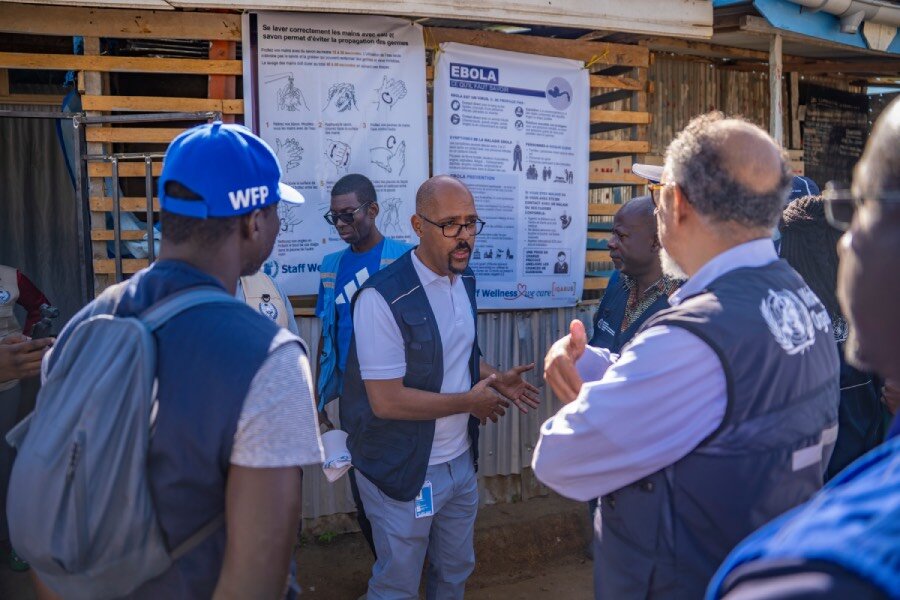
For years, ongoing conflict and massive population displacement have smashed livelihoods in northeastern Democratic Republic of the Congo (DRC), feeding soaring poverty and food insecurity. Now, from Ground Zero of DRC’s Ebola epidemic, Sib Ollo and Olivier Nkakudulu offer a frightening assessment of the region’s latest threat: a deadly and fast-moving strain of the virus that risks further deepening hunger – and the race against time to contain it.
“If we don't act, things could quickly spiral out of control,” says Ollo, World Food Programme (WFP) Area Coordinator for eastern DRC of the rare Bundibugyo species of virus.
“We have the capacity to respond,” adds Nkakudulu, WFP Head of Field Office in Ituri Province, the epicentre of DRC’s 17th Ebola outbreak. He and Ollo are both based in Ituri's capital of Bunia, leading WFP’s frontline response to the Bundibugyo outbreak.
“We need a very strong and coordinated response," Nkakudulu adds. "And we need it fast.“
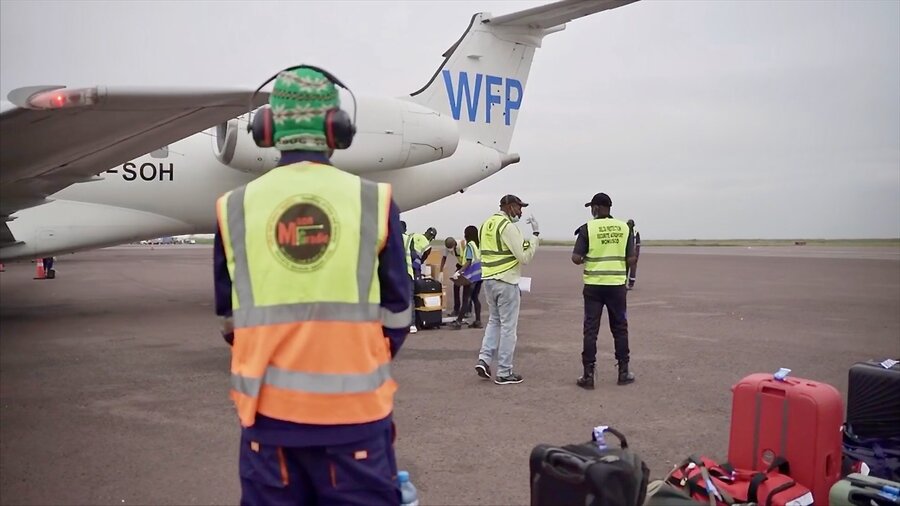
Just over two weeks after being identified in Ituri, DRC’s latest Ebola epidemic is now the third largest in history, with hundreds of suspected cases and deaths. The Bundibugyo virus, which has no approved treatments, has since spread to at least two other Congolese provinces, North and South Kivu, with several suspected cases also reported next door in Uganda. Neighbouring countries are tightening borders. International health authorities have raised their DRC risk assessment to “very high” and warn that ten other countries in the region could be exposed.
The outbreak is “outpacing the response,” warned World Health Organization Director-General Tedros Adhanom Ghebreyesus, who recently visited Bunia. He has described DRC as at the centre of a “catastrophic collision of disease and conflict.”
Working to support the Government, the World Health Organization and other partners in containing Ebola’s spread, WFP is rapidly scaling up: transporting frontline health workers, medical supplies and other vital cargo to remote and conflict-hit locations, and providing warehousing and emergency telecommunications assistance on the ground. We are also upgrading a helipad to deliver more critical support to the mining town of Mongbwalu, one of the Ebola hotspots.
“We are in a very fragile country – any capacity that can be mobilized to come to DRC should be mobilized." – Sib Ollo, WFP Area Coordinator for eastern DRC
And we are drawing on our emergency response expertise and lessons from previous outbreaks to shape our actions today. Crucially that includes extending WFP food and nutrition assistance – already reaching hundreds of thousands of vulnerable people in eastern DRC – to cover Ebola patients, family and others affected by the outbreak.
“Food insecurity didn’t start with Ebola – but Ebola makes it worse,” says WFP’s Nkakudulu of a virus first discovered 50 years ago in what was then Zaire. “If you confine people, they will need to be supported with food. And if they don’t get food they will move,” increasing the risk of the virus, and hunger, spreading.
“We are in a very fragile country – any capacity that can be mobilized to come to DRC should be mobilized,” adds Ollo, urging coordinated action by the international community, including ramped-up funding.
Scale of Ebola epidemic ‘still unfolding'
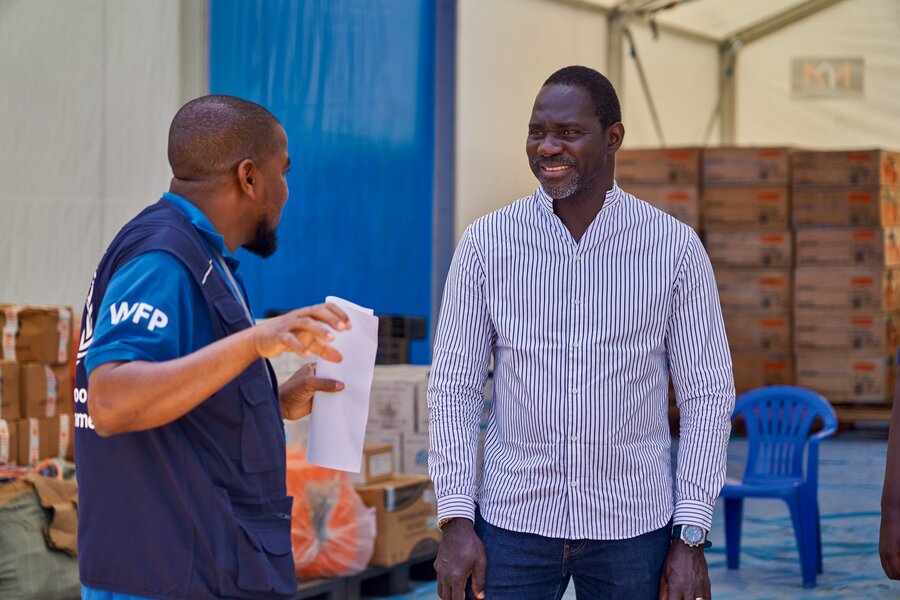
Ollo oversees the planning and implementation of WFP’s regional Ebola response that for the moment comprises northeastern DRC. In recent days he’s met with authorities and civil society members in the affected provinces and visited hospitals treating suspected Ebola patients.
“The true scale of the crisis is still unfolding,” Ollo says of the virus that experts believe may have been circulating for weeks before it was detected.
Nkakudulu is zooming in on our Ebola response in Ituri Province, where the majority of suspected Ebola cases are concentrated.
“There is a geographical expansion of the outbreak,” which now affects 7 Ituri health zones, Nkakudulu says. “And there is a denial among the population - which is why it’s very difficult to contain.”
“Our priority is to save lives on all fronts." – Olivier Nkakudulu, WFP Head of Field Office in Ituri Province
When WFP is alerted to an emergency such as Ebola, we act immediately.
“In places like eastern DRC, where many families were already facing hunger, the impact is even more severe,” Ollo says. “So we assess the situation, coordinate with partners, and deploy our logistics and air services to move critical supplies."
At the same time, WFP increases food assistance, because such shocks deepen an already fragile situation. “Our priority is to save lives on all fronts,” Nkakudulu says.
WFP’s Bunia Office has also rolled out prevention measures to keep staff and partners safe, including mandatory hand washing and temperature checks when employees arrive, holding Ebola awareness sessions and providing prevention kits with gloves, masks and hand sanitizers. The compound has additionally identified a place where those with elevated temperatures can isolate.
Ebola + funding cuts = deepening food crisis
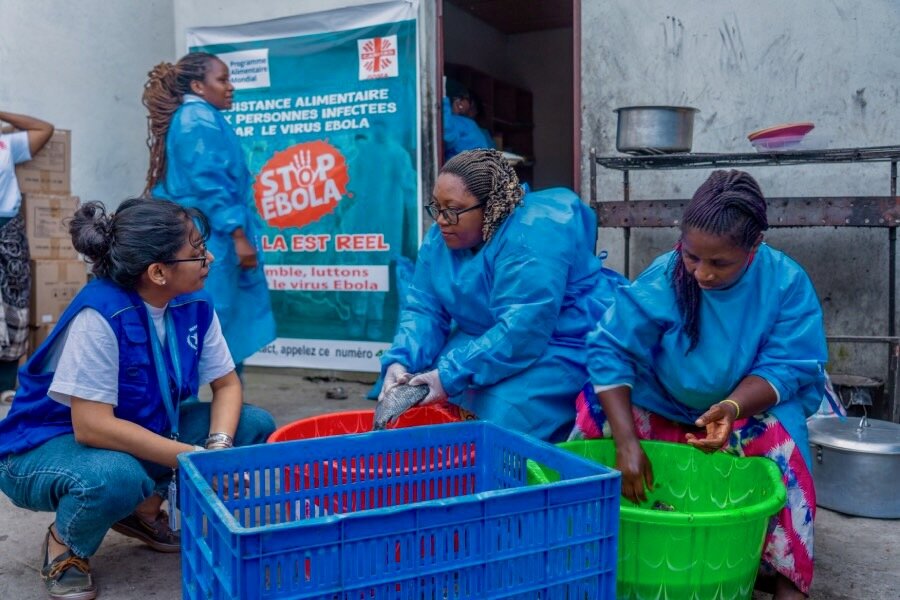
The Bundibugyo outbreak threatens to escalate what is already one of the world’s largest hunger crises, which affects 26.5 million people across DRC – including nearly 10 million in the East. In Ituri Province alone, more than one-third of the population struggles with acute or worse food insecurity, including more than half-a-million facing emergency hunger.
“The scale of displacement, hunger and malnutrition are huge in DRC,” Ollo says. “WFP needs to maintain a footprint and cover those needs at scale – and Ebola is an additional crisis we need to tackle.”
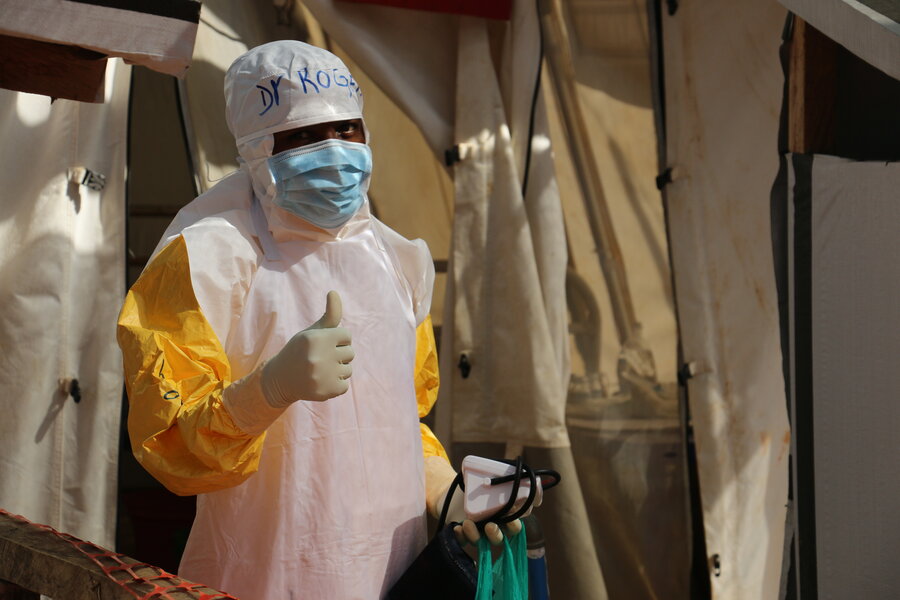
He and Nkakudulu warn that a toxic mix of factors could make DRC’s 17th Ebola outbreak extremely challenging to contain: from armed conflict in northeastern DRC driving massive population displacements – and complicating coordination efforts – to mistrust and denial of Ebola among affected communities, to the sheer spread of the outbreak and insufficient humanitarian funding to respond to it.
“It’s a vast region,” says Ollo of the Ebola-affected areas. “We’re not just talking about isolated, remote locations. It also includes really big cities, with big populations and proximity.”
With needs growing and limited resources, WFP may soon be forced to make difficult decisions. “Are we going to prioritize people with Ebola against people facing emergency hunger?” Ollo asks. “This is the challenge we are facing now.”
Lessons from Ebola hotspot Mongbwalu – and West Africa
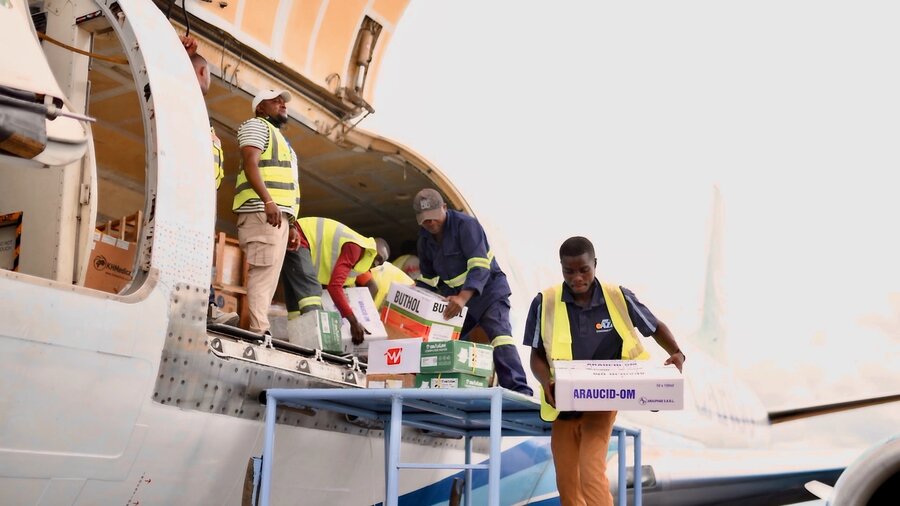
Ebola hotspot Mongbwalu, 86 km from Bunia, exemplifies some of the challenges responders face today, says Nkakudulu, who recently visited the town after the outbreak was declared.
“I saw abandoned communities living with nothing,” says Nkakudulu, who was born in DRC. “They need jobs, they need education, they need access to basic social services, including healthcare. And this crisis increases the feeling they are abandoned.”
Mining towns are also key markets for local commerce — which Ebola now puts at risk. Ollo describes trucks that normally would be heading to Mongbwalu loaded with supplies now idling in Bunia.
“If those markets collapse, the implications on food insecurity are massive,” Ollo says.
WFP and other responders are drawing lessons from previous outbreaks, he and Ollo say – including from a decade ago, when the largest Ebola epidemic ever spread across three West African countries.
“What was originally a health crisis ended up being a food crisis because of measures to contain the outbreak – with strong restrictions in the movement of food, goods and people,” Ollo says of the 2014-2016 Ebola outbreak in Guinea, Liberia and Sierra Leone, which saw higher prices and food scarcity in markets.
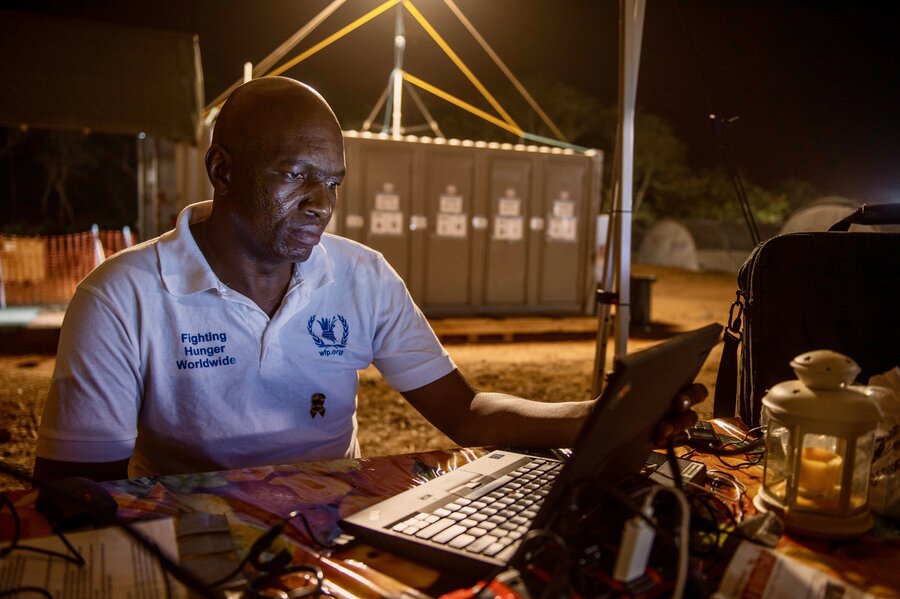
Working with country authorities and our humanitarian partners, WFP scaled up food assistance and logistical support, and used available data to model the impact of the Ebola virus disease on food security. We also expanded air routes via the WFP-managed UN Humanitarian Air Service to deliver humanitarian workers and equipment where they were needed. International donors also stepped up, surging funds, equipment and experts to support the response.
“WFP was equipped to deal with that food crisis, and we learned a lot from the West Africa response,” Ollo adds. “Let’s put that learning and knowhow to scale, with today’s different complexities that we didn’t have in West Africa.”
“Let’s build a community-centred response to this crisis. Because health crises especially always start with communities – and end with communities.” – WFP's Sib Ollo
For both of WFP’s frontline responders, this newest Ebola outbreak represents not just a brewing tragedy but a chance for positive change.
“Let’s build a community-centred response to this crisis,” Ollo says. “Because health crises especially always start with communities – and end with communities.”
“It’s an opportunity to build something strong,” Nkakudulu adds. “A strong system – to prevent the emergence of an 18th Ebola outbreak in the future.”
WFP urgently requires US$26 million for the next three months to scale up logistics and emergency food assistance for over 146,000 people in Ituri Province and communities affected by the Ebola outbreak.