
WFP surges food assistance amid renewed violence in eastern DRC
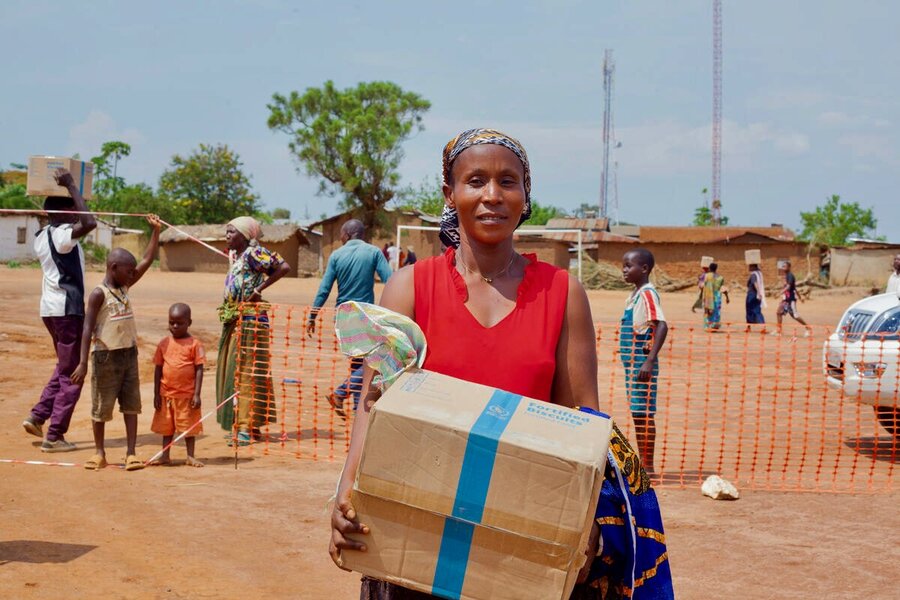
Carrying a box of World Food Programme (WFP)-supplied high energy biscuits, Riziki describes the personal toll of conflict ravaging this fertile, mineral-rich slice of eastern Democratic Republic of the Congo. The recent uptick in fighting, she says, has robbed her community of Sange of crops, possessions and jobs.
“Finding food is becoming increasingly difficult,” says Riziki. “We thank WFP for not abandoning us.”
Since early December, half-a-million people have fled deadly and escalating violence that has erupted in South Kivu Province, where Riziki lives. (WFP is withholding the last names of displaced people for their protection). The unrest has shuttered schools and deprived communities of safe water, medical care and livelihoods. Its fallout has spilled over the borders, as tens of thousands of Congolese, flee especially to neighbouring Burundi, in search of refuge.
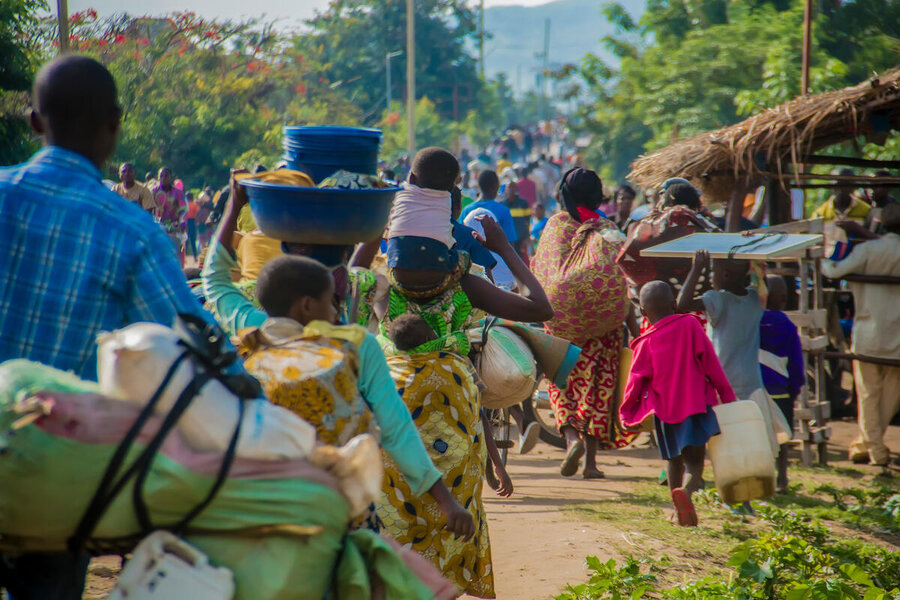
“This hunger crisis risks spiralling without urgent action,” says Cynthia Jones, WFP Country Director ad interim in DRC. “Not only are those forced to flee in dire need but families who have provided shelter, and already living at emergency levels of food insecurity, are sharing their last food with displaced neighbours - pushing all of them closer to utter desperation.”
But millions more dollars are needed to respond to the escalating needs. Already, WFP’s operations in both DRC and Burundi are severely underfunded. “Without urgent support and additional funding,” Jones says, “we cannot respond to a crisis that is teetering on the brink of a hunger catastrophe.”
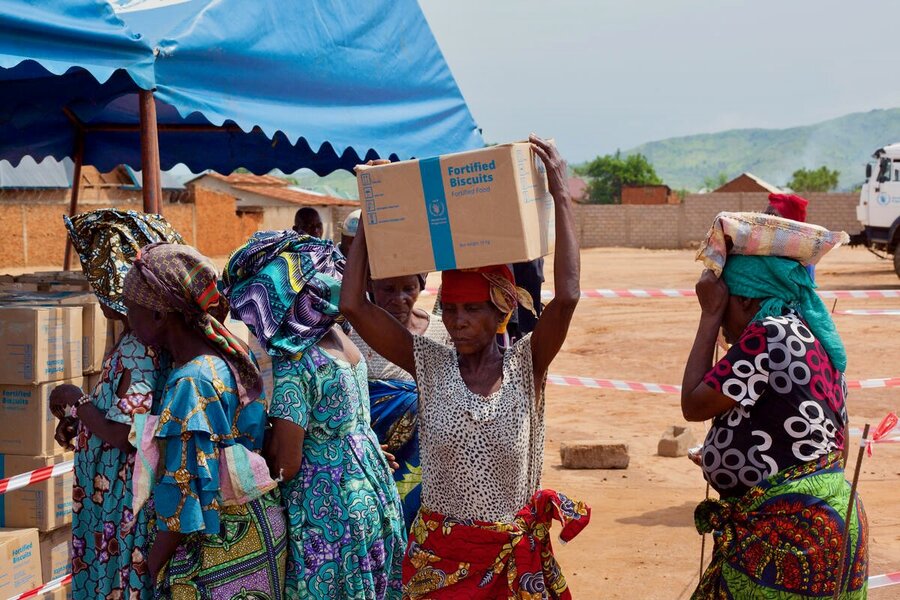
On a recent humid morning, lines of people snake around a dirt field in Sange, as men and women pick up boxes of WFP-supplied fortified biscuits. The distributions are just part of WFP’s larger assistance surge in South Kivu, aimed to reach an initial 210,000 people most affected by the unrest. It will include survival packages of cereals, pulses, vegetable oil, and iodized salt for the most vulnerable displaced families and host communities. Young children and pregnant or breastfeeding women will also receive specialized foods to prevent malnutrition.
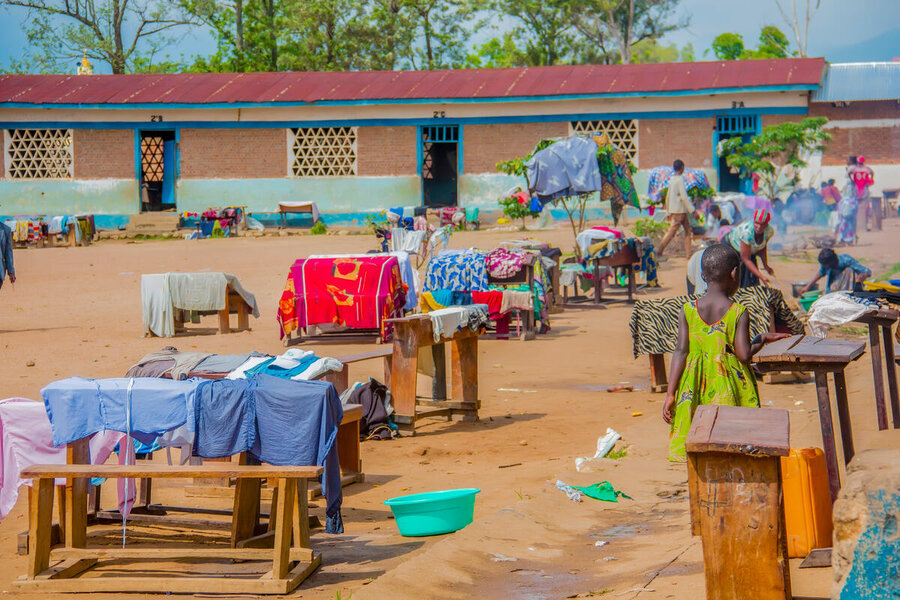
For many in Sange - a small farming town ringed by emerald, green hills near DRC’s border with Burundi - the assistance is sometimes all they have.
“Life in Sange now is marked by a lack of everything: food, security, money,” says Sange resident, Mulaba, a farmer and pastor. Fearful of becoming casualties of the unrest, he says, growers like himself have “no access to our fields.”
When fighting erupted in Uvira region earlier this month, the pastor’s family fled the town. But they had no money to cross the border into safety, he says, so they returned home.
“The needs here in Sange are food, money - everyone is now vulnerable,” the preacher adds. “Children no longer study. Life is bitter here.”
The violence in South Kivu feeds into broader unrest across a large swathe of eastern DRC, where 10 million people are experiencing crisis levels of food insecurity or worse. Recent expert findings predict 3 million people in the region will experience emergency food insecurity by early 2026 - accounting for 75 percent of all cases countrywide. Known as IPC 4, it is the second-highest level on the hunger scale set by the Integrated Food Security Phase Classification, or IPC, which monitors global hunger crises. Overall, 26.6 million people in DRC are projected to face severe food insecurity by January.
“We have nothing to eat,” says another Sange resident, Amuli, who is nonetheless grateful for the WFP nutrient-packed biscuits. Many people in town are sick, he adds, but there is no medicine.
Rising needs, shrinking funds
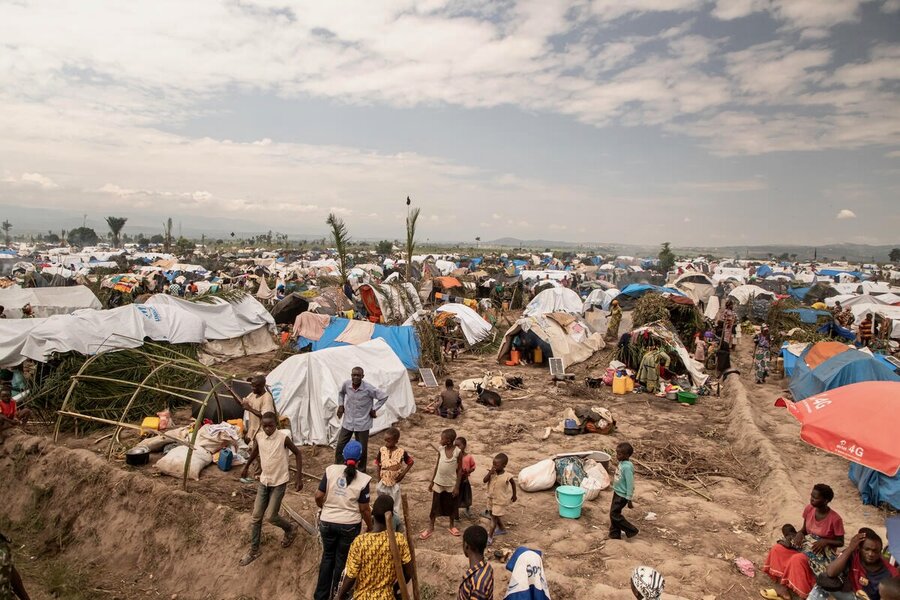
Needs are also rising in neighbouring Burundi, as it grapples with a recent influx of nearly 80,000 Congolese asylum seekers - doubling the number of refugees relying on WFP’s humanitarian assistance in the country. Meanwhile, tens of thousands of exiled Burundians, mainly from Tanzania, are expected to return home in the coming months, further straining resources.
“We are suffering a lot,” says Esperance, a Congolese mother of 12, as she sits on a mattress in a crowded transit centre after crossing into Burundi. “This is how we sleep here - some people sleep outside, and some children do not have clothes.”
Like other Congolese at the shelter, Esperance shares a story of displacement, describing how some people died after escaping violence in her Congolese town of Luvungi. She lost track of some of her children during the flight.
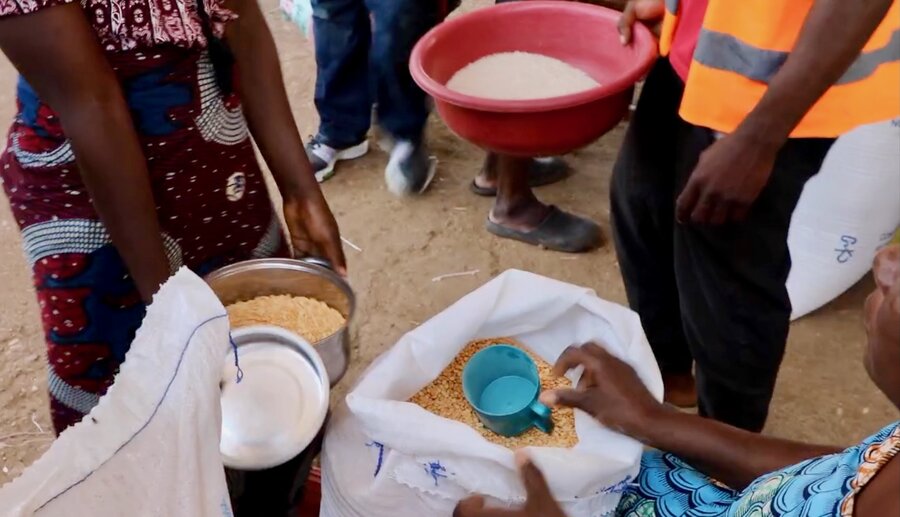
Today, she counts among the tens of thousands of newly arrived Congolese in Burundi receiving WFP food assistance, which includes hot meals, dry rations and cash transfers. Many of them have walked for hours or days to reach safety.
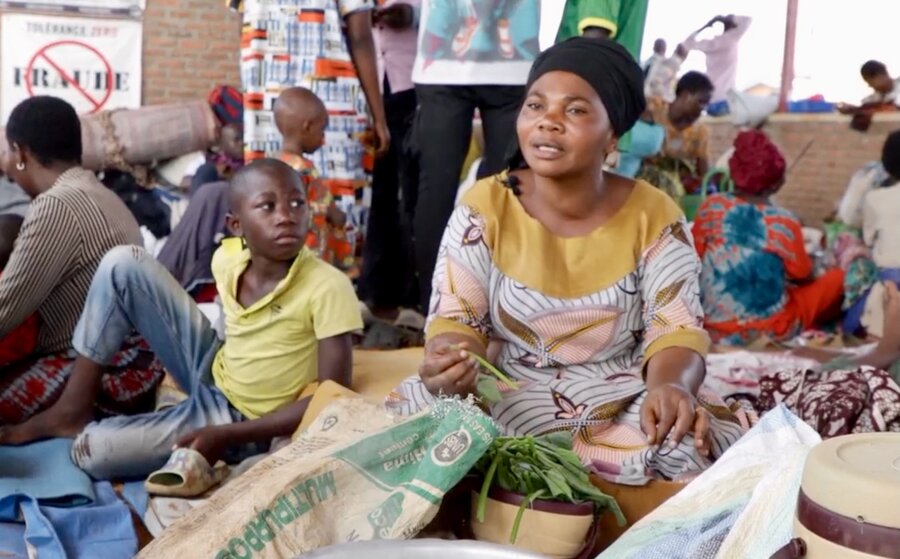
“WFP has provided us with food - and we are thankful,” Esperance adds. “But we ask, if possible, to increase the rations - because the food is not enough.”
But with humanitarian funding now at critical lows, supplying food, shelter and other basics is becoming increasingly challenging. Already, WFP has cut refugee food rations by a quarter, so we can stretch our limited resources. Without more donations, we may be forced to further cut rations - or halt them altogether in January 2026.
“Burundi is shouldering immense pressure as thousands of Congolese families arrive in search of safety,” says WFP Burundi County Director Jean-Noel Gentile. "WFP is working tirelessly with the Government and partners to provide food and dignity, but without urgent support our ability to respond will be severely compromised."
Referring to a recent joint appeal by the Government of Burundi and the United Nations, he adds, "it is critical that the international community stands with refugees and host communities in this profoundly difficult moment.”
WFP urgently needs US$67 million to assist the most vulnerable forced to flee in South Kivu, and US$12.7 million to assist the new refugees in Burundi. To keep operations running across all programmes over the next six months, WFP urgently needs US$350 million in DRC, US$39 million in Burundi and US$17 million in Rwanda.