
Drought in Uganda’s Karamoja region: hunger peaks as El Niño arrives
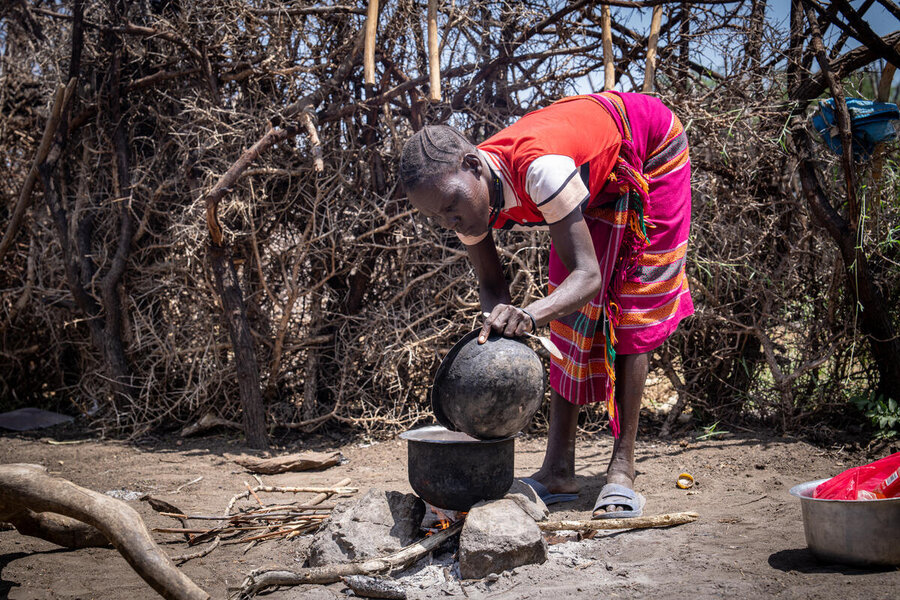
The granary at Paulina Awii’s homestead in Uganda’s Kotido District is the size of a small hut, raised on stilts to keep out rats. By early June, there was nothing in it worth guarding.
She planted her sorghum when the first rains arrived in February. The rains came early, stopped almost immediately and returned too weak to sustain a crop. By the end of May, the rain had stopped altogether. The plants meant to feed her five children stood thin and yellow through June and July, then became dry stalks in the hard ground beneath the hot skies.
“This year is the worst compared to the others,” Awii says. “By now, people would be eating food. There is too much sunshine. There is no rain.
A World Food Programme (WFP) rapid assessment has found that across Uganda’s northeastern Karamoja region, the failed rainy season – which experts believe is likely linked to the El Niño weather phenomenon – has left over 600,000 people food insecure, representing nearly half the region’s population.
“Karamoja shows why early action matters." – Marcus Prior, WFP’s deputy country director in Uganda
Well before that happened, WFP and the Government of Uganda had rolled out early action initiatives to help people in high-risk areas to prepare with the worsening drought. In May, as government weather forecasts crossed trigger thresholds, Ugandan authorities initiated their drought early action plan for Karamoja, one of Uganda’s poorest and hungriest regions.
Together, WFP and the Government delivered initial food, nutrition and resilience-building support to 110,000 vulnerable people – including extra support for elderly people and those living in two of the hardest-hit districts, Kotido and Kaabong. Months later, as drought deepened, we extended the assistance to hundreds of thousands more.
Uganda reflects WFP’s broader early action efforts to build people’s resilience against what may be a record-breaking El Niño this year. The phenomenon is forecast to unleash both much drier and wetter-than-normal conditions, which risk triggering crop failures and rising hunger in many parts of the globe. Since May, WFP has triggered anticipatory action plans in countries including Chad, El Salvador, Guatemala, Mauritania and South Sudan, as well as Uganda, providing over US$14 million in life-saving responses to support half-a-million people.
“Karamoja shows why early action matters: the May support delivered before the drought peaked helped families buy food and cushion themselves against the worst impact of the drought,” says Marcus Prior, WFP’s Deputy Country Director in Uganda.
Deepening drought, deepening hunger
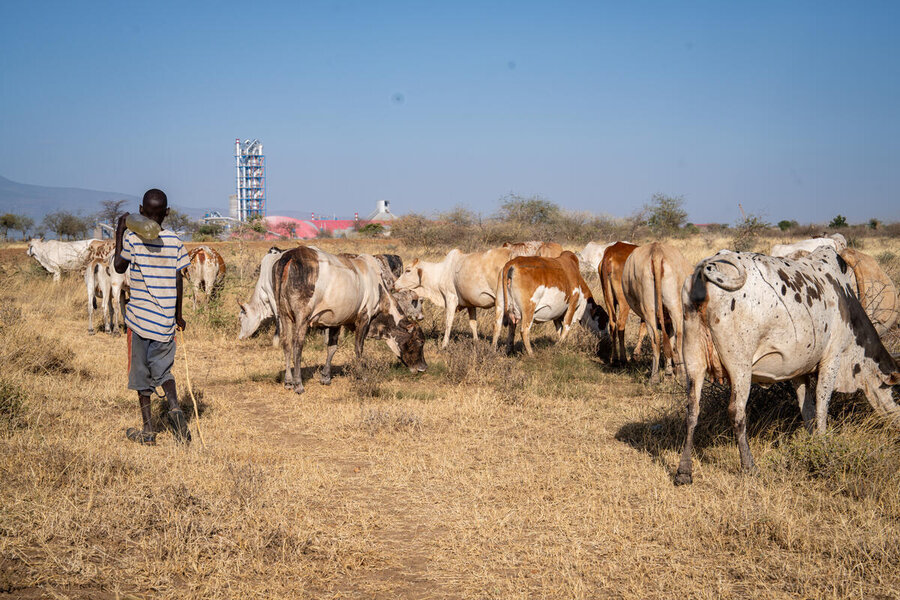
As the weeks rolled by and parched weather continued to grip Karamoja, needs soared, outpacing our initial anticipatory assistance. Kotido District was already facing crisis-level hunger and malnutrition before the dry season peaked in June. Families like Awii’s, which did not receive the early support, were surviving on a single meal a day. Her youngest child, Margaret, was diagnosed with moderate-acute malnutrition during a community screening.
“My children had no food at home,” recalls Awii. “They would eat once a day. Sometimes there was nothing. And up to the next day when I get something again, then they can eat again.”
“There is nothing much they are facing apart from hunger,” says Kotido’s Chief Administrative Officer, Daniel Ochoro. “There is food scarcity – and what food is available is not affordable.”
Neighbouring Kaabong District also reported that crops had almost entirely failed. Families there were similarly surviving on one meal a day.
Feeding families, building resilience
In July, the Government of Uganda declared a drought and mounted a six-month emergency response targeting 300,000 households, moving maize flour and beans into all nine districts of Karamoja to keep families fed through the months before the next harvest.
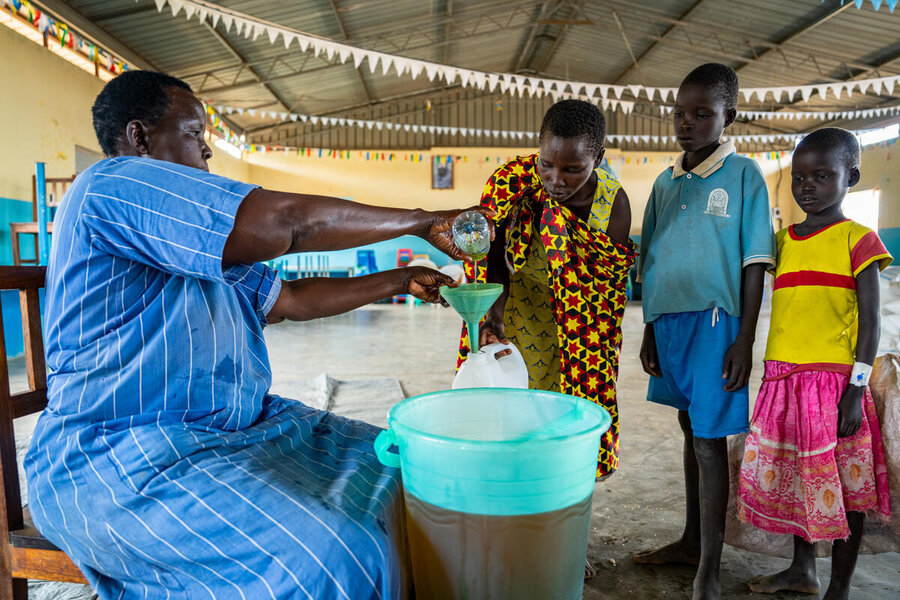
Supporting the government response, WFP is preventing and treating acute malnutrition in the three hardest-hit districts, including Kotido – reaching 30,000 people with monthly cash support that gives families choice over nutritious foods that fit local recipes.
WFP is also delivering daily hot school meals to 221,000 schoolchildren at 284 Karamoja schools, sourcing the ingredients locally. During the August-September school holidays, WFP is giving learners at its supported schools a one-off take-home ration of rice, mung beans and fortified vegetable oil. The support keeps children fed through the break and encourages them to stay in school, while cushioning households bearing the brunt of the current drought.
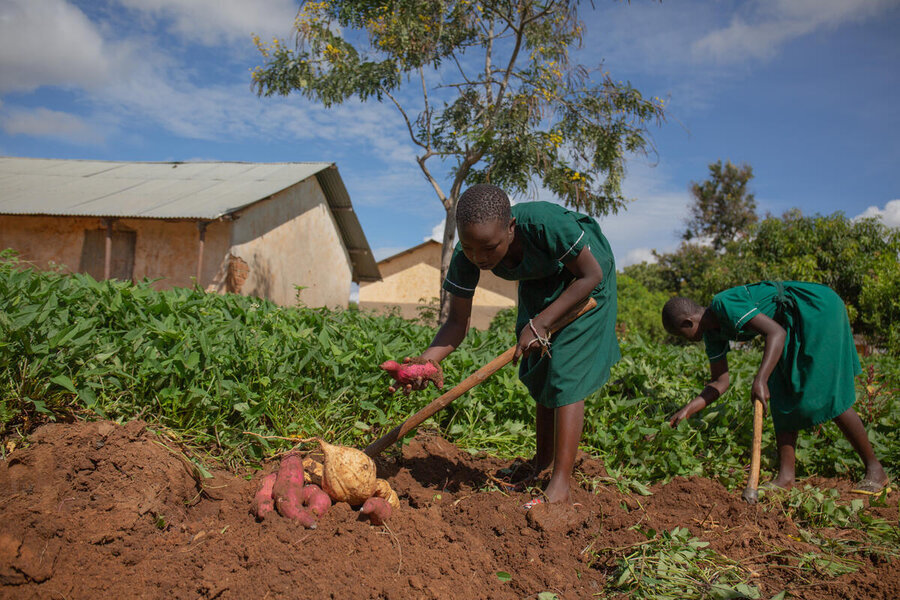
Beyond immediate assistance, WFP and partners are implementing programmes to build resilience to weather extremes. In 86 villages across Karamoja, 35,000 households learn to grow drought-tolerant, nutrient-rich crops such as orange-fleshed sweet potatoes and iron-rich beans. They receive planting materials and farming advice, as well as training in water-retention and soil-restoration techniques.
Still, the initiative reaches only a fraction of Karamoja’s population. Expanding them depends on funding.
“What we are doing today addresses part of the need, not all of it,” says WFP’s Prior. “The hardest months are still ahead. We need to provide families with immediate food assistance even as we strengthen long-term solutions for Karamoja.”
Food for now – but weather swings loom
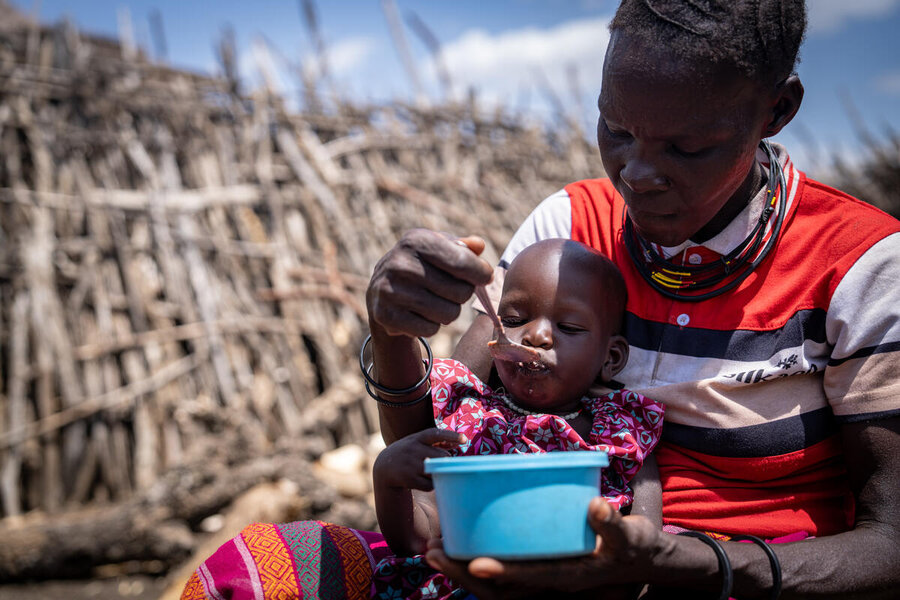
In Kotido, Awii’s daughter Margaret was referred to a health facility and enrolled in WFP’s malnutrition treatment programme. The 16-month-old counts among 122,000 children under 5 expected to need treatment for acute malnutrition in Karamoja, amid rising hunger projected to last well into 2027.
Awii and her family use WFP’s monthly cash transfer to buy food, especially sorghum flour, groundnuts, sugar and oil, which are cooked into a fortified porridge. She also buys vegetables with money earned from selling firewood.
The nutritious meals are paying off. At daughter Margaret’s follow-up assessment last month, the malnutrition screening tape around her mid-upper arm showed green – the safe zone. She had gained weight.
“I am seeing a difference in my child now." – Karamoja farmer Paulina Awii, whose family is receiving WFP food assistance
“I am seeing a difference in my child now. With the support I receive, I can buy nutritious foods. My child eats the porridge three times every day,” Awii says, beaming.
Karamoja’s worries are not over. Ugandan authorities forecast that El Niño conditions could bring above-normal rainfall from September to December, increasing the risk of floods, landslides and disease countrywide.
For now, the drought continues.
“Up to now, there has not been any significant rainfall over Karamoja,” says George William Omony, principal meteorologist at Uganda’s Ministry of Water and Environment. He attributes the suppressed rainfall to El Niño conditions present since June.
After losing one season to drought, Karamoja must now prepare for further extreme climate events. Awii is waiting to plant for the next harvest. But with so much weather uncertainty, she is determined to stretch her current supplies for as long as possible.
WFP's interventions in Karamoja are generously supported by the Governments of Uganda, China, Denmark, France, Iceland, Ireland, the Republic of Korea, and the Uganda Humanitarian Fund, and by philanthropic partners Lions Clubs International Foundation, the Mastercard Foundation, the Novo Nordisk Foundation, the Grundfos Foundation and the Rockefeller Foundation.