
Funding shortfalls push Uganda's refugees deeper into hunger
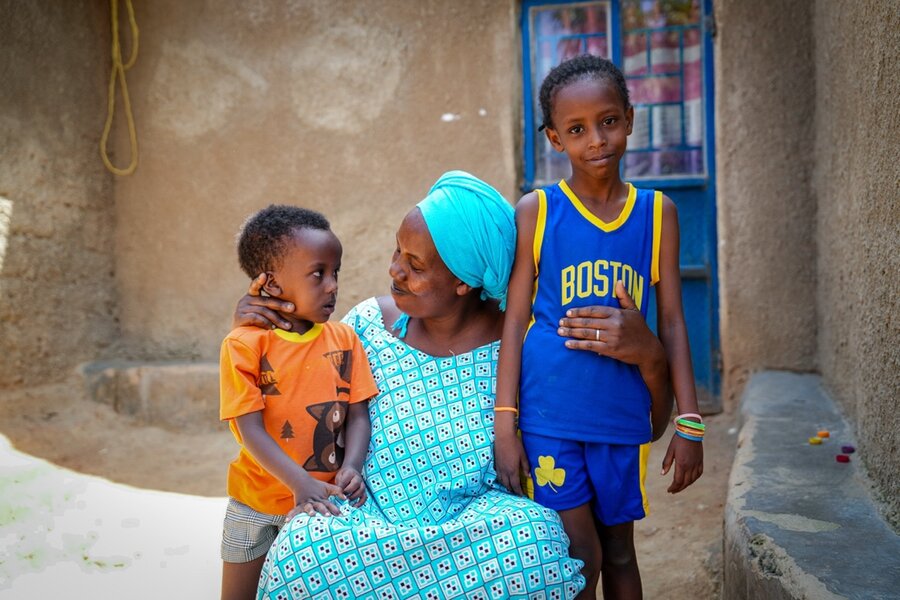
Sitting on a bench outside her home in southwestern Uganda, Namahirwe describes fleeing her home in the Democratic Republic of the Congo nine years ago and finding refuge across the border.
“I remember attacks at night and people running,” she says of her family’s brutal separation from their homeland.
The neat, flat-roofed house they now rent in Uganda’s Nakivale refugee settlement offers safety for the mother and her nine children. And for years, WFP food assistance kept Namahirwe's household fed. But now, as humanitarian funding declines, her family is receiving less support.
“As a mother, I worry about the well-being and health of my children because life is harder now than it was before,” she says, “and the pressure is heavy.”
“People cannot invest in their futures when they are hungry." – Aikins Mac-Bansah, Head of Emergency and Livelihoods at WFP Uganda
Over the past year, WFP has slashed both coverage and food rations to Uganda’s refugees, as humanitarian funding dwindles. From assisting 1.6 million in early 2025, our support now only reaches 663,000 refugees – leading to a sharp rise in hunger and malnutrition, according to a recent United Nations report. The cuts are also undermining a key WFP programme to build refugees’ self-reliance - so they no longer depend on humanitarian assistance.
“Food insecurity among refugees has more than tripled in a single year – and every dollar cut from food assistance today is worsening the situation,” says Aikins Mac-Bansah, Head of Emergency and Livelihoods at WFP Uganda. “We are trying to build a foundation, but people cannot invest in their futures when they are hungry.”
Cuts drive up hunger
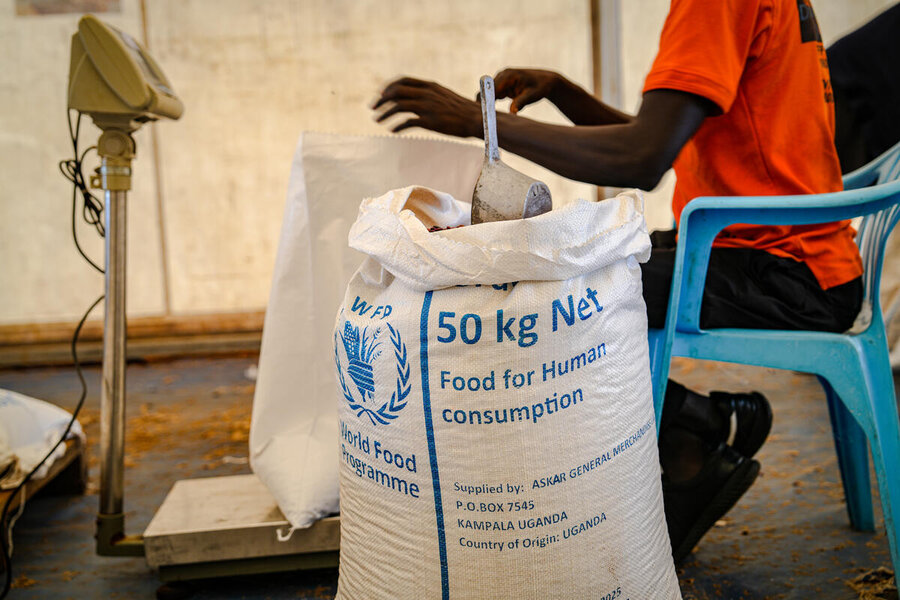
The UN report reveals the cuts’ devastating toll: 65 percent of refugees lack sufficient food; over 7 in 10 households have reduced daily meals; and 1 in 4 have pulled their children from school. Acute malnutrition among under-5s has jumped nearly 50 percent in a single year, with 4 in 10 children experiencing emergency anaemia levels.
As a stopgap over the March-July lean season between harvests – usually the hungriest time of the year – WFP is working to restore assistance to levels seen before the 2025 ration cuts. But urgent donor funding is needed for the longer term.
“We have very vulnerable refugees, especially single mothers and children who were solely dependent on WFP rations,” says Titus Jogo, a Government refugee official in southwestern Uganda. “Their coping mechanisms have not been good and they have become even more vulnerable than when they first arrived.”
"It is much harder to survive, especially with my husband not here.” – Namahirwe, a refugee from DRC
That’s the case of Namahirwe and her family, who settled in Nakivale in 2016. Soon after, her husband disappeared, leaving her the sole provider. Until recently, WFP food assistance met their nutritional needs, freeing up her wages from casual labour to cover housing and her children’s school expenses.
But today, Namahirwe’s careful balancing act – and that of many other refugees – is collapsing.
“Before, with a better amount, I could plan to buy food, like 5 kg of beans and 10 kg of maize flour,” she says of days when her family received more WFP food assistance. “Now I have to buy cheaper substitutes. It is much harder to survive, especially with my husband not here.”
Funding can build self-reliance
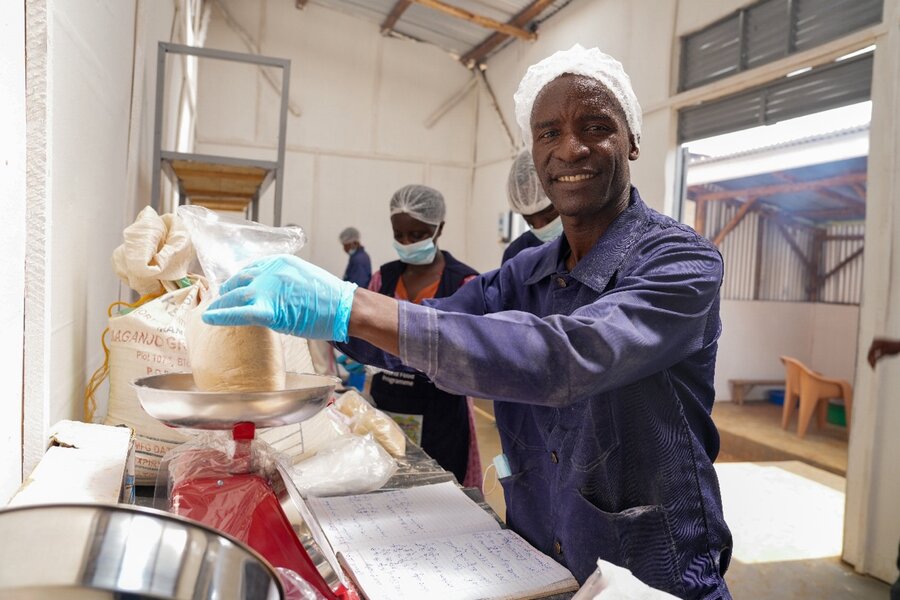
A few kilometres away, another Nakivale resident shows what can be achieved with adequate funding. Jean-Marie counted among participants in a WFP livelihoods programme helping refugees transition away from humanitarian assistance through business training, seed funding and market links.
After losing his wife in 2024, he developed a fortified porridge mix from locally sourced millet, sorghum and soya beans. What began as nutrition for his severely malnourished daughter grew into a thriving enterprise.
With financing from WFP and StartHub Africa, a social enterprise accelerator, Jean-Marie purchased a solar-powered milling facility, which more than doubled his production of the mix to 1,000 kg per month. He now employs 12 refugees and supplies over 100 retail clients and several schools across Nakivale.
“It was the day the sun came to work for us,” he quips of the support.
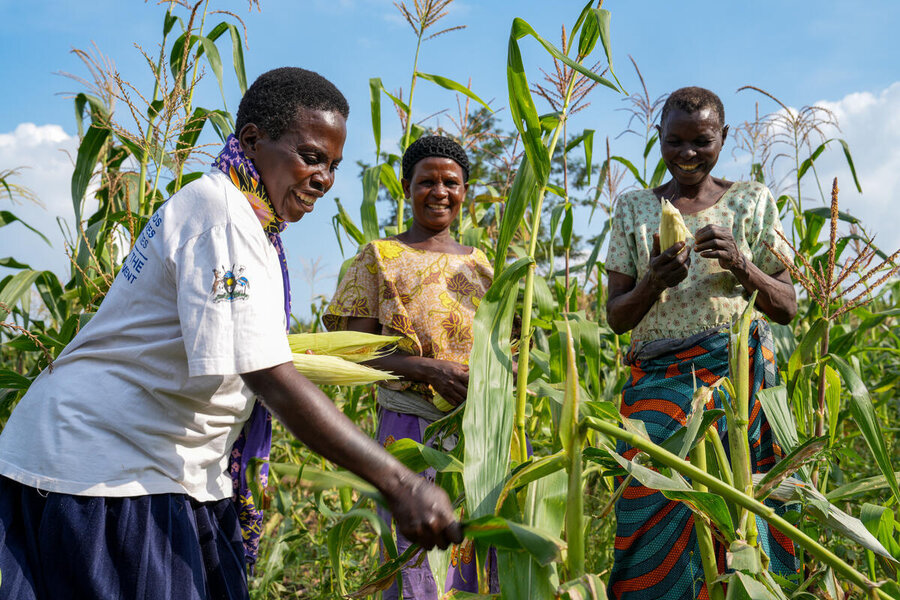
Combining business training, financial literacy and market link-ups – and targeting 100,000 participants by the end of 2026 – WFP’s 36-month self-reliance programme in Uganda guides refugees like Jean-Marie toward sustainable incomes and reduces the long-term need for humanitarian assistance.
But as funding cuts push more families into crisis, the programme cannot meet soaring demand – putting it out of reach for many like Namahirwe. Funding cuts further risk reversing the gains made by many refugees through the programme.
“We need help,” says Namahirwe. “We need support again – food and money. If the donor community and organizations can help us, it would make a big difference for my family and for the community around me.”
(*Refugees' surnames are withheld for their protection).
WFP Uganda urgently needs US$47 million through 2026. Without it, the most vulnerable will face worsening food insecurity.