
This teacher once received WFP school meals - now she's inspiring Uganda's next generation
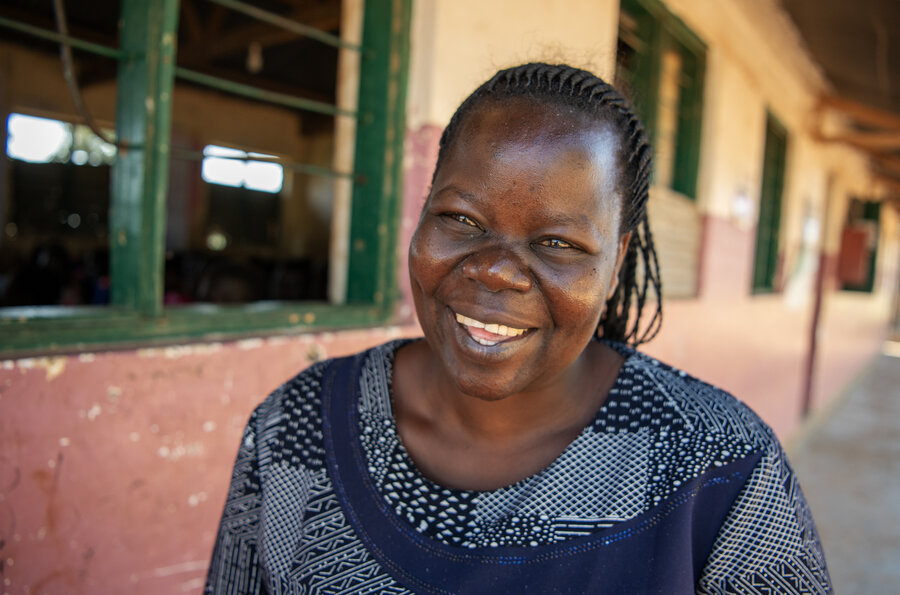
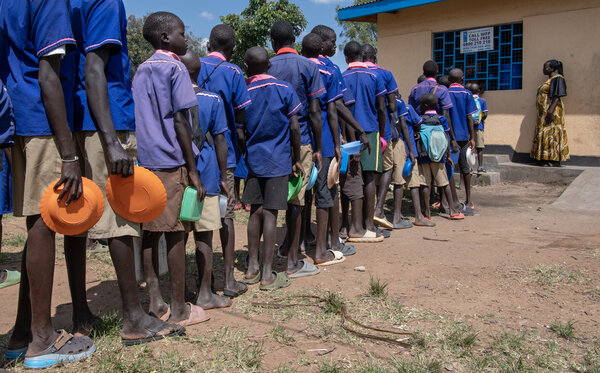
As dawn breaks over Pajar Primary School in northeastern Uganda’s Karamoja Region, English teacher Evaline Akello prepares for another day of class. For the institution’s more than two thousand students, daily hot meals from the Government of Uganda and the World Food Programme (WFP) - meals that will soon be replicated nationwide - keep up their attendance.
But it's teachers like Akello who inspire students to keep learning.
Her dedication comes at a high price. Akello lives alone. Her five children stay with their grandmother, an eight-hour drive away. She can only visit them during school holidays.
”The nature of my work doesn't allow me enough time to support them fully as a parent,“ she says.
“Teachers are respected in this community because they teach our children knowledge, and guide and train them for a good life.”
Akello’s journey to teaching was not easy. The youngest of ten children, she grew up during an armed uprising in the late 1990s. Insecurity forced her family to spend nearly a decade in a displacement camp, where WFP’s school meals became a daily staple.
“Girls were expected to cook, do chores, collect water, and eventually marry,” Akello recalls.
But her mother, one of the few educated women in their village, defied cultural expectations. A teacher herself, she used her small salary to send Akello to school - even after her father refused.
Watching her mother leave for work each morning, confident and happy, Akello found her calling. “My mother was my role model, and I wanted to follow in her footsteps,” she says.
Later, when she began working at Pajar Primary, in Karamoja’s Kaabong District, Akello was also motivated by the great esteem shown to teachers by parents and the local community.
“Teachers are respected in this community because they teach our children knowledge, and guide and train them for a good life,” says one local resident, Dorothy Adong.
Teaching life skills
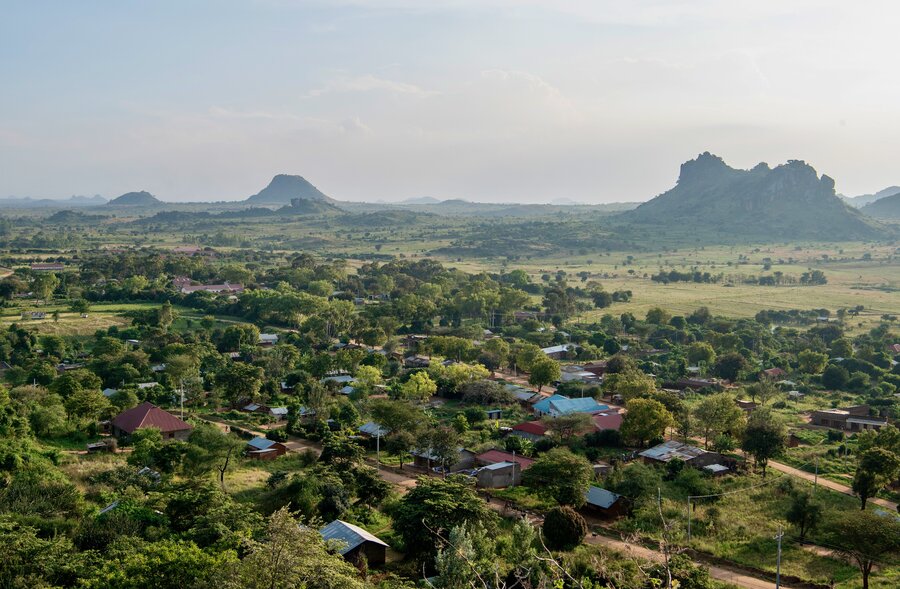
In this region of striking contrasts, where golden savannahs stretch towards jagged hills, pastoral traditions have shaped lives for generations. But beneath the beauty, Karamoja faces profound challenges.
While the unrest that displaced Akello is long over, insecurity from cattle raids disrupts daily life. The nomadic rhythms of many families make schooling difficult, contributing to the lowest education rates in Uganda. Eighty-four percent of children grow up in poverty and most families are food insecure.
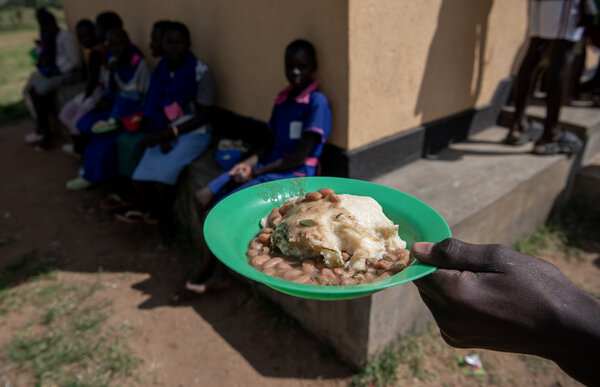
The nutritious WFP-provided lunches of atap, a dense maize porridge, pulses and vegetables are especially critical in Kaabong, one of Karamoja’s most food-insecure districts. A 2024 survey found nearly one-fifth of young children here were wasted, meaning underweight for their height.
“It's hard to focus on learning when you're hungry,“ says Edgar Twinomujuni, WFP’s school meals programme policy officer in Uganda. “For many students walking long distances from food-insecure homes, these meals are often the main reason to attend school, and may be their only meal of the day.”
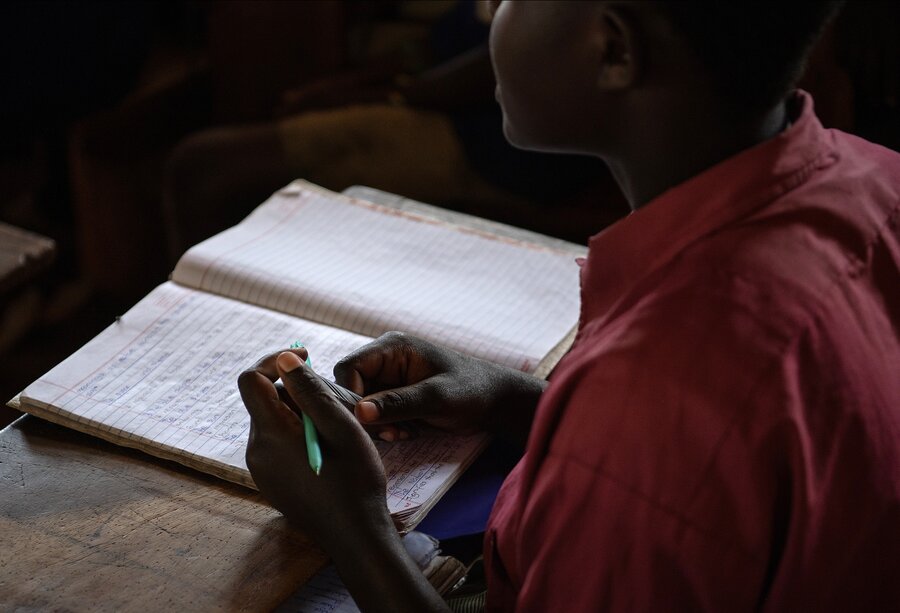
Across Karamoja, 200,000 students in nearly 300 schools are eating our nutritious, daily meals - and the impact has been profound. Between 2022 and 2025, the region’s schools saw a 55 percent uptick in enrolment, while attendance jumped by nearly half.
A good education can open up far more future opportunities for children - just like they did for Akello - while boosting Uganda's wider economic prospects.
Karamoja’s success has inspired the Government’s upcoming launch of Uganda’s first national school meals policy, aimed to reach 9 million children countrywide. And it reflects a broader trend across sub-Saharan Africa, where countries are increasingly investing in school meals - which now reach a record 87 million children. Uganda, for example, contributed US$680,000 to WFP’s Karamoja school meals programme in 2025 alone.
But what happens before and after those meals is just as important.
“She teaches us to be kind, to love one another, and to speak respectfully to others.”
Akello’s classroom holds orphans, children of single parents, youngsters with disabilities, and those carrying traumas they barely speak about. She knows that without school, they might be forced into early marriage or recruited into gold mining or cattle raiding.
She teaches far more than English grammar. She offers her students life skills: how to communicate, seek help, understand their changing bodies - especially for girls who might otherwise stay at home during menstruation.
“We are teachers, but we are also parents,” she says. “From 7 am to 5 pm, they are ours.”
After four years at Pajar Primary, Akello’s lessons are paying off. “She teaches us to be kind, to love one another, and to speak respectfully to others,” says one of her students, Florence.
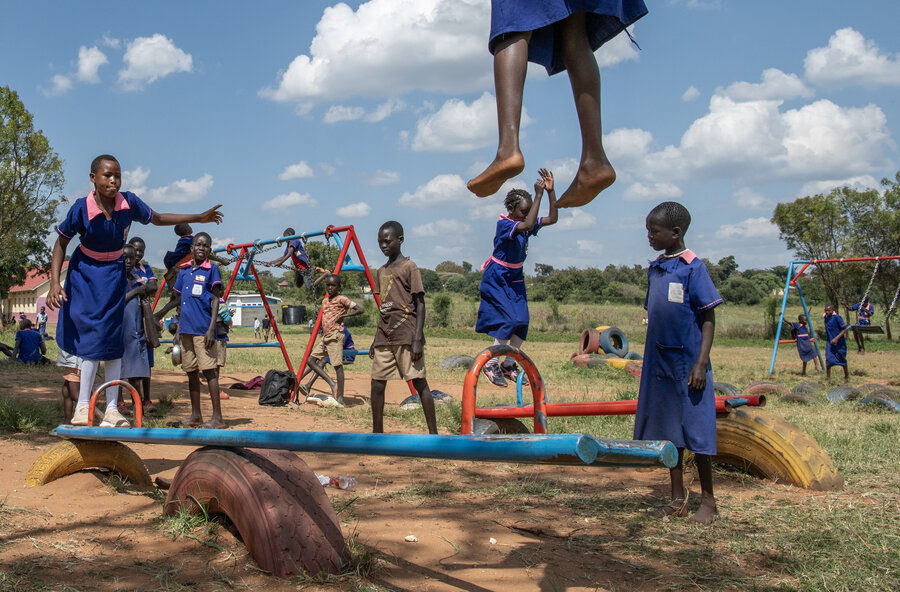
Akello still remembers another student: a quiet, isolated and unhappy 15-year-old girl, who was being pressured into early marriage. She connected her young pupil with a nongovernmental group which sponsored the girl’s education. Now 28 and a trained nurse, she is employed and happy.
“Even though we have lost contact, I know she made it,” Akello says. “And that makes me proud.”
“As a teacher, you cannot force children to love you,” she adds. “But what you do today makes children love you tomorrow. You must be devoted, loving, caring, and friendly. You must be a parent to them.”
WFP’s school meals programme in Karamoja is supported by China, Denmark, Germany, the Grundfos Foundation, Iceland, Ireland, the Lions Club International Foundation, the Novo Nordisk Foundation, the Republic of Korea, and Uganda.