
From food aid to farming: how refugees in Africa are building food security
Refugee farming in Uganda builds self-reliance
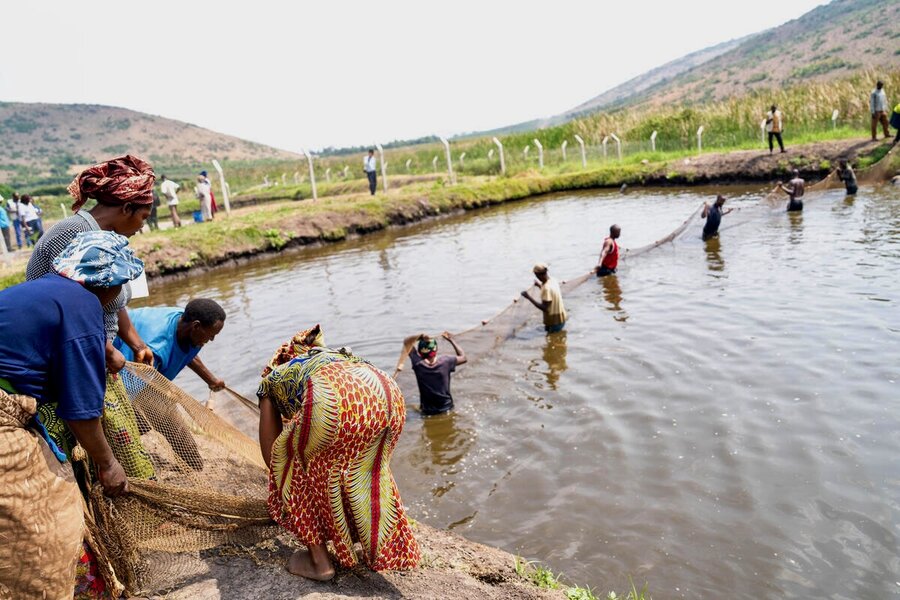
Daforoza’s life has changed radically in the 13 years since arriving in Navikale refugee settlement in the country’s southwest.
That's where the Burundian refugee was introduced to Uganda’s "self reliance model", a market-oriented drive mixing skills training, financial inclusion and social protection. It aims to move both the roughly 2 million refugees – Africa’s largest population – off humanitarian aid and to build self-reliance among vulnerable host communities.
The model is all the more important today, as shrinking aid has forced WFP to end support for nearly 1 million refugees – and cut rations by 60 percent for the remaining 784,000.
At Navikale, self-reliance translates into a WFP-run farm on Government-provided land bringing together refugees and locals and a raft of activities – from vegetable gardens and fish farming to pig raising and savings groups – in a single shared enterprise.
“They taught us how to prepare for the day when cash assistance might stop – how we would cope, how we would continue and how we could stand on our own.” – Burundian refugee Daforoza of a WFP resilience project
“They taught us how to prepare for the day when cash assistance might stop – how we would cope, how we would continue and how we could stand on our own,” says Daforoza of the project. (As a refugee, her last name is withheld for her protection). “We learned those lessons and kept them in our minds.”
At Navikale, Daforoza also learned to grow vegetables, and was encouraged to grow a kitchen garden at home. WFP enrolled her in a savings group gathering both refugees and local Ugandans, and later introduced the group to fish farming.
She invested her profits in raising pigs, hoping to start a small business from the profits of pig sales. And she began building friendships with her Ugandan colleagues. “Today, through the Kashare resilience group, we are one community.,” Daforoza says. “We visit each other, we know each other, and we live together as human beings. That is something very important to me.”
“There is so much I could tell you about this project,” says Sanyu Sylva, a local Ugandan resident and another Navikale project member. She ticks off a raft of things she has learned: from planting methods that yield bigger harvests, to how to make manure – and save, budget and invest. “I can now go and teach others.”
Refugees and host communities farm together in Rwanda
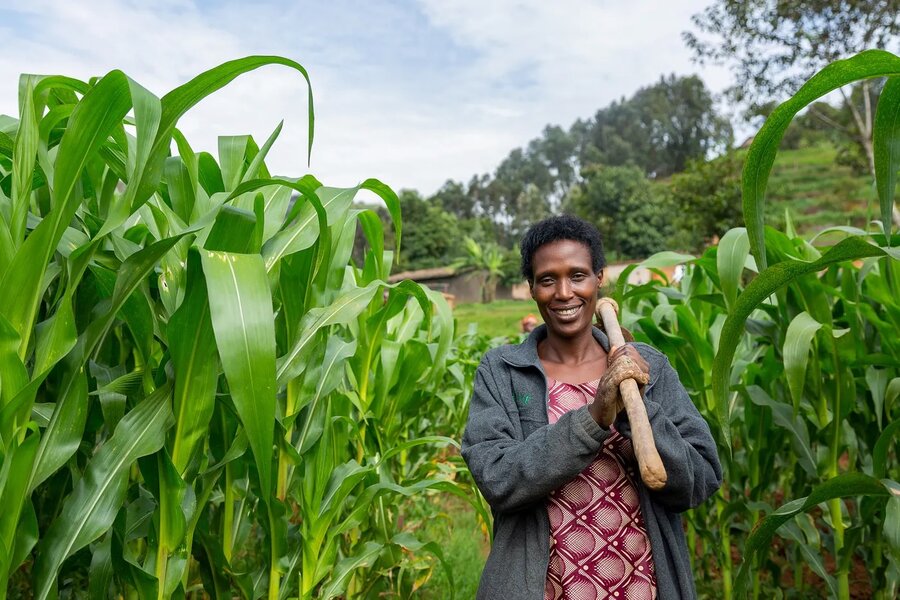
In southern Rwanda's Mushishito marshland, Christine bends over rows of maize, potatoes and beans, joining the chatter and laughter as she works the soil with other farmers. Not long ago, her days were filled with uncertainty.
“For a long time, I stayed at home with nothing to do,” says Christine from the Democratic Republic of the Congo, who has nine children and lives in Kigeme refugee camp.
That changed the day she heard an announcement inviting refugees to join a farming initiative in the marshland nearby, as part of a broader WFP-supported Government project bringing refugees into local agricultural cooperatives. Launched in 2018, it has grown to include hundreds of refugees who now farm alongside more than 1,000 members of host communities.
"When you work and see your harvest grow, you feel that your life is moving forward again.” – Christine, refugee from the Democratic Republic of the Congo
The Rwandan farmers voluntarily reduced their individual land allocations from three hectares to one, so that refugees could also cultivate. In turn, refugees contribute labour and share knowledge, strengthening collective production systems.
Dozens of savings groups also established under the initiative give members greater access to finance. Harvests are aggregated and sold collectively – boosting incomes and offering produce for WFP-supported school meal programmes.
"When you work and see your harvest grow, you feel that your life is moving forward again,” says Christine.
The project is also building bonds between refugees and locals – like those forged when Rwandan farmer Jean Damascene Mubiligi agreed to shelter cows owned by Congolese refugee Jean Damascene.
“From working together our friendship grew,” says Damascene, adding that the two men now support each other “not only in farming, but in life".
Farming projects reduce hunger for refugees in Ethiopia
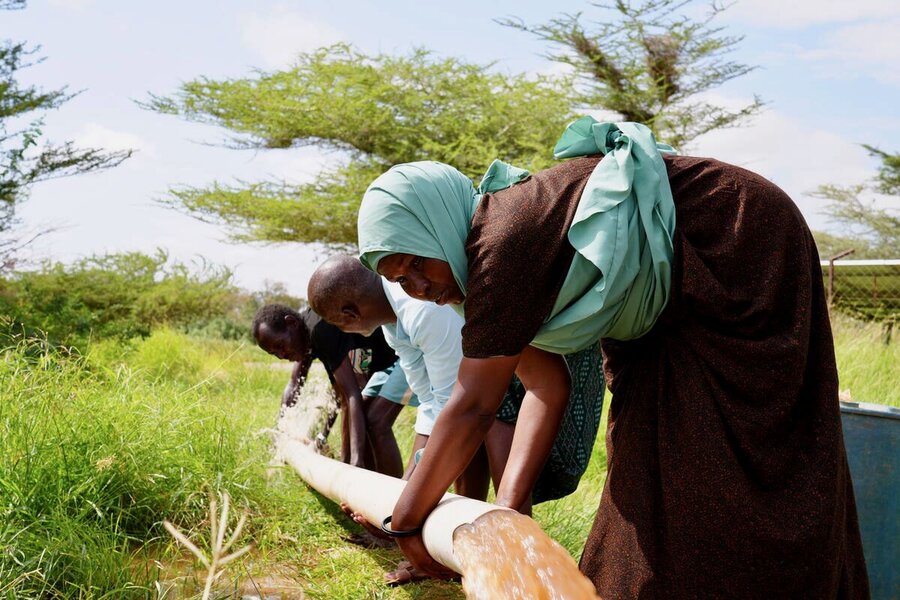
As a teenager, Sara’s father taught her to be bold. So when the opportunity arose years later to learn how to operate an irrigation pump, the Somali refugee stepped forward.
“I am the only woman in this community who can operate it,” Sara says proudly of the solar-powered pump that helped transform farming in southeastern Ethiopia’s Dollo Ado refugee camps where she lives.
Supported by WFP and other partners as part of a broader resilience-building initiative, the pump illustrates the Government of Ethiopia’s shift in supporting refugees through projects with host communities based on integration, self‑reliance and development.
“By supporting refugees and host communities through shared irrigation schemes, farmer groups, cooperatives and livelihood opportunities, we help create shared economic opportunities and build trust around common goals,” says Allan Mulando, WFP Ethiopia’s Head of Climate Change Adaptation and Livelihoods programme of the nearly 8,500 refugees we support through similar initiatives in the country.
"By supporting refugees and host communities...we help create shared economic opportunities and build trust around common goals." – Allan Mulando, WFP Ethiopia’s Head of Climate Change Adaptation and Livelihoods programme
Around Dollo Ado’s five refugee camps, WFP and partners are working with hundreds of refugees and local Ethiopians in a pair of agricultural projects that include revitalizing farmland and training in areas like soil and water management and pest control.
Participants receive seeds and other support to improve and modernize their farming practices, including through drip irrigation and greenhouses – along with solar-powered irrigation in a region prone to rolling droughts.
The project has changed life for Sara’s family, who fled Somalia more than a decade ago, joining Ethiopia's refugee population that numbers more than a million today. When her father later fell ill and died, she dropped out of school, joining the rest of her family in farming the land – planting maize, onions and other crops to make ends meet.
“Access to water is no longer a challenge for us,” Sara says. “As long as we have the sun, we have water.”
From food aid to autonomy in Chad
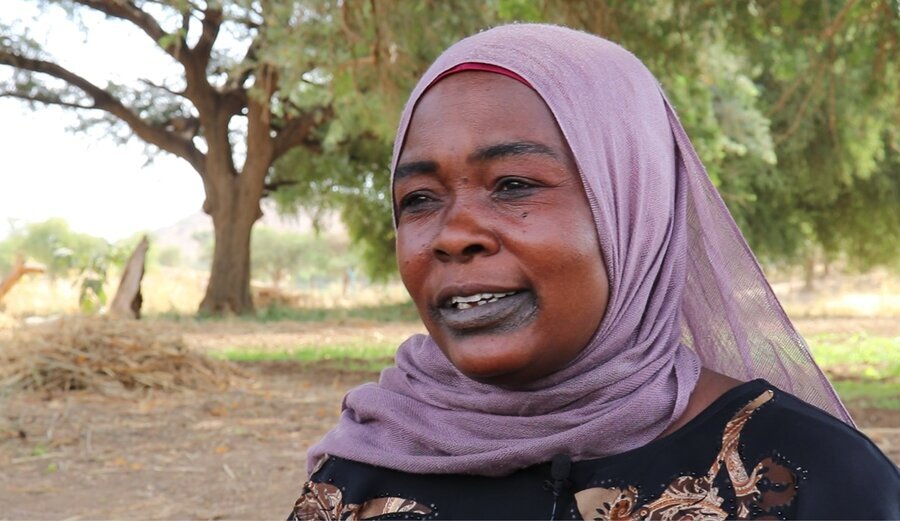
In eastern Chad, where she found shelter from Sudan’s brutal civil war, refugee Mahassine has found a new calling among plots of okra, garlic and beets.
“This project has given us a great opportunity,” she beams of the WFP-supported Loumba-Massalit market garden where she works, as fellow farmers carry a hose through lush green beds of crops. “Before, I looked in vain for work. Now, I work all day to earn at the end of the month.”
Partnering with other humanitarian agencies in projects like building water infrastructure and growing food crops, WFP is helping to build self-sufficiency among some of the 1.5 million refugees sheltered by Chad, one of Africa’s largest host countries. Many here, like Mahassine, have fled the ongoing civil war in neighbouring Sudan.
These projects also feed into Chad’s broader national development plan, aiming – among a raft of goals – to unlock the agropastoral potential of the Central African country, with its rich subsoil and 39 million hectares of arable land. And they reflect the Government of Chad's Haguina approach – a multipronged, resilience-building initiative coined from the Chadian Arabic term meaning “it is ours".
“WFP is helping to drive a fundamental shift in Chad: from food relief to sustainable development,” says Sarah Gordon-Gibson, WFP Country Director in Chad.
“WFP is helping to drive a fundamental shift in Chad: from food relief to sustainable development,” says Sarah Gordon-Gibson, WFP Country Director in Chad. “This transition is crucial for long-term food security. It’s a strategic, cost-effective way to reduce the resources needed for humanitarian aid, invest in local economies and ensure self-sufficiency.”
At the Loumba-Massalit site alone, the results are impressive: participants like Mahassine have developed 19 hectares of market garden plots – the size of about 27 football fields – planted 13,000 seedlings and built 30 hectares of half-moon catchments capturing precious rainwater.
The garden’s bountiful vegetable harvests amount to a real business, yielding enough money to meet the needs of Mahassine’s family – including school supplies for her children. Her next project: to invest in livestock, using the profits to provide more for her chidren.
“Especially for their education,” Mahassine says, “so that they can take care of me when I am old.”
WFP is urging more support for sub-Saharan Africa’s more than 10 million refugees and asylum seekers, as funding cuts threaten efforts to build refugee self-sufficiency. Across East and Southern Africa, WFP’s operations assisting more than half of the region's 6.3 million refugees are less than 50 percent funded – forcing us to sharply shrink assistance. The same grim scenario is unfolding in West and Central Africa – including in Chad, where WFP has been forced to more than halve its support for the majority of refugees for lack of resources.