
Hunger and displacement soar as fighting escalates in Yemen

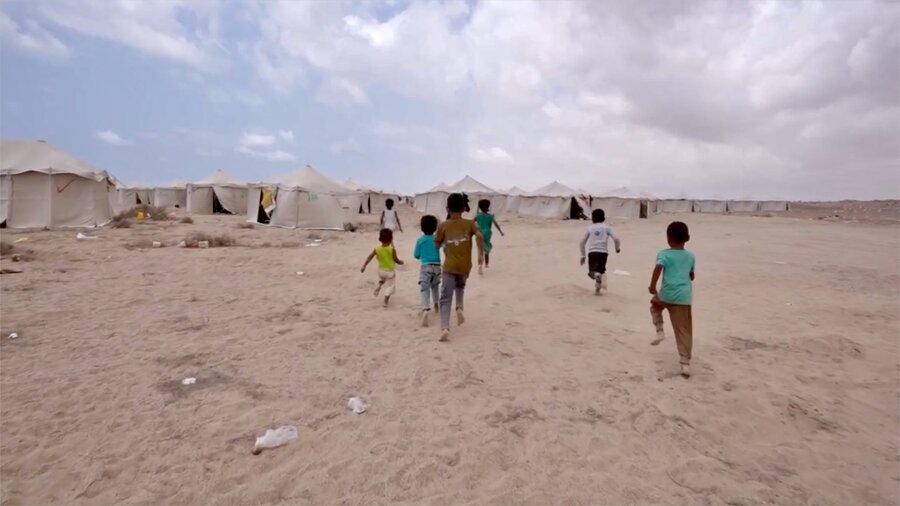
A strong wind whips sand across a sea of white tents on the outskirts of Yemen’s port city of Aden, where small boys play pickup football across barren land and men carry large bags of World Food Programme (WFP) food assistance to their latest, makeshift home.
“This assistance has eased things for us,” said Hassan, an elderly man sporting a grey, striped T-shirt and colourful headscarf, who welcomes a visitor into his family’s tent at Al-Firdous displacement camp. Referring to WFP and other humanitarian responders who supplied it, he added: “Since the day we came, we have had food and water, and they helped us with wheat and rice.”
Escalating conflict across parts of Yemen since September has uprooted more than 200,000 people, deepening a humanitarian crisis in what is already one of the world’s most fragile countries. Across Yemen, more than 5 million people are internally displaced, more than 18 million face severe hunger and more than 2 million young children are acutely malnourished. With heavy fighting cutting off humanitarian access to some areas, those numbers are expected to rise even higher.
“The impact of the escalation of the conflict over the last few weeks on the ability of Yemeni people to put food on the table has been immediate,” Matthew Hollingworth, WFP’s Assistant Executive Director for Programme Operations said recently, describing WFP’s own monitoring showing nearly three in four households unable to meet their most basic food needs.
“That’s a record number for this year,” he added, “in just a few weeks.”
Hassan and his family are living that hunger reality. He and his family escaped fighting raging in the coastal Red Sea city of Al-Mokha, making a days-long journey by foot to Al-Firdous camp.
“We carried nothing but the clothes on our backs,” he recalled. “We do not even own a grain of sand.” (To protect conflict-displaced people, WFP does not use their last names.)
“What we want is safety and security,” Hassan added. “Nothing more.”
Scaling up WFP’s response
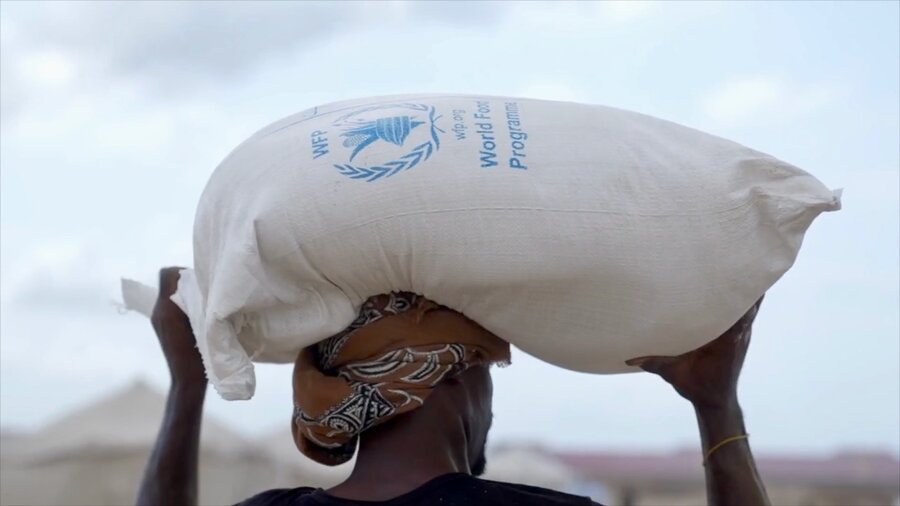
Many other conflict-affected Yemenis have faced similar hardships, WFP staff report, walking for days without food and water to reach safety. Some have survived on little more than leaves and grass.
“Many of these families have been displaced multiple times,” said Damien Vaquier, WFP Head of Programmes in Yemen. “And they have reported food as being among their most urgent needs.”
Over the past month, WFP has scaled up food assistance to reach more than 120,000 vulnerable people across two displacement hotspots in southern Yemen, with plans to reach up to 1.5 million. In total, WFP is supporting up to 2.4 million hungry people across Government-controlled areas.
But the scale-up faces serious challenges, as fighting cuts off access to vulnerable areas, forcing WFP to suspend operations across multiple districts in Al-Mokha, Turbah and Taiz, and losing access to nearly 800,000 people. A funding shortfall is also stretching and potentially limiting our response, even as global supply chain disruptions push up prices in a country that imports 90 percent of its food.
The overall fallout could be devastating, said WFP’s Hollingworth, compounding and deepening a food security crisis well beyond Yemen’s borders. “Today's humanitarian shock and supply chain disruptions can become tomorrow's global food crisis,” he added.
Not enough food
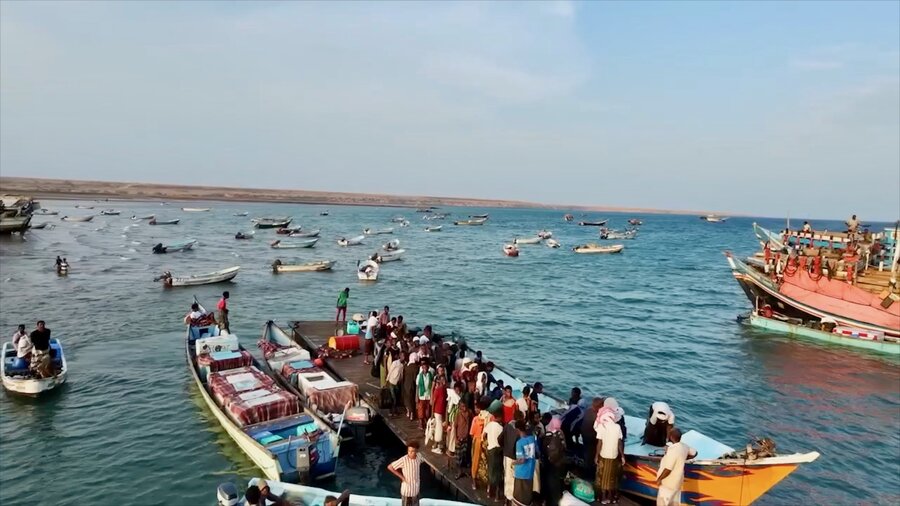
Humanitarian operations are also stretched in nearby Djibouti, where more than 3,800 refugees from Yemen have arrived by boat in recent weeks, just across the slender ribbon of the Bab el-Mandeb Strait.
At Djibouti’s Markazi village, a faded French sign welcomes the newcomers, many sheltering in tents and prefabricated containers. Others have pitched mattresses and other bedding inside a cavernous hall.
“We lost my husband and my children, we could not find them,” said Wahida, from the coastal town of Dhubab, in Yemen’s Ta’iz Governorate – where heavy fighting has compromised humanitarian access in some places. The mother of six has found safety at the refugee settlement. But, she added, “the situation is difficult. There is not enough food.”
WFP is assisting the new arrivals with hot meals, high-energy biscuits and nutritional supplements, and providing key logistics support for our humanitarian partners. But needs here, too, are outpacing available funds.
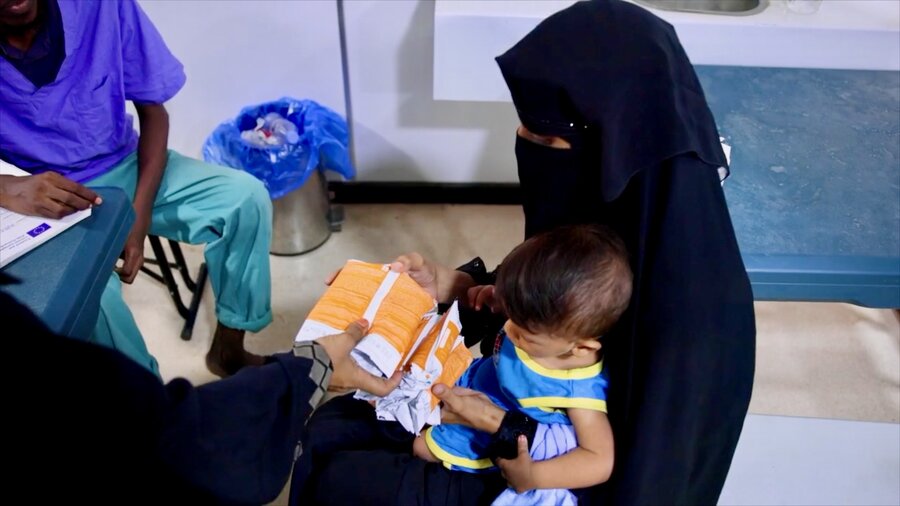
“Behind every statistic is a family struggling to meet its most basic needs.” said Alejandro López Chicheri, WFP Country Director in Djibouti, of the refugees. “They have lived through harrowing experiences. WFP is at their side, but we need more resources to continue providing the vital food support they need.”
Back at Yemen’s Al-Firdous camp, conflict survivors keep pouring in. Mohamed and his children also escaped restive al-Mokha, where they lived in another displacement camp.
“I still remember the fear,” he recalls of the family’s flight by foot and car.
Today, they depend entirely on humanitarian assistance. “I have no skills,” he said, “no resources, no source of income, no knowledge that I can work with.”
It pains him also to see his children out of school.
“War,” Mohamed said, “does not distinguish between the young and the old.”
WFP needs US$268 million to sustain emergency food assistance, nutrition programmes, school meals, resilience activities and critical humanitarian logistics services in Yemen through 2027.