
More than ‘frog’s umbrellas’: how mushrooms are improving food security in Bangladesh
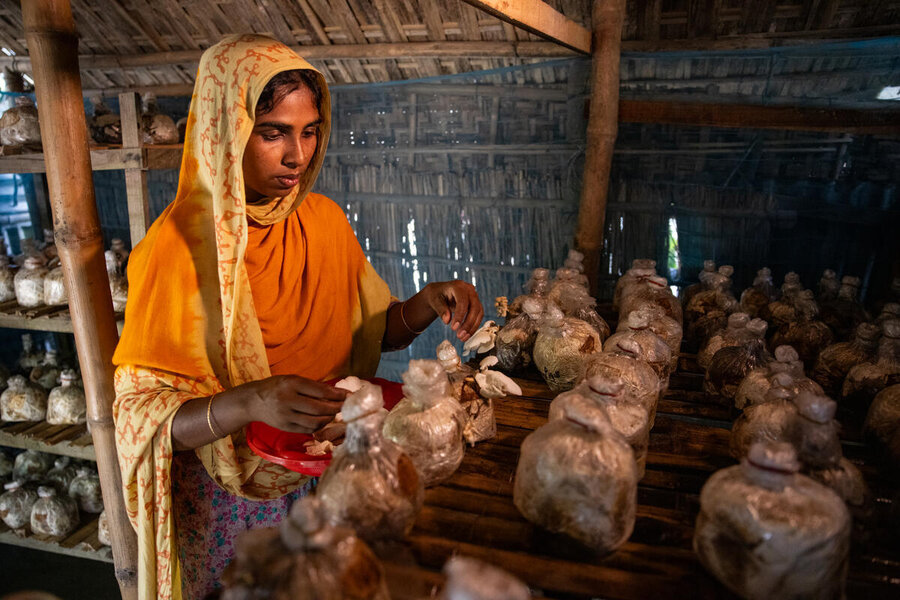
“People here used to hate it,” says Layzu Akter, describing the oyster mushrooms from which she now generates a good income. "Locally, they would call these mushrooms 'frogs' umbrellas.'”
A closer look at the delicate mushrooms, sprouting out of an odd-looking package, makes it clearer why someone would make that comparison.
Yet today, the pearly-white fungus, a delicacy in many places, is also increasingly popular in Akter's community in northeastern Bangladesh's Kurigram District – thanks to a broader World Food Programme (WFP) initiative that has transformed the livelihoods of food-insecure families like Akter’s, who once struggled to make ends meet.
Rolled out in 2018, the WFP programme aims to equip vulnerable households with diversified ways to support themselves and better withstand floods and other disasters: from cash support ahead of floods and climate risk insurance, to sustainable livelihood activities and skills training.
A hunger solution for a disaster-prone region
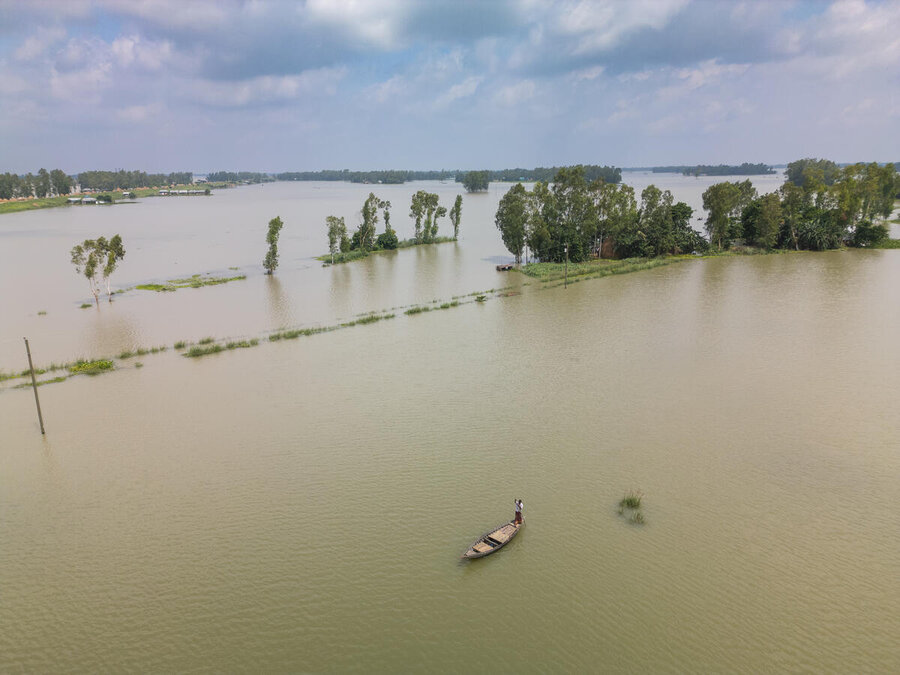
These climate resilience initiatives are essential in a region that is one of the poorest and most-disaster prone in Bangladesh. Floods and other extreme weather events regularly devastate communities here, affecting people’s livelihoods and access to food, and driving up hunger.
Akter’s husband – a day labourer working far from home – used to be the only family member with an income, making it sometimes difficult for the family to cover their basic needs. They lived in a small dwelling near the mighty Brahmaputra River and had to build rafts or swim to safety during floods. But Akter turned their fortunes around when she joined WFP’s mushroom-growing pilot.
One of 6,000 vulnerable women enrolled in the initiative, Akter learnt new skills and received a small cash grant to move forward. That support allowed her to start several businesses: raising cows and pigeons, cultivating fodder from nutrient-rich water – and mushroom farming with the "frogs' umbrellas".
Rich in vitamins and essential minerals – helping improve diets and nutrition – these oyster mushrooms require minimal space and resources. They can be grown indoors and year-round, providing an excellent source of nutrition and income for small-scale farmers such as Akter.
Oyster mushrooms are also one of the easier species of mushrooms to grow and have a relatively fast growth cycle. Historically, they were not typically farmed or eaten in this region. However, thanks to training and cooking demonstrations organized by WFP and our local partners, the local community has increasingly embraced them – and demand for Akter’s mushrooms is now high.
Three meals a day
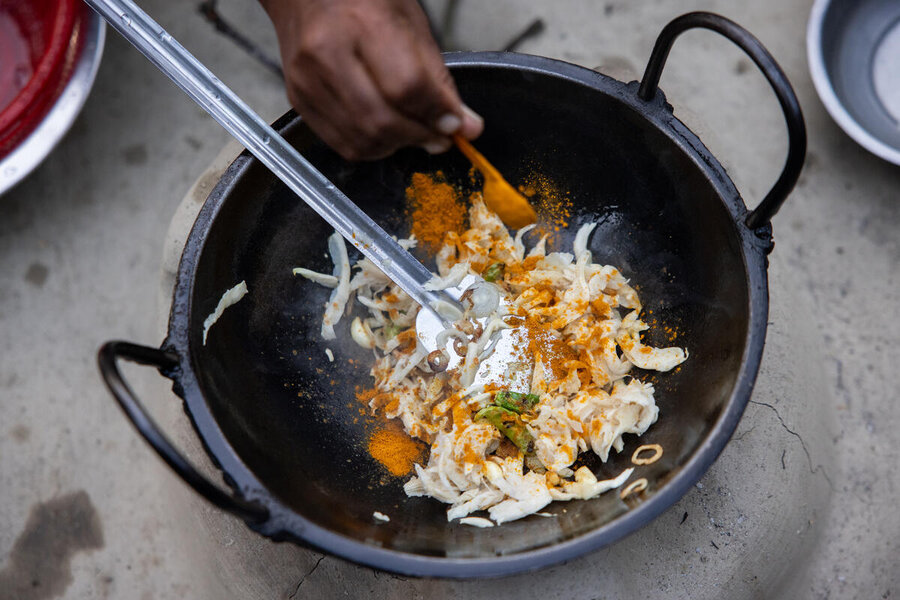
“You can eat it with everything,” Akter says. “I can cook a lot of things with mushrooms – mushroom bhaji (fried), mushroom soup, mushroom kababs, mushroom mash, mushrooms with meat curry. Mushrooms can also be dried and turned into a powder and added to curries.”
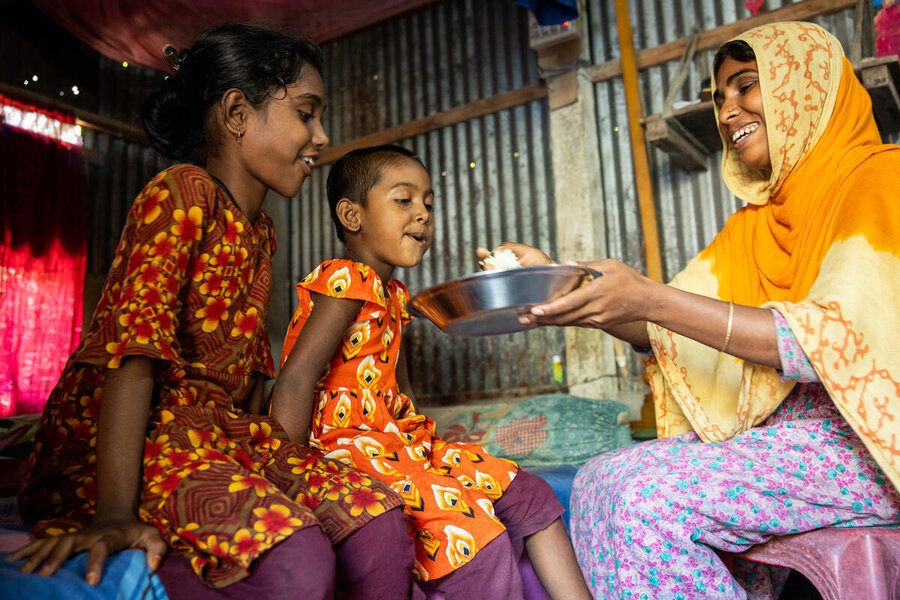
With her new skills and income, Akter has purchased a piece of land and raised her home above flood level to protect her family and livestock. She and her husband no longer worry about where their next meal will come from.
“We used to eat once or twice a day. Now, we can eat three times a day." – Bangladeshi mushroom farmer and entrepreneur Layzu Akter
“We used to eat once or twice a day. Now, we can eat three times a day – we can eat meat, fish, eggs and milk,” says Akter, who has two young daughters who she can now afford to send to school. “We can make a living whether WFP is here or not. We can stand on our own two feet.”
WFP’s integrated risk management pilot in Bangladesh has been implemented since 2018 and has received support from multiple donors and funding mechanisms, including WFP’s global trust fund with direct contributions from Germany and Ireland to Bangladesh, as well as support from the Korea International Cooperation Agency (KOICA) (2018–2024), the European Union, and Japan.