
For Ukrainians evacuated from Oleshky, a hot meal and a sense of safety
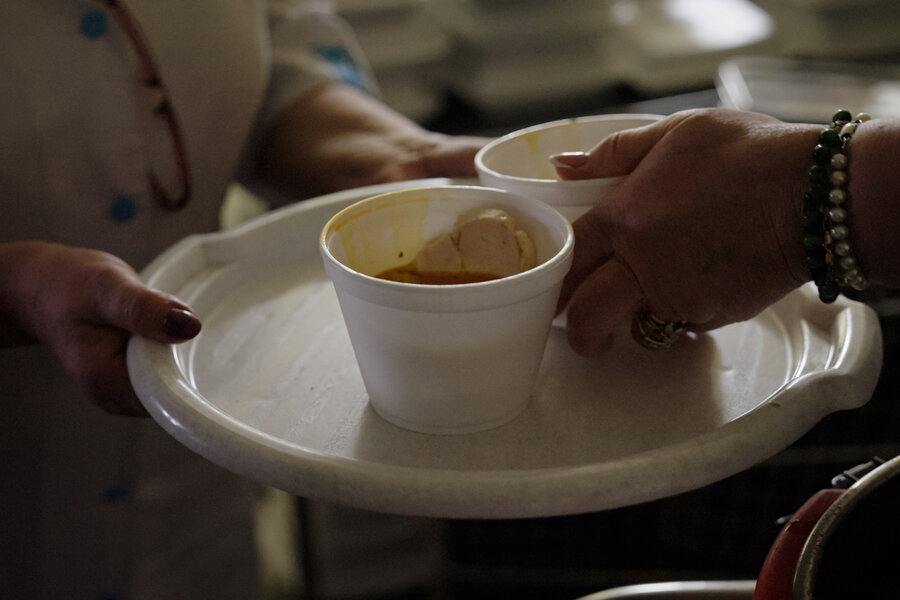
In a quiet hospital corridor in Kyiv, staff and volunteers push carts carrying steaming pots of food: chicken soup and bread, buckwheat porridge and chicken. They stop outside each room, bringing hot meals to hungry patients recently evacuated from Russian-occupied Oleshky, in Ukraine’s southern Kherson region.
For most people, a bowl of soup and a slice of bread are unremarkable. But for evacuees like Olha, who spent the last four-and-a-half years trapped in a war zone, the hearty World Food Programme (WFP) meals are a feast.
“Our neighbours had eaten all the pigeons in the area, every last one,” Olha, 50, recalls, her exhausted face turning sombre as she remembers a meat many Ukrainians find repelling. “I simply couldn’t understand how there could be hunger in the 21st century.”
We will continue to respond wherever the needs are greatest, scaling up quickly when and where it matters most.” – Richard Ragan, WFP Country Director in Ukraine.
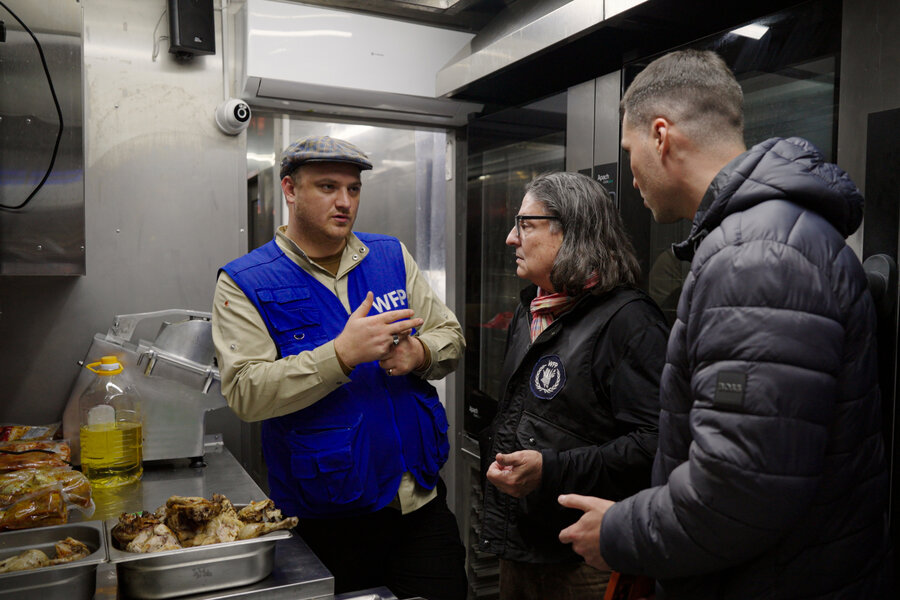
Olha is one of hundreds of Ukrainians evacuated from Oleshky in late October under a brief ceasefire. After months of deprivation, the busloads of evacuees, including children, elderly people and the seriously ill, are receiving medical check-ups and treatment in Kyiv hospitals. WFP and its Ukrainian partner, Iskra Dobra, were the first humanitarian responders to provide hot meals the moment they arrived in Kyiv.
“This is the first proper meal they have had in years,” says Richard Ragan, WFP Country Director in Ukraine, of the Oleshky evacuees. “Providing food is an immediate priority and part of our wider, sustained response to the war in Ukraine.”
Since the full-scale war broke out in 2022, WFP has provided the equivalent of 4.1 billion meals to Ukraine’s most vulnerable people. We now buy all our food within the country. Every month, we reach 357,000 people in frontline communities with emergency food and cash assistance, along with fresh bread. Some 200,000 young students receive WFP’s daily school meals.
“We will continue to respond wherever the needs are greatest,” Ragan says, “scaling up quickly when and where it matters most.”
Food in short supply
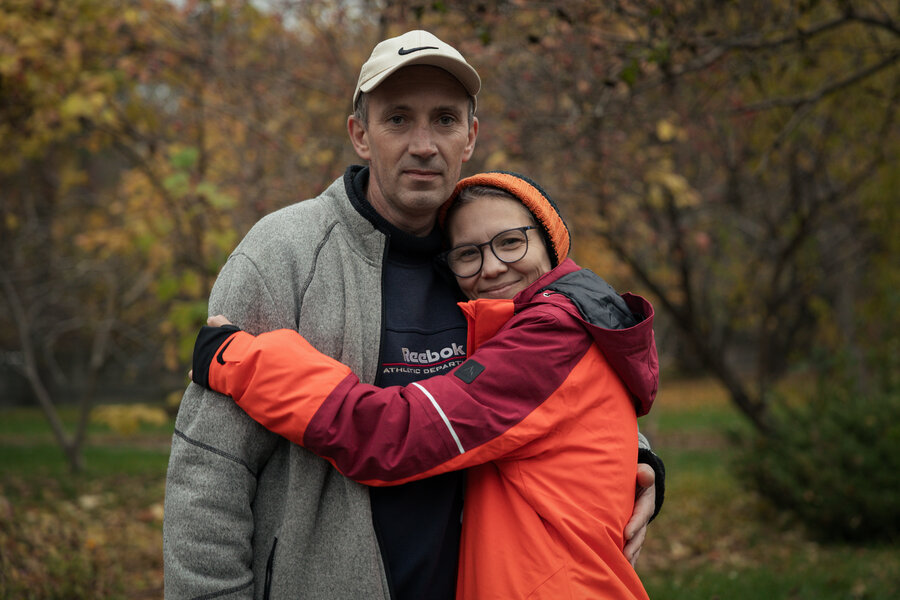
Olha was born in Oleshky and has spent her entire life there. She remembers a happy existence before the war: neighbours gathering for celebrations, children playing outside and shared meals.
When the war in Ukraine erupted in 2022, Oleshky was occupied, essentially becoming a frontline and eventually inaccessible to humanitarian assistance. Life became increasingly dangerous. Olha and her husband Serhii were searched, interrogated and threatened. Moving around the town became risky. “By noon at the latest, everyone was indoors,” says Serhii.
Food became increasingly scarce and prices soared. A kilo of flour could cost as much as US$12, evacuees say. Vegetables were even more expensive. In May, food deliveries ended altogether. Olha’s family ran out of potatoes and had little more than pasta.
Winter made everything harder. Most apartments and houses were heavily damaged by Russian shelling. With no heating at home, the family slept in three layers of clothes. Olha remembers her hands turning purple while washing dishes.
“It was terribly frightening. But what could we do? We had to eat,” – Oleshky evacuee Olha, recalling how she tended her vegetables between attacks
But it was the dwindling food supplies that frightened them most.
Olha planted cucumbers, tomatoes and zucchini to stretch their meagre supplies, rushing outside during brief lulls between attacks to tend the vegetables.
“It was terribly frightening. But what could we do? We had to eat,” she recalls.
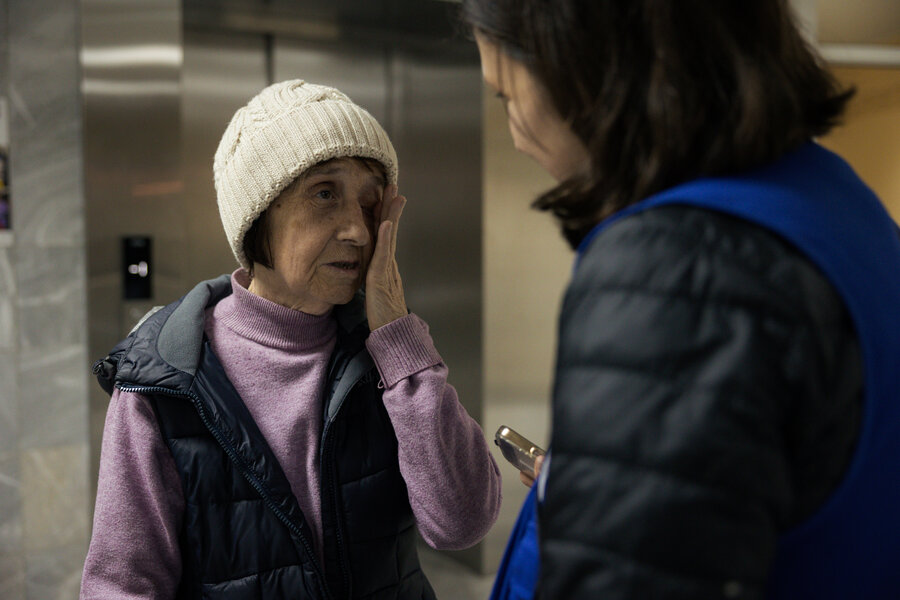
Further down the hospital corridor, 78-year-old Valentyna, another evacuee, describes how she and her elderly neighbours made soup from wild plants. Looking frail, she speaks quietly about the hardships she endured. “There was no bread, no flour, nothing at all,” she says.
Evacuation – and finally, a full plate
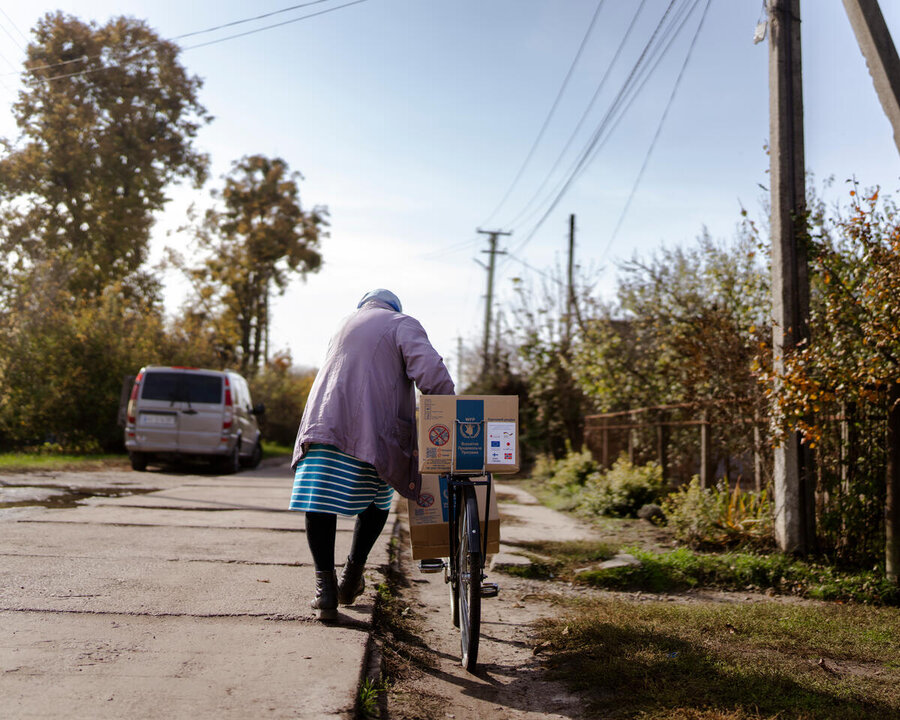
Oleshky’s trapped residents did not believe they could escape the occupied city. Information was scarce, and people learned not to trust announcements. And, until the very last minute, many couldn’t believe they were being evacuated.
“Until we reached the border, we were afraid anything could still happen,” Olha recalls. “We kept thinking someone might come in at any moment and take us back to Oleshky.”
Then, suddenly, they were through. “And everything was all right.”
Along the road to Kyiv, people stood holding signs and Ukrainian flags to welcome them.
“We saw our people,” Olha recalls. “There was something so wonderful about their energy. A sense of peace.”
For many evacuees, it was the first chance in a long time to stop worrying about what might happen – and when they would eat. “Here, you can eat until you’re full! I hadn’t seen so much food in years,” Valentyna says of the meals evacuees received as soon as they arrived at the hospital. With power unreliable in many places, the food is cooked before delivery.
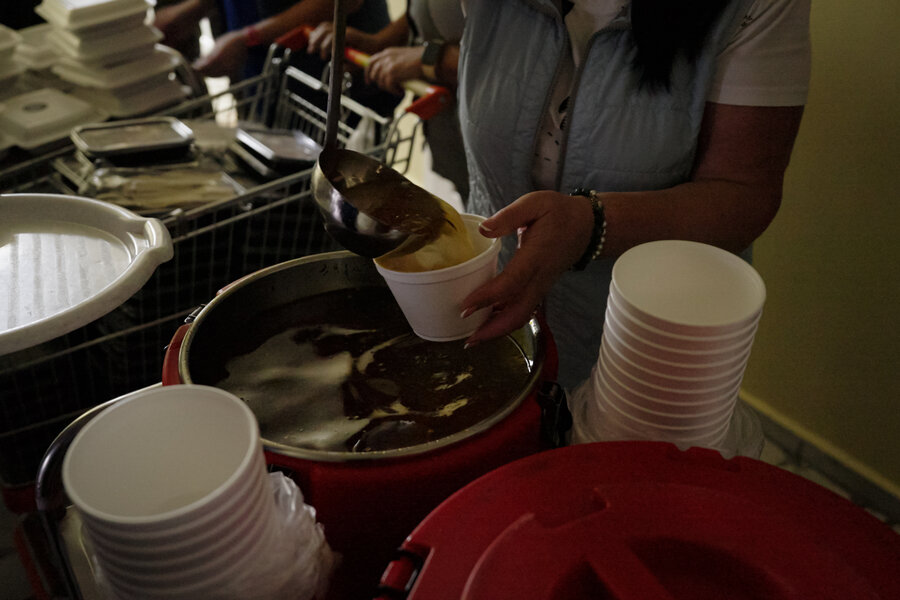
“The borscht is absolutely delicious,” Valentyna adds.
For Olha, Valentyna and the hundreds of others who escaped Oleshky, the future is still uncertain. There are homes they cannot return to, graves they cannot visit, and years of fear that will not simply disappear. But there is also the relief of being somewhere safe, the prospect of seeing family again, and the small routines that make new beginnings possible.
And, in a hospital room in Kyiv, there is a hot meal waiting.