
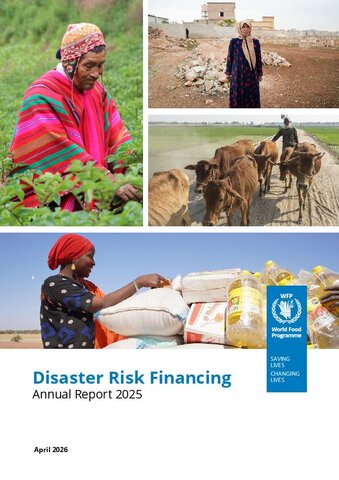
In 2025, the humanitarian consequences of extreme weather events were unprecedented. No region was spared, with devastating droughts and heatwaves in the Middle East, countries in Southern Africa reeling from the impacts of multiple tropical cyclones followed by drought, and supercharged hurricanes leaving a path of destruction across Caribbean countries. While the events of 2025 strained both national and humanitarian response systems, WFP continued to scale up its Disaster Risk Financing programmes to ensure that hunger can be prevented before shocks turn into humanitarian emergencies. Recognising the need to financially protect communities from the losses and damages caused by weather-related events and to prevent them from being pushed into hunger and food insecurity WFP continued to invest in readiness through pre-arranged finance.
Since 2008, WFP has prioritised advancing financial protection for food insecure communities and strengthening governments’ disaster risk financing and response strategies as a means of building resilience to extreme weather events. In 2025, through its Disaster Risk Financing portfolio WFP protected 4.9 million people across 44 countries with US$380 million in financial protection. In regions affected by drought, floods and tropical cyclones, US$13.2 were transferred to assist 1.1 million people. WFP remains committed to invest in innovative, risk-informed financing—enabling the organization to deliver greater impact, faster responses and more resilient futures in a climate-constrained world.
WFP. 2026. Disaster Risk Financing: Annual Report 2025. Rome.