
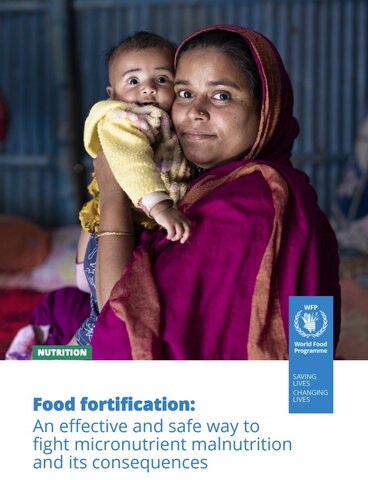
Food fortification provides a cost-effective and life-changing solution to micronutrient malnutrition by adding essential vitamins and minerals such as iron, iodine, vitamins A and B, and folic acid to everyday staples like flour, rice, oil and salt.
Why food fortification matters
Micronutrient malnutrition – often called “hidden hunger” – affects more than 2 billion people. It occurs when people are without regular access to the nutritious, diverse foods needed for a healthy diet. Fortification boosts the health and development of communities and entire economies by:
- Tackling hunger: Boosting people’s nutrition and health, which lowers their risk of falling further into food insecurity.
- Improving health: Reducing common micronutrient-related conditions, from anaemia and lowered immunity to neural tube defects.
- Protecting early childhood: Ensuring mothers and young children receive the nutrients needed during the critical first 1,000 days from conception to age 2.
- Boosting people’s and countries’ prospects: Improving health, productivity and future potential, with benefits for economies and long-term development. Every US$1 invested in fortification has an estimated $27 return in economic benefits.
| Document | File |
|---|---|
| Food Fortification brochure |
PDF | 4.99 MB
Download
|
| FAQ on Food Fortification |
PDF | 677.15 KB
Download
|
| Summary of evidence on the economic benefits of large-scale food fortification - 2024 |
PDF | 449.7 KB
Download
|
| Fortification: Leveraging evidence for improving nutrition - 2022 |
PDF | 2.48 MB
Download
|
| Harvest Plus/WFP joint brief on biofortification - 2021 |
HTML | 42.43 KB
Download
|