
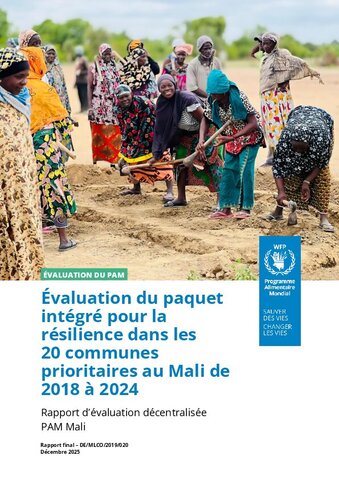
This decentralized evaluation was commissioned by the WFP Mali Country Office to generate credible evidence and lessons learned from the Integrated Resilience Package (IRP) implemented from 2018 to 2024. The IRP is a multisectoral program encompassing food assistance, nutrition, asset creation, livelihoods, school feeding, and social safety nets. The evaluation aimed to serve both learning and accountability purposes, focusing on the program’s relevance, effectiveness, efficiency, coherence, sustainability, and impact, with a strong emphasis on gender and social inclusion. The methodology combined qualitative and quantitative approaches, including extensive stakeholder consultations.
Key evaluation questions:
- To what extent was the design of the IRP relevant to Mali’s context and the needs of vulnerable populations?
- How effective was the IRP in improving food security, nutrition, and resilience among targeted communities?
- What specific impacts did the IRP have on household and community resilience, social cohesion, and gender equality?
- How sustainable are the results and assets created by the IRP?
- Were resources used efficiently, and how well did WFP coordinate with other actors?
Key findings:
- The IRP was well-aligned with national strategies and addressed urgent needs in food security and resilience, though sustainability is challenged by weak formalization of land agreements and limited intercommunal coordination.
- The program effectively targeted vulnerable groups, with notable improvements in nutrition, food security, and women’s inclusion, but persistent gender inequalities and local frustrations regarding beneficiary selection remain.
- Asset creation and agricultural support strengthened resilience and diversified livelihoods, yet overall effectiveness was constrained by climate and security challenges.
- The IRP contributed to improved dietary diversity, reduced negative coping strategies (e.g., migration), and enhanced social cohesion, but impacts were less pronounced among the poorest households and varied by region.
- Community management committees are central to sustainability, but their capacity and resources are often insufficient for long-term maintenance of assets.
- Financial mobilization increased, but operational efficiency was hampered by security, logistical, and administrative constraints.
Key recommendations:
- Support the establishment of intercommunal coordination frameworks to strengthen governance of IRP actions and improve the coordination of community structures.
- Promote a transformative gender approach by systematically collecting disaggregated data, conducting in-depth gender diagnostics, and supporting women’s leadership and rights.
- Optimize logistical and technical planning to enhance responsiveness and implementation quality.
- Support the integration of IRP activities into local development plans and budgets to ensure sustainability.
- Improve communication and transparency around beneficiary targeting process.
- Formalize local governance platforms to enhance coordination and synergy between emergency response and development.