
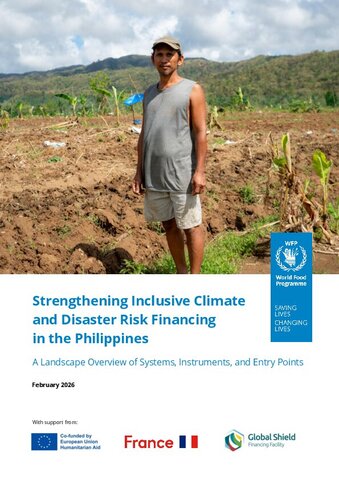
As the world’s most disaster‑prone country, the Philippines faces recurring climate shocks straining public finances, disrupt food systems, and negatively impact poor households, particularly at-risk communities. Delays in financing amplify these impacts, raise humanitarian costs and force families into harmful coping strategies that deepen food insecurity. Climate disaster risk financing and insurance (CDRFI) helps protect climate-vulnerable communities by encouraging early and proactive action, provide fast and reliable funding, and build long-term climate resilience.
Recent policy and legal reforms mark important steps forward, including the passage of Republic Act 12287 (Anticipatory Action Law) in 2025 which enables government funds to be mobilized before disasters strike, and the ongoing revision of the National Disaster Risk Financing and Insurance Strategy. Drawing on its engagement in anticipatory action, cash transfers and shock‑responsive social protection with the Government, WFP Philippines provides operational insights into how pre‑arranged financing can deliver timely support for people and food systems. This publication seeks to support dialogue and strengthen collaboration with donors and development partners in advancing inclusive CDRFI in the Philippines.
| Document | File |
|---|---|
| Strengthening Inclusive Climate and Disaster Risk Financing in the Philippines: A Landscape Overview |
PDF | 3.61 MB
Download
|