
How colliding crises are shaping Somalia's hunger emergency
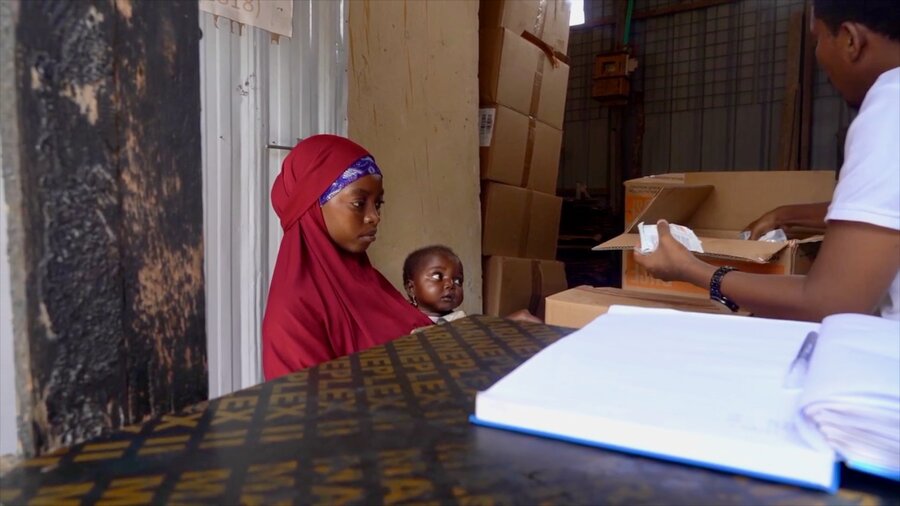
At the crowded Weidow health centre on Mogadishu’s outskirts, a health worker slips a special tape around the arm of 21-month-old Farhiya, cradled in her mother’s lap. It takes just seconds for the measurements to confirm the little girl with big eyes has moderate-acute malnutrition, becoming yet another casualty of Somalia’s deepening hunger crisis.
“I didn’t even know my child was malnourished,” says Farhiya’s mother, Hawo, adding, “I hope I can get the support I need for my child to recover.” (As a displaced person, Hawo’s last name is being withheld for her protection).
That support is increasingly precarious, as severely limited resources collide with soaring needs. New expert hunger findings estimate 5.4 million people could face crisis or worse food insecurity in the Horn of Africa country, amid an El Niño-intensified October-December rainy season. That number includes nearly 1.5 million falling into emergency hunger. Even more alarming, 26,000 people in the south-central city of Baidoa face catastrophic food insecurity – the highest level on the hunger scale and putting them at risk of famine.
"With El Niño approaching, livelihoods will be destroyed and families pushed into further suffering.” – Hameed Nuru, WFP Country Director in Somalia
“These are terrible findings, especially for families and communities that are just beginning to recover from prolonged drought,” says Hameed Nuru, WFP Country Director in Somalia. “For the world, it is a wake-up call that we need sustained investment to address the root causes of hunger, so communities are not pushed into crisis with every shock.”
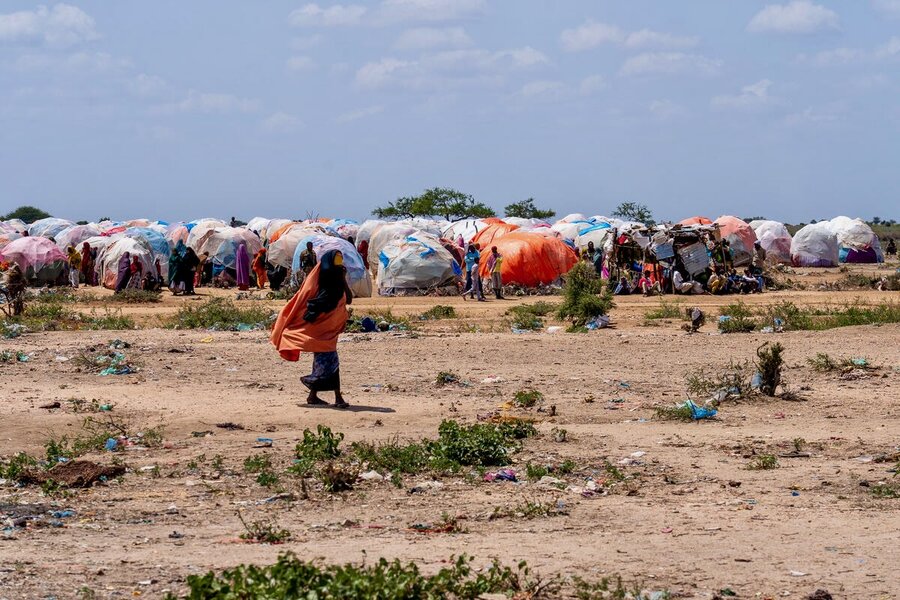
Compounding shocks – from conflict, displacement and global trade disruptions to a recent drought emergency, and now the looming threat of floods – are driving the alarming hunger forecast. They are also exacerbating one of the world's biggest malnutrition crises, with nearly 2 million Somali children acutely or severely malnourished.
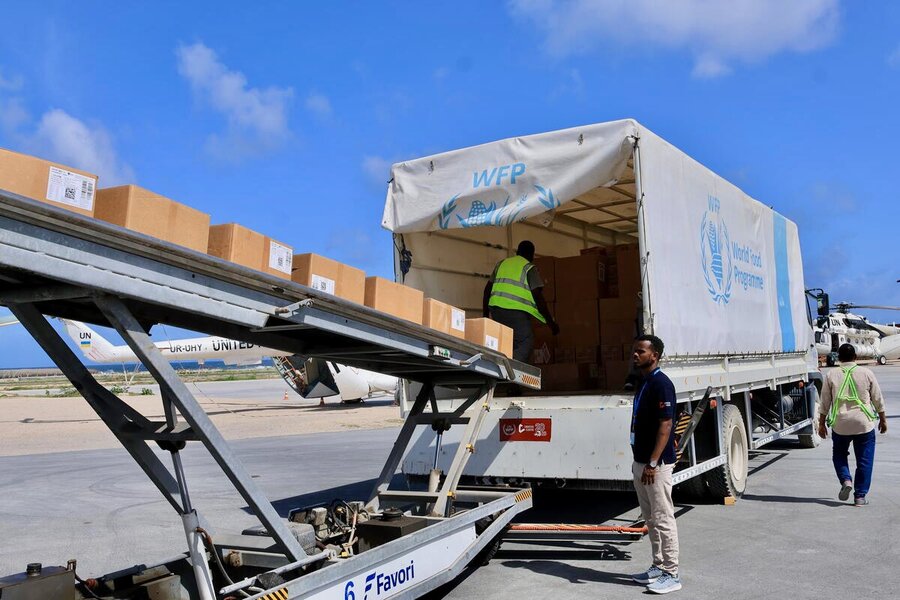
But today, the food and nutritional safety net that once buttressed millions of vulnerable Somalis is collapsing, as humanitarian financing dries up. While WFP still provides the backbone of the overall food aid response in Somalia, that support has fallen sharply. From reaching more than 4 million people monthly a few years ago, our food assistance can only support just over 670,000 today.
“In 2022, when Somalia was experiencing its longest drought in 40 years, timely and generous funding helped scale up assistance to avert famine,” Nuru says. “Today, severe funding shortfalls mean we are only reaching a fraction of those in need, forcing us to make painful choices about who receives assistance and who does not.”
How aid cuts are worsening malnutrition in Somalia
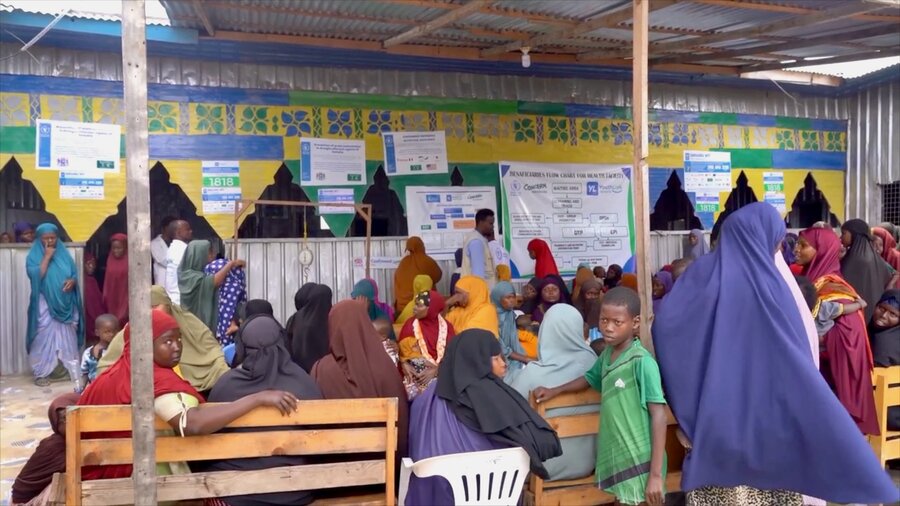
The fallout of the scarce funding can be seen at Mogadishu’s WFP-supported Weidow clinic, where mothers and ailing babies pack battered wooden benches and plastic chairs awaiting treatment. Beyond screening and treatment for malnutrition, including with WFP nutritional supplements, the health centre offers mothers pointers on hygiene and how to make healthy meals with locally available food.
After other clinics closed due to lack of financing, Weidow's caseload has expanded from just over 1,600 to more than 2,000 children under 5. It is the only area clinic still being supported by WFP – and nutritional assistance for vulnerable women has stopped altogether. Without fresh funds, assistance to children will also end as of October.
“It is very concerning to see the increasing number of women coming here needing help – but we have to turn them away because we don’t have enough resources,” says Yusuf Hassan, Programme Manager of nongovernmental group Youthlink, one of our humanitarian partners in Somalia.
The vast majority of Weidow’s patients are displaced, Hassan says. Many are women and their children who have fled conflict or prolonged drought. “The clinic,” he adds, “is overwhelmed.”
Hawo and her daughter count among the many conflict-displaced people. First, a mortar hit their family home in Baidoa, killing Hawo’s father. Then her brother died during the fighting. The young, single mother was forced to flee to Mogadishu, where she now lives with her aunt. She sometimes washes clothes to make ends meet. But still physically fragile from a recent cesarean procedure, she cannot do much.
“Even with my aunt’s support I have been struggling, but sometimes it is really bad,” she acknowledges. “Some days we eat just once a day.”
Her daughter Farhiya became listless, losing her appetite and shedding weight. A neighbour recommended she visit the Weido clinic. “I hope I can get the support I need for my child to recover,” she says.
But today, the clinic is turning women and children away for lack of resources, aid worker Hassan says. He worries things will only get worse.
“The cases will keep increasing because Mogadishu in itself is a fragile place,” he says. “With El Niño approaching, livelihoods will be destroyed and families pushed into further suffering.”
From drought to threatened El Niño floods in Somalia
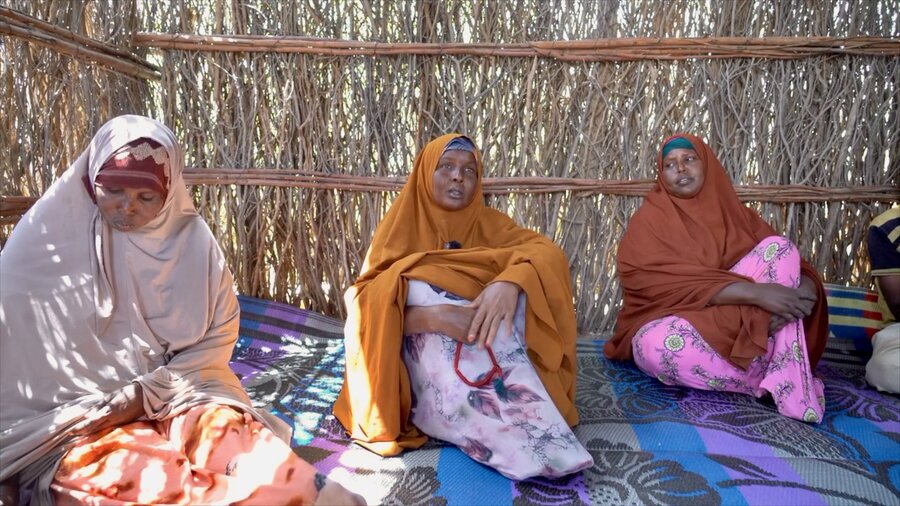
After weathering a punishing drought, Somalia will likely face above-normal rainfall during the October-December Deyr rainy season, forecasts suggest. Expected to intensify with El Niño, the weather swing threatens more hardship for hundreds of thousands of people in flood-prone zones.
Working with the Government of Somalia, WFP is monitoring forecasts and preparing an early action response for those living in high-risk areas, including with cash assistance and early-warning alerts. These efforts help communities and governments prepare for and withstand sudden shocks, while reducing future humanitarian needs.
They also reflect our broader anticipatory response in Somalia over the years. Indeed in 2022, support from WFP and our partners helped to avert famine.
Now, up to 3.5 million people are at risk of floods later in the year, which could see hundreds of thousands displaced from the farming and grazing areas they depend on. With Somalia’s humanitarian response plan only partially funded, the impact could be devastating. Malnourished children are especially at risk of potentially deadly water-borne diseases such as cholera.
“For the world, it is a wake-up call that we need sustained investment to address the root causes of hunger." – WFP's Hameed Nuru
The fallout of extreme weather events can be seen in the restive, south-central city of Beledweyne, where women like Asli Dagane are still recovering from the previous 2023 El Niño event. Flooding that year destroyed homes in her village of Helikiliyo that have yet to be rebuilt – dealing another blow to a farming community with no schools, medical facilities or businesses.
“During our last evacuation, we saved only our children, our donkey and our cart,” she recalls. “The floodwaters destroyed all the crops of our farms.”
WFP’s Nuru hopes this El Niño event will have a different outcome. “For the world, it is a wake-up call that we need sustained investment to address the root causes of hunger,” he says, “so communities are not pushed into crisis with every shock.”
WFP urgently requires US$162 million to sustain life-saving assistance for the most vulnerable people in Somalia through March 2027 and to prevent today’s warning signs from becoming tomorrow’s catastrophe.
WFP's life-saving work in Somalia is supported by donors including the African Development Bank (AfDB), the African Union (via the African Risk Capacity (ARC)), Ajram Foundation, Canada, Denmark, European Union, France, Germany, Global Agriculture and Food Security Programme (GAFSP), Government of Somalia, Japan, Norway, Novo Nordisk Foundation, Qatar, Republic of Korea (RoK), Sweden, Switzerland, United Kingdom, United Nations, WFP USA and Zoetis Foundation.