
How fighting Ebola in eastern DRC starts with tackling hunger
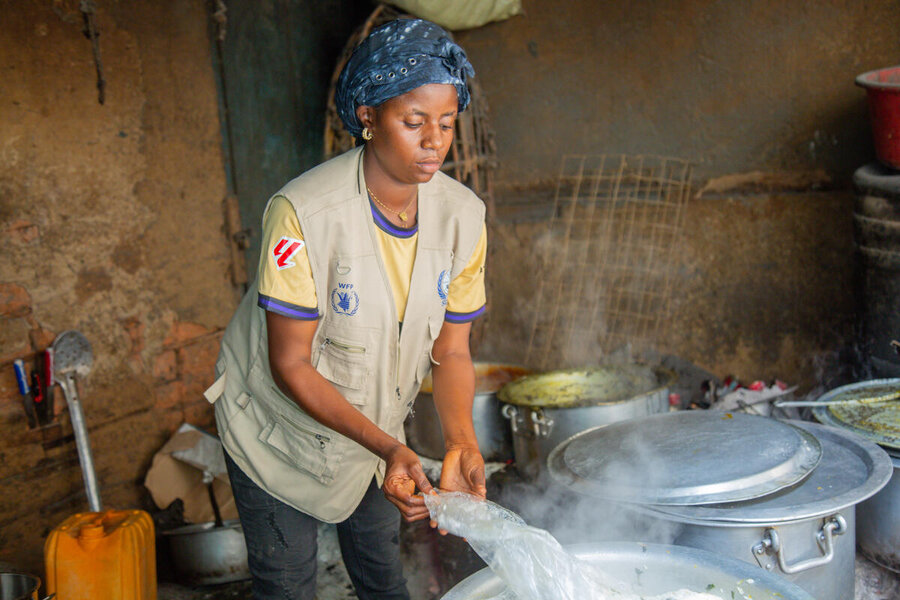
In the eastern Congolese mining town of Mongbwalu, Dorica Hanibaliye has buried neighbours and seen friends lose siblings and close relatives to Ebola since the virus was first confirmed there more than three months ago. But that is not her only loss.
Before Ebola, she earned enough to support her seven children by selling sweets around once-bustling mining sites. Today, she and other town residents live in fear of the deadly and surging virus, and struggle to put food on the table.
“Since the outbreak began, we have been unable to go about our daily lives,” Hanibaliye says. “Food is becoming scarce and prices are rising beyond what many families can afford.”
That sentiment is echoed across eastern Democratic Republic of the Congo, where Ebola is sweeping through communities already weakened by conflict, displacement and hunger. Since the first cases were reported in Mongbwalu in mid-May, the rare Bundibugyo virus has spread from three health zones in one province to 57 across 6 provinces. It has infected and killed thousands of people, while health officials warn it is spreading increasingly beyond the reach of surveillance and care.
“To end Ebola, we must address both the health emergency and the hunger it is worsening.” – David Stevenson, WFP Country Director in DRC.
Ebola is also deepening one of the world's largest hunger crises, with 26.5 million people facing acute food insecurity, adding another layer of suffering for families with few resources left to cope.
“The fact that so many deaths are occurring is a stark reminder that this is more than a health emergency,” warns David Stevenson, World Food Programme (WFP) Country Director in DRC. “Ebola follows the fault lines of hunger, poverty and displacement, as families exhaust their coping mechanisms and move in search of food, work or safety.”
WFP is working to turn around that grim trajectory, offering food assistance to communities and aiding the overall Ebola response with logistics, transport and other support. So far, our hot meals and dry food rations have reached nearly 87,000 people, including patients, caregivers, frontline workers and vulnerable families.
By helping families like Hanibaliye’s cope with Ebola’s economic fallout, we’re also helping to curb the outbreak: when people are able to meet their basic food needs, they are less likely to move in search of sustenance, which risks spreading the disease. They can better comply with public health measures and care for sick relatives.
“To end Ebola, we must address both the health emergency and the hunger it is worsening ” Stevenson says.
The scars of hunger
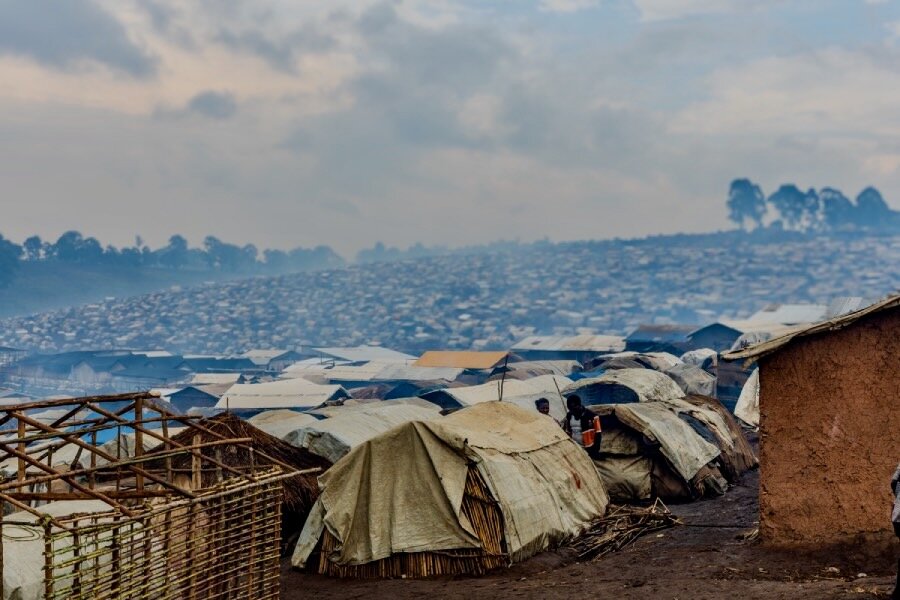
Even before Ebola, WFP’s food assistance has amounted to a key safety net for many families in eastern Congo, where survival has become a constant balancing act. Years-long conflict has forced millions from their homes. Hunger has stretched already fragile livelihoods.
The virus has brought a new layer of fear and uncertainty to communities still struggling from previous shocks. Each shock feeds on the other, making it harder to recover.
As the outbreak disrupts trade routes and local markets, the cost of a basic food basket increased by nine percent in the three months leading to July 2026, according to WFP market monitoring. The depreciation of the Congolese franc has further reduced people’s purchasing power.
Hanibaliye sees the effects in Mongbwalu: not just in her own hungry children, but also in others around her. “We saw more and more children becoming malnourished,” she says. “Their faces became swollen, and their hair turned red or yellow because they could not get the nutritious food they needed.”
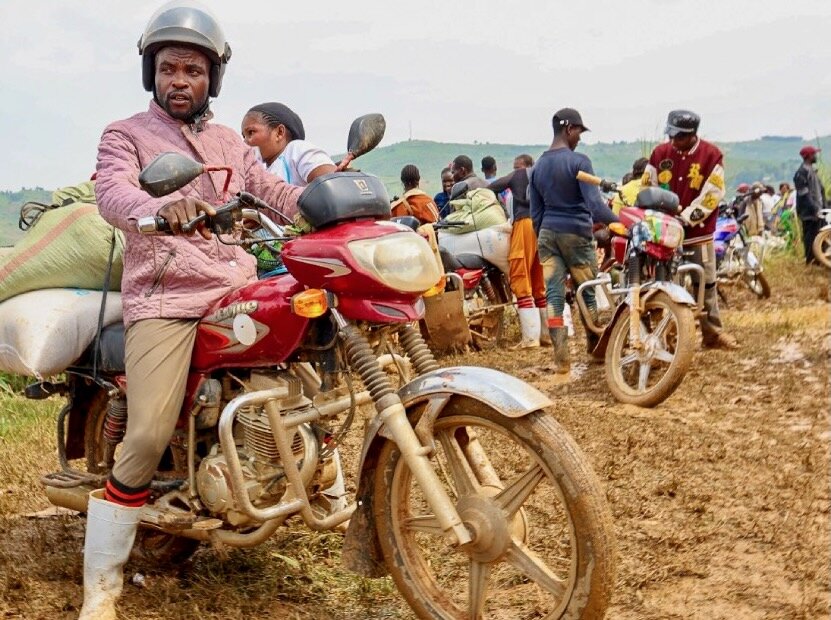
Other Mongbwalu residents are feeling Ebola’s impact on their pockets. They include Pascal Kanane Mokara, who leans against the red motorcycle that once sustained his family, scanning the road for passengers.
Sporting a dusty pink jacket, Kanane has long connected people to markets and communities across the area. The work allowed him to support his family of nine and earn a modest living.
But the outbreak brought a cruel paradox. His profession – carrying strangers from place to place – suddenly became shunned by clients anxious over Ebola’s transmission, he and other drivers say. As customers disappeared, so did incomes, leaving many struggling to afford food and other essentials.
“Fear of Ebola changed everything,” says Kanane, who now sometimes waits for hours before landing a passenger.
The food safety net
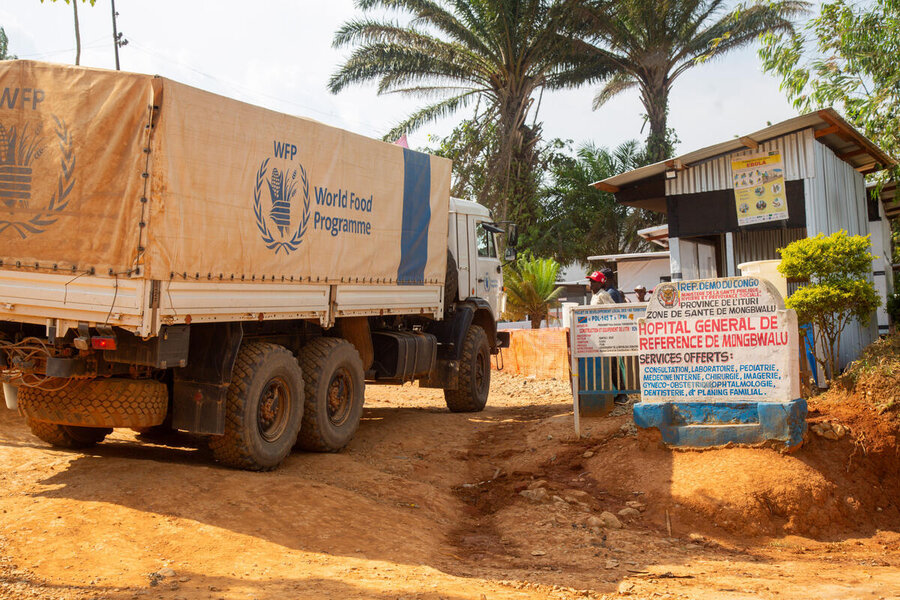
Later, both Hanibaliye and Kanane join hundreds of Mongbwalu residents at a WFP food distribution in town, collecting rice, beans, vegetable oil and iodized salt – enough to last a month. Across Ebola-affected regions, our food serves as a lifeline for families whose livelihoods have been upended by the outbreak.
“It helps us feed our families and get through a very difficult period,” says Kanane, as he loads the food onto his battered motorcycle.
“Ebola is spreading across some of the hungriest parts of eastern DRC,” says WFP’s Stevenson. “In communities already facing crisis and emergency levels of food insecurity, the virus is taking a devastating toll, claiming lives, disrupting livelihoods and making it harder for families to access the food they need.”
When incomes shrink, families often buy less food, switch to cheaper options, or reduce dietary diversity, WFP and other hunger experts note. The impacts are rarely immediate. But over time, they accumulate.
“We often see three or four malnourished children arrive at the same time, accompanied by their mothers, who are also malnourished. The entire family lacks food.” – Jean de Dieu Nduwingalo, head nurse at Salama Health Centre, Bule, DRC
That is happening in restive Ituri Province, where Mongbwalu is located. Here, in the epicentre of DRC’s latest Ebola outbreak, one child in two is affected by malnutrition. Needs remain immense, despite ongoing humanitarian assistance.
At the WFP-supported Salama Health Centre, in the Ituri town of Bule, head nurse Jean de Dieu Nduwingalo knows those needs well.
The small health centre, 100 km east of Mongbwalu, serves tens of thousands of Congolese who have fled conflict and other hardship. They now live at a nearby displacement settlement. As unrest cuts off many from farming and other livelihood activities, Nduwingalo has witnessed a sharp rise in hunger and severe acute malnutrition – an uptick that risks rising further with Ebola.
“We often see three or four malnourished children arrive at the same time, accompanied by their mothers, who are also malnourished,” Nduwingalo says. “The entire family lacks food.”
Dollars needed to fight Ebola, build food security
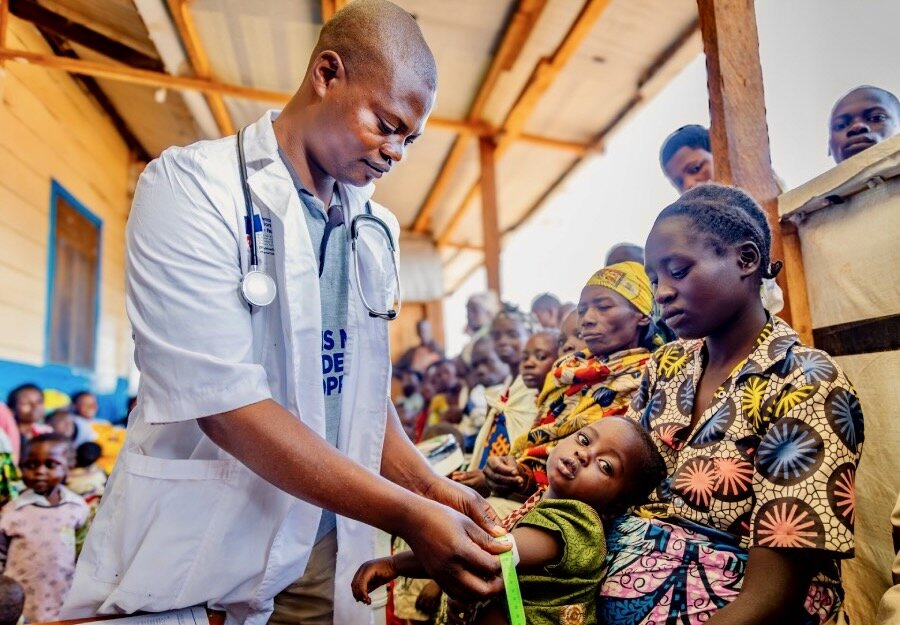
Behind him, mothers pack the centre’s wooden benches, clutching malnourished children. Salama is equipped to treat only the most critical cases. Its shelves stacked high with files attest to needs that outpace available resources.
“Children recover from treatment only to relapse weeks later, because their families still do not have enough to eat,” Nduwingalo says.
Nor is the clinic able to treat all the pregnant and breastfeeding women seeking assistance. “We can save some lives, we can treat the most severe cases,” the nurse says, “but without more assistance, too many families remain beyond our reach.”
As violence continues to uproot families, WFP is providing food and nutrition support to more than 68,000 displaced people in the area. It is part of our broader, years-long response in Ituri, and across eastern DRC, where WFP has assisted nearly 480,000 food-insecure people with food and cash so far this year. But like Salama, we are seeing needs outpace our resources – even as Ebola marches on.
“Food assistance is helping families to stay fed and stay safe while supporting efforts to contain Ebola.” – David Stevenson, WFP Country Director in Democratic Republic of the Congo.
Indeed, food security – critical in helping families cope with the Bundibugyo outbreak – remains the most underfunded component of the Ebola response.
“Food assistance is helping families to stay fed and stay safe while supporting efforts to contain Ebola,” says WFP’s Stevenson. “What we do not have is the funding needed to address them together.”
Food and nutrition assistance remains the largest unmet need in the Ebola response. WFP requires US$50 million to sustain hot meals, support quarantine measures and reach newly affected communities, yet funding continues to lag behind rapidly growing needs.
WFP thanks the United States of America for supporting our Ebola response in DRC.