
Hunger in Gaza: aid delivers fragile gains, but families remain in crisis
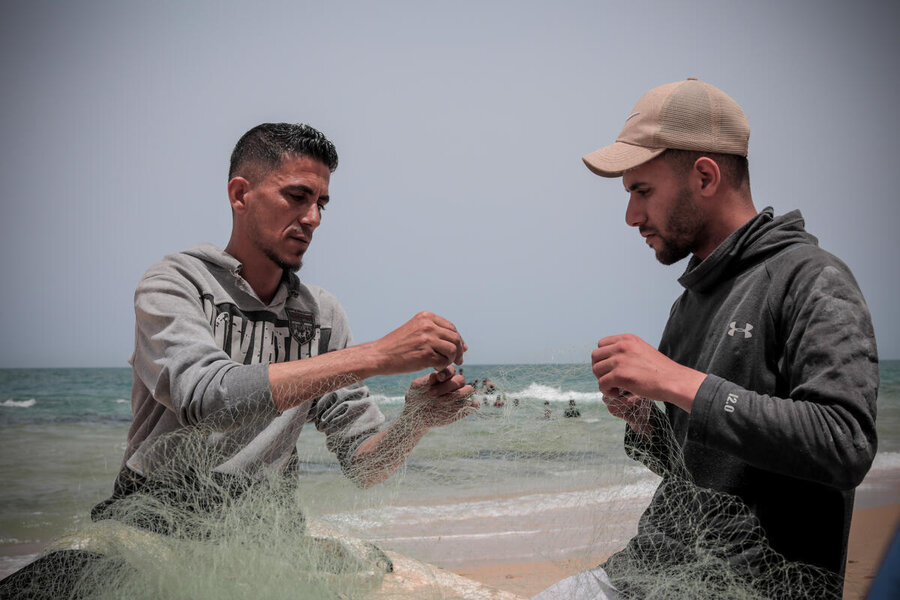
The Mediterranean Sea that once fed Murad al-Aqra’s large family yields very little these days. He is lucky to pull in a kilo or two of fish with his dripping nets. Each time he steers his small wooden boat through the sparkling waters beyond Gaza’s shore, he is taking a risk.
“My life today is like the life of every fisherman in Gaza – hard and exhausting,” says the father of seven, who lives in the central Gazan town of Deir al-Balah. “We have families and children depending on us, yet we can no longer provide for them properly.”
That is the story of many in Gaza, where new expert findings show modest but fragile improvements in food security and child nutrition, thanks to expanded humanitarian aid and commercial supplies. Even so, 1.4 million people, or more than two-thirds of the Strip’s population, face crisis or worse hunger levels – down from 1.6 million late last year, according to the latest Integrated Food Security Phase Classification (IPC) analysis, the global hunger authority.
Emergency hunger still grips roughly 200,000 Palestinians in Gaza – especially those living near the so-called “yellow line,” beyond which begins the area of Gaza under military control, where access to humanitarian aid is challenging. And with just one border crossing into Gaza now open, humanitarian and commercial imports remain restricted.
Without sustained assistance and investment in recovery, the World Food Programme (WFP) and other experts warn, families risk tipping back into catastrophe. Already, funding shortfalls are forcing ration cuts across Gaza, potentially triggering rapidly worsening food security if gaps aren’t filled.
“There is progress on food security in Gaza, but it is fragile and can easily be reversed,” said Carl Skau, WFP’s Acting Executive Director. “The overall humanitarian situation remains brutal: families lack water, sanitation and medicine. We need sustained access, funding and stability so people of Gaza can begin recovery.”
WFP's food lifeline
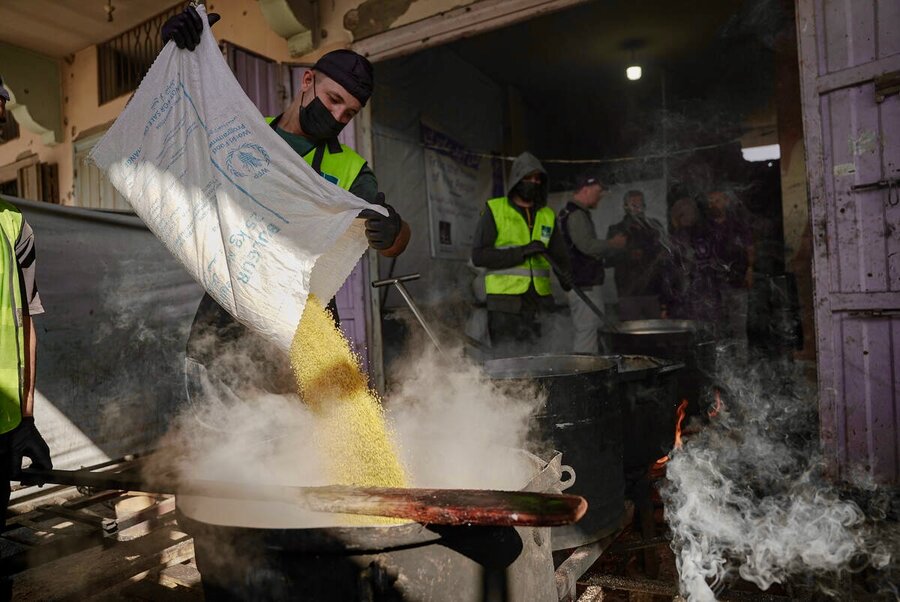
Like 1.5 million people in Gaza today, al-Aqra and his family count on monthly WFP assistance: food parcels, hot meals, bread and cash – support that was barely available during the most difficult days of the war, due to restrictions in humanitarian access.
But it is not enough to move his family beyond survival. “The needs are still enormous,” says al-Aqra. “We need safety, healthcare, education and support to rebuild our lives.”
As hunger surged during the war, the fisherman took his boat out to sea every day, hoping to bring fish back for his family – and never certain he would come back alive. With security still fragile, that fear hasn’t gone away. “If I stayed home,” he says, “there would be no one to feed my children.”
Hunger is not his only worry. One daughter suffers from kidney disease that requires regular treatment – care that evaporated when the October 2023 war broke out. Al-Aqra’s youngest child, born during the war, fell severely ill during the conflict. Eventually, the baby recovered thanks to nutritional support and treatment, he says.
Then, as now, our food was a lifeline. “One of the few things that helps us survive is the community kitchen supported by WFP,” al-Aqra says.
Remembering the hungriest times
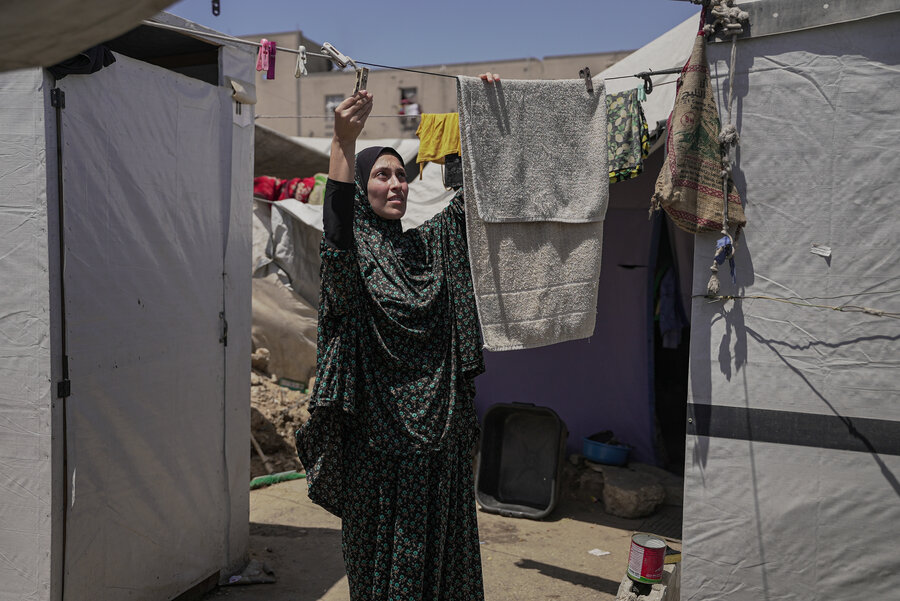
Humanitarian aid has pulled other families in Gaza from catastrophe. Inas Al Qombuz, now pregnant with her second child, describes how nutritional supplements and medical follow-up have improved her health. WFP has also provided her with food parcels and cash assistance.
“The parcels contain items like chickpea, rice and beans — all are essential for us to cook and eat,” she says. “With cash assistance, we cover what is needed and missing from the parcels,” including vegetables.
A university student studying software engineering, Al Qombuz lost everything in the war. She and her family joined a sea of people on the move, fleeing their home east of Gaza City on the first day of conflict, and taking nothing with them.
“I was displaced nearly ten times during the war,” Al Qombuz says, as she describes sleeping in school shelters and eating a single bowl of lentil soup during the hungriest times a year ago, when hundreds of thousands faced famine.
Twice diagnosed with malnutrition – first breastfeeding her young son and now with her second pregnancy – Al Qombuz says she remains in poor health. Severe pain and acne around her mouth makes it difficult to eat and drink.
Like hundreds of thousands of other people in Gaza, the family still lives in a tent, collecting water from trucks and cooking food over an open fire. The conflict that pulled her from her studies and destroyed her husband’s business, has also taken a mental toll.
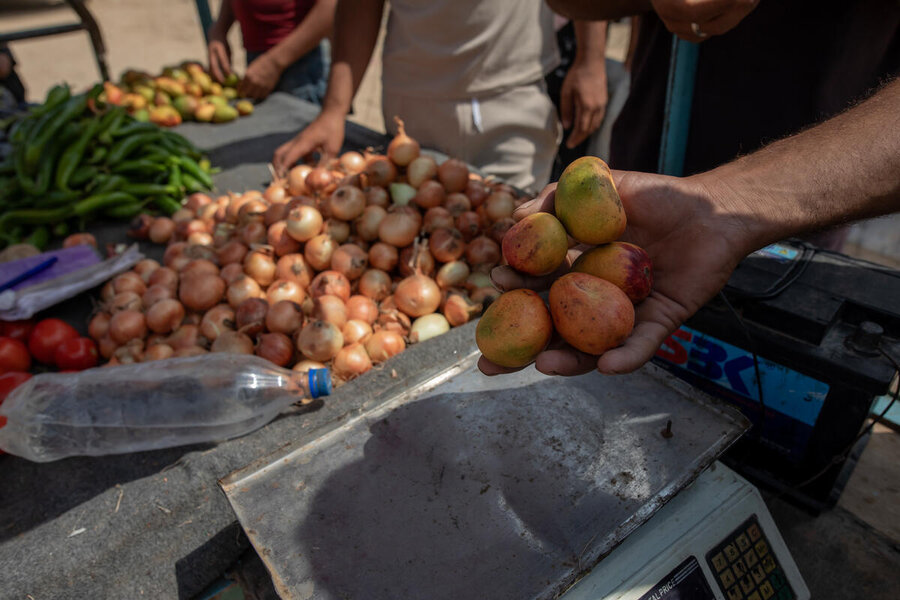
“I am in most need of fruits and vegetables to be always available,” she says of produce that remains scarce and expensive in the market. “Also eggs and healthy food in general.”
Fragile food security
As funding shrinks, Gaza’s precarious gains against hunger could easily be rolled back, WFP and others warn.
“We know from last year’s devastating famine conditions – how fragile the food security situation is in Gaza and how dangerous it is to run operations “hand‑to‑mouth,” says Shaun Hughes, WFP Country Director in Palestine. “Any small disruption can quickly have negative consequences.”
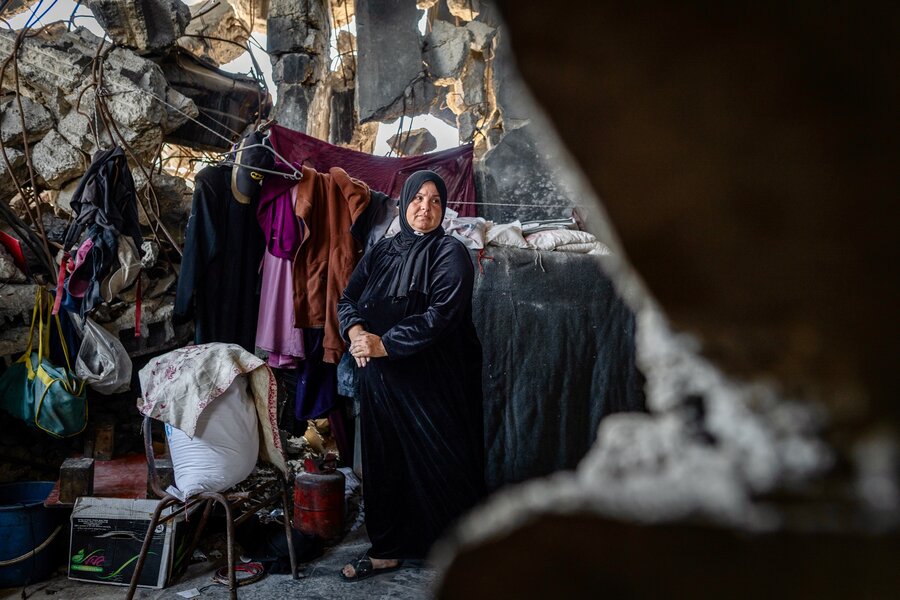
From a cratered building in Gaza City, mother and grandmother Siham Abdel Aal remembers the hardest days of the war, watching people killed by falling bombs and fearing her daughters would be unable to deliver their babies safely. She, too, remembers pre-war times of plenty, when her large family gathered around.
“Before the war, life was very beautiful,” says Abdel Aal, whose family has returned to their bombed-out home, now a shaky construction of rubble, tarp and cement. “Today, life is completely different.”
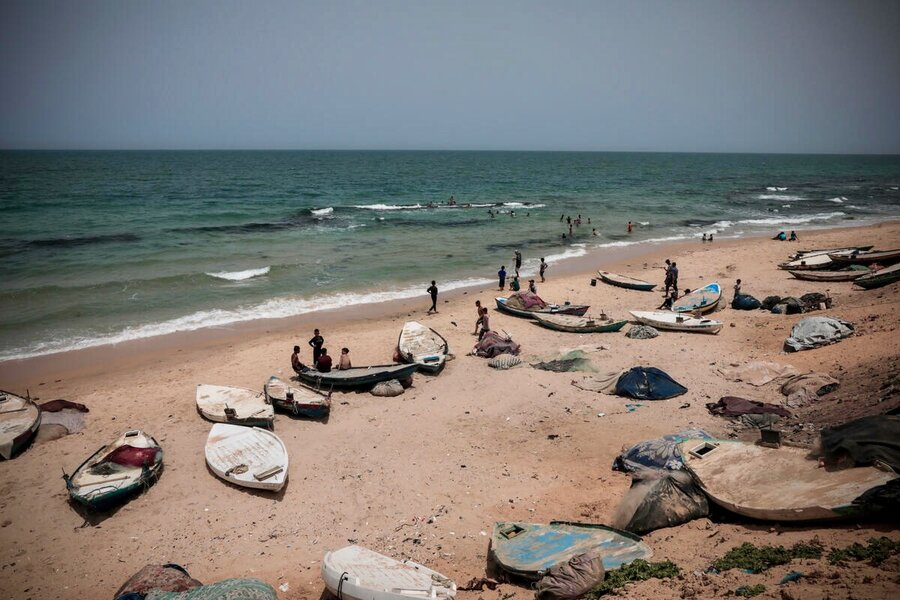
As he sits on the Deir al-Balah’s beach repairing his fishing net, Al-Aqra is betting on the sea to deliver better days.
“The sea is our source of life,” he says. “Every time we cast our nets, we are searching for more than fish—we are searching for a way to provide for our families and keep going.”