
Middle East conflict fuels bread shortage in hungry Gaza
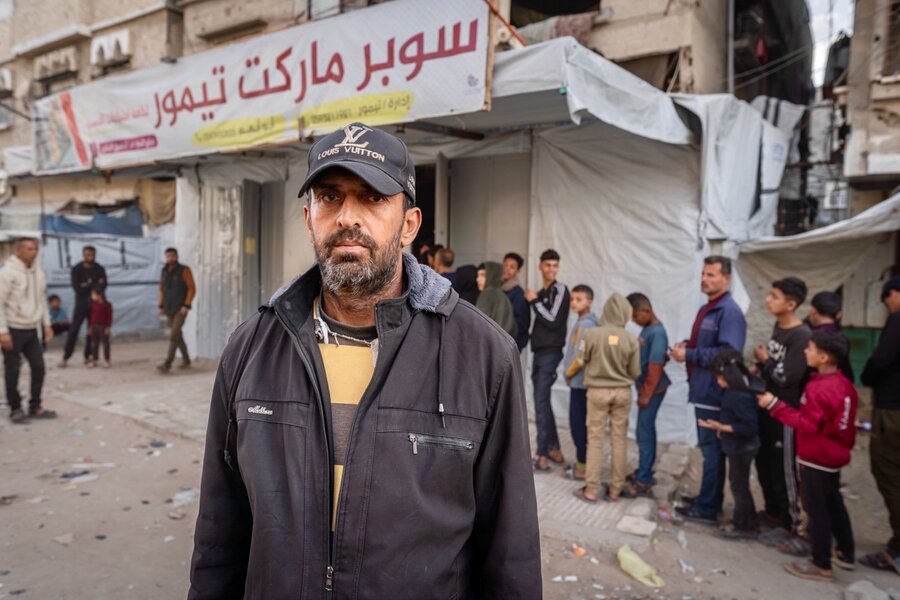
By the time the sun rises, Mohammad Abu Tair is already in line at a local shop in the central Gazan town of Khan Younis.
The shop’s vast metal doors are still shut tightly. Yet, the queue of men, women and children braving the chilly morning continues to grow.
“I’ve been standing here since 6 am,” says Abu Tair, sporting a baseball cap and dark jacket to ward off the cold. “I come here every day to buy one bundle of bread. But we are a family of nine – one bundle is not enough.”
Abu Tair’s family normally bakes their own bread at home. But that changed after the Middle East crisis erupted, roiling the region. At first, for more than a month, no commercial wheat flour entered Gaza, temporarily causing prices to spike.
“I went to the market to look for a bag of flour,” says Abu Tair, recalling his sticker shock a few weeks ago, prompting him to purchase subsized bread at his local store. “I don’t have a job. I cannot afford that.”
“Cooking gas and life in general are expensive right now.” – Alabadsawi Safi, Gaza shop owner
Rollercoaster prices for key staples have piled more hardship on Gazans emerging from two years of war. Nearly seven months into the ceasefire, signs of recovery are barely visible. Some 80 percent of Gaza’s workforce is unemployed, and many face severe hunger. A recent United Nations and European Union report finds the Strip will need US$71.4 billion over the next decade for recovery and reconstruction.
World Food Programme (WFP) support, allowing shops to provide flatbread at subsidized prices, has been a lifeline for many here like Abu Tair – but only as long as flour and fuel continue to reach local bakeries.
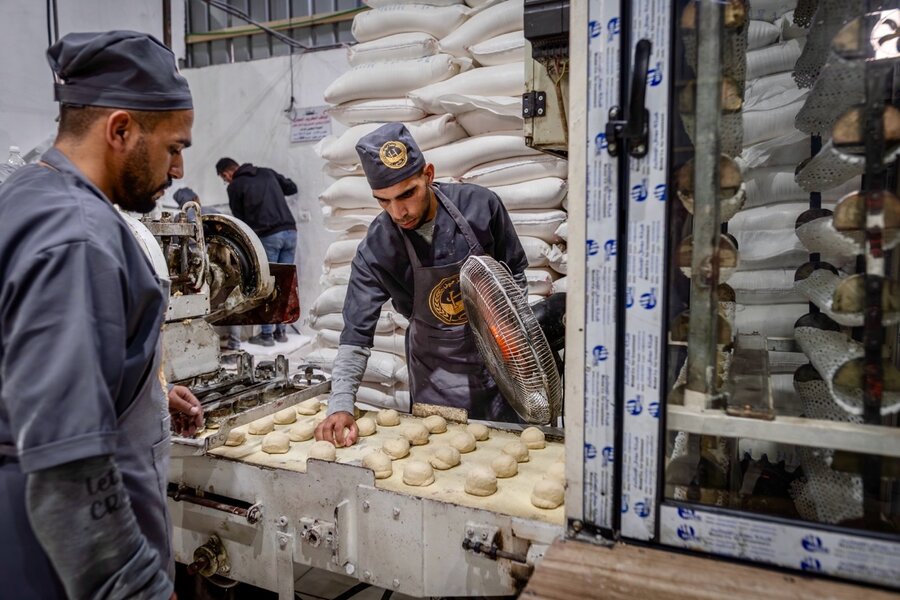
“Cooking gas and life in general are expensive right now,” says Alabadsawi Safi, the owner of a WFP-contracted shop, “especially since the beginning of March.”
Safi is one of the 164 retailers who sell bread produced by the 26 bakeries across Gaza that WFP supplies with flour and fuel. They provide about one-third of the enclave’s bread needs.
For every ten bundles the WFP-supported bakeries churn out, eight go to retailers, where they are sold at a capped price of three shekels (about US$1). The remaining two are provided for free to families at hot meal kitchens.
Gaza's bread of life
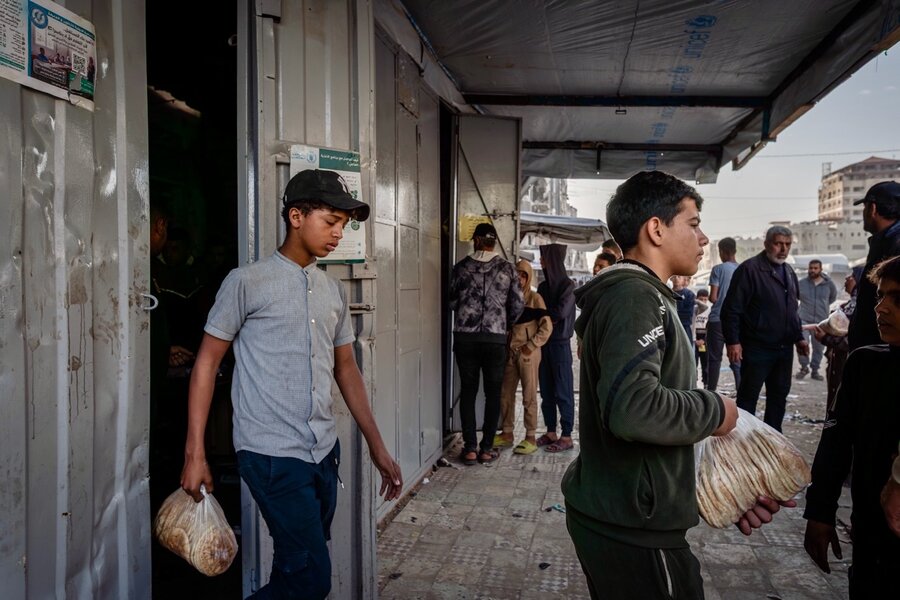
Before Gaza’s war erupted in October 2023, there were almost 100 registered, flourishing bakeries and countless smaller informal ones in the enclave. The warm flatbreads they baked are a staple of Palestinian life, eaten with nearly every meal.
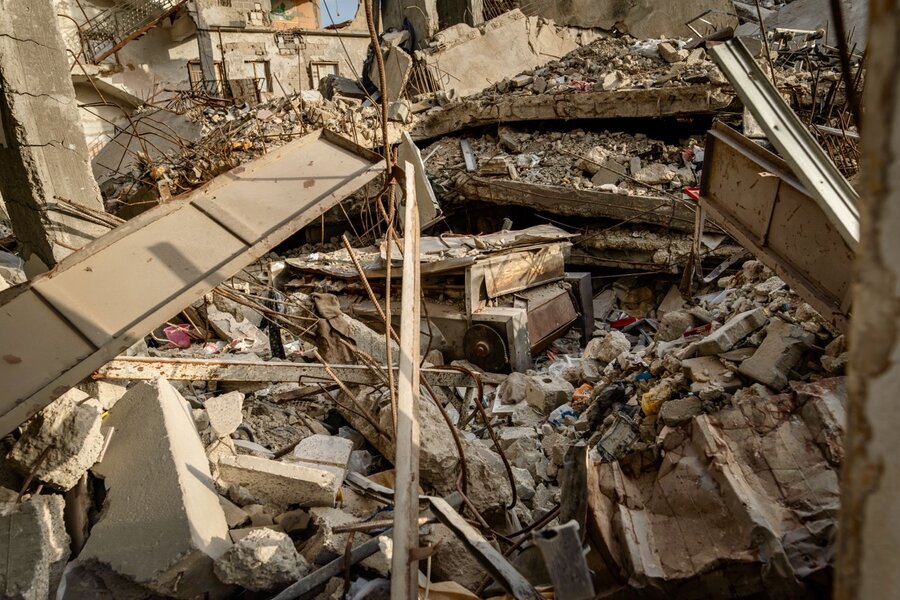
During the war, bakeries were essential to combat rising food insecurity – until they were forced to shut down soon after a two-month aid blockade that began in March 2025. Many were destroyed or damaged by airstrikes and shelling. Entire production lines remain covered in rubble, beyond repair.
“We worked day and night to remove the debris and rebuild what you see today.” – Tariq Ewaida, owner of Haifa bakery in Khan Younis
“In July 2025, an air strike reduced my bakery to rubble,” says Tariq Ewaida, the owner of Haifa bakery in Khan Younis. His father, who previously owned the establishment, was killed as he went to assess the damage, along with Ewaida’s nephew. “We worked day and night to remove the debris and rebuild what you see today.”
Salvaging Ewaida’s machinery from the debris was no easy task. “Nothing you see here is new,” he says. “It’s all been repaired.” The bakery reopened in March, but most of the equipment is barely adequate.
With little or no infrastructure material allowed to enter the Strip, or financial resources, rebuilding Gaza’s bakeries is close to mission impossible right now.
“Raw materials and equipment are very difficult to find because of restrictions on what is allowed to cross the borders,” says Mohammed Zidan, the owner of another bakery called Castle, in the town of Deir al-Balah.
“Even when you find them in the market, they are incredibly expensive,” he adds. “Some spare parts we previously imported from Israel for 5,000 shekels now cost over 40,000, and none of them are new.”
Maintaining the ageing production line is another headache. “It’s been three years since my machines had proper servicing,” Zidan says. “They are getting very tired.”
Next door to Ewaida's Haifa bakery in Khan Younis is another called Al-Heloo, which is still a pile of rubble. Both bakeries lie a few hundred metres from the so-called yellow line, beyond which begins the half of Gaza that is currently controlled by Israel. Residents there are accustomed to the sound of shootings and explosions. Some shops have delayed their opening hours because customers are too afraid to venture out when it is dark.
Keeping the local economy going
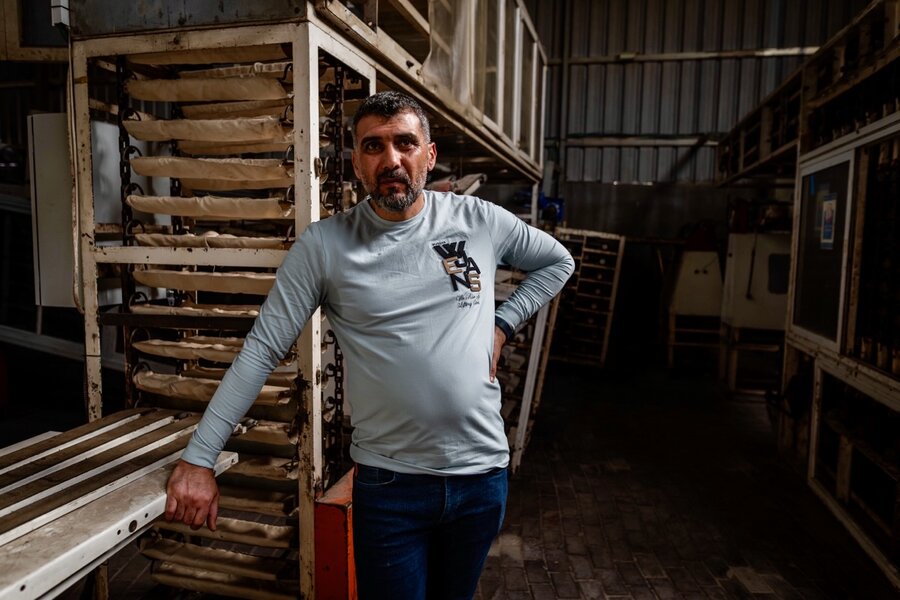
Castle bakery is among several recently contracted bakeries under WFP’s new, market-based production model. The pilot – which sees WFP providing only diesel and the bakeries sourcing everything else themselves – allows businesses more operational control, fuels competition and gives customers more choice.
The pilot reflects a shift towards market‑based solutions that sustain local businesses – but only where commercial supply chains can function.
"What we do is make sure people have bread to eat," says Castle bakery owner Mohammed Zidan
For owners like Zidan, the model offers a way to restart operations and employ workers despite the broader constraints.
“Every bakery in Gaza can support around 100 people and their families,” he says, referring to jobs across supply, transport, production, security and sales. “It helps keep the local economy going.”
But the Middle East crisis also exposes the bakeries to the same uncertainty affecting the wider market. And while some commercial supplies are now entering the Strip, they remain restricted and unpredictable. Bakery owners like Zidan worry they may be forced to slow or shut again.
The problem goes beyond bread. Many traders choose to bring in products with higher profit margins, leaving some essential food items in short supply.
“We need all crossings into Gaza to open and to be free to import what we need to make our businesses work,” says Zidan. “After all, what we do, is to make sure people have bread to eat.”