
In rugged Kyrgyzstan, smallholder farmers turn hardship into hope
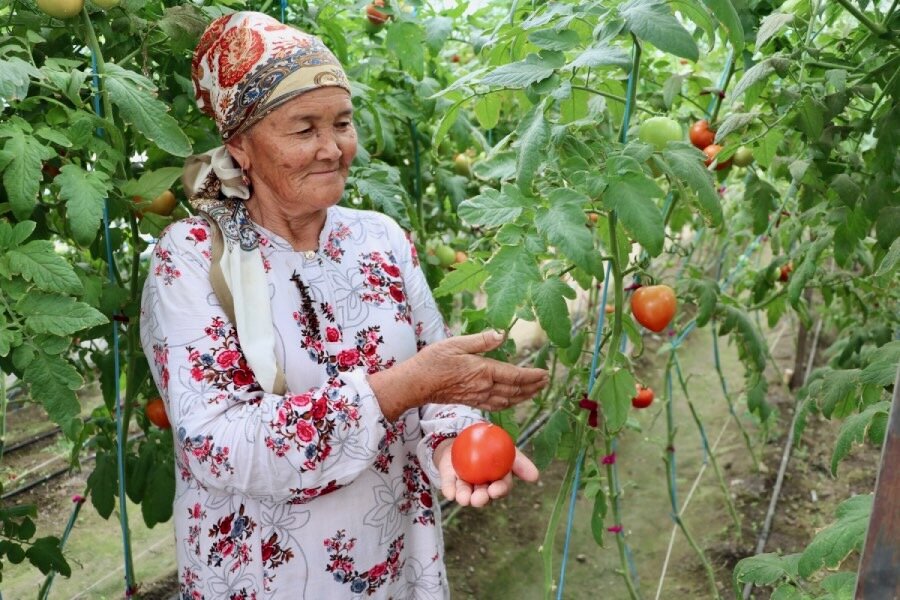
Urinisa Tillabaeva proudly shows a visitor the ruby-red tomatoes ripening along a row of gigantic plants now towering over her head. Not so long ago, the 70-year-old farmer would wait out the harsh winter months in southwestern Kyrgyzstan’s Batken Province before planting.
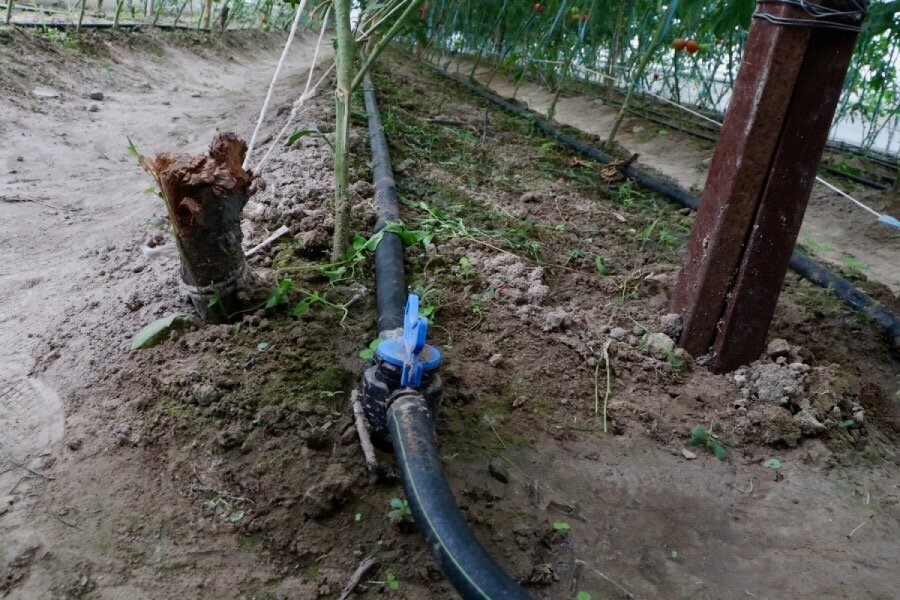
But a new, cutting-edge greenhouse, equipped with drip irrigation, has dramatically changed the agricultural landscape for smallholder farmers like Tillabaeva, who live in one of the poorest and most food-insecure parts of the country. Even in the deepest winter, they are producing bumper harvests.
“We used to plant tomatoes on our lands but the yields were low,” says Tillabaeva, who leads a women’s farming group in Batken province’s Kadamjai district. “Now, with the greenhouse and training, our income has increased nearly tenfold.”
Tillabaeva counts among 4,500 farmers participating in a new World Food Programme (WFP) project aimed at boosting incomes and diets - and adapt to deepening weather extremes in one of Central Asia’s most climate-vulnerable countries. Rolled out in 2024 and aimed at ultimately reaching three districts of Batken Province, the initiative, financed by the World Bank's Global Agricultural Food Security Programme (GAFSP), provides hardy, high-quality seeds, modern technology and training, along with better access to markets, so growers can improve their production and incomes.
“Before, we struggled with poor soil, limited water and old equipment,” said Mirzalim Asrankulov, who heads the Mol Tushum cooperative in Kadamjai district, to which farmer Tillabaeva belongs. “Now, with quality seeds, greenhouse, water systems and better storage, our farmers grow more, waste less and earn more.”
Those achievements are striking in the mountainous, landlocked country where more than 2 million people live below the poverty line. In Kyrgyzstan, nearly half of children under 5, along with adolescent girls, are malnourished. In rural Batken Province especially, many households struggle to cope with soaring prices - forced to skip meals and eat cheaper but often less nutritious foods to get by.
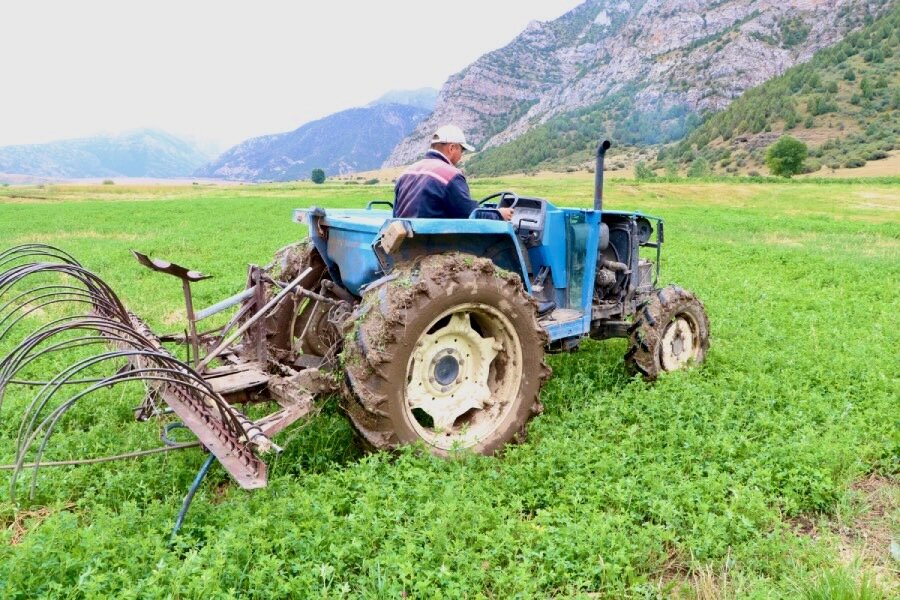
Smallholder farmers, who form the backbone of Kyrgyzstan’s agriculture, count among the country’s poorest population groups. Many struggle to earn a living with outdated farming techniques and equipment in a country where only 12 percent of land is arable. Water is increasingly scarce and temperatures are rising with a changing climate. Women growers, who often have few other earning opportunities, count among the most vulnerable.
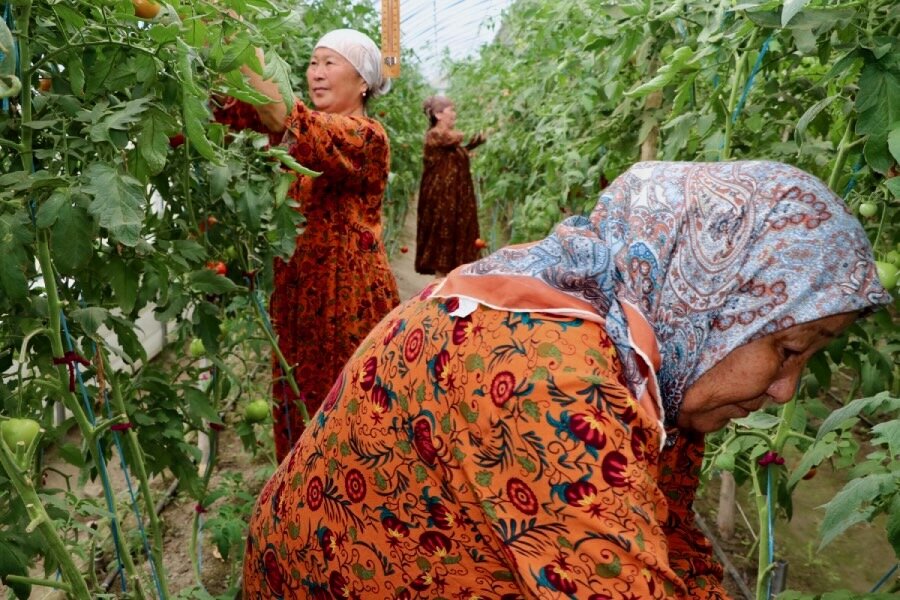
“Before, we earned only KGS 10,000 (or US$114) per season,” says Tillabaeva, who began farming a decade ago and is the sole breadwinner for herself and a grandchild. Today, she is earning ten-times more - with the greenhouse allowing her and other farmers to produce more than the traditional single yearly harvest.
“We spend that money on our families,” she adds.
Lifting up mountain communities
The Mol Tushum cooperative, to which Tillabaeva and her women’s group belong, became the first to benefit from this new project. Along with the greenhouses, climate-resilient seeds and drip irrigation, the farmers received organic fertilizer, new crop storage facilities and training on nutrition, food safety and post-harvest management. A newly drilled well now provides them with a reliable water source.
Women account for 40 percent of the famers enrolled in the project. So far, 27 women's groups like Tillabaeva’s have joined Mol Tushum's near 300-member cooperative. Beyond directly benefiting the farmers involved, the WFP-World Bank initiative will indirectly benefit more than 22,000 people across the three participating districts.
“Through the GAFSP project, we are empowering smallholder farmers with modern greenhouses, resilient seeds, and building the capacity of the Mol Tushum cooperative to enhance their management system," says Kojiro Nakai, WFP Country Director in Kyrgyzstan. "By improving market access, post-harvest management and nutrition training, we help smallholder farmers not just grow more food but build climate resilience. These efforts are providing real chances for a brighter future for families living in mountainous areas.”
Tillabaeva is growing cucumbers along with tomatoes, and her output is being snapped up. “There is demand for our tomatoes,” she says. “We have permanent clients.”
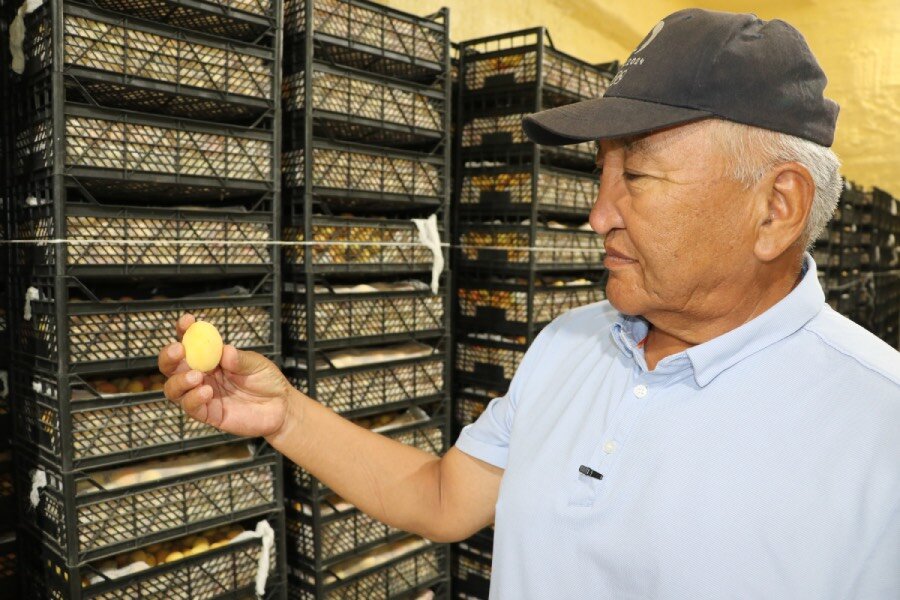
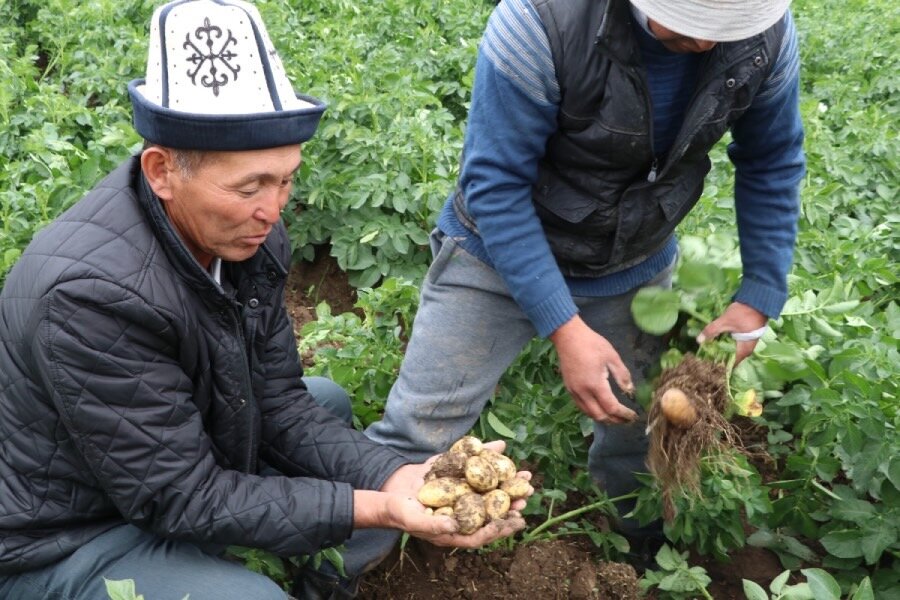
Other farmers are harvesting apricots and potatoes, with WFP supplying high-quality, drought-resistant potato seeds. Thanks to new storage facilities, which include cooling equipment, they have sharply reduced post-harvest losses.
“In the past, our farmers had no choice but to sell their apricots and other products immediately after harvest - often at very low prices,” says cooperative head Asrankulov. “Now with our newly equipped storage centre, we can preserve our produce and wait for better market conditions,” he adds, estimating the farmers have more than doubled their seasonal earnings.
The farmers are plowing their profits into better seeds and fertilizers - and improving their daily lives, he says. “This support has changed our cooperative,” Asrankulov adds, “and brought new hope for a sustainable future.”