
The backstory: WFP’s airdrops offer a food lifeline in hunger-hit South Sudan
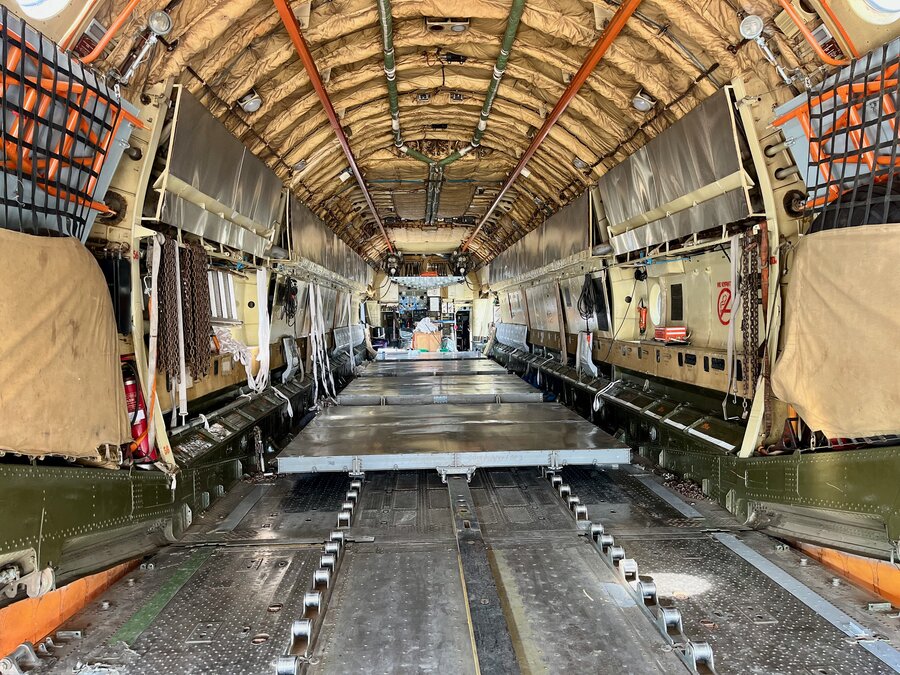
The space feels endless inside WFP's hulking cargo plane, sitting on the tarmac of South Sudan’s Juba International Airport. A long metal corridor, spanning from the entry door to the tail ramp, slowly fills up with heavy sacks of cereal stacked high.
Workers move back and forth between a waiting truck and the aircraft’s cavernous hold where I’m standing, balancing bags of food on their heads. Each sack lands with a dull thud on the metallic ramp, followed by shouted encouragement as the work continues.
At sunrise the following morning - and after hours of loading food assistance for some of the world’s most vulnerable communities - the crew is ready. The engines come alive with a deafening roar.
Hand signals flash between engineers and crew. Then the ramp closes with a heavy clang and the aircraft taxis away, lifting off above the capital. In the plane's belly are 30 metric tons of life-saving food - supplies meant for remote communities in Kueryang, in conflict-torn Jonglei State. They cannot be reached any other way.
It’s a typical day for WFP Aviation and the United Nations Humanitarian Air Service, or UNHAS. Together in 2025, they delivered over 13,000 tons of humanitarian aid and airdropped an additional 9,400 tons of food into South Sudan’s most isolated corners. Beyond delivering relief items, WFP-managed UNHAS also carried staff from 217 humanitarian organizations to the frontlines of the crisis - another way our aviation support is indispensable in saving lives.
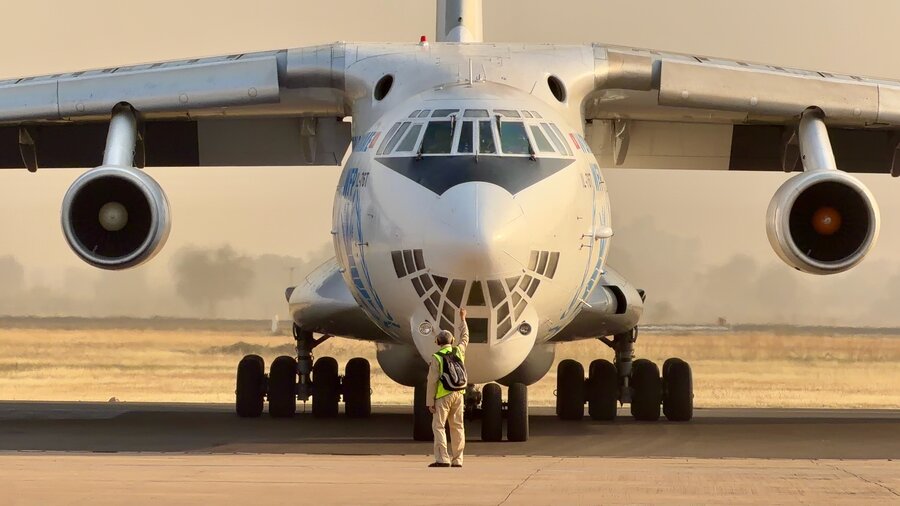
Wherever possible, we deliver humanitarian assistance by road, which is more affordable. But in remote, conflict-torn places like Kueryang, WFP Aviation airdrops like this one are the only option.
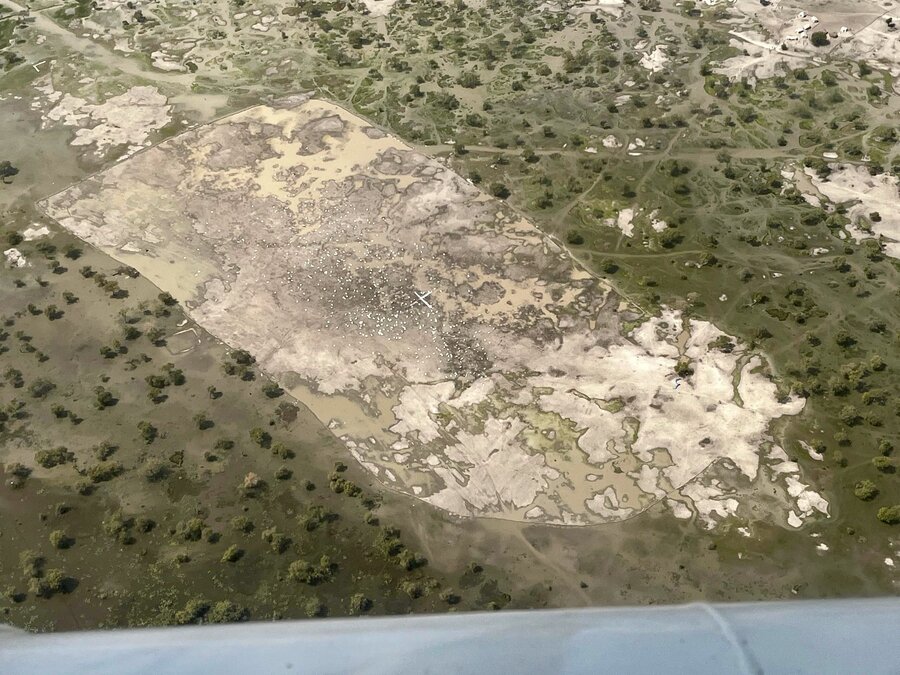
As the plane climbs higher, the landscape below tells its own story. Miles of swampy land stretch out in every direction, broken by water channels with greenish surfaces. Roads vanish into flooded earth. Only a small fraction of South Sudan’s roads are paved. When the rains come, movement is by canoe — or not at all.
In the village of Kueryang, about 500 km from Juba in the Greater Upper Nile region, the drop zone sits on uneven ground scarred by past floods. Muddy patches suggest how quickly this land can be reclaimed by water. In the distance, vultures circle above the still-dry earth. Nearby, scattered animal bones lie half-buried, serving as a reminder of how harsh this place can be. It is at once both flooded and dry.
More than half of the 1.2 million people living in Jonglei State face crisis hunger levels, which may further worsen during the April-July lean season, when food stocks run out and rains cut off already fragile road access. For many communities, months of flooding and insecurity mean they cannot grow crops or rely on markets - making airdropped assistance all the more vital.
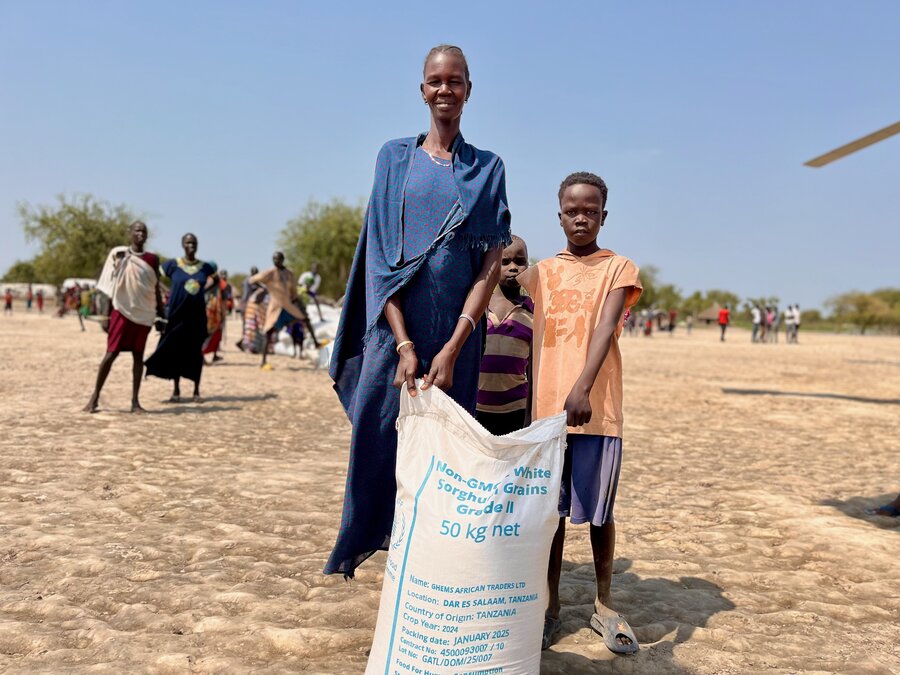
In Kueryang, I watch community leaders move through the crowd that has flocked to the drop zone, clearing the area for safety. Many children have gathered, drawn by the promise of food. Nyagha, a mother of seven, counts among those waiting. Her youngest child is three.
“When there is no food from the drops,” she tells me quietly, “we go to the flooded areas and collect lilies or tree leaves to eat.”
Then the sound arrives - and the plane appears in the sky.
The aircraft flies in a rectangular pattern, circling four times to align with the drop zone. At about 400 metres above the ground, the crew prepares. Then lower still - around 200 metres - the ramp opens.
Swoosh.
One after another, the bags of food are ejected, falling fast towards the marked drop zone. The sound is thunderous as they hit the ground, softened only by the sacks’ reinforced layers - designed to withstand the impact. From a safe distance, people watch closely. The bags land exactly where they should.
These are moments rarely seen beyond South Sudan, where WFP does most airdrops. These are moments where precision flying meets human survival.
As the now-empty cargo plane disappears into the sky, people slowly disperse from the drop zone. The food bags are moved to a nearby area for distribution, after aid workers verify people’s identities.
Later, mother Nyagha will prepare a thick local porridge called walwal for her family, using the WFP grains she has received. It is a meal that will allow her children to eat without having to search flooded fields for leaves.
For Nyagha, the sound of a WFP plane overhead means something very simple. “When I hear it,” she says, “I know food is coming.”
UNHAS operations in South Sudan in 2025 were supported by the European Union, Norway, the United Kingdom, the United States and the UNHAS Centralised Funding Mechanism funded by Belgium, Canada, France, Germany, Luxembourg Netherlands, Norway and Sweden.