
Hope in Haiti: Lessons from the frontlines of a hunger crisis
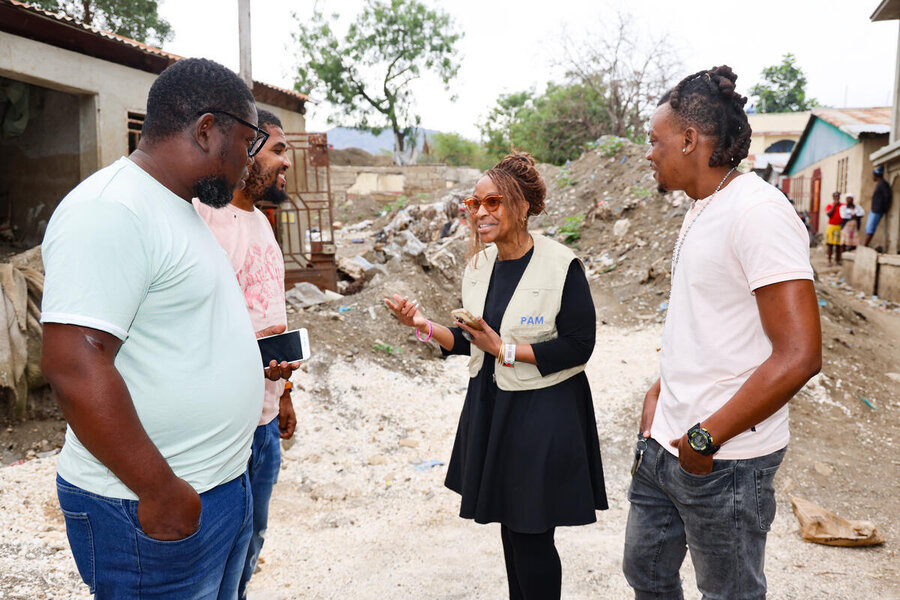
What were your first impressions of Haiti when you arrived two years ago – and what informed your early actions?
I remember very vividly when I arrived in Haiti. At the time, the Port-au-Prince Toussaint Louverture International Airport was operating normally. What moved me most was the Haitian band playing local music as we stepped off the plane, which made people feel so welcome. That left an indelible mark. [Access to the airport has since been severely limited after commercial aircraft were fired on by armed groups in November 2024].
"This is a country in crisis – dangerous to operate in and immensely complex."
You look at how beautiful Haiti is, and you think: “I'm going to be living in a paradise.” Very soon, the reality sets in: this is a country in crisis – dangerous to operate in and immensely complex. But I also realized I had an incredibly committed team by my side. I remember very, very vividly how quickly donors rallied to help WFP build the financial resources we needed.
How did you go about changing perceptions – and creating opportunities for Haitians?
The narrative surrounding Haiti is overwhelmingly negative. Yet once you arrive in the country, you quickly witness the extraordinary resilience, determination and dignity of its people. What continues to amaze me is that even when we provide emergency food assistance, many Haitians tell us: “We don't want this free food for too long. We want means to support ourselves and our families.”
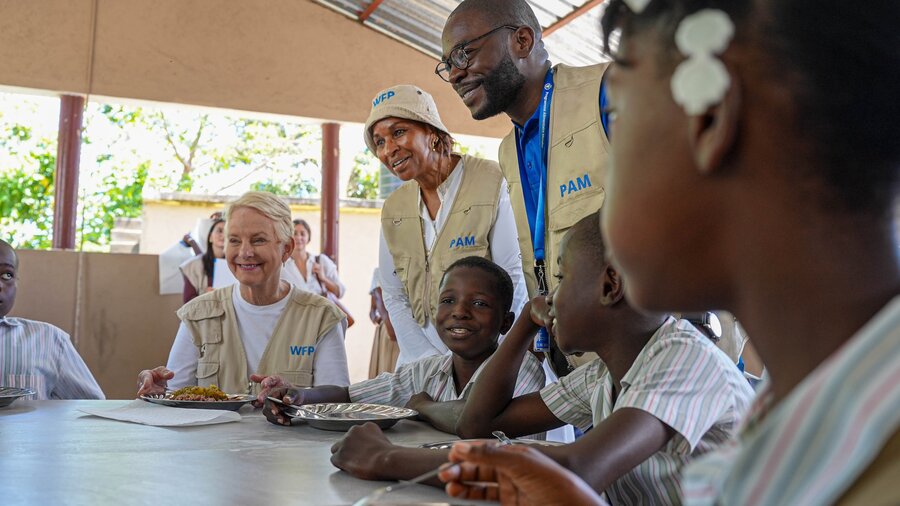
That approach is reflected in one of WFP’s flagship initiatives in Haiti and globally: our home-grown school meals programme, through which food for school meals is purchased from local farmers’ associations.
"For families displaced by violence, school meals provide a sense of normalcy and stability."
Over the past two years, the number of children receiving WFP school meals in Haiti has increased from 450,000 to 650,000. At the same time, nearly three-quarters of those meals are now locally produced, up from 50 percent two years ago – helping to strengthen local agriculture and catalyse economic growth.
In school kitchens across Haiti, many of the cooks are parents of the students themselves, creating benefits that extend beyond classrooms. The programme not only ensures children receive nutritious meals, but also generates income and builds hope for entire communities. For families displaced by violence, school meals provide a sense of normalcy and stability amid uncertainty.
You have also witnessed incredibly difficult moments – like in November 2024 when there was a spike in violence.
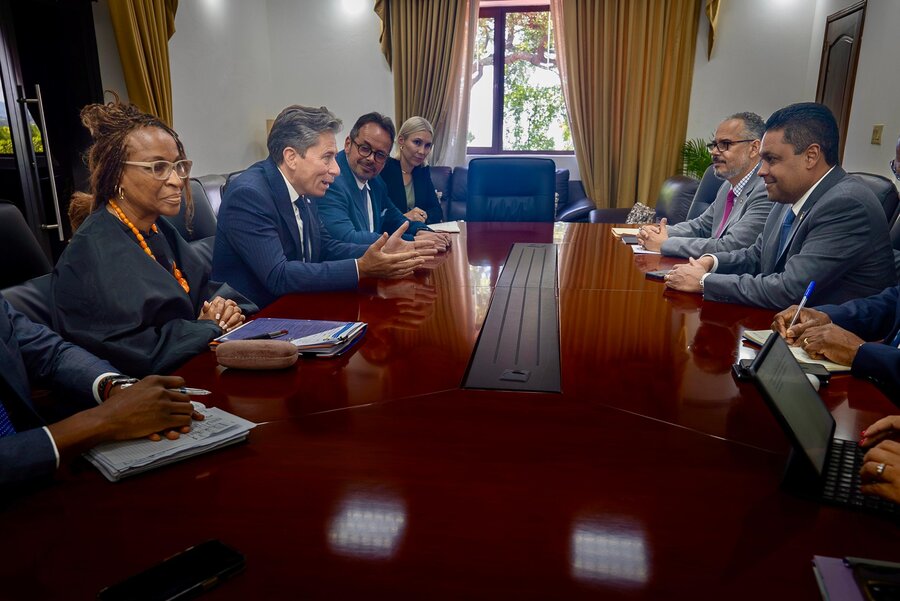
The humanitarian situation deteriorated rapidly in 2024/25 and needs were growing every day. Families were forced to flee their homes as violence intensified, with thousands more displaced every week.
At the same time, access constraints were intensifying. The Port-au-Prince airport was off-limits, while key roads and ports were blocked. The WFP-operated United Nations Humanitarian Air Service (UNHAS) became a critical lifeline, providing access to the capital – which enabled humanitarians and diplomats alike to continue their operations. That arrangement is still in place and remains essential.
Despite the challenges, we stayed and continued delivering assistance to those most in need. At the height of the emergency response, in December 2024, WFP was providing 50,000 hot meals every day to newly displaced people. By the end of the year, we had served over 3 million hot meals. It was an extraordinary effort, under exceptionally difficult circumstances. That’s something I am very proud of.
Hurricane Melissa last October was another difficult moment. Tell us how you led the response.
When I first arrived in Haiti, I quickly realized preparedness needed to be central to our work. The context is complex, and crises can emerge and advance rapidly. When Hurricane Melissa was forecast to make landfall in Haiti, we were ready.
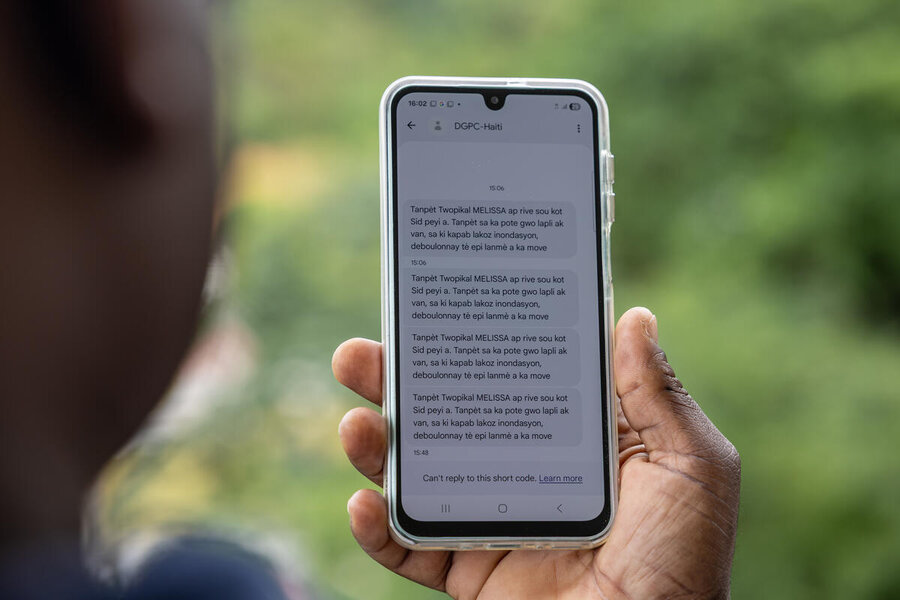
Even before the storm arrived, WFP teams were positioned on the ground and response mechanisms were already in motion. Earlier preparedness simulations with the Government and our teams played out as envisaged. With WFP’s support, the Government sent out 3.5 million early-warning messages, helping communities take action before the hurricane struck.
"I quickly realized preparedness needed to be central to our work...we can no longer afford to wait for disasters to unfold before acting."
Through United Nations emergency funds, WFP provided anticipatory cash transfers to families likely to be impacted, enabling them to protect themselves and secure their assets. As they began to return home after the hurricane, we followed up with additional transfers to help with recovery and rehabilitation efforts.
These actions represent a broader shift in how WFP responds to shocks and crises, whether related to climate, disease or conflict. We can no longer afford to wait for disasters to unfold before acting. WFP’s Hurricane Melissa response showed us that preparedness, anticipation and early action saves lives, protects livelihoods and minimizes human suffering.
This is an extraordinarily challenging time, as needs grow and funding contracts. How have you prepared WFP Haiti to navigate this new reality?
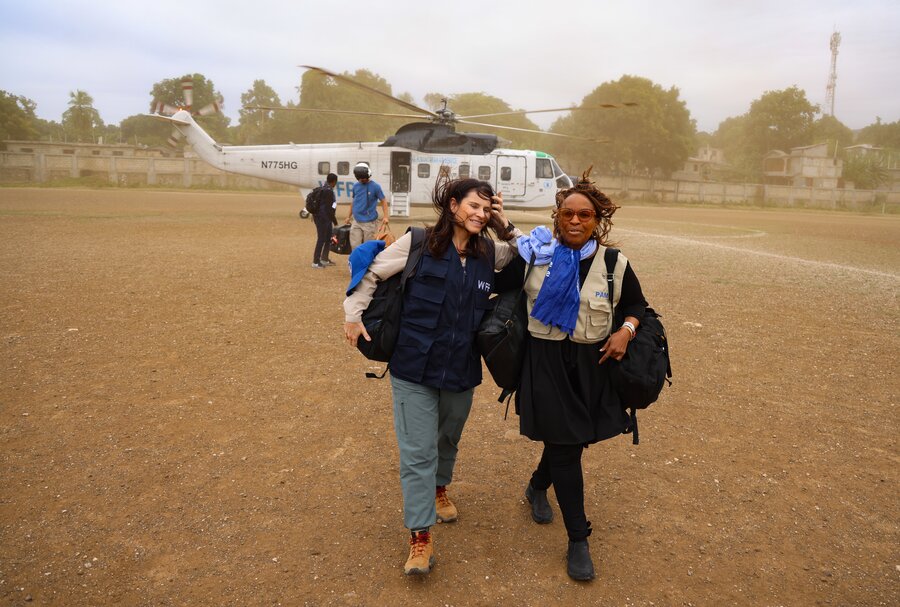
The funding landscape has changed and will continue to evolve. While these shifts present challenges, I believe the UN80 reform initiative provides WFP with a unique opportunity to play a lead role.
This approach builds on WFP's greatest strengths: the common services that we provide for the entire UN and humanitarian community. In Haiti, these include the WFP-managed UNHAS, flying aid workers and cargo domestically and to the Dominican Republic; airbridge flights delivering cargo from Panama; and warehousing and maritime transport for UN agencies, NGOs and even the Government.
"To achieve lasting and sustainable peace in Haiti, we must address hunger."
We also provide fuel storage services for all humanitarian partners, maintaining sufficient reserves to sustain operations for about six months – which is critical at a time of global fuel supply chain disruptions. These shared services form the backbone of the overall humanitarian response, underscoring WFP’s indispensable role as a key enabler.
At the same time, we must also speak out about the destructive link between conflict and hunger. Food insecurity is not only a consequence of instability – it can undermine prospects for peace. To achieve lasting and sustainable peace in Haiti, we must address hunger. So as the international community ramps up security efforts, there must be equally strong investments to address food insecurity.
What will you remember most about Haiti?
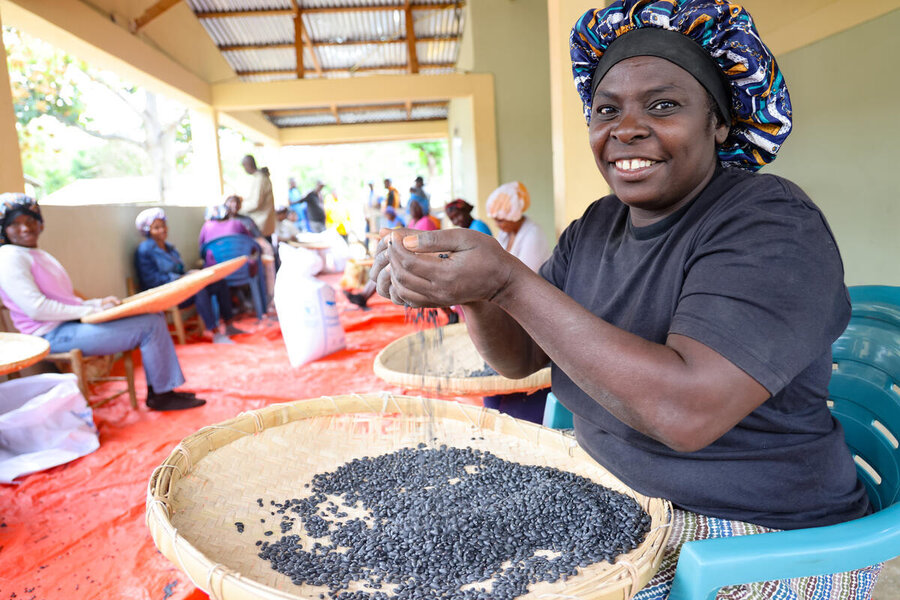
I was privileged to work with a government that always stood by us, and donor partners who provided the resources to ramp up our response as needs continued to grow. Last year, we worked together to reach a record 2.7 million Haitians. As I leave Haiti, I do so with immense pride in my WFP team and in everything that we've achieved together under extraordinary circumstances.
I will always remember the Haitian people, their dignity and their resilience. Despite insecurity and daily hardships, they keep pushing forward, finding ways to support themselves and their families with unwavering optimism that one day Haiti will achieve peace and stability.
Too often, those outside of Haiti speak of the country as a lost cause, as if there is no path forward. Yet for Haitians, and for us who have the privilege to live and work alongside them, hope remains very much alive. It is what motivates all of us at WFP to continue standing with Haiti’s people – because we know we cannot afford to let them down.