
Hunger and conflict in South Sudan: families trapped in Jonglei State
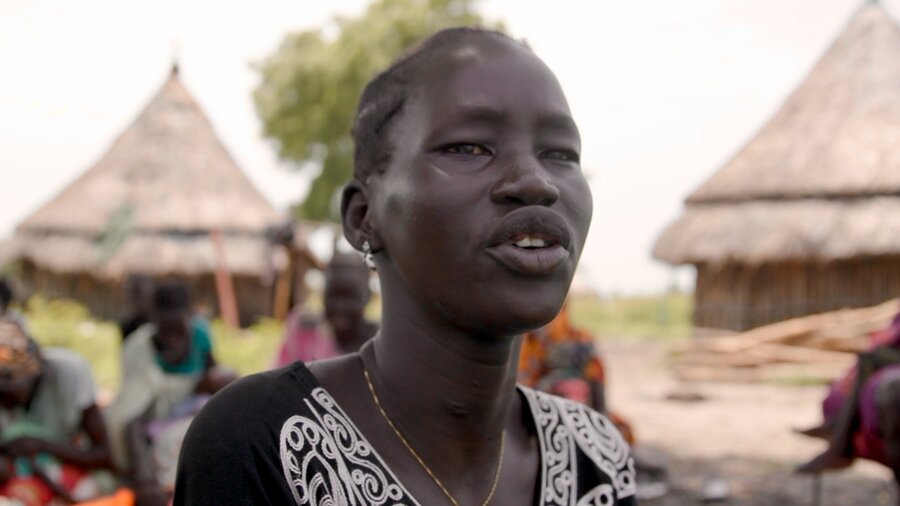
There is not much left of Chol’s old life in Akobo, South Sudan. Like many families across Jonglei State, she is caught in a wider crisis where conflict and repeated displacement are pushing communities deeper into hunger.
Her husband is dead, killed by armed fighters who also torched her home and many others. Hunger is everywhere. Dirt tracks winding through clusters of straw-and-reed shelters have turned to mud under heavy rains that will last for months, threatening to cut off vital supply routes.
“This is our reality,” says Chol of ongoing conflict smashing lives and hopes in this young country. “We have no power.” (Chol’s last name is being withheld for her protection).
Caught between conflict and hunger in Jonglei State
South Sudan’s hunger emergency is not down the road – it is now. It is seen in the stick-thin, malnourished children and their parents arriving in this eastern town and finding almost nothing. It is why the World Food Programme (WFP) and our partners are now surging food and other assistance to Akobo, to prevent a humanitarian crisis from getting worse.
Today, parts of the wider Akobo County, in Jonglei State, face catastrophic hunger – the highest level of food insecurity, according to the latest expert food security analysis. Most alarmingly, Akobo counts among four counties in South Sudan at risk of famine if conditions deteriorate.
“The situation is critical and demands immediate attention to save lives." – Mutinta Chimuka, WFP Country Director in South Sudan.
Altogether, nearly 200,000 people are projected to face crisis or worse hunger through July. Countrywide, more than half of South Sudan's population, or 7.3 million people, faces crisis hunger levels.
“The situation is critical and demands immediate attention to save lives of people who desperately need assistance,” said Mutinta Chimuka, WFP Country Director in South Sudan.
WFP ramps up food assistance
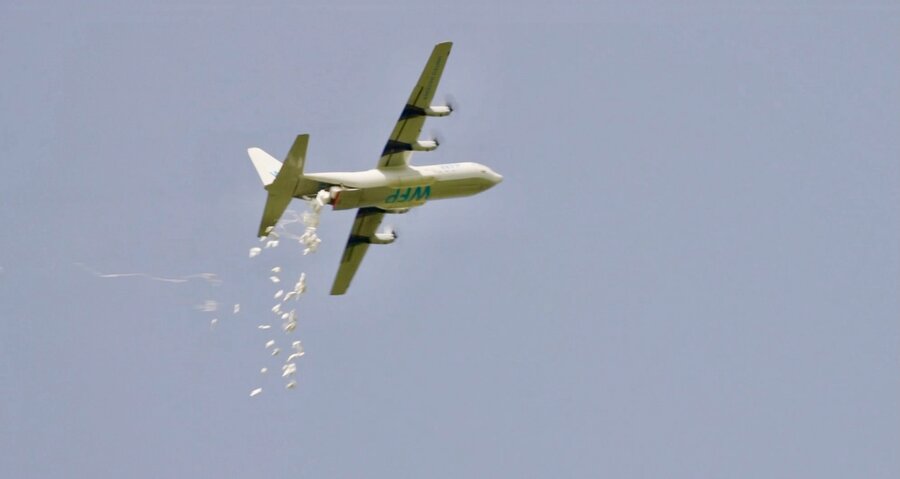
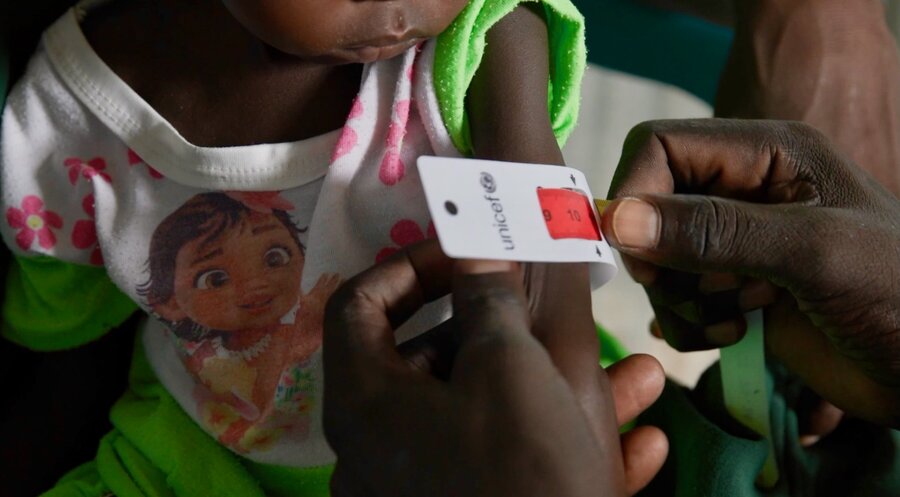
Since launching our emergency response three weeks ago, WFP has reached more than 60,000 vulnerable people with food and nutritional assistance, and screened thousands of children for malnutrition. Through our supply chain, we have been transporting life-saving cargo by air and road, along with flying in hundreds of aid workers. Indeed, WFP's supply chain support is a key part of the humanitarian response countrywide.
“Our hope is to continue to reach people in need,” says WFP’s Chimuka. “Sustained safety and security of humanitarians and humanitarian cargo is therefore crucial to allow us to ramp up assistance and effectively reach all those in need.”
On a recent morning, a WFP cargo plane flew low over a wide grassy strip near Akobo town, dropping dozens of hardy white burlap (woven polypropylene) food bags, before soaring off into a soft blue sky. Within minutes, a team of workers – men and women – ran over to drag the bags away. Later the WFP food would be distributed to the hungriest families, taking one tiny bite out of soaring hunger.
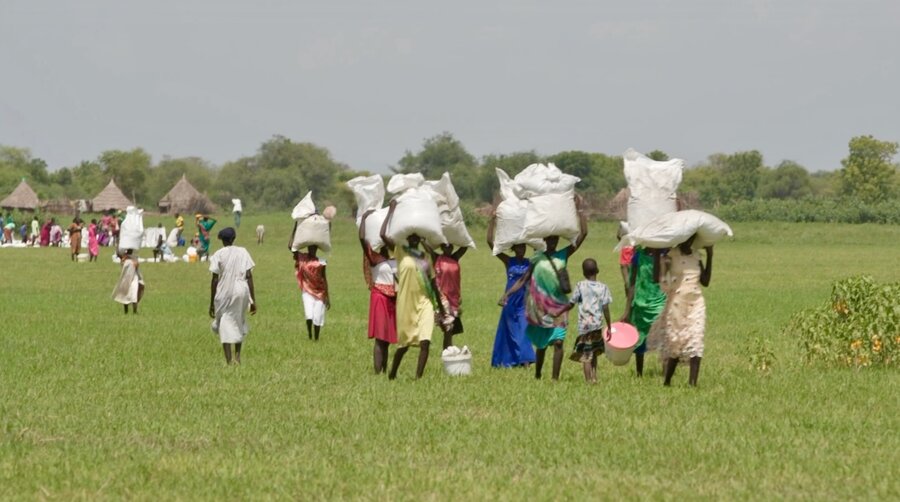
“The situation in Akobo is extremely difficult. Families are slowly returning but in very dire conditions,” says WFP Emergency Nutritionist Joseph Macharia.
“Mothers are saying it’s extremely difficult to provide food for their families,” Macharia adds. “They’re really worried about where their next meal will come from.”
Chol knows that feeling well. She describes how fighters arrived in Akobo earlier this year, torching homes and attacking vulnerable people. “They beat children and told them to leave,” she recalls. “But the children didn’t know where to go.”
Families forced to flee again and again
Chol and her own children have joined tens of thousands of people fleeing the violence in Akobo town in recent months, crossing the border to safety in Ethiopia’s Gambella Region.
Living in the bush and weak from lack of food and water, Chol recounts how she fell ill.
Others had it worse. “Many people are dying, pregnant women, elderly people and mothers,” along with children, she says.
People need consistent access to humanitarian support
For the moment, fighting has largely subsided in Akobo County, allowing displaced people to return – but the risk of conflict resuming remains very real. WFP and other humanitarians are calling for hostilities to end and for consistent access to reach the most vulnerable people with life-saving support.
“Humanitarian organizations came to help us,” Chol says. “Without them, we could never have returned. We would still be hiding in the bush.”
Another mother in Akobo, Nyaruai, describes losing a son, as her family escaped inter-communal violence in her home village of Walgak, about 100 km away. They spent weeks on the run, hiding out in the bush and surviving on wild fruit, before seeking shelter here. One of her sons was killed in the fighting.
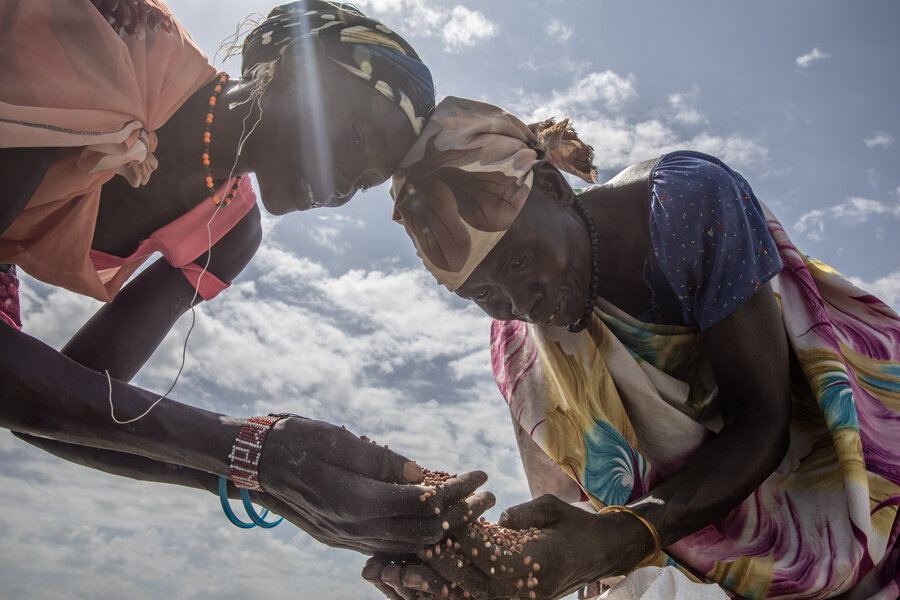
“Life is hard away from home,” without family or friends who can help, Nyaruai says. WFP rations of salt, vegetable oil, cereals and pulses – along with power-packed high-energy biscuits – have changed things.
“The food we received yesterday, it gave us our lives back,” Nyaruai says.
Chol and her children also receive WFP’s food and nutritional assistance. They live alone in their burned-out home. With no other family to count on, she fears for her children’s safety every time she leaves the house.
But she still hopes for a better future.
“Maybe,” she says, “this baby in my womb could one day help the people of Akobo.”