
From ruins to renewal: Gaza's farmers seek to restore harvests after conflict
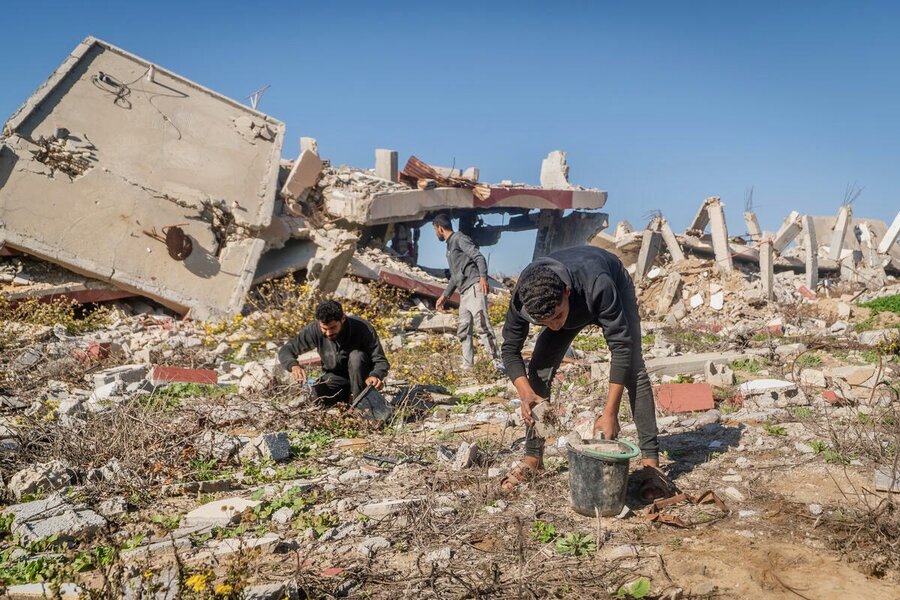
Using bare hands and damaged shovels, farmer Isa Shamallah and his four sons dig deep into the earth in Gaza City, hoping the roots of their vines will reach precious veins of shallow groundwater.
The Shamallah family has cultivated grapes in their neighbourhood for generations - indeed, the area where they live and farm is known locally as 'Shamallah.’ But two years of war have left their land almost unrecognizable: buried in rubble and concealing dead bodies and unexploded ordnance.
“We need water and an irrigation system,” says Isa Shamallah, a father and grandfather of his large family. “But we don’t have enough money to purchase one.”
For now, ingenuity will have to do. That’s the byword for many Gazans, as they mark 100 days of a precarious ceasefire - and an equally uncertain year ahead.
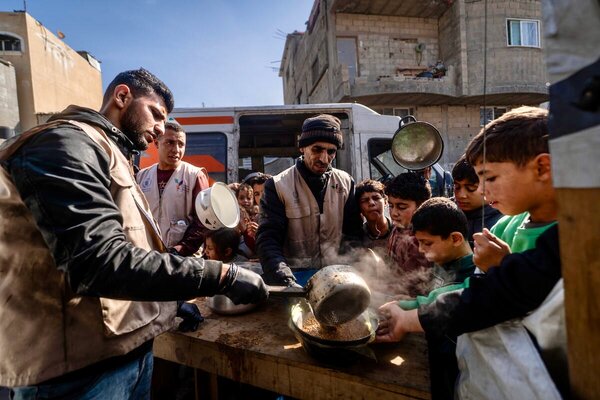
The truce has allowed more food and other humanitarian aid to enter the Gaza Strip. The World Food Programme (WFP) has significantly expanded life-saving operations, reaching more than 1 million people each month and helping to push back famine.
But 77 percent of the population are still facing crisis levels food insecurity. This includes 100,000 experiencing catastrophic food insecurity - the highest hunger level - according to a recent expert assessment. Hundreds of thousands of young children, along with pregnant and nursing mothers, remain severely malnourished.
“We’ve made important gains in making food available since the ceasefire began, but those are extremely fragile.”
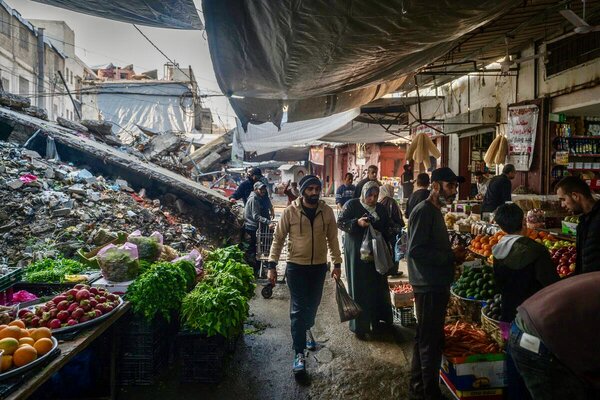
Icy winter rains pour into threadbare tents. Much of the food sold at markets remains prohibitively expensive. Many of Gaza’s buildings, including the Shamallah family homes, are partially or totally destroyed. The war has also destroyed more than 90 percent of Gaza’s cropland, along with greenhouses and water sources. Rubble, insecurity and ongoing movement restrictions mean around 4 percent of arable land is accessible to farmers.
Sustained access through all crossings, the flow of humanitarian and commercial goods, and the continuation of the ceasefire are essential to further reducing hunger.
“We’ve made important gains in making food available in Gaza since the ceasefire began, but those gains are extremely fragile,” says Willy Nyeko, WFP Emergency Coordinator in Gaza. “With markets and livelihoods still severely disrupted, families remain highly dependent on food assistance and have little ability to recover on their own.”
Barely surviving
Farmers like Shamallah and his family will be key to building a sustainable, food-secure future in Gaza - but for now, they are barely surviving. “Cultivating grapes is in our blood,” says Shamallah’s cousin Youssef. “We need to work the land and we need to eat,” he adds. “We are all farmers here.”
“For people to move beyond survival on handouts, Gaza needs its basic infrastructure, markets and services to function again,” says WFP’s Nyeko. “That means restoring supply chains, reclaiming agricultural land, reviving the private sector and creating jobs, so families can start rebuilding their lives after two years of devastating losses.”
Before the war, roughly 40 percent of the Strip was cultivated. Families like the Shamallahs grew wheat, along with fruit and vegetables like grapes, olives and citrus. Agriculture accounted for around 11 percent of Gaza's economy and roughly half of its exports - which included some of the Shamallah’s grapes.
"Gaza needs its basic infrastructure, markets and services to function again."
“Before the war, we had the land - but we all had jobs too,” Shamallah recalls. “My sons studied at university. Today, no one in the family has a stable income.”
When war broke out in 2023, the plot that once fed Shamallah’s family of 30 - including his sons and grandchildren - was caught in the line of fire. Their neighbourhood suffered multiple waves of attacks.
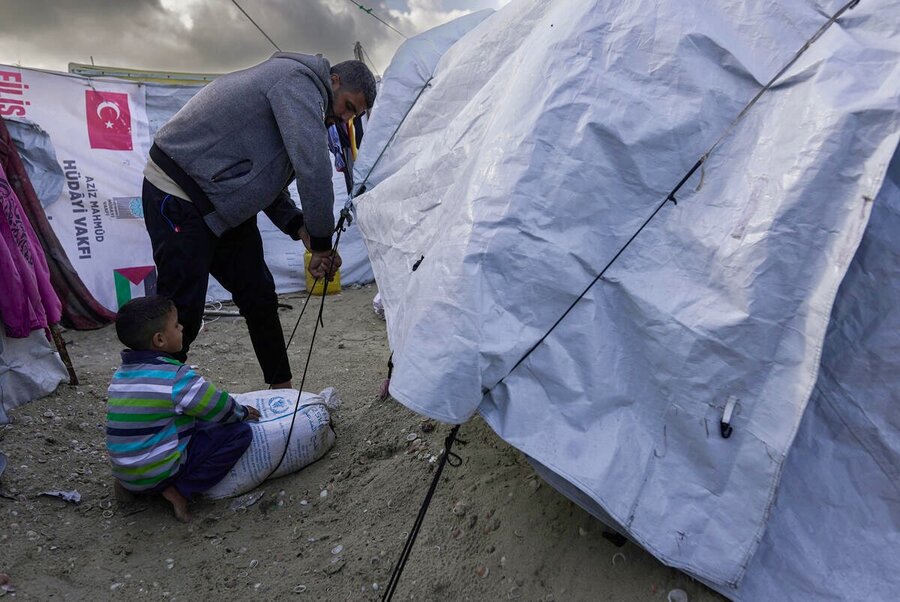
The family joined hundreds of thousands of others on the move: first pitching tents in the southern town of Rafah, before fleeing to Khan Younis and Nuseirat, farther north, as fighting uprooted them again and again.
They managed to survive on WFP food and other humanitarian assistance, and by selling scraps of firewood they found in fields - which they also used for cooking. As with many Gazans, they paid a high price: one nephew was killed as he headed out to collect aid.
With the ceasefire, the Shamallahs returned to land covered in rubble. Hungry people had stolen their grapes. They pitched their cluster of white tents in front of their ruined homes and started over.
Like most of the population, the family still depends on humanitarian assistance, including WFP boxes of food and wheat flour, along with digital cash payments, worth the equivalent of US$400.
“Every day, I wake up and I look around, and I remember my old neighbourhood.”
“For now, nothing has changed,” Shamallah says. “Every day, I wake up and I look around, and I remember my old neighbourhood.”
The family immediately began clearing their land, knowing it would take three years for new vines to bear fruit. But with only their hands and broken shovels, the job has been exhaustingly slow.
“It’s not only the debris,” Shamallah says. “While trying to clear the land, we also found a lot of dead bodies and unexploded ordnance.”
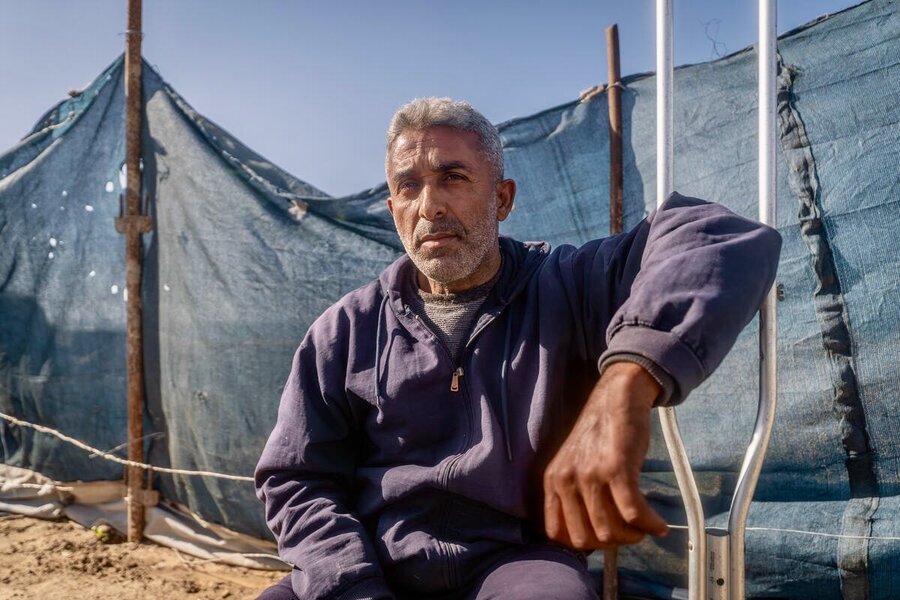
Even today, life is dangerous. Airstrikes and drone attacks continue. Shamallah’s cousin, Abu Rami, was injured by an exploding landmine that his young son had discovered in their field.
Even so, the family holds on to hope. They remember their shattered Gaza City neighborhoud, known as Sheikh Ajleen, as one of the most beautiful in the enclave.
“Closer to Paris than the rest of the Strip,” Shamallah says. That is what he wants to rebuild.
“Before I die, I want to live my life as it was before the war,” he adds. “Even if it’s just for one day.”