
A year after Myanmar's earthquake, Middle East crisis threatens more hunger
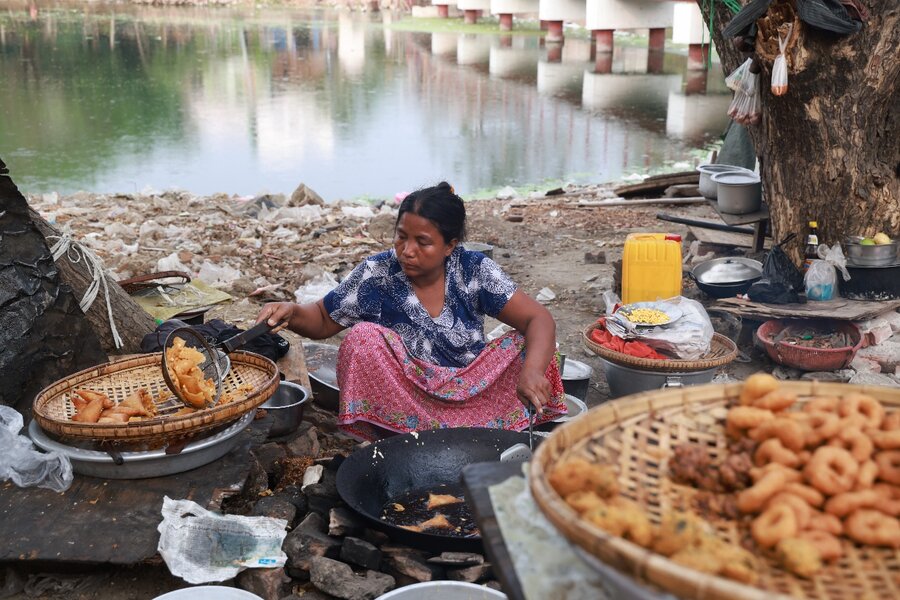
Under a large tree by a creek flowing across Myanmar's second-largest city of Mandalay, the day begins long before sunrise. Around 4 am, Myint Myint lights the fire and starts frying samosas and fritters as the city wakes up.
This is Myint Myint’s workspace. It is also a neighbourhood space where people gather to escape the scorching dry-season sun. Soon buyers arrive, some purchasing a few of her snacks for breakfast, others taking large quantities to resell elsewhere. Either way, she struggles to make a profit, as people buy less and expenses rise.
“You really need two sets of capital to keep a business moving,” Myint Myint says. “One just isn’t enough.”
A year after a massive 7.7 magnitude earthquake struck central Myanmar, killing thousands and devastating whole communities, recovery remains fragile – despite World Food Programme (WFP) post-earthquake support that helped many like Myint Myint get back on their feet. In quake-affected regions, half of all families remain only marginally food secure – surviving day to day and unable to absorb even the smallest shock.
Now the Middle East crisis, upending supply chains and driving up global food prices, is delivering further hardship.
“In the year since the ground broke, we have seen incredible community resilience. But resilience is not a shield,” says WFP Country Representative and Director Michael Dunford. “People may be standing again, but many are still standing on the edge.”
Support after the quake
Myint Myint’s small roadside stall is more than a business. It has been her family’s lifeline – especially after her husband died a decade ago, leaving her to raise two sons and run the stand alone. She built up her enterprise slowly, fritter by fritter, customer by customer.
“I learned by watching others, starting small and just keeping at it until I eventually built up a few regulars here and there,” Myint Myint says.
When the earthquake struck Myanmar in late March 2025, it shattered more than buildings and roads. For many poor families like Myint Myint’s, it wiped out the little they had to keep going.
For Myint Myint, that meant both her raw ingredients to make the fritters and emergency capital. Suddenly, she could no longer reopen her stall. Like many other destitute survivors, she struggled to feed her family and make ends meet.
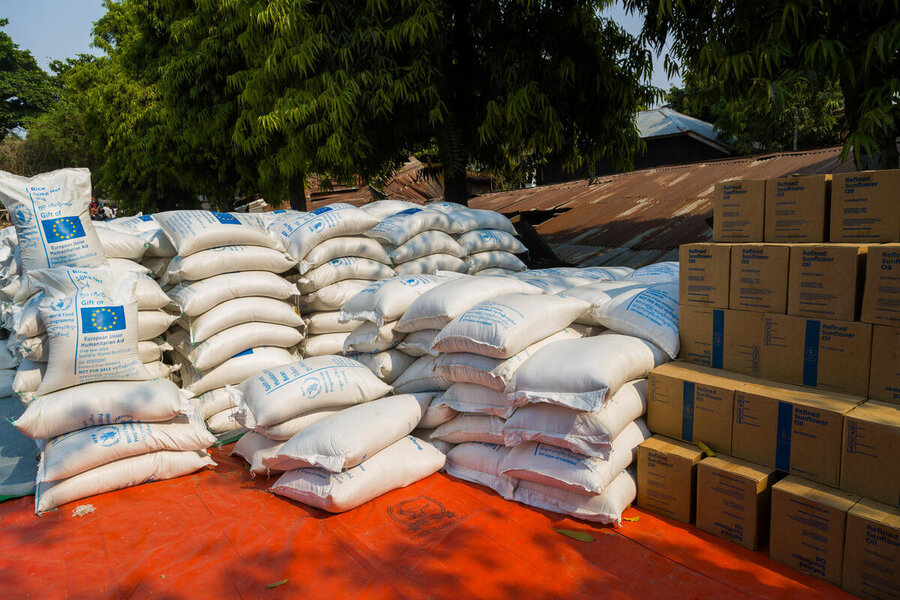
But WFP’s post-earthquake cash assistance of 360,000 Kyat (about US$93) changed the course of her future – illustrating the power of timely multi-purpose support in not only helping families eat, but also recover their independence.
Along with cash assistance reaching half-a-million affected people, WFP is helping communities rebuild the foundations of long-term recovery. In Myanmar’s Dry Zone, covering many of the quake-hit regions, we are rehabilitating village roads and irrigation canals to reconnect farmers to markets and protect future harvests. Elsewhere, in Shan State, we are helping restore damaged floating farms — a vital source of food and income for local communities.
For Myint Myint, the WFP cash support allowed her to restart her business. “I never dreamed I’d get that much,” she recalls, adding, “I was out selling again the very next day. It made me realize that my life wasn’t over just yet.”
Living on the edge
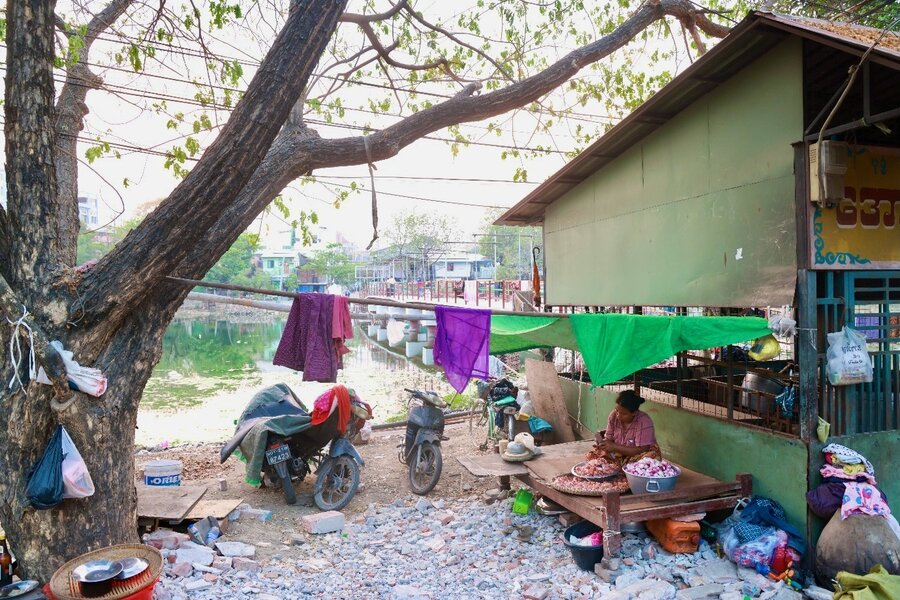
A year after the earthquake, Myint Myint is back at her stall, back at the fire before dawn, back to doing what she knows best.
Cooking up the fritters is repetitive and physical. Onions must be peeled, washed and sliced. Potatoes must be prepared. By the time Myint Myint has sold her wares and prepared for the next business day, it’s nearly midnight.
“We manage to make about 300 pieces of samosas. Once we hit 300 or 350, we call it a day,” she says.
But recovery does not mean security. Like many women supporting families on their own, Myint Myint has little margin for error. Her stall brings in just enough to survive. Even before the earthquake, she was living in and out of debt, managing each day as it came.
The quake, among other shocks, has taken its toll on many in Myanmar. Myint Myint’s business is slower today than it used to be, as cash-strapped customers buy less. She now sells around 700 pieces of different snacks daily: Indian-style fritters, Burmese traditional fritters, bean fritters and the crispy toppings often eaten with the national dish, Mohinga. Before the earthquake, she used to produce more than 1,000 pieces.
Along with inflation, the weak demand is chipping away at her already narrow margins. “When the capital runs low, you have to find a way to borrow or pull money from somewhere else,” she says.
The Middle East fallout
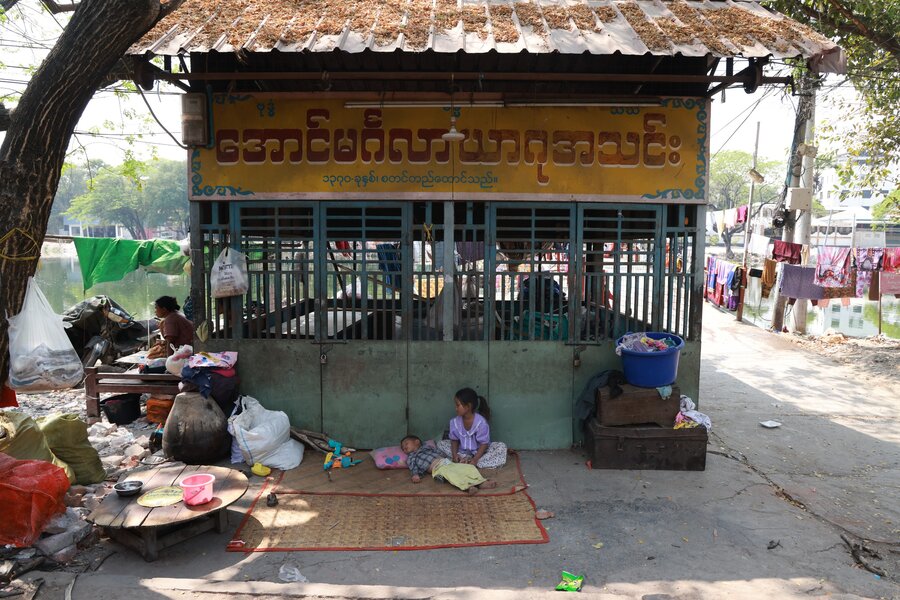
Myint Myint’s experience mirrors a broader pattern seen across the earthquake-affected regions of Sagaing and Mandalay, where one in six households faces moderate to severe food insecurity. Experts fear hunger may deepen as the Middle East crisis drives up the cost of fuel and staples like rice – along with fertilizer prices, at a time when Myanmar’s farmers prepare for monsoon crops.
“This new wave of global instability is hitting Myanmar at the worst possible moment,” says WFP’s Dunford.
Myint Myint knows exactly just how fragile her recovery is. She remains in debt, and worries about the next rent. Rain can still ruin her business. Another shock could push her right back into crisis.
“Life isn’t always a smooth ride,” she says. “Things might get worse, or they might get better. Just don’t give up or lose heart. You have to keep fighting so you can eventually stand on your own two feet.”
WFP’s support for earthquake survivors was made possible by contributions from the European Union, France, UN CERF and other donors.
To sustain lifesaving assistance while protecting recovery gains, WFP needs US$150 million in 2026 to support 1.5 million people across Myanmar.