
Empty cooking pots, rising hunger in Cameroon
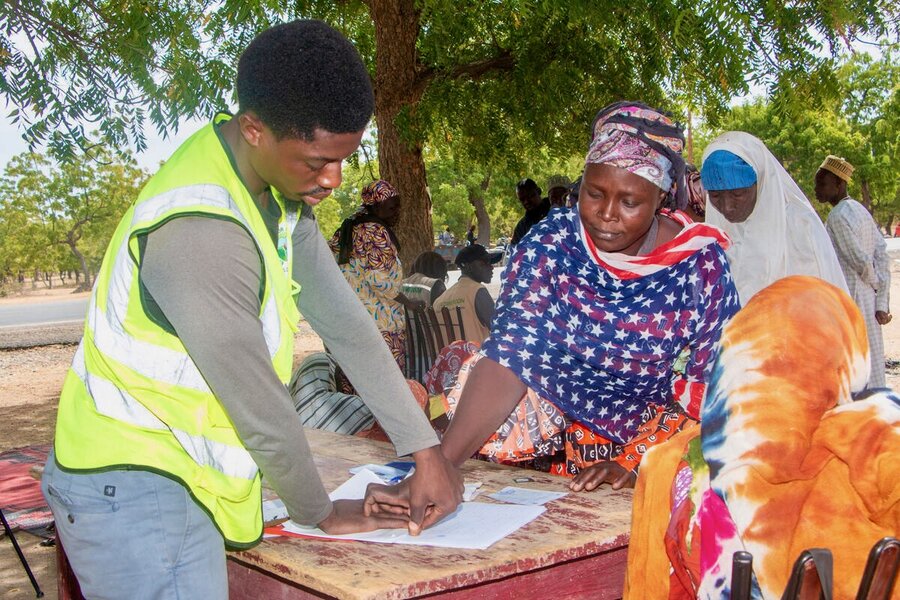
By the time the sun climbs high over the town of Mora, in Cameroon’s Far North Region, many cooking pots like Esther’s are already empty.
She has joined dozens of women queuing up at a World Food Programme (WFP) food distribution site, her youngest child tied securely to her back. Displaced by violence from Kolofata, a small town about 22 km away, she now relies on WFP assistance to feed her family.
“Without this, we would not eat,” says Esther, who has four children (her surname is withheld for her protection).
Across Cameroon, Esther’s reality is shared by millions, as conflict, displacement, climate shocks and rising food price erode their ability to cope. “In Cameroon, millions of people are facing deepening hunger,” says Gianluca Ferrera, WFP Country Director in Cameroon. “WFP is assisting the most vulnerable families, enabling them to meet their immediate food and nutrition needs and avoid falling deeper into crisis.”
For displaced families like Esther’s, hunger is no longer seasonal...it is constant.
Today, more than 2 million people are displaced by ongoing unrest roiling swathes of the Central African country. Nearly 3 million are projected to face crisis or emergency levels of hunger during the upcoming June-August lean season between harvests. Nearly one in three children under five is stunted, or too short for their age, due to malnutrition.
Those realities will greet Pope Leo XIV during his 15-18 April visit to Cameroon – part of a four-nation papal tour focusing on peace and on turning "the world's attention to Africa," according to a senior Vatican official.
Hunger shaped by conflict
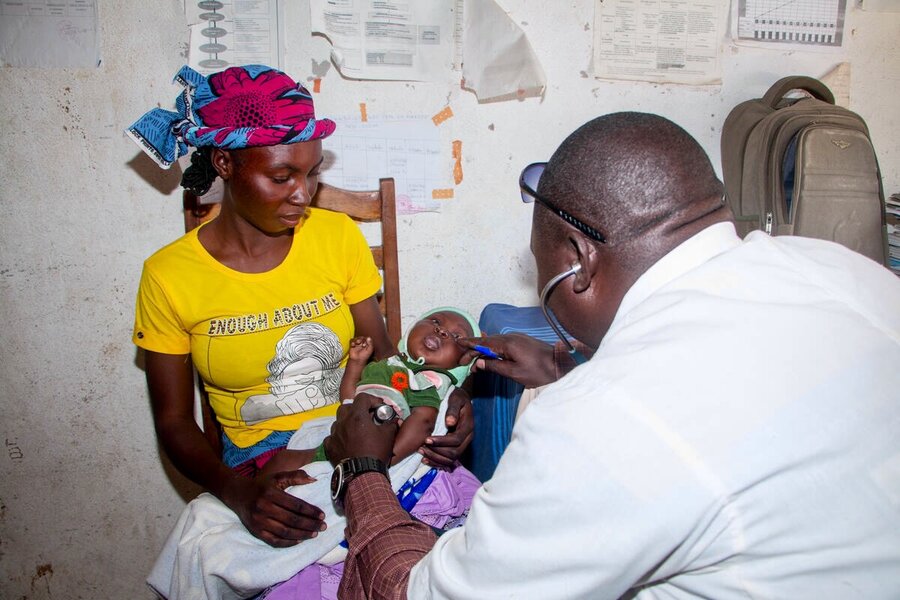
The situation is particularly dire across six regions, from northern to southwestern Cameroon, where insecurity has disrupted livelihoods and agriculture production, limited access to land and markets, and deepened dependence on humanitarian assistance. More than 8 in 10 people facing acute hunger are concentrated in these crisis-affected areas.
It is in these regions where WFP’s crisis response, the backbone of our work in Cameroon, counts the most. Amounting to 70 percent of our emergency funding in the country, this response includes food distributions and cash-based transfers, treatment and prevention of malnutrition, and emergency school meals – reflecting the urgency and scale of needs.
Last year alone, WFP delivered nearly 8,000 metric tons of food and more than US$18.5 million in cash assistance to more than 900,000 people – more than a third of whom were refugees or displaced people like Esther. That support helps stabilize households, ensuring families can eat and avoid harmful coping strategies such as skipping meals, pulling their children from school, or forcing them into early marriage.
“This is not just about food,” says WFP’s Ferrera of the assistance. “It is about protecting lives, dignity and stability.”
"This is not just about food. It is about protecting lives, dignity and stability." – Gianluca Ferrera, WFP Representative and Country Director in Cameroon
But what is trickling in now is shrinking by the day. Funding cuts are forcing WFP to slash our food assistance to reach just 590,000 people this year – or just over half of those we planned to assist in 2026. The cuts have also shuttered several WFP field offices, reducing our access to already hard-to-reach communities.
In some areas, we are reducing food rations by up to 50 percent, and prioritizing support to the most vulnerable – like Esther’s family. The shrinking aid comes as staple food prices remain high, driven up by reduced agricultural production due to conflict, climate shocks and rising prices of agricultural inputs, among other economic pressures that place even basic meals beyond the reach of many.
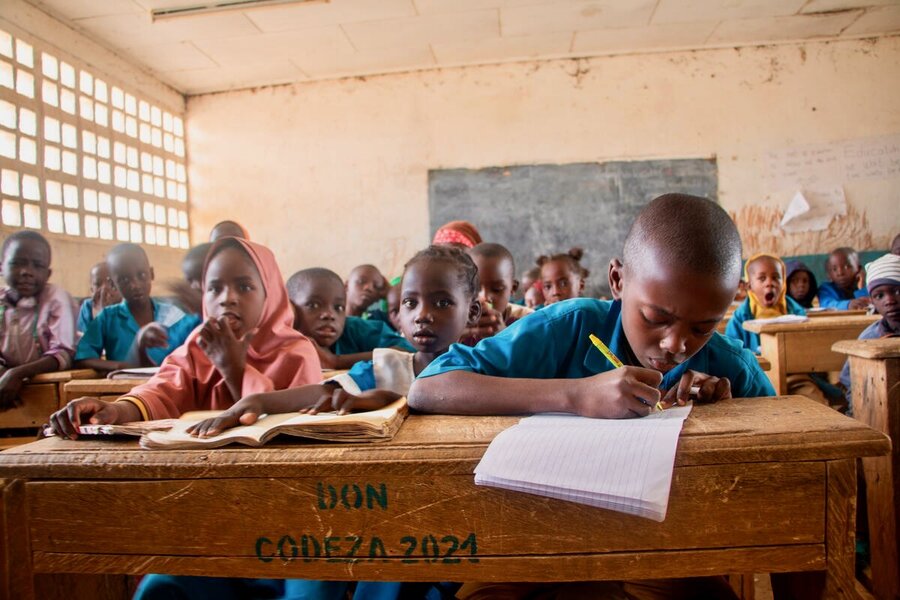
For displaced families like Esther’s, who once relied on farming, hunger is no longer seasonal: rising and ebbing depending on harvests or access to farmland. It is constant, as funding cuts translate into less and more erratic food aid.
“When there is no food, everything changes,” she says. “The children cannot stay in school. They cry at night.”
When Esther’s name is called, she steps forward with a value voucher, which allows her to collect food according to her family size. In exchange, she receives rice, beans, vegetable oil, beef, and other items to sustain her family for four weeks.
As Esther leaves the distribution site, she balances the food on her head and begins the walk back home.
“For now, we will eat,” she says.
Beyond that, nothing is certain.
WFP requires US$95.2 million to sustain food and nutrition assistance in Cameroon in 2026. Without urgent funding, nearly 600,000 people, including refugees, internally displaced persons and vulnerable host communities risk losing access to food and nutrition assistance in 2026.
WFP's emergency response in Cameroon is made possible thanks to support from Canada, Japan, Luxembourg, Private Sector Donors, Switzerland and the United States.