
'There is no food': multiple crises push South Sudan deeper into hunger
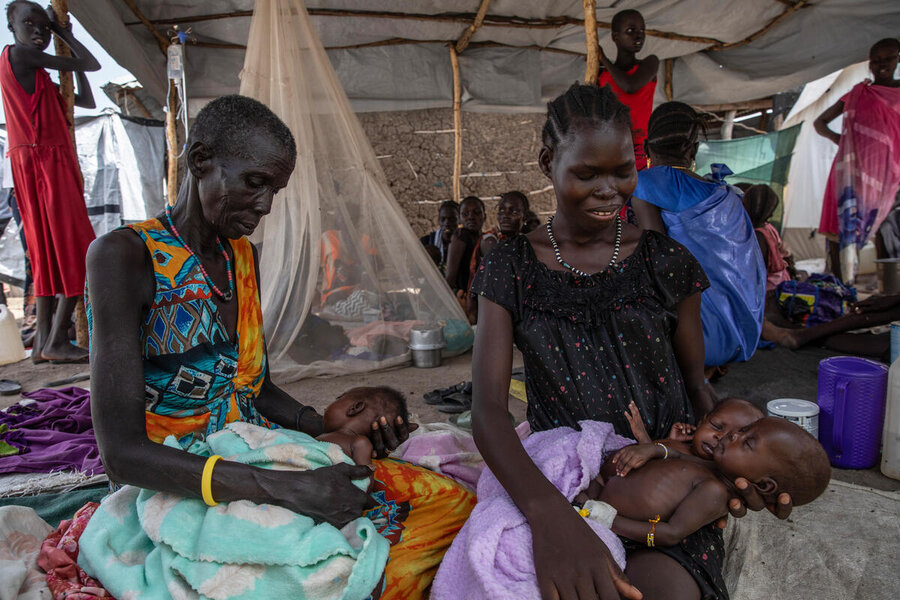
There were no clothes, not even a blanket to cover Nyakuma’s triplets after she gave birth on the run, days after escaping her burning village. Surviving only on fruit and leaves, she had no milk to breastfeed her newborns. And so the tiny babies and their mother became the latest casualties of South Sudan’s hunger emergency.
“If you can feed my children, please take them,” Nyakuma tells a humanitarian worker at a nutrition centre in the eastern town of Chuil, where she’s sought treatment for her children. “If they can eat, they will be OK.” (Surname withheld for person's protection).
A perfect storm of conflict, floods and displacement
Colliding crises in South Sudan, from escalating conflict and mass displacement to extreme weather shocks, reduced food production and a faltering economy have shaped one of the world’s highest levels of acute food insecurity. More than half the population, or 7.8 million people, is severely hungry, according to new expert findings, known as the Integrated Food Security Phase Classification, or IPC.
More than 70,000 are projected to face catastrophic hunger, or IPC 5 – the highest level on the charts. Two areas of the country, including Jonglei State where Nyakuma and her children are displaced, face extremely critical malnutrition outcomes.
“Conflict is hitting women and children the hardest.” – Ross Smith, WFP Director of Emergencies and Preparedness
“What we're seeing in South Sudan is a deepening hunger and malnutrition crisis that's being driven by conflict and access denials,” says Adham Effendi, World Food Programme (WFP) Country Director in South Sudan, referring to mounting roadblocks in delivering humanitarian relief.
“WFP has been doing everything possible to reach the most vulnerable families with critical food and nutrition assistance,” Effendi adds, “but it is becoming increasingly challenging for us.”
Women and children are hardest-hit
South Sudan’s hunger crisis risks inflicting long-term scars on the world’s youngest country that became independent just 15 years ago. Some 2.2 million children under 5 are acutely malnourished, with potentially irreversible consequences on their development and learning capacity. Unrest has chased farmers from their fields, unravelling hard-won gains in building local agriculture and food systems.
“Conflict is hitting women and children the hardest,” says Ross Smith, WFP’s Director of Emergencies and Preparedness, in a joint appeal with other United Nations agencies for greater international support. “These children are the future of the country, but without urgent support, that future is at risk. We must act swiftly and decisively to ensure their survival and well-being.”
Families seek safety and shelter
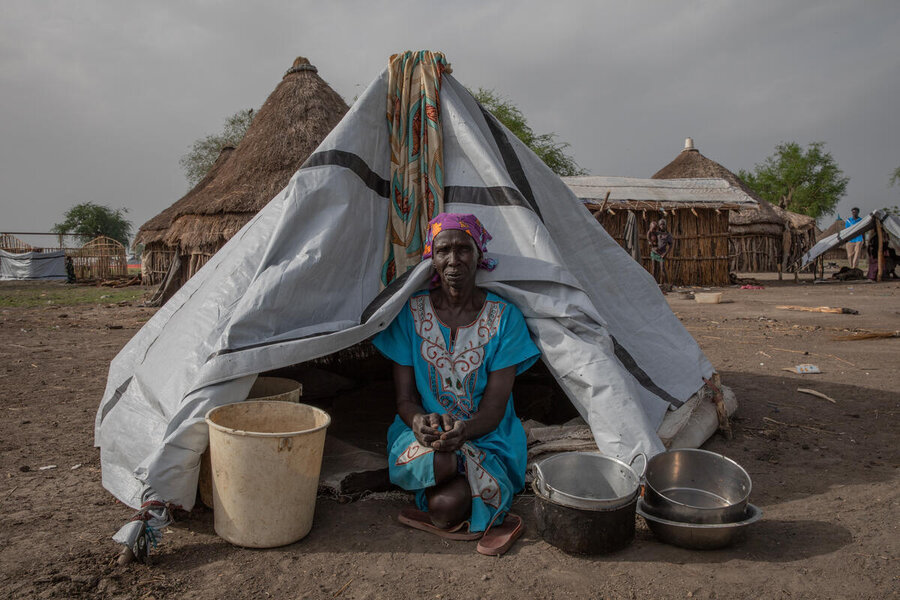
One of the hunger epicentres is Jonglei State, where the UN assesses a credible risk of famine. Deepening violence has cut off river routes for delivering vital aid and uprooted 300,000 people. Tens of thousands of the conflict-displaced have sought safety in Chuil, pitching fragile cloth and plastic tents on grassy plains, or finding shelter with local residents. In interviews, many described losing children, spouses and homes to the violence, surviving on water lilies and swamp water, and sometimes sleeping in the mud.
“The community received us, they are the ones who gave me clothes,” says Nyanyik, who like many uprooted people sleeps under the open sky. “They shared food with us, but it was not enough.”
At Chuil’s crowded nutrition centre, women fan themselves against the heavy heat and swat flies from sleeping babies. Health workers check children for malnutrition and distribute specialized, nutrient-packed food to the mothers. An infant grasps one of the packages – which treat severe-acute malnutrition – squealing with delight. The child’s hair is rust-coloured, a tell-tale sign of malnutrition.
"They are suffering. There is no food." – South Sudanese mother Nyakuma of her recently born triplets
Nyakuma and her sister-in-law wait their turn for assistance, cradling the triplets who are now covered with small blankets. The family has found shelter under a tree – the most basic shield against heavy rains that have now arrived.
“The babies were not well so we came to the hospital,” she says. “They are suffering. There is no food.”
Like many displaced people here, Nyakuma hails from a village about 30 km away, which is now caught in the crosshairs of the country’s escalating violence. After assailants torched her home, she fled, walking for days to safety in Chuil.
“I delivered the babies and had to keep moving,” she says. “There was nothing to cover them. Our clothes were burned.”
How WFP reaches families with food and nutrition assistance
WFP is distributing rations of sorghum, pulses, oil and salt to roughly 35,000 displaced people in the Chuil area, as well as 7,000 local residents. Children and pregnant and breastfeeding mothers also receive specialized nutritional food.
Over the next four months, we plan to assist 700,000 people across Jonglei State and the nearby Pibor Administrative Area, where hunger rates are soaring, trucking in the cargo from wherever possible. But funding shortages are forcing WFP to halve rations to just 300 grams a day, making it all the more difficult to fight hunger.
Moreover, with unrest, insecurity, permission denials and other roadblocks cutting off access to some areas, including Chuil, we are resorting to costly airdrops and airlifts as last-ditch alternatives.
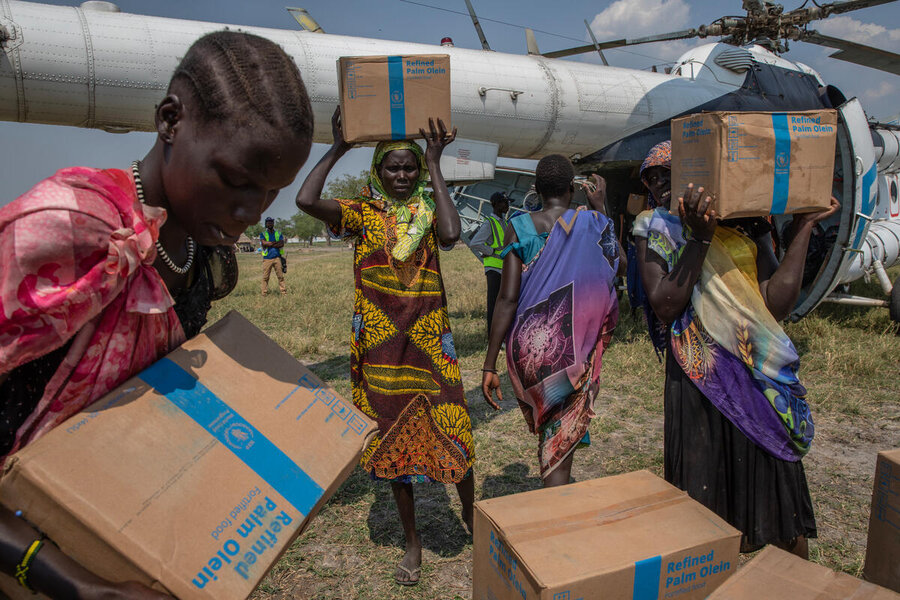
On a recent morning, a large WFP helicopter touches down on Chuil’s grassy airstrip, packed with nutrition assistance. Within minutes, workers begin unloading the cargo, balancing the boxes on their heads. Other support is being airdropped in heavy white bags over specially demarcated zones, following strict safety precautions.
Critical funding is needed to sustain life‑saving operations
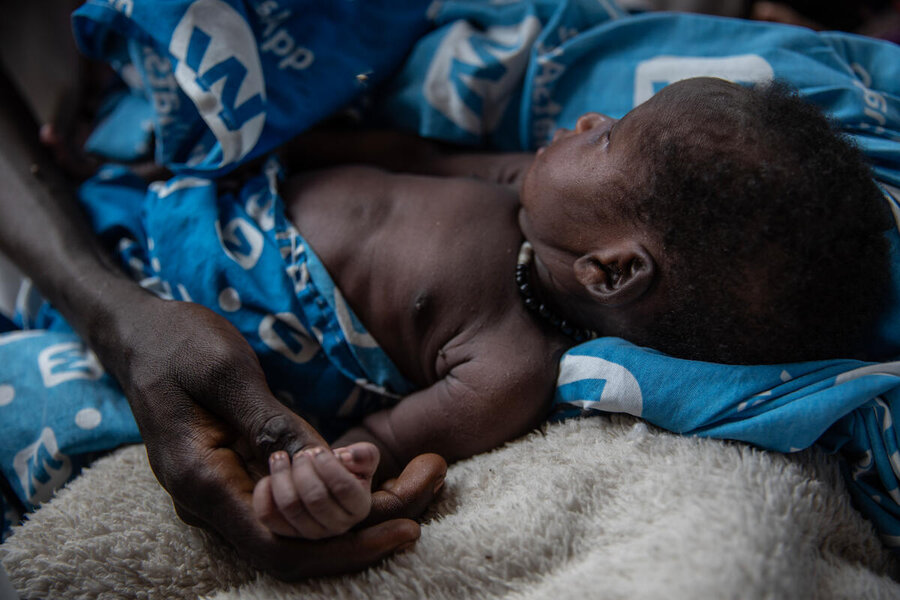
The assistance will end up in the hands of women like Nyawiel, who cradles her two-week-old baby. At Chuil’s nutrition centre, she describes fleeing violence that killed her husband and mother – and getting attacked on the way to safety. She gave birth to her third child shortly after arriving in Chuil.
“People were killed and children were taken,” Nyawiel says, describing her traumatic days-long journey on foot to Chuil, drinking swamp water along the way.
“We are eating water lilies. We are suffering,” she adds. “I have nowhere to go. There is conflict everywhere.”
WFP has received invaluable funding from a range of generous donors, including Canada, Finland, France, Germany, the European Union, Japan, Ireland, Luxembourg, New Zealand, Norway, Private Donors, Switzerland, the South Sudan Humanitarian Fund (SSHF), the United Kingdom and the United States.
Despite this generous support, WFP is currently facing a significant shortfall of US$193 million for the next six months – affecting our ability to provide emergency food and nutrition support to millions of vulnerable people in need.