
WFP at a Glance
About WFP
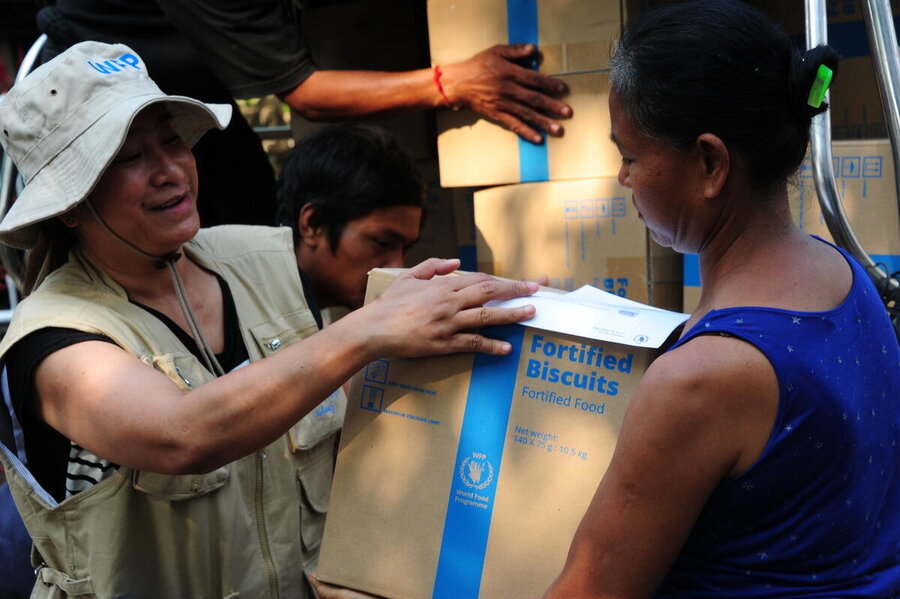
The World Food Programme (WFP) has a presence in over 120 countries and territories. We provide food and other assistance to people affected by sudden and ongoing emergencies. At the same time, we provide governments with the support and skills to manage food security in the long term. WFP was awarded the Nobel Peace Prize in 2020 in recognition of our strong advocacy for the critical role of peace in ending hunger, and for the use of food as a tool for peace.
Quick facts
- WFP is funded entirely by voluntary donations, with US$6.5 billion raised in 2025.
- We provided assistance to 121 million people in 2025.
- We delivered 15.8 billion daily rations.
A global hunger crisis
The year 2026 is one of unrelenting humanitarian needs, driven by conflict, weather-related and economic shocks that are in turn fuelling food insecurity.
Funding shortfall and ration cuts
While global humanitarian needs are skyrocketing, funding is failing to keep pace. This has forced WFP – and other organizations – to scale back assistance and refocus on the most severe needs.
It is also getting harder for our teams to do their work, with humanitarian access restricted by conflict.
WFP needs US$13 billion to reach 110 million vulnerable people in 2026, as detailed in the WFP 2026 Global Outlook.
Main areas of work
Emergency response and preparedness
We respond to emergencies caused by conflict, climate shocks, economic slumps, pandemics and other disasters. We coordinate responses to large-scale emergencies on behalf of the wider humanitarian community, as lead agency of the Logistics Cluster and the Emergency Telecommunications Cluster. We further work with partners to provide early warning and help communities lessen the impact of looming disasters. Learn more here about the emergencies we are currently tackling.
- Each day WFP can have up to 4,300 trucks, 55 aircraft and 135 ships on the move, delivering food and other assistance.
Climate action
WFP works with governments and humanitarian partners to respond to an increasing number of weather-related disasters, which wipe out crops, disrupt markets and destroy infrastructure such as roads and bridges. At the same time, we take pre-emptive action – including restoring degraded ecosystems that serve as shields against disasters. Anticipatory action allows families to buy food, reinforce their homes and take other steps to build resilience ahead of disasters.
- WFP provided 10.3 million people with financial protection from climate hazards in 2025.
Ending malnutrition
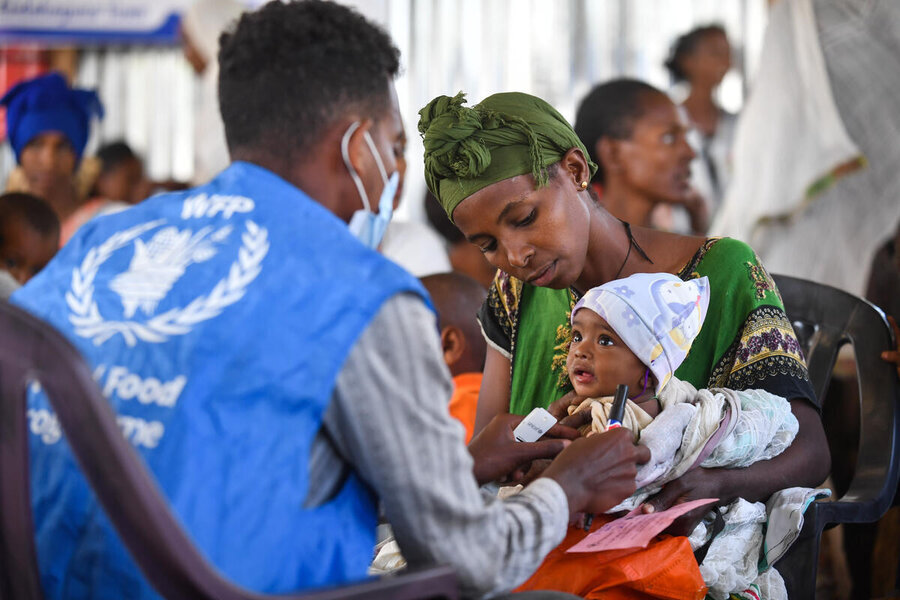
Sustainable development is only possible in communities where malnutrition is eradicated. WFP's work goes beyond emergency interventions to address all forms of malnutrition, including vitamin and mineral deficiencies, and overweight and obesity. We address malnutrition from the earliest stages, targeting the first 1,000 days from conception to a child's second birthday. We provide access to healthy diets, with a focus on young children, pregnant and breastfeeding women, and people living with HIV.
- WFP supported 25 million people through nutrition treatment and prevention programmes in 2025.
School meals
WFP is the largest humanitarian organization implementing school-meal programmes, which improve children's nutrition and health while also increasing access to a potentially life-changing education. Home-grown school feeding sources food from millions of smallholder farmers, increasing their incomes and boosting local economies. WFP is secretariat of the School Meals Coalition, with over 100 governments and more than 150 organizations working for every child to receive a healthy, nutritious school meal by 2030.
- WFP provided nutritious school meals, take-home rations or cash transfers to 19.3 million schoolchildren in 63 countries in 2025.
Supporting smallholder farmers
Smallholder farmers produce most of the world's food and are critical in achieving a zero-hunger world. WFP's support ranges from business-skills training to post-harvest management, from increasing access to finance to improving the roads leading to markets.
- WFP’s supported 2.1 million smallholder farmer across 56 countries in 2025.
Resilience building
WFP's early-warning and preparedness systems allow governments to prevent or respond quickly to crises. We help develop national capacities to manage disaster risk through approaches such as weather insurance. Our work includes vulnerability analysis and mapping, as well as support to governments' social protection systems such as cash transfers. WFP's Food Assistance for Assets programme sees people receive food or cash to meet immediate food needs, which frees up their time for work on community assets and livelihood resources.
- WFP plans to support the rehabilitation of 3 million hectares of degraded land by 2030, under the Climate and Resilience Investment Pipeline.
Cash assistance
Financial support provides increased choices and diet diversity for people, while boosting smallholder production, retail and the financial sector through increased spending and trade. It is also an effective means of giving more economic power to food-insecure women.
- WFP delivered US$1.81 billion in cash-based transfers and commodity vouchers to the most vulnerable people in 2025.
Capacity building
WFP shares skills and knowledge with public, private and civil society organizations who are pivotal to sustaining national policies and programmes. We are building governments' and other partners' capacities to manage disaster risk and improve food security, while also investing in the aforementioned early-warning and preparedness systems.
- In 2025, WFP helped 78 countries strengthen their national systems for emergency preparedness and response.
Digital innovation
New innovation and technology help drive WFP’s work to achieve zero hunger. WFP’s Munich-based Innovation Accelerator sources, implements and scales high-impact innovations, by connecting them with WFP’s global network and field operations.
- The Innovation Accelerator reached 132.5 million people across 75 countries and territories in 2025, working with WFP's country offices and global headquarters, WFP innovation hubs and partners.
UNHAS
WFP Aviation manages the only UN-mandated air transport service, the United Nations Humanitarian Air Service (UNHAS), which allows humanitarian staff and cargo to reach the world's most remote and challenging locations.
- UNHAS transported 239,000 passengers and 2.5 metric tons of relief cargo in 2025.
Further information: 12 things you may not know about the World Food Programme / History / Who we are / Our work / Where we work / Governance and leadership